This modern wall bookshelves reviews buying guide USA is written for anyone who wants to store books, display objects, and save floor space at the same time. Wall bookshelves have become a standard part of American home design. They fit small apartments. They fit large family rooms. They work in studies, hallways, and nurseries. A good unit can hold hundreds of books and still look neat. A poor one can sag, tilt, or pull loose from the wall. The difference usually comes down to three things: the quality of the material, the strength of the mounting hardware, and honest planning before you buy.
Why Wall Bookshelves Matter
Floor-standing bookcases take up valuable floor area. In a small room, every square foot counts. Wall-mounted shelves lift the storage up and off the floor. The floor below stays open. The room looks larger. Cleaning gets easier. A vacuum cleaner or mop passes under the shelves without trouble.
Wall bookshelves also change the look of a room. A long row of floating shelves draws the eye across the wall. It creates a line of order. A tall arrangement of cubes can act like art. Designers often use shelves to frame a reading chair or a desk. The result feels planned and calm. If you want a broader buying plan, start with this modern wall bookshelves buying guide.
Types and Options: Modern Wall Bookshelves Reviews Buying Guide Usa
Shoppers will meet four main types of modern wall bookshelves. Each has strengths and limits. The right choice depends on your wall, your books, and your style.
Floating Shelves
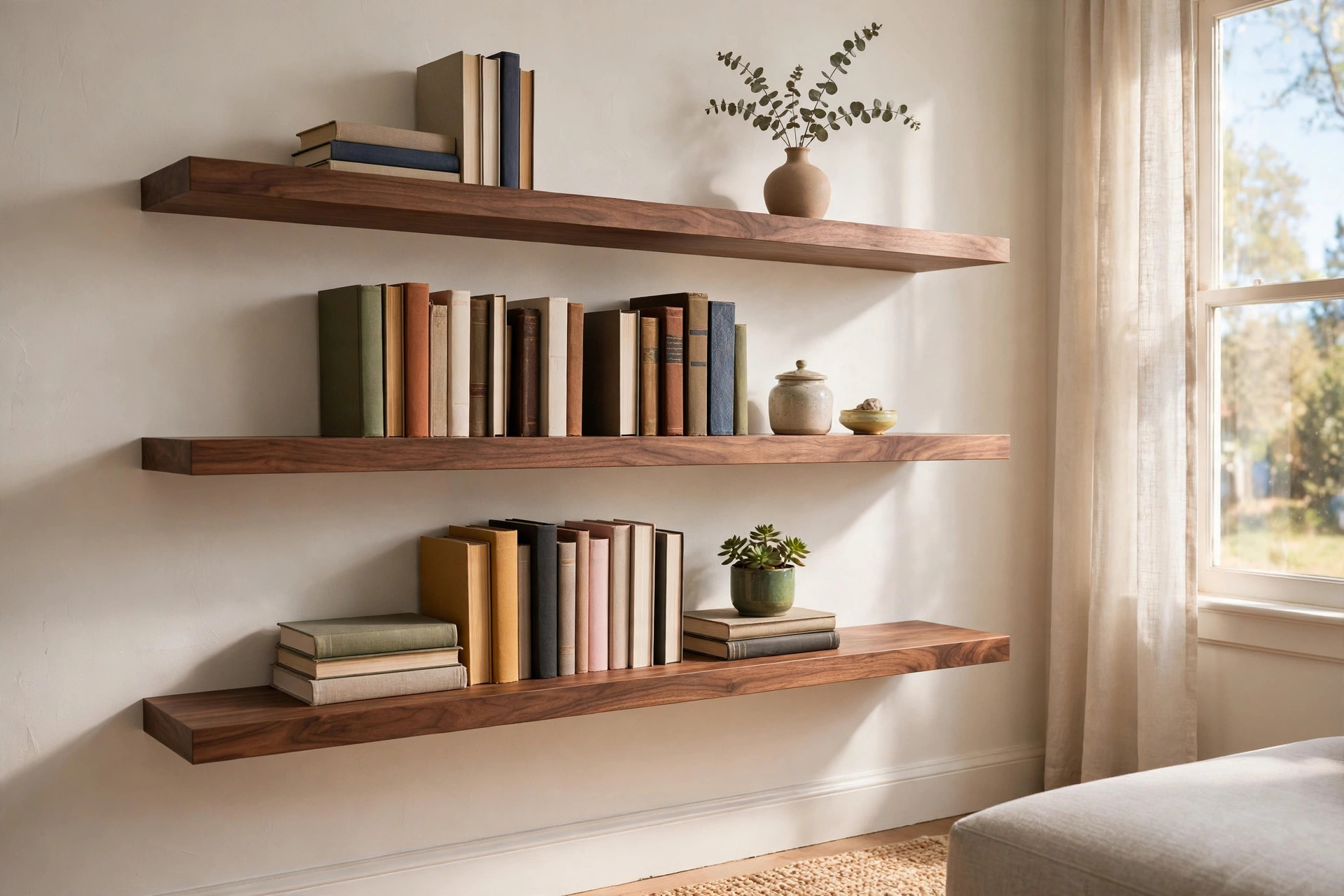
Floating shelves are the most common modern choice. They have no visible brackets. The support is hidden inside the shelf or behind it. They look clean and light. They suit living rooms and hallways where the look matters as much as the storage.
Floating shelves come in single boards and in sets of two or three. Widths run from twelve inches to six feet. Short shelves hold picture books or plants. Long shelves hold full rows of novels. Reviews praise their look but warn about weight limits. Most boards are rated for fifteen to twenty-five pounds per bracket pair. Real books add up fast. Measure your load before you hang them.
Ledge Shelves
Ledge shelves have a raised lip or rim at the front. They were made for picture ledges, but they work well for books too. The lip keeps books upright without bookends. They are shallow, usually four to six inches deep. That makes them good for paperbacks and thin art books.
Many parents use ledge shelves in nurseries and children’s rooms. The low depth keeps things within reach. Spines face out, which helps small children find a book. Budget-friendly shelving often includes simple ledge boards that can be cut to size.
Cube and Box Units
Cube shelves are square or rectangular boxes fixed to the wall. They give each row a frame. The boxes can be grouped into patterns: grids, stair steps, or scattered clusters. This type holds the most weight of the wall-mounted styles because the box frame spreads the load.
Open cubes show off book spines and objects. Closed cubes with doors hide clutter. Reviews often rate cube units high for families. They stand up to heavy use. The main drawback is depth. Most cubes project eight to twelve inches from the wall, so they need a clear wall with room in front.
Modular Systems
Modular systems use rails, uprights, and movable shelves. The classic design hangs two or more vertical rails on the wall. Shelves and cabinets clip into the rails at any height. You can move them as your needs change. Add a shelf when the book collection grows. Move a cabinet down when a child needs a desk.
These systems cost more than single shelves. Reviews call them the best long-term value. One rail set can serve a home office for twenty years. Brands in modern furniture showrooms often display modular walls because they show how flexible a room can be.
How to Choose
Choosing well means checking five points: size, material, load rating, finish, and hardware. Take them one at a time.
Measure the Wall and the Books
Start with a tape measure. Note the width of the open wall. Note the height from the floor to the first shelf. Most living rooms put the lowest shelf at forty to forty-eight inches. That keeps books clear of furniture but within easy reach.
Then measure your books. Tall art books need shelves spaced twelve inches apart. Standard hardbacks need ten inches. Paperbacks need eight. Count how many linear feet of shelf you own. Ten linear feet of books weighs about one hundred pounds. Buyers often forget this step. Do not skip it.
Pick a Strong Material
Three materials dominate the market: solid wood, plywood with veneer, and medium-density fiberboard, called MDF.
Solid wood is the strongest and the most expensive. It resists sag. It takes screws well. A solid oak board can span four feet with books and stay flat. Check listings for solid-wood modern furniture when you want this level of quality.
Plywood with a wood veneer is the middle choice. It is strong, lighter than solid wood, and costs less. Most mid-range reviews rate plywood shelves as the best balance of price and strength.
MDF is the cheapest. It is smooth and paints well. It is also heavy for its strength. Long MDF boards sag over time under books. Short MDF shelves are fine. Long ones are not. If your budget points to MDF, keep spans under thirty inches and use center brackets.
Metal shelves are a fourth option. They suit industrial and loft styles. Steel brackets and boards hold very heavy loads. They can feel cold in a warm room. Pair them with wood or fabric nearby to soften the look.
Check the Load Rating
Every shelf should list a weight limit. If a listing does not show one, treat that as a warning sign. Quality makers publish ratings tested in labs. The number assumes proper installation into studs.
Add up your planned load. A foot of standard hardbacks weighs about ten pounds. A three-foot shelf of hardbacks weighs about thirty pounds. Compare that number with the rating. Keep a margin of at least twenty percent. Books have a habit of multiplying.
Match the Finish to the Room
Modern styles favor simple finishes: white, black, light oak, walnut, and natural ash. White shelves disappear into white walls. That makes a room feel bigger. Walnut adds warmth and works well with leather and wood furniture.
Check the finish in real light if you can. A board that looks gray in a photo may read as brown in your room. Order a sample when the maker offers one. If your walls are textured, matte finishes hide dust and marks better than gloss.
Many shoppers plan the whole room at once. Wall shelves pair well with soft floor layers, so see our luxury area rugs buying guide when you plan the full room.
Do Not Ignore the Hardware
Hardware decides whether a shelf stays up. Good kits include heavy-duty wall anchors, long wood screws for studs, and a level. Cheap kits include short screws and plastic anchors that fail in drywall.
Buy a stud finder. It is a small tool that locates the wooden studs behind drywall. Screwing into a stud gives ten times the holding power of a drywall anchor. Reviews of failed shelves almost always mention weak anchors or missed studs. Spend an extra hour on installation. It is the cheapest insurance you will ever buy.
Cost and Price
Prices in the United States vary widely. A single short floating shelf in MDF costs fifteen to thirty dollars. A pair of solid wood floating shelves, forty-eight inches long, costs eighty to one hundred sixty dollars. Cube units run from sixty dollars for a small set to three hundred dollars for a large arrangement. Modular rail systems start around two hundred dollars and can reach eight hundred dollars for a full wall.
Sets sold by large online furniture catalogs often bundle several shelves at a lower per-unit price. Check the reviews before trusting a bundle. Some bundles use thinner boards to hit a price point. Watch for shipping costs. Long boards ship as oversize freight in some cases.
Custom carpentry is the top tier. A carpenter-built shelf wall costs one thousand dollars or more. You get exact sizes, hidden hardware, and a finish matched to your trim. Many buyers split the difference. They buy quality rails and have a carpenter cut solid boards to fit.
Installation costs are separate. A handyman charges fifty to one hundred fifty dollars to hang a set of shelves. The job is simple enough for most owners, but a pro is worth it for heavy loads on plaster or brick walls.
Plan the room around the shelves to get the most value. Wall shelves above a reading corner work well with a side table. See our rustic console tables buying guide for ideas on pieces that sit well under or beside shelf walls.
Care and Upkeep
Modern wall bookshelves need little care, but a few habits keep them looking new.
Dust shelves every two weeks. A microfiber cloth lifts dust without scratching finishes. Avoid spray cleaners on wood veneer. They can cloud the finish over time. For wood, a dry cloth is enough. For painted MDF, a lightly damp cloth removes marks.
Check brackets once a year. Pull gently on each shelf. If it moves, tighten the screws. In homes with seasonal humidity swings, wood boards expand and shrink. A shelf that was level in summer may tilt in winter. Small adjustments fix this.
Keep books out of direct sun. Sunlight fades spines and dries wood finishes. If a shelf sits under a window, rotate the books twice a year. Heavy books belong on lower shelves. They lower the center of gravity and reduce stress on the top brackets.
Overloading is the most common cause of damage. If a shelf bows in the middle, remove books until it is flat. A bowed board rarely straightens on its own. Replace it before it fails. Home organization guides offer good routines for sorting shelves twice a year, which also gives you a chance to check the hardware.
Safety
Wall shelves hold real weight above head height. Treat them with respect.
Always anchor into studs when the load is heavy. Drywall anchors are rated for light loads only. A shelf of books is not a light load. Use a stud finder on every installation. Mark the studs with tape before you drill.
In earthquake zones and in homes with small children, add safety straps or lip rails. A strap ties the shelf to the wall so it cannot tip forward. Lip rails keep books from sliding off during shaking. The federal product safety information explains anchor rules for wall-mounted furniture. Follow them.
Check local building rules for very large installations. A full wall of shelves in a rental may need landlord approval. Get it in writing. Patch holes with spackle and paint when you leave.
Keep the floor below shelves clear of cribs and play areas where possible. If a shelf must go above a desk or chair, double-check the hardware. Heavier loads need more brackets, not fewer.
Frequently Asked Questions
How much weight can a floating shelf hold?
It depends on the board, the brackets, and the wall. Most home floating shelves are rated for fifteen to thirty pounds when mounted into studs. Metal-backed boards hold more than hollow ones. Always read the published rating. Add up the weight of your books. Keep a twenty percent safety margin. When in doubt, add a center bracket or choose a shorter span.
Can I install wall bookshelves on drywall without studs?
You can, but only for light loads. Special toggle bolts hold more than plastic anchors, but no anchor beats a wood stud. For books, find the studs. Studs in American homes are usually sixteen inches apart. A stud finder locates them in seconds. If your wall has no studs where you want the shelf, move the shelf or add a backer board screwed into two studs.
What is the best wood for wall bookshelves?
Solid hardwood such as oak, maple, or walnut is the best. It resists sag and holds screws firmly. Plywood with hardwood veneer is a close second at a lower price. Avoid long spans of MDF for heavy books. Short MDF shelves are fine for paperbacks and display items.
How deep should wall bookshelves be?
Ten inches is the standard depth for most books. Twelve inches holds oversized art books and storage boxes. Eight inches works for paperbacks. Ledge shelves are four to six inches deep. Measure your tallest books first, then choose depth and spacing to match.
How do I style modern wall bookshelves?
Group books by size or color for a calm look. Leave empty space. Crowded shelves look messy. Mix in a few objects: a small plant, a framed photo, a clock. Odd numbers look best. Three items on a shelf beat four. Many small-space living tips suggest keeping one shelf partly empty so the wall can breathe.
Are wall bookshelves a good idea for renters?
Yes, with care. A few well-placed shelves cause less damage than large furniture. Use proper anchors and patch the holes when you move. Get written permission for large installations. Some landlords allow shelves but not rail systems. Ask first.
A Final Word
Modern wall bookshelves are one of the simplest upgrades a home can get. They cost less than new furniture. They take an afternoon to install. They turn bare walls into useful storage. The buyers who are happiest are the ones who plan first. They measure the wall. They weigh the books. They buy strong boards and real hardware. They anchor into studs. Follow those steps and your shelves will serve you for years. For more room ideas, browse modern decor retailers and quality home goods — and keep an eye on home design shows for styling inspiration.
References
Apartment Therapy. (n.d.). Home design ideas and inspiration. https://www.apartmenttherapy.com Article. (n.d.). Modern furniture. https://www.article.com CB2. (n.d.). Modern furniture and decor. https://www.cb2.com Crate and Barrel. (n.d.). Furniture and home decor. https://www.crateandbarrel.com HGTV. (n.d.). Home and garden ideas. https://www.hgtv.com IKEA. (n.d.). Home furnishings. https://www.ikea.com The Spruce. (n.d.). Home and garden advice. https://www.thespruce.com U.S. Consumer Product Safety Commission. (n.d.). Product safety information. https://www.cpsc.gov Wayfair. (n.d.). Furniture and home goods. https://www.wayfair.com West Elm. (n.d.). Modern furniture and home decor. https://www.westelm.com
Was this guide helpful?

About James Carter
The My Garden US editorial team writes practical, in-depth home and garden guides for American homeowners — tested advice, no fluff.