
Introduction
This bedroom dressers mirror american homes guide begins with a simple fact. The dresser is one of the most used pieces of furniture in any bedroom. A mirror on that dresser adds more than looks. It gives a clear place to check your face, your shirt, or your tie before you start the day. It also bounces light around the room and makes a small bedroom feel a bit larger.
Many American homes have a dresser with a mirror as part of the main bedroom set. The pair is bought together in many cases. In other cases, a family buys the dresser first and adds the mirror later. Either way works. This guide walks through the reasons to own one, the styles on the market, the cost ranges, and the plain care steps that keep the piece in good shape for years.
A bedroom dresser mirror set fits most home styles. A colonial farmhouse, a city condo, and a ranch home all have rooms where a dresser mirror works well. The key is to match the size, the wood tone, and the frame shape to the room you own. The sections below give clear steps for each choice.
Why a Dresser Mirror Matters: Bedroom Dressers Mirror American Homes Guide
A Daily Use Piece
Most people check a mirror each morning. When the mirror sits right above the dresser, the habit becomes easy. You pull a shirt from a drawer, stand up, and look at the glass. There is no need to walk to the hall or the bath. That small ease adds up over years of use.
More Light in the Room
A mirror throws light back into a room. In a bedroom with one window, a dresser mirror can double the feel of daylight. Place the dresser where the mirror faces the window, or at least faces it at an angle. The glass will catch the light and send it to the darker corner. Evening lamps near the dresser give the same lift after dark.
A Sense of Space
Small bedrooms feel tight. A mirror on the dresser opens the view. The eye reads the reflected half of the room as extra space. This trick is old, and it still works. For a guest room or a child’s room, the mirror can make the room feel calm and less closed in.
Storage and Display
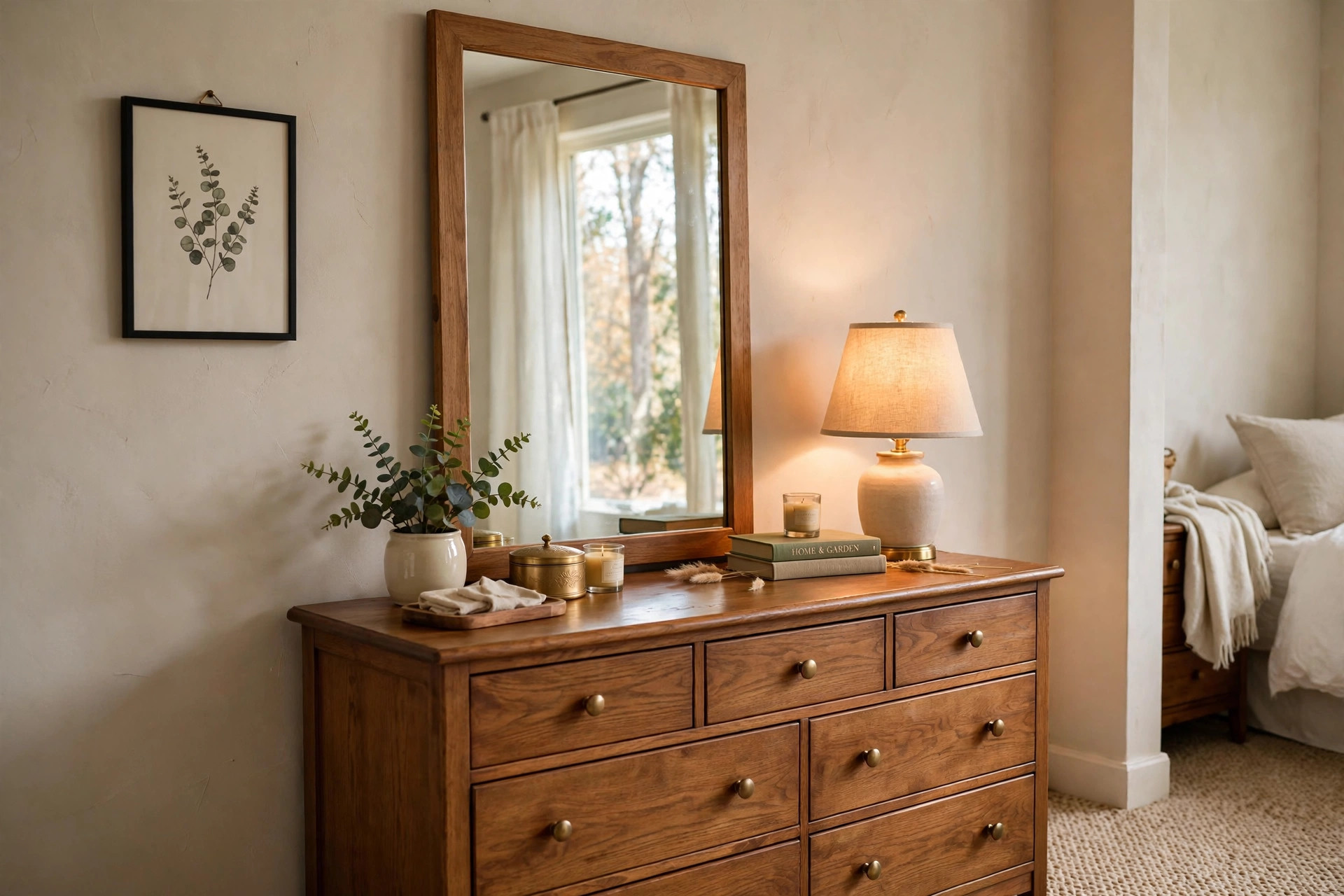
The dresser top serves as a stage. A tray for keys, a small plant, a lamp, or a framed photo all fit beside the mirror base. The mirror frame itself adds height to the wall. The whole setup looks finished with little extra work.
What to Look For
Size and Proportion
Measure the wall before you shop. A mirror should be about two thirds to three quarters as wide as the dresser top. A mirror that is too wide will crowd the wall. One that is too narrow will look lost. Most dresser mirrors stand 36 to 48 inches tall. The dresser is about 30 to 36 inches high, so the glass will reach roughly six feet up the wall in most setups.
Check the ceiling height of the room. In a room with an eight foot ceiling, a tall mirror works fine. In a low attic bedroom, a shorter mirror keeps the balance right.
Frame Material
Wood frames are the most common choice. Oak, pine, maple, and cherry all take stain well. A wood frame can match the dresser wood tone. Metal frames suit a modern room. Brass or black iron frames last a long time and hold their finish. Some mirrors use a plain wood frame with a thin metal trim for a mixed look.
Check the back of the frame before you buy. A solid wood back board or a good plywood panel holds the glass firm. A flimsy backing can let the glass shift over time.
Glass Quality
Good mirror glass gives a clear, true image. Cheap glass can wave or tint the face green at the edges. Look for glass that is at least one eighth of an inch thick. Ask the store if the glass has a protective backing coat. A sealed back slows the dark spots that form with age and damp air.
Attachment Method
Most dresser mirrors bolt to the back of the dresser. Two or four bolts pass through the dresser back panel into the mirror posts. Some mirrors stand on the dresser top with a brace. Others hang on the wall above the dresser. Bolt-on mirrors move with the dresser. Wall-hung mirrors stay put if you move the dresser. Pick the method that suits your room plan.
Types and Options
The Standard Bolt-On Mirror
This is the classic pair found in most bedroom sets. Two posts rise from the dresser back, and the glass sits between them. It is stable and simple. The posts may be plain or turned in a classic shape. This type suits bedroom dressers mirror buying guide usa shoppers who want the full set look.
The Arched Mirror
An arch at the top of the frame softens the room. Arched mirrors suit farmhouse and French country styles. The curve breaks up the straight lines of the dresser and the wall. They cost a bit more because the frame takes more work to build.
The Round Mirror
A round mirror above a wide dresser gives a fresh, modern feel. It works well in small rooms because it has no hard corners. Some round mirrors hang from a leather strap or a brass bracket. Those add a touch of style to a plain wall.
The Tri-Fold Mirror
A tri-fold has a center panel and two side wings that angle in. It was popular in past decades and is back in many homes. The side wings let you see your face from two angles at once. They fold flat for a move.
The Wall-Hung Mirror
This mirror hangs on the wall like a picture, just above the dresser. It needs a strong hook and a stud in the wall. The benefit is a floating look. The dresser can slide out for cleaning without moving the glass.
Matching the Room
If you own bedroom side tables, try to echo their finish in the mirror frame. A maple table pairs with a maple frame. If the tables are painted white, a white or cream frame ties the set together. Style guides at Apartment Therapy show how small echoes of color pull a room into one calm picture.
Cost and Price
Price Ranges
A basic dresser mirror sells for about 80 to 150 dollars. These have a simple wood or composite frame and standard glass. Mid-range mirrors run 150 to 350 dollars. They offer solid wood frames, better glass, and nicer post details. High-end mirrors cost 350 to 800 dollars or more. These use hardwood, hand-rubbed finishes, and thick beveled glass.
Buying the mirror with the dresser as a set can cut the cost. Many stores sell the pair for less than the two items priced apart. Watch for bundle sales in late summer and after the winter holidays.
What Drives the Price
Size is the first driver. A large mirror needs more glass and more frame stock. Wood type is the second. Solid cherry or walnut costs more than pine or composite board. The bevel is the third. A beveled edge needs skilled labor and adds to the bill. Special finishes, like hand distressing or gold leaf, push the price higher still.
Where to Shop
Large home stores stock the basic and mid-range types. Furniture chains carry full bedroom sets with matching mirrors. Online sellers offer a wide range of styles with home delivery. Design sources like Houzz let you browse room photos and find makers who build dresser mirrors in many styles. Price trackers at Wayfair make it easy to compare costs across brands.
Used and Vintage Pieces
A used dresser mirror can be a good deal. Estate sales and thrift stores often carry solid wood pieces at low prices. Check the glass for dark spots and the frame for loose joints. A light refinish can bring an old frame back to life. Just be sure the glass is safe and firmly held before you carry it home.
Care and Upkeep
Cleaning the Glass
Clean the mirror with a soft cloth and a spray of mild glass cleaner. Wipe in a circle pattern to avoid streaks. Do not soak the frame. Water that runs into the frame edge can stain wood or lift the finish. Dry the glass right away with a second clean cloth.
Caring for the Frame
Dust the frame each week with a dry cloth. For wood frames, use a light furniture polish once a month. For metal frames, wipe with a damp cloth and dry at once. Keep the mirror out of direct sun if the frame is stained wood. Strong sun fades the finish over time.
Tightening the Hardware
Once a year, check the bolts that hold the mirror to the dresser. Lift and shift can loosen them. Use a wrench to snug each bolt, but do not over-tighten. Cracking the dresser back panel costs more to fix than the check takes. Wall-hung mirrors need a check of the hook and wire too.
Handling Damp Air
Bathrooms share walls with bedrooms in many homes. Damp air can creep in and spot the back of the mirror. Run a vent fan after showers. If the bedroom feels damp, a small dehumidifier helps. Sealed-back glass resists spots far better than open-back glass.
Safety
Anchoring the Dresser
A tall dresser with a mirror on top can tip if a child climbs the drawers. Anchor the dresser to the wall stud with a furniture strap. This is a simple job and takes about fifteen minutes. Safety guides from IKEA and Crate and Barrel both stress wall anchoring for tall bedroom pieces.
Glass Safety
Keep the glass away from door swings. A door that hits the mirror can crack it. If the mirror hangs on the wall, use hooks rated for twice the mirror weight. When you move house, wrap the glass in a moving blanket and carry it upright. Never lay a large mirror flat in a truck bed where weight can press on the center.
Placement Away from Heat
Do not set the dresser and mirror right next to a heat vent or a radiator. Steady heat dries wood frames and can split the joints. Keep at least a foot of space between the piece and the heat source. The same rule holds for a wood stove corner.
Frequently Asked Questions
How high should the mirror sit above the dresser?
For a bolt-on mirror, the bottom of the glass usually starts at the dresser top. For a wall-hung mirror, leave a gap of four to eight inches between the dresser top and the frame bottom. That gap leaves room for a lamp or a tray on the dresser.
Can I add a mirror to a dresser that did not come with one?
Yes, in most cases. Many dressers have a back panel strong enough to take bolt-on posts. Check the panel thickness first. A panel of at least half an inch holds bolts well. If the back is thin, a wall-hung mirror is the safer choice.
What shape works best in a small bedroom?
A round or oval mirror suits a small room. The soft shape keeps the wall from feeling boxed in. A tri-fold also works because it pulls the view inward. Avoid a very wide rectangular mirror in a tight room.
Should the mirror match the dresser exactly?
It should match in tone, but it does not need to be from the same set. A walnut frame pairs with a walnut dresser even if the makers differ. For painted pieces, match the paint color closely. Room stylists at The Spruce note that near matches look planned, while clashing tones look like an accident.
How do I stop the mirror from wobbling?
First check the bolts at the dresser back. Snug them with a wrench. If the posts still rock, add a small felt pad under the mirror base where it meets the dresser top. For wall-hung mirrors, tighten the hook screws and make sure the wire sits deep in the hook.
Is a dresser mirror worth it for a guest room?
Yes. Guests value a mirror at dresser height for morning use. It saves them a trip to the hall bath. A simple mid-range mirror is enough. Pair it with a small tray for keys and the room feels ready.
A Short Final Word
A bedroom dresser mirror is a plain, honest piece of furniture. It does its job each morning without fuss. Pick a size that fits the wall, a frame that suits the wood you own, and glass that shows a true image. Anchor the dresser, clean the glass with care, and the piece will serve the home for many years.
Shoppers who want more ideas can browse style photos on HGTV or read buying advice from West Elm and CB2. For a related look at mirrors in the entry, see entryway decorative mirrors buying guide usa. The right mirror turns a plain dresser into the calm center of the bedroom.
References
Apartment Therapy. (n.d.). Home design ideas and inspiration. https://www.apartmenttherapy.com CB2. (n.d.). Modern furniture and decor. https://www.cb2.com Crate and Barrel. (n.d.). Furniture and home decor. https://www.crateandbarrel.com HGTV. (n.d.). Home and garden ideas. https://www.hgtv.com Houzz. (n.d.). Home design and remodeling. https://www.houzz.com IKEA. (n.d.). Home furnishings. https://www.ikea.com The Spruce. (n.d.). Home and garden advice. https://www.thespruce.com Wayfair. (n.d.). Furniture and home goods. https://www.wayfair.com West Elm. (n.d.). Modern furniture and home decor. https://www.westelm.com
Was this guide helpful?

About Robert Taylor
The My Garden US editorial team writes practical, in-depth home and garden guides for American homeowners — tested advice, no fluff.
You May Also Like

Dining Room Sets USA Online Deals: How to Buy Well and Save Money
September 4, 2026 0 views
Bedroom Side Tables Buying Guide USA: Sizes, Styles, and Prices
May 28, 2026 0 views
Mid Century Chairs Reviews Buying Guide USA
May 11, 2026 0 views