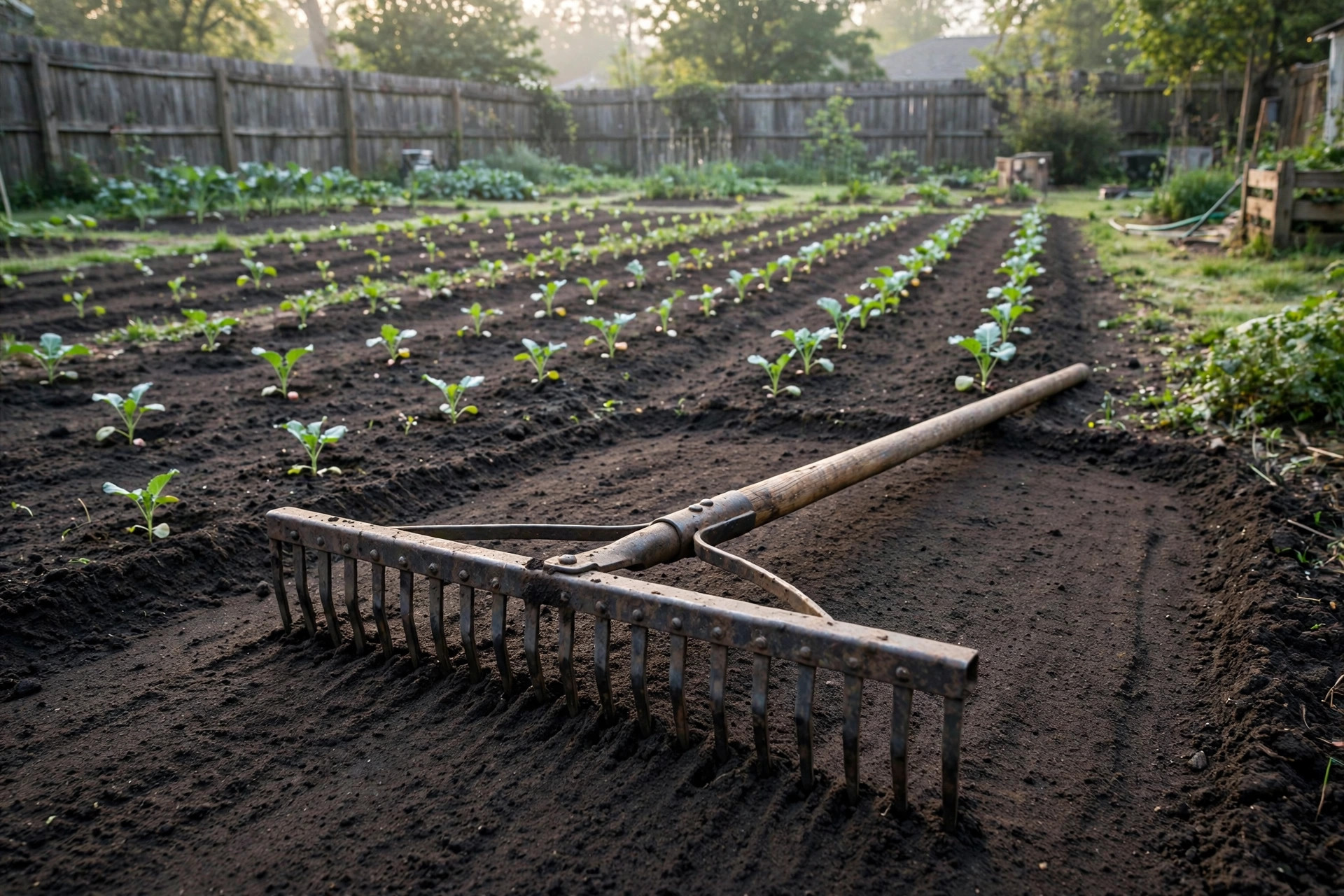

Few tools shape a garden more than the rake. The best garden rake for leveling soil turns lumps, ridges, and loose earth into a smooth bed that is ready for seed or plants. A level surface helps water spread evenly. It helps seeds sprout at the same rate. It also makes the garden look neat and cared for. Many gardeners skip this step and pay for it later with puddles, bare spots, and wasted seed. The good news is that a leveling rake is a simple tool. It is not costly. With the right choice, it can serve a home garden for decades.
Why Leveling Soil Matters
A flat garden bed is more than a matter of looks. When soil is uneven, water runs off the high spots and pools in the low ones. Seeds washed downhill by rain end up in clumps. Some areas dry out while others stay wet. Plants grow at different rates, and the garden looks patchy.
Leveling solves these troubles at the start. A smooth bed lets irrigation water sink down evenly. This is true for sprinkler systems and for simple hand watering. Good drainage follows because water does not sit in dips and rot young roots. A level bed also helps when you grade soil around the home. Directing soil away from the foundation protects the house from water damage.
The right rake makes this job easy. A standard bow rake works well for rough shaping. A wide landscape rake moves larger amounts of soil at speed. Special grading tools such as a lute rake give a finish as smooth as a paved road. The task of picking the best garden rake for leveling soil starts with knowing what each type can do.
How to Choose the Right Rake: Best Garden Rake for Leveling Soil
Head Design
The head is the working end of the rake. For leveling, you want a straight, flat edge. Wide heads cover more ground in each pass. A head of 30 to 36 inches moves soil fast on large beds. A head of 24 inches suits small raised beds and tight corners.
Tooth shape matters too. Short, stiff teeth break up clods without digging too deep. Some heads have one smooth side and one toothed side. The toothed side breaks up rough ground. Then you flip the rake over and use the smooth side to finish the surface. This two-in-one design saves time and effort.
Handle Length and Material
A long handle lets you stand upright while you work. Most leveling rakes have handles between 60 and 72 inches. Tall users should look for the longer end of that range. A short handle forces you to bend over, and the back pays for it by the end of the day.
Handles come in wood, fiberglass, and aluminum. Wood is the classic choice. It absorbs shock well and feels warm in the hand. Ash and hickory are strong and durable. Fiberglass is lighter than wood and will not rot or splinter. Aluminum is the lightest of all, which matters on a large job. Each material has a place. For daily use on big plots, lighter handles win. For rough work near stones and roots, a wood handle takes the knocks best.
Weight and Build Quality
A good leveling rake has some weight to it. The weight helps the head sink into the soil and do the work for you. Too light, and you must press down with every stroke. Too heavy, and your arms tire fast. A head weight around two to three pounds feels right for most home gardeners.
Look at how the head joins the handle. Welded joints are strong. Riveted joints can loosen over time but are easy to tighten. Avoid heads that wobble on the handle in the store. A loose head only gets looser in the garden. Reviews from independent testing groups can help you judge build quality before you buy. Sites like Consumer Reports publish ratings of garden tools based on lab tests.
Types of Rakes for Leveling Soil
The Bow Rake
The bow rake is the classic garden rake. It has short, rigid teeth set in a head that is held to the handle by a curved steel bow. The best garden rake for leveling soil is often a bow rake for simple reason: it is strong. It breaks up clods, drags soil into low spots, and smooths the surface with its back edge.
Bow rakes work best on soil that is moist but not muddy. On very dry, hard ground, they bounce over the surface. Water the bed a day before you plan to level it. The soil will be soft enough to shape but firm enough to hold its form.
The Landscape Rake
Landscape rakes are wide and flat. Many have heads 36 inches or wider. They are built for speed. On a new lawn bed or a large vegetable plot, a landscape rake moves soil in broad, even sweeps. Some models have wheels or levels built in.
The trade-off is control. In tight spaces, a wide head is clumsy. For open beds, paths, and new lawns, few tools beat it. Many home stores stock landscape rakes in their garden tool aisles, and you can compare models side by side at retailers like Lowe’s or The Home Depot.
The Grading or Lute Rake
A lute rake has a long, narrow head with one smooth edge. It was designed for bunker sand on golf courses. Gardeners borrowed it for seed beds. The smooth edge leaves a surface as even as glass. When you need the finest finish for small seeds, this is the tool.
Lute rakes cost more than bow rakes. They also do less rough work. Many gardeners own both: a bow rake for shaping and a lute rake for the final pass. Tool makers such as Corona Tools and Fiskars publish guides that show how each head shape suits a different task.
The Leaf Rake
A leaf rake is the wrong tool for leveling soil. Its thin, springy tines are made for leaves and light debris. Press one into packed soil and the tines bend. If you already own only a leaf rake, use it to clear debris first, then borrow or buy a proper leveling rake for the soil work.
Cost and Price
Prices for garden rakes are modest. A basic bow rake with a wood handle costs about 25 to 40 dollars. Fiberglass and aluminum models run 40 to 65 dollars. Wide landscape rakes cost 60 to 120 dollars, depending on head width and build. Specialty lute rakes sit in the 50 to 90 dollar range.
For most home gardens, the 30 to 50 dollar range buys a tool that lasts for years. Very cheap rakes have thin heads that bend and handles that snap. Spending a little more buys thicker steel and a stronger socket where the head meets the handle.
Think of the rake as a long-term buy. A good rake used and stored well can last 15 years or more. The cost per year is small. Guides from home improvement sites such as Bob Vila and Family Handyman often note that mid-priced tools give the best value over time.
Care and Upkeep
A rake lasts longer with small, regular care. Clean the head after each use. Knock off dried soil with a stiff brush or an old paintbrush. Soil left on steel holds moisture and starts rust. A quick wipe with an oiled rag stops rust before it starts.
Sharpen the teeth once a season. A mill file takes minutes. Sharp teeth cut through clods instead of riding over them. Check the handle for cracks and splinters. Sand rough spots smooth and rub in boiled linseed oil to keep wood from drying out.
Store the rake indoors or under cover. Hang it on a wall hook with the head up. Never lean a rake with the teeth facing up on the ground. That is how foot injuries happen. A pegboard or a simple rack keeps tools off the floor and easy to find. For broader advice on keeping hand tools in good order, see the garden tool care guides at The Spruce.
Preparing the Seed Bed
The best rake work starts before the rake touches the soil. Remove stones, roots, and old plant stems by hand or with a garden fork. Break up large clods. If the soil is bone dry, water it lightly the evening before. If it is soggy, wait. Working wet soil packs it down and ruins its structure.
Rake in long, steady strokes. Pull soil from high spots into low ones. Work in a grid: one pass north to south, then one pass east to west. This crosshatch pattern finds the bumps you missed. Step back and look from a low angle. The eye catches ridges that the hand cannot feel. Finish with the smooth edge of the rake for a fine surface. Seed companies like Burpee note that fine seed needs firm, even contact with soil to sprout well.
Safety
Rakes cause more injuries than most people expect. The classic accident is stepping on the head and being struck by the handle. Always lay a rake down with the teeth facing the ground. Better still, hang it up when you are done.
Wear sturdy shoes. Boots protect feet from dropped tools and sharp teeth. Gloves protect hands from blisters on long jobs and from splinters on old wood handles. On sunny days, wear a hat and drink water. Leveling a large bed is heavy work, and the hours pass fast.
Watch for underground lines before you shape soil near the house. Call your local utility marking service before you dig or move large amounts of earth. A broken cable or pipe turns a garden project into an expensive repair.
Frequently Asked Questions
What is the best garden rake for leveling soil on a new lawn? A wide landscape rake is the best pick for a new lawn. Its broad head moves soil fast and leaves a smooth surface for seed or sod. For small patches, a standard bow rake works fine.
Can I use a bow rake to level soil for a vegetable bed? Yes. A bow rake is ideal for vegetable beds. Use the teeth to break up clods and drag soil into dips. Then flip the rake and smooth the bed with the back of the head. The result is a fine, even surface that young plants love. Once the bed is level, an even bed also helps simple watering setups. If you water with drip lines, our guide on how to use a soaker hose effectively shows how to lay hoses on flat ground.
How fine should the soil be before planting? For large seeds such as beans and peas, a rough finish is fine. For small seeds such as carrots and lettuce, rake until the surface is fine and even. Clods bigger than a marble should be broken up. Firm the bed gently with the back of the rake before sowing.
Is a heavy rake better for leveling? A medium-weight rake is best. Heavy heads dig in and do the work for you, but too much weight tires the arms. Most home gardeners do well with a head of two to three pounds and a handle that suits their height.
How do I level soil in a raised bed? Fill the bed with soil and let it settle for a day. Then use a short bow rake or a garden hoe to pull soil level. A bed of 24 inches wide needs only a small head. After leveling, water gently so the surface stays even. Raised beds are perfect for small crops. Our guide on how to grow radishes in containers covers easy first crops for small beds.
Do I need different rakes for soil and leaves? Yes. Keep a bow rake or landscape rake for soil work and a separate leaf rake for leaves. Using a leaf rake on soil bends its tines. Using a soil rake on leaves is slow and clumsy. Each tool lasts longer when it does the job it was made for. And when the garden is full of blooms, the right tool for cutting back matters too. Our guide on the best pruning shears for rose bushes covers that side of the garden.
A Final Word
Leveling soil is quiet, honest work. It does not show like a new fence or a fresh coat of paint. But every seed you plant will sit on the bed you made. Take the time to choose the best garden rake for leveling soil for your plot. Keep it clean and sharp. Work the soil when it is moist, not wet. Your reward will be even germination, easy watering, and a garden that looks as good as it grows.
References
Bob Vila. (n.d.). Home improvement advice. https://www.bobvila.com Burpee. (n.d.). Seeds, plants, and gardening supplies. https://www.burpee.com Consumer Reports. (n.d.). Product reviews and ratings. https://www.consumerreports.org Corona Tools. (n.d.). Garden and landscape tools. https://www.corona-tools.com Family Handyman. (n.d.). DIY home repair and maintenance. https://www.familyhandyman.com Fiskars. (n.d.). Garden and cutting tools. https://www.fiskars.com Lowe’s. (n.d.). Home improvement products. https://www.lowes.com The Home Depot. (n.d.). Home improvement products. https://www.homedepot.com The Spruce. (n.d.). Home and garden advice. https://www.thespruce.com
Was this guide helpful?

About Sarah Mitchell
The My Garden US editorial team writes practical, in-depth home and garden guides for American homeowners — tested advice, no fluff.
You May Also Like

How to Start Seeds Indoors Guide for Strong Spring Plants
February 20, 2026 0 views
The Best Garden Sprayer for Deck Staining: A Plain Guide
February 12, 2026 0 views
Seed Starting Mix vs Potting Soil: Which One Seedlings Need
January 14, 2026 0 views