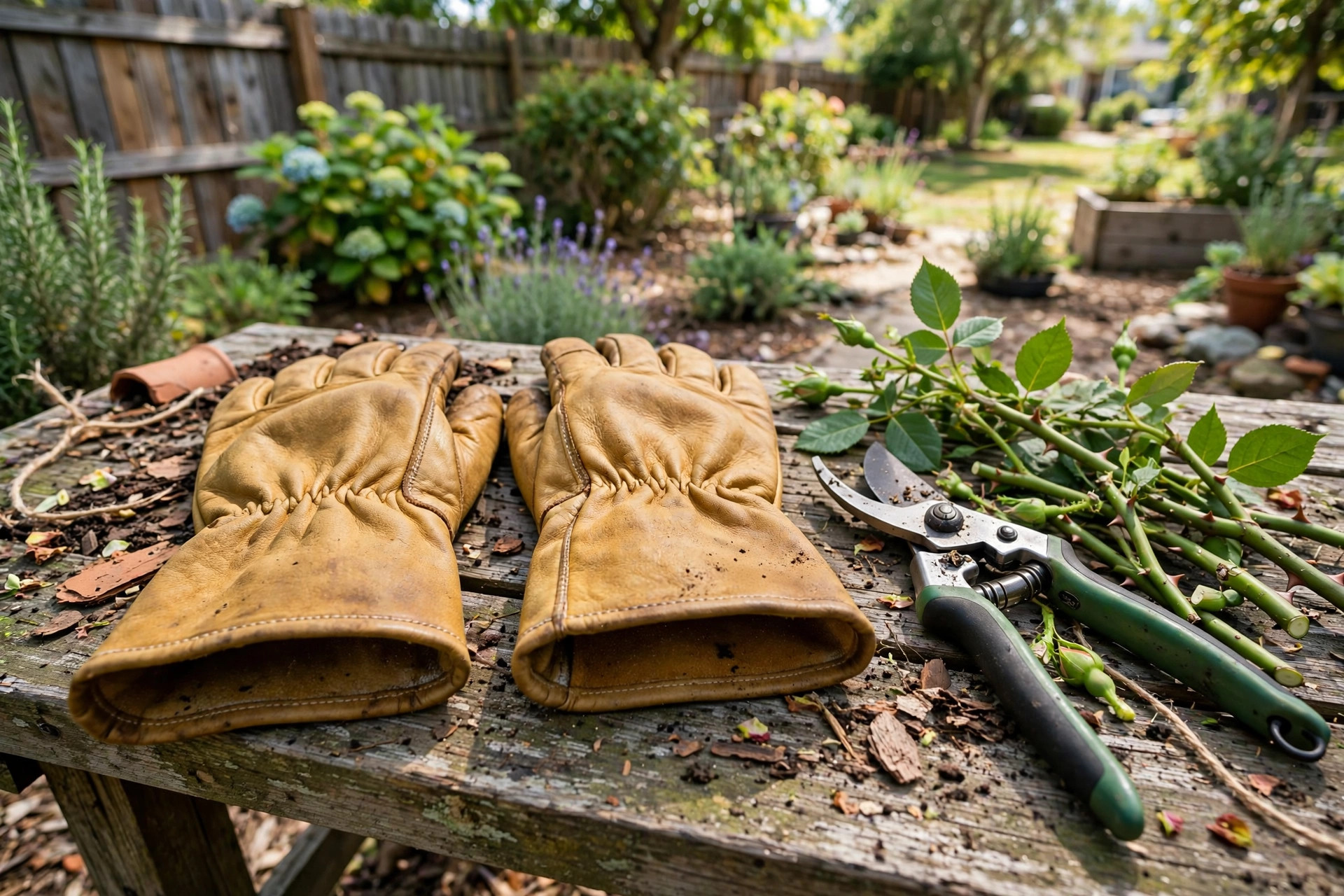

The best garden gloves for rose pruning are not a luxury. They are a necessity. Every gardener who works with roses learns this lesson, usually the hard way. One careless grasp of a cane, and a thorn finds its way through a thin glove. A good pair of gloves changes the whole experience of pruning. It turns a painful chore into steady, confident work.
Roses are among the most loved flowering plants in the American garden. They are also among the most defended. The thorns that protect the plant do not care how careful you are. This article explains what makes a good rose pruning glove, how to choose one, what you should expect to pay, and how to keep your gloves in good shape for years. Whether you tend two bushes by the front steps or a full hedge of climbers along a fence, the right gloves make the difference.
Why Good Gloves Matter for Rose Pruning
Pruning is the most important care a rose bush receives each year. It shapes the plant, lets air reach the center, and encourages strong new growth and better blooms. Most pruning happens in late winter or early spring, when the bush is bare of leaves and every cane is easy to see. It is also the time when thorns are most exposed.
A bare cane is a hazard. The thorns are hard, sharp, and often hooked. They catch on skin, cloth, and ordinary work gloves. A thin cotton glove offers almost no protection. Many gardeners report scratches, puncture wounds, and even infections from rose thorn injuries. A deep puncture can introduce bacteria and lead to swelling and soreness that lasts for days.
The best garden gloves for rose pruning solve this problem in three ways. First, they use tough materials that thorns cannot push through. Second, they extend past the wrist to protect the forearm, because canes spring back and rake across exposed skin. Third, they fit closely enough that fingers stay nimble, so you can handle shears, pull dead wood, and tie canes with precision.
A pair of rose gloves also builds confidence. When your hands and arms are protected, you prune more boldly and more correctly. You cut where the cut belongs instead of where your fearful hand will reach. Over a season, that confidence shows in healthier bushes and fuller blooms.
What to Look for When You Choose Rose Pruning Gloves: Best Garden Gloves for Rose Pruning
Shopping for rose gloves is easier when you know what matters. The market offers many choices, from cheap cotton pairs to heavy leather gauntlets. Here are the points to weigh before you buy.
Material and Thorn Resistance
The palm and fingers take the most abuse. Leather is the classic choice for rose work. Goatskin is soft and flexible. Cowhide is thick and long lasting. Pigskin is tough and stands up to moisture. Many gardeners prefer leather on the palm with a tougher or reinforced back of the hand.
Some gloves use synthetic materials. Modern synthetics can resist thorns well, and they often wash more easily than leather. But not all synthetics are equal. Read the product description with care, and compare materials and construction at retailers such as Lowe’s. Look for words like puncture resistant or thorn proof. Garden suppliers such as Gardener’s Supply Company carry several styles of long-cuff rose gloves. A general-purpose garden glove is not the same as a rose glove. If you want extra peace of mind, guides to thorn-proof garden gloves offer more detail on puncture resistance.
Length and Coverage
Ordinary garden gloves stop at the wrist. Rose gloves should go further. Look for a gauntlet style with a cuff that reaches halfway to the elbow. Long cuffs protect the forearm when you reach deep into a bush to remove a dead cane. Elastic or drawstring closures at the top of the cuff keep debris out and keep the glove from slipping down while you work.
Fit and Dexterity
A glove that is too loose is almost as bad as no glove. Loose fingertips fold over and catch on thorns. Loose palms make it hard to hold pruning shears safely. Try gloves on before you buy if you can, or check the sizing charts published by tool makers such as Fiskars and Corona Tools. The fingers should reach the ends without pressing hard. The palm should feel snug but not tight. Many brands offer sizes from small to extra large, and some offer separate women’s and men’s sizing.
Dexterity matters because pruning is fine work. You must open and close your shears, strip small leaves, and sometimes pinch off spent blooms. The best garden gloves for rose pruning protect without turning your hands into mitts. A flexible palm and articulated fingers help a great deal.
Grip and Palm Design
Wet canes are slippery. A good palm gives grip even when damp. Reinforced palms with extra leather layers last longer and grip better. Some gloves add textured patches or silicone dots for grip. If you prune in early morning dew or after rain, this detail matters more than it seems.
Types of Garden Gloves for Rose Work
Garden gloves for roses fall into a few broad types. Each has strengths and limits.
Long gauntlet leather gloves. These are the classic rose gloves. They run from fingertip to mid-forearm. The palm is usually goatskin or cowhide. They give the highest thorn protection. Gardening guides at The Spruce also favor the gauntlet style for heavy pruning work. Their weakness is heat. In a hot climate or in summer pruning, long leather gloves can make hands sweat. They also take time to dry if soaked.
Short leather work gloves. These stop at the wrist and cost less. They protect the hands but leave the forearm bare. Some gardeners pair them with separate forearm sleeves. This combination works well in hot weather, since you can remove the sleeves when you are not reaching into the bush.
Reinforced synthetic gloves. These use layered man-made fabrics with thorn-resistant barriers. They are often lighter than leather and machine washable. Quality varies widely. A cheap synthetic glove may claim thorn resistance it does not deliver. Check reviews from real gardeners before trusting the label.
Coated fabric gloves. These are knit gloves dipped in latex, nitrile, or rubber. They are cheap, comfortable, and grippy. But most coated gloves are too thin for serious rose pruning. They suit light deadheading in summer, not the heavy work of spring pruning. Keep a pair for gentle tasks, but do not rely on them for cutting back a big climber.
For the main pruning season, the long gauntlet leather glove remains the standard by which others are judged. If you buy only one pair, make it this type.
Cost and Price Guide
Rose pruning gloves are not expensive compared with most garden tools. Prices follow quality and material.
A basic pair of synthetic or thin leather garden gloves costs about five to ten dollars. These are fine for light work but rarely hold up to real rose pruning. Expect them to puncture and wear out quickly.
A solid mid-range pair of long gauntlet rose gloves costs about fifteen to thirty dollars. This is the sweet spot for most home gardeners. At this price you find genuine leather palms, long cuffs, and decent stitching. Independent reviews from Consumer Reports and the how-to guides at Bob Vila can help you compare models before you buy.
Premium gloves cost thirty to fifty dollars or more. These use top-grade leather, extra reinforcement, and careful construction. They last longer and often fit better. For a gardener with many roses, the extra cost pays for itself in comfort and durability.
Watch for value, not just price. A twenty-dollar glove that lasts four seasons is cheaper than a ten-dollar glove you replace every year. Look at the stitching, the thickness of the palm, and the quality of the cuff closure. These details tell you more than the price tag.
Keep your shears in good order too, since sharp tools make pruning easier on both the plant and your gloves. A simple guide on how to sharpen garden tools properly can extend the life of your equipment.
Care and Upkeep
Good gloves deserve good care. Leather gloves last much longer when they are cleaned and stored correctly.
Brush off dirt and thorn fragments after each use. A stiff brush works well. For leather gloves, wipe them with a damp cloth when they are dirty. Do not soak leather in water and do not put it in a washing machine. Water and heat dry out leather and make it stiff and cracked.
Let gloves dry slowly at room temperature. Never place them on a radiator or in direct hot sun. Stuffing them loosely with newspaper helps them hold their shape while they dry. Maintenance guides from Family Handyman offer more tips for leather goods kept in the garden shed.
Once dry, rub a little leather conditioner or mink oil into the leather. This keeps the hide soft and supple. Treated leather also resists moisture better. Condition your gloves once or twice a season, or whenever the leather starts to feel dry.
Synthetic gloves are easier. Most can be machine washed on a gentle cycle. Air dry them. Check the maker’s instructions first.
Inspect your gloves each spring before pruning season. Look for worn spots on the palm, loose stitching, and thin areas on the fingers. A small tear can be sewn, but a worn-through palm means the glove has served its time. Retire it and buy a new pair. Your hands are worth more than the cost of replacement.
Store gloves in a dry shed or garage, away from mice. Rodents enjoy the salt in leather and will chew stored gloves. A closed box or a hanging hook keeps them safe.
Safety Notes
Rose thorns deserve respect beyond simple scratches. A deep puncture can introduce bacteria under the skin. Clean any thorn wound at once with soap and water. Watch for redness, swelling, or warmth in the following days, and see a doctor if an infection develops.
Wear eye protection when pruning large bushes. Canes snap and whip. A thorn in the eye is a serious injury. Simple safety glasses cost little and prevent much.
Work with sharp, clean shears. A dull blade crushes the cane instead of cutting it, and crushed wood invites disease. Clean blades with rubbing alcohol between bushes to avoid spreading plant illness. Pair your gloves with quality cutting tools, such as the options described in guides to the best pruning shears for rose bushes.
Prune in daylight when you can see every cane clearly. Keep a first aid kit within reach during garden work. For seasonal rose care calendars, growers such as Burpee publish planting and pruning guides worth keeping on the shelf. Tetanus protection should be current for anyone who works with soil and sharp plants. If you are unsure when you last had a tetanus shot, ask your doctor.
Frequently Asked Questions
Can I use ordinary garden gloves for rose pruning?
You can, but you will likely regret it. Ordinary garden gloves are made for soil, weeds, and soft plants. Rose thorns punch through thin cotton, knit, and light synthetic gloves with ease. A dedicated rose glove with a leather palm and a long cuff is far safer and more comfortable for real pruning work.
Are long gauntlet gloves really necessary?
For serious pruning, yes. The danger is not only to your fingers. When you reach into the center of a bush, canes rake across your forearms. A long cuff that reaches toward the elbow prevents dozens of small scratches in a single session. Gardeners who switch to gauntlet gloves rarely go back.
How do I find the right size?
Measure around your knuckles with a tape measure, not counting the thumb. Compare the number with the maker’s size chart. Try the glove on if possible. Your fingers should just reach the ends, and you should be able to make a fist without strain. Between sizes, choose the smaller one for leather, since leather stretches a little with wear.
Can rose pruning gloves be washed?
It depends on the material. Synthetic gloves usually wash well in a machine on a gentle cycle. Leather gloves should not be machine washed. Wipe them clean with a damp cloth, let them air dry slowly, and condition the leather afterward. Always check the care label that comes with the gloves.
How often should I replace my rose gloves?
A good pair of leather rose gloves lasts three to five seasons with proper care. Replace them when the palm wears thin, stitching fails, or thorns start getting through spots that once held firm. Do not wait for a bad puncture to tell you the gloves are finished.
Do expensive gloves protect better than cheap ones?
Usually, yes, but price is not the whole story. A well-made mid-range glove often protects as well as a premium one. What matters most is the material, the thickness of the palm, the length of the cuff, and the fit. Read reviews from gardeners who actually prune roses, and favor gloves described as puncture resistant or thorn proof over plain garden gloves.
A Final Word
Roses reward the gardener who tends them well, and good pruning starts with good protection. The best garden gloves for rose pruning are tough, long, and well fitted. They let you work with confidence instead of caution. Choose leather if you can, insist on a gauntlet cuff, and buy the best fit your budget allows. Care for the gloves, and they will care for your hands through many seasons of blooms. Your roses, and your fingers, will thank you.
References
Bob Vila. (n.d.). Home improvement advice. https://www.bobvila.com Burpee. (n.d.). Seeds, plants, and gardening supplies. https://www.burpee.com Consumer Reports. (n.d.). Product reviews and ratings. https://www.consumerreports.org Corona Tools. (n.d.). Garden and landscape tools. https://www.corona-tools.com Family Handyman. (n.d.). DIY home repair and maintenance. https://www.familyhandyman.com Fiskars. (n.d.). Garden and cutting tools. https://www.fiskars.com Gardener’s Supply Company. (n.d.). Gardening tools and supplies. https://www.gardeners.com Lowe’s. (n.d.). Home improvement products. https://www.lowes.com The Spruce. (n.d.). Home and garden advice. https://www.thespruce.com
Was this guide helpful?

About Emily Rodriguez
The My Garden US editorial team writes practical, in-depth home and garden guides for American homeowners — tested advice, no fluff.
You May Also Like
How to Build a Compost Bin Cheap: A Simple Guide for Any Yard
May 8, 2026 0 views
Best Garden Hose Reel Cart Reviews: Which One Is Worth Your Money
January 11, 2026 0 views
Best Garden Tool Storage Rack Reviews: What Buyers Say
March 10, 2026 0 views