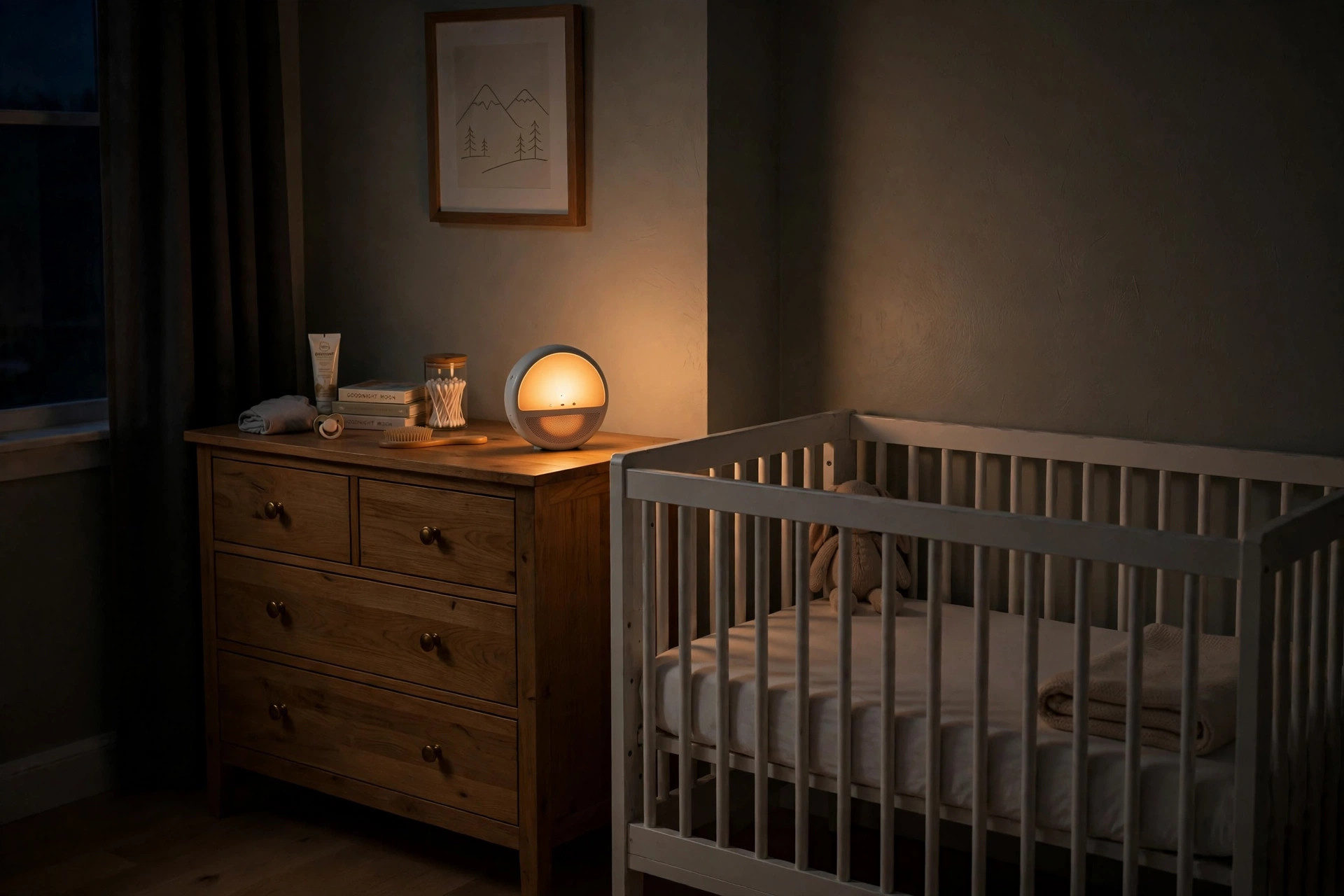

New parents learn fast that darkness is not always a friend. A baby wakes at 2 a.m., hungry and crying. The parent stumbles down the hall. A bright lamp floods the room, and the baby is now wide awake. The best nursery night light with white noise solves this old problem with one small device. It gives just enough light to feed, change, and comfort a baby, while a steady sound helps the child drift back to sleep. This guide explains what these devices do, how to choose one, and what to watch for when you bring one into your home.
Why It Matters
A newborn sleeps in short stretches. Night feeds and diaper changes are part of life for many months. Bright light at night tells the brain to wake up. For the parent and the baby, that is the wrong signal. A dim, warm glow lets a parent see what they are doing without waking the baby fully. Healthychildren.org notes that calm, dark sleep settings help babies learn healthy sleep habits.
Sound matters too. The womb is a loud place. The steady rush of blood and the muffled sounds of the mother’s body surround the baby for months. Silence after birth can feel strange. White noise copies that steady background sound. It can mask sudden noises, like a door closing or a dog barking, that might wake a sleeping infant. Parents who read What to Expect often see the same advice: soft, steady sound helps many babies settle.
Put light and sound together in one device, and you get a tool that many families use every night. It sits on a shelf or a dresser. It glows gently. It hums along. When the baby wakes, the parent already knows where to go. When the baby sleeps, the room stays calm.
What to Look For: Best Nursery Night Light with White Noise
Light quality
The glow should be warm and soft. Cool, blue-white light can wake a baby and a parent alike. Look for lights with adjustable brightness. A dimmer lets you raise the light just enough for a diaper change and lower it again for nursing. Some models let you choose color. A warm amber or soft red glow is gentle on tired eyes. If your current lamp is too bright, you might also look at a nursery night light with dimmer for feeding for a light-only option.
Sound options
White noise is one kind of sound, but many devices offer more. Pink noise, brown noise, fan sounds, ocean waves, and lullabies are common. Try several and watch how your baby reacts. Some babies sleep best with pure white noise. Others like the low hum of a fan sound. A good device plays sound in a loop with no gaps or clicks. A gap of even one second can wake a light sleeper.
Volume control
The volume should be low. Experts advise keeping sound machines under 50 decibels, about as loud as a quiet shower. The device should not sit inside the crib. Place it a few feet away from the baby’s head. A timer that turns the sound off after a set time is a nice extra, though many parents leave the sound on all night. Guidance from Healthy Children on safe sleep settings is worth reading before you set the volume for the first time.
Power and portability
Most nursery night lights plug into a wall outlet. Many also have a rechargeable battery. A battery model can move with you. You can take it to the couch for a late feeding or on a trip to visit family. Some models charge through a USB cable, which is handy for travel. Check how long the battery lasts. A battery that dies at 3 a.m. helps no one.
Controls parents can use in the dark
You will use this device with one hand, half asleep, in the dark. Big, simple buttons win over tiny touch screens. Some models come with a remote control. Others connect to a phone app. An app can be useful, but many tired parents find a remote or a simple button on the device itself faster and easier.
Types and Options
Plug-in combination units
The most common type plugs into the wall. It gives a steady light and steady sound. These units are simple and reliable. They cost less than smart models. The cord must be kept far from the crib. Cords near a crib are a hazard, and the U.S. Consumer Product Safety Commission warns parents to keep all cords out of a child’s reach.
Rechargeable portable models
These run on a battery and can sit anywhere. Many are shaped like small animals or round lamps that a toddler cannot knock over. They work well for travel and for rooms with few outlets. The trade is battery life. Read the listed run time at a low brightness setting, which is how you will use it most of the time.
Smart and app-connected models
Some newer models connect to a phone. You can change the light color, start a sleep program, and set schedules from the app. A few link with a baby monitor so the light turns on softly when the baby stirs. These cost more. They also add a screen and alerts to your night, which some parents like and others do not. If you enjoy comparing smart gear, reviews at Wirecutter and CNET test many of these models in real homes.
Projector lights with sound
A projector light throws stars, clouds, or ocean waves on the ceiling. Many also play white noise. These suit older babies and toddlers who watch the ceiling as they fall asleep. For a newborn, a simple dim glow is usually enough. If the projection idea appeals to you, a kids night light projector for bedroom covers that style in more depth.
Separate light and sound units
Some parents prefer two devices: one night light and one sound machine. This gives more choice in each, but it takes more shelf space and more outlets. A combined unit is tidier. Reviews at The Spruce and Good Housekeeping often compare combined and separate units side by side, which can help you decide.
Cost and Price
Nursery night lights with white noise range from about ten dollars to about eighty dollars in the United States. Basic plug-in models sit at the low end. They give a warm glow and a handful of sounds. Mid-range models, near thirty to fifty dollars, add a dimmer, a remote, more sound choices, and a rechargeable battery. Top models near seventy or eighty dollars add app control, sleep programs, and fine light tuning.
Price does not always mean quality. A simple, well-made light from a trusted shop can serve for years. Retailers like IKEA, Wayfair, and Pottery Barn Kids sell nursery lighting in this range, and independent testing at Consumer Reports can help you judge whether a pricier model is worth the extra money.
Remember that the device may run for several years. A crib-side light bought for a newborn can move to a toddler’s room later. Buying a sturdy model once is cheaper than replacing a cheap one twice. To keep the whole room sleep-friendly, many parents pair the night light with blackout curtains for nursery windows so daylight naps stay dark too.
Care and Upkeep
These devices need little care. Wipe the outside with a soft, dry cloth once a week. Dust can gather on the light lens and dim the glow. If the device has a fabric cover, check the maker’s care label before washing it.
For rechargeable models, do not let the battery sit dead for weeks. Charge it at least once a month, even when the baby starts sleeping through the night. A battery left empty for a long time may hold less charge later. Keep the charging cable in the nursery so you are not hunting for it at midnight.
Check the sound quality from time to time. A speaker that starts to crackle or buzz should be replaced. A harsh sound is worse than no sound at all. If your device has a timer or app schedule, review the settings as your baby grows. A toddler may want the light on longer than a newborn did.
Safety
Safety comes first in the nursery. Keep the night light out of the crib. Do not hang it over the crib rail. Place it on a dresser or shelf a few feet from where the baby sleeps. This keeps cords away and keeps curious hands off the device.
Use a low volume. The sound machine should be as quiet as a soft shower, not as loud as a vacuum cleaner. Give the baby’s ears a break from time to time. If you are unsure about safe volume levels, ask your child’s doctor at the next visit.
Choose a device that stays cool to the touch. LED lights run cool and are the standard now. Avoid old-style bulbs that heat up. Check that any paint or finish on the device is non-toxic, since a toddler may one day carry it around the room.
Cord safety deserves one more word. A cord within reach of a crib is a strangling risk. Route cords behind furniture. Use a cord cover or cord shortener so no loop hangs free. The U.S. Consumer Product Safety Commission publishes nursery safety guidance that every parent should read before setting up the room.
A nursery is a small world, and every item in it should earn its place. A crib mobile gives the baby something to watch during the day. If you want one, read about a nursery crib mobile for baby sleep to pick a safe model. At night, though, the star of the room is the quiet glow and steady hum of your night light.
FAQ
What is the best nursery night light with white noise for a newborn?
The best choice for a newborn is a simple model with a warm dim glow, pure white noise, and a volume limit. Newborns do not need color shows or apps. They need soft light for feeds and a steady sound that masks household noise. Place it a few feet from the crib and keep the volume low.
Is white noise safe for babies?
White noise is widely used and seen as safe when kept quiet. Keep it under 50 decibels and place the machine away from the baby’s head. Do not run it at full volume all day. Many pediatric groups advise giving the baby’s ears rest during awake play time.
Should the white noise play all night?
Many parents leave it on all night, and many babies sleep well that way. Others use a timer that stops the sound after an hour or two, once the baby is in deep sleep. Either method works. Watch your baby. If the child sleeps well and wakes calm, your method is fine.
What color light is best for a nursery at night?
Warm amber, soft red, or warm yellow are the best colors. These shades disturb sleep less than blue or bright white light. A dim warm glow lets you see the baby without waking the room. Avoid bright white or blue light after dark.
Can a toddler keep using a nursery night light?
Yes. Many toddlers keep a night light for years. A dim glow can comfort a child who fears the dark. A portable model can even travel to a grandparent’s house. When the child outgrows white noise, the light alone still earns its shelf space.
How do I clean a nursery night light?
Wipe it with a soft dry cloth. For sticky spots, use a slightly damp cloth and dry it at once. Do not soak the device. Keep water away from speakers, buttons, and charging ports. Check the maker’s instructions before using any cleaner.
A Final Word
The nights are long, but they do not last forever. One day the baby sleeps through, and the night light becomes a memory of those early months. Until then, the right device makes the nights gentler for everyone. Pick a warm glow, a soft sound, and a design that fits your room. Set it low, keep it safe, and let the quiet hum do its work. Your future self, rested at last, will thank you.
References
American Academy of Pediatrics. (n.d.). HealthyChildren.org. https://www.healthychildren.org CNET. (n.d.). Technology news and reviews. https://www.cnet.com Consumer Reports. (n.d.). Product reviews and ratings. https://www.consumerreports.org Good Housekeeping. (n.d.). Product reviews and home advice. https://www.goodhousekeeping.com IKEA. (n.d.). Home furnishings. https://www.ikea.com Pottery Barn Kids. (n.d.). Kids furniture and decor. https://www.potterybarnkids.com The Spruce. (n.d.). Home and garden advice. https://www.thespruce.com U.S. Consumer Product Safety Commission. (n.d.). Product safety information. https://www.cpsc.gov Wayfair. (n.d.). Furniture and home goods. https://www.wayfair.com What to Expect. (n.d.). Pregnancy and parenting guidance. https://www.whattoexpect.com Wirecutter. (n.d.). Product reviews from The New York Times. https://www.nytimes.com/wirecutter
Was this guide helpful?

About James Carter
The My Garden US editorial team writes practical, in-depth home and garden guides for American homeowners — tested advice, no fluff.
You May Also Like
Kids Loft Bed With Slide for Fun Bedroom: A Parent’s Guide
August 3, 2026 0 views
Kids Dresser with Changing Top for Nursery: A Simple Buying Guide
July 15, 2026 0 views
A Nursery Crib with Changing Table Attached: What Parents Should Know Before They Buy
June 8, 2026 0 views