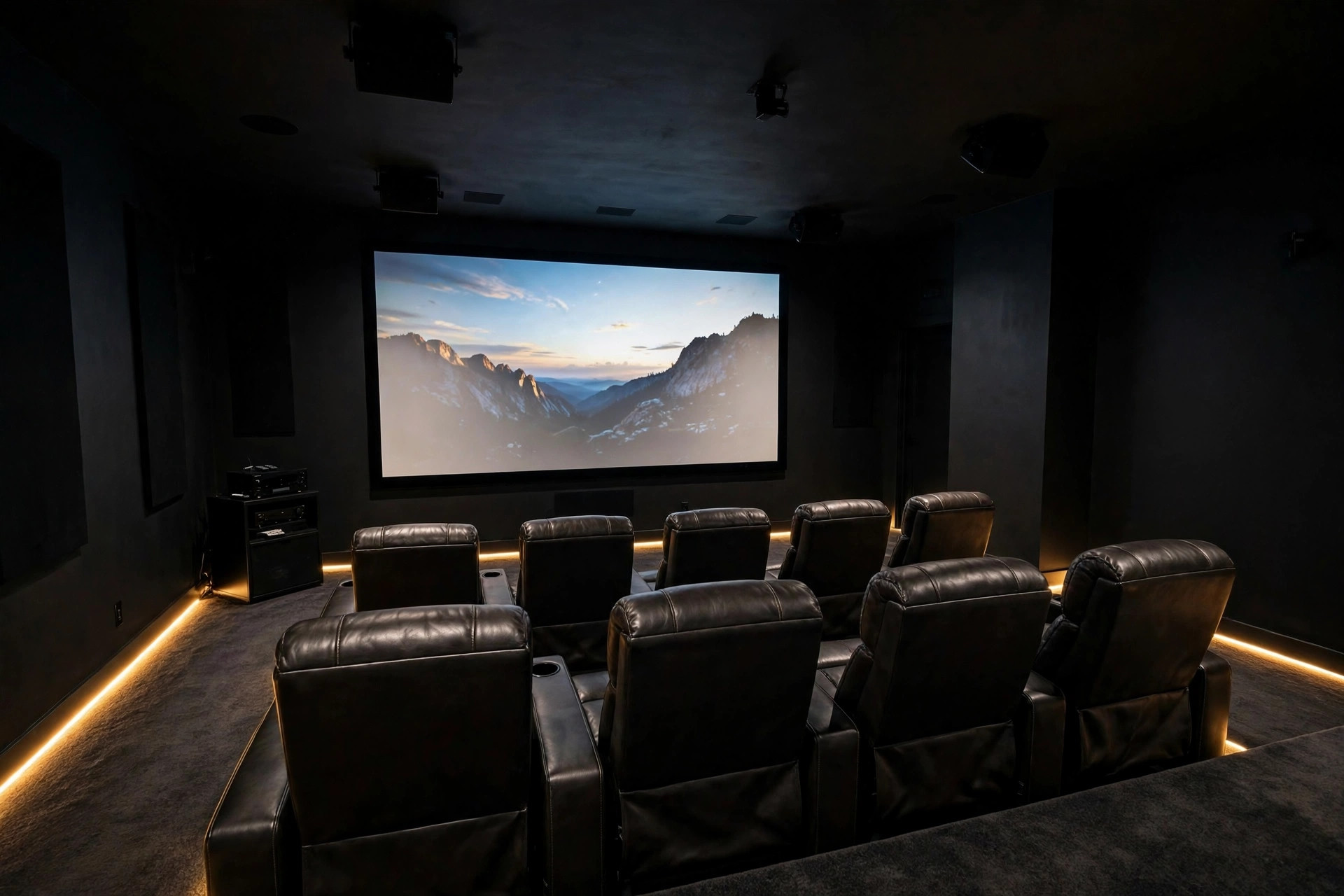

Homeowners across the country are turning spare rooms into home theaters. The most important step is often the paint. The right home theater wall paint colors dark usa buyers pick can change the whole room. Dark walls cut glare. They hide wires and trim. They make the screen look brighter by contrast. This guide walks through the best dark shades, the right finish, the real cost, and the care these walls need.
Why Dark Walls Matter in a Home Theater
Light is the enemy of a good picture. White walls bounce light back onto the screen. That bounce washes out blacks and dulls colors. Dark walls absorb that stray light. The picture on the screen looks deeper and richer.
Dark walls also set a mood. A theater should feel separate from the rest of the house. When the door closes and the lights drop, dark walls tell the mind that the movie is about to start. Pale walls keep the room feeling like a bedroom or an office. Deep color makes it feel like a cinema. Guests notice the change at once. A room painted for movies feels finished and planned, even before the equipment is installed.
There is a practical side too. Projectors throw light across the whole room. Speakers, racks, and cords are easier to hide against dark paint. Marks and scuffs from chairs show less on dark matte paint than on light satin paint. Baseboards, vents, and outlet covers can all be painted dark so they fade into the walls. For a room built for movies, dark paint is the working choice.
How to Choose the Right Dark Paint: Home Theater Wall Paint Colors Dark Usa
Not every dark paint works in a theater. Color, finish, and light all play a part. Take time with each one before you buy gallons.
Pick the Right Finish
Finish matters more than the exact color. Flat and matte finishes absorb light. Eggshell and satin finishes reflect it. In a theater, reflection is the problem. Choose flat or matte on the walls. Many painters reach for a dead-flat ceiling paint on the walls too, because it hides every flaw.
Flat paint has one drawback. It marks more easily than satin. In a dark theater, though, marks show less. Touch-ups blend in well on flat dark walls. Keep a small jar of leftover paint for quick fixes.
Test Samples in Low Light
Paint chips lie. A chip viewed under store lights looks very different on a wall at night. Buy small sample pots of three or four dark shades. Paint large test squares on the wall, at least two feet wide. Look at them in the dark, with the projector or television on. This is the only light that matters in this room.
Watch the walls during a bright scene and a dark scene. If you see a soft glow bouncing off the walls during bright scenes, the color is too light or the finish is too glossy. Move darker and flatter until the walls nearly disappear.
Mind the Room Size
Dark paint can make a small room feel smaller. This is fine in a theater. The room is meant to feel closed and focused. But in a very small room, paint only the screen wall and the ceiling black, and use a slightly lighter dark tone on the side walls. A deep charcoal on the sides with a true black on the front wall is a common mix.
Ceilings deserve dark paint too. A white ceiling in a dark room bounces light back down. Paint the ceiling the same dark color or one shade darker. Trim can stay dark as well, or take a slightly lighter tone for contrast.
The Best Dark Colors for Theater Walls
Any dark color can work, but some families perform better than others. Here are the shades that theater builders use most.
True Black
Black gives the deepest, most cinema-like result. It absorbs the most light. A flat black screen wall is the standard in serious home theaters. Good paint lines sell rich blacks that do not look blue or green in low light. The Sherwin-Williams dark color families include deep blacks that work well on theater walls.
Black walls need care with lighting. Aim lights at the seating, not the walls. Small sconces or step lights keep the room safe without washing the walls. If pure black feels too stark, a very dark charcoal reads as black in low light but looks softer when the room lights are on.
Charcoal Gray
Charcoal is the most popular choice overall. It feels less harsh than black but still kills reflections. It also hides dust better. Many homeowners who want guidance on deep wall colors start with paint color tools such as the ones at Behr to compare charcoal tones side by side.
Charcoal pairs well with wood trim and warm lighting. It suits rooms that double as a den or game room.
Navy Blue
Deep navy brings a classic cinema feel. Old movie palaces used dark blue and gold. Navy walls with dark trim give that same rich look at home. Navy also hides well under projector light. Benjamin Moore sample pots are a cheap way to test navy tones on your own walls before you commit.
Navy works best in rooms with some warm light. Pure white bulbs can make navy look cold.
Forest and Hunter Green
Dark green is growing in popularity. It feels natural and calm. It absorbs light well when kept deep and flat. Green walls suit rooms with wood furniture and leather seating.
Test greens carefully. Some lean yellow under warm bulbs and can look muddy. Others lean blue and read almost black. Paint large samples and view them at night.
Burgundy and Dark Brown
Deep red-brown tones give an old-theater look. They feel warm and rich. They work in rooms with classic furniture and framed posters. Keep them dark enough that they read nearly black in low light.
For general painting advice that covers dark rooms and tricky colors, guides at This Old House walk through prep and technique step by step.
Cost and Price of Painting a Theater Room
Paint is one of the cheapest upgrades in a home theater. A single room takes two to four gallons for two coats, depending on size. Quality interior paint in the United States runs about thirty to sixty dollars per gallon. Expect a paint budget of one hundred to two hundred fifty dollars for most rooms.
Supplies add more. Budget for primer, rollers, tape, drop cloths, and brushes. If the walls have bright colors now, a dark primer saves a coat. A dark gray primer under black topcoat gives rich, even coverage.
Labor is the bigger cost if you hire out. Professional painters often charge two to four dollars per square foot of wall. A full theater room repaint can run eight hundred to two thousand dollars with labor. Many homeowners paint theaters themselves because dark flat paint is forgiving and hides small flaws.
Ceilings take extra time and paint. Add one or two gallons for the ceiling. Dark ceilings need good cutting-in at the corners, so take your time or hire that part out.
Care and Upkeep of Dark Painted Walls
Dark walls need a little attention to stay rich and even.
Dust shows on dark paint. Run a dry microfiber mop over the walls every few months. Do not press hard. Flat paint can burnish and turn shiny if scrubbed.
For marks, dab with a damp cloth and mild soap. Test in a hidden spot first. Keep leftover paint for touch-ups. Dark flat paint touches up better than any other kind. Small roller marks blend in once dry.
Repaint the room every five to seven years, or when touch-ups start to show. Theater rooms see little daylight, so paint fades slowly. The bigger threat is wear around doors and seats.
Humidity control matters. A damp basement theater can grow mildew behind dark paint. Run a dehumidifier and keep air moving. If you see spots, clean them early and find the moisture source. Check behind speakers and seating where air moves less. Those dead spots are where mildew starts first.
Dust settles fastest on flat dark paint near vents and doors. A quick pass with a soft brush attachment on a vacuum keeps edges clean. Work from top to bottom so falling dust lands on the floor, not on clean walls. With this simple routine, dark theater walls look fresh for years.
Homeowners comparing paint lines for durability can check ratings from Consumer Reports, which tests interior paints for hiding, washability, and stain resistance.
Safety Notes for Painted Theater Rooms
Safety comes first, even in a fun project room.
Ventilate while painting. Open windows and run a fan. Low-VOC paints cut fumes and are widely sold at stores like Home Depot and Lowe’s. Keep the room aired out for a day or two before long movie nights.
Do not paint over warm fixtures. Keep paint off recessed light housings and away from heat vents. Dark paint absorbs heat from bulbs, so switch to LED bulbs that run cool.
Keep floors clear and lit. Dark rooms hide steps and cords. Add low step lights or LED strips along the floor. These add safety without hurting the picture.
If your theater shares space with a workshop, read up on durable coatings for other rooms too, such as the best paint for garage walls and epoxy garage floor cost per square foot, since those spaces need tougher finishes than a theater. A theater is a low-traffic room, so a simple flat wall paint is plenty, but a garage floor takes real abuse.
Frequently Asked Questions
What is the best dark color for a home theater?
Charcoal gray is the safest all-around pick. It absorbs light well and suits most furniture. True black on the screen wall with charcoal on the side walls is the classic pro setup.
Should the ceiling be dark too?
Yes. A white ceiling bounces light back onto the screen. Paint the ceiling the same dark color as the walls, or one shade darker, in flat finish.
What paint finish is best for theater walls?
Flat or matte. These finishes absorb light instead of reflecting it. Avoid eggshell, satin, and semi-gloss on theater walls.
Can I use dark paint in a small theater room?
Yes. Dark paint makes the walls recede, which suits a theater. In very small rooms, keep the seating area clear and add dim step lighting so the space feels cozy, not cramped.
How do I test dark paint colors?
Paint two-foot squares of three or four shades. View them at night with the projector or television on. Pick the shade that disappears most in the dark.
Do dark walls affect sound?
Paint does not change sound in any meaningful way. Acoustic panels and soft furnishings handle sound. Paint the panels the same dark color so they blend in.
A Final Word
Dark paint is the simplest way to make a home theater feel real. Pick a deep shade, use a flat finish, test it in the dark, and do not forget the ceiling. The room will reward you every time the lights go down. For more room-by-room paint ideas, browse the room guides at The Spruce and HGTV, or read painter-tested tips at Bob Vila. Office spaces have different paint needs, as shown in these dry erase wall paint reviews for offices, and garage spaces differ too, as covered in this guide to the best paint for garage walls.
References
Behr. (n.d.). Paints, primers, and stains. https://www.behr.com Benjamin Moore. (n.d.). Paints and stains. https://www.benjaminmoore.com Bob Vila. (n.d.). Home improvement advice. https://www.bobvila.com Consumer Reports. (n.d.). Product reviews and ratings. https://www.consumerreports.org HGTV. (n.d.). Home and garden ideas. https://www.hgtv.com Lowe’s. (n.d.). Home improvement products. https://www.lowes.com Sherwin-Williams. (n.d.). Paints and coatings. https://www.sherwin-williams.com The Home Depot. (n.d.). Home improvement products. https://www.homedepot.com The Spruce. (n.d.). Home and garden advice. https://www.thespruce.com This Old House. (n.d.). Home renovation guidance. https://www.thisoldhouse.com
Was this guide helpful?

About Jennifer Lee
The My Garden US editorial team writes practical, in-depth home and garden guides for American homeowners — tested advice, no fluff.
You May Also Like

Best Washable Paint for Kids Rooms USA: A Plain Guide for Parents
March 29, 2026 0 views
Lead Paint Removal Service Cost USA: What Homeowners Should Know
July 3, 2026 0 views
The Best Paint for Laundry Room Walls: What Works in American Homes
August 2, 2026 0 views