
When you plan a tile job, the field tile gets most of the attention. You pick the color. You pick the size. You argue about grout. Then the installer asks how you want to finish the raw edge of the tile, and you realize you never thought about it. This bullnose tile vs schluter trim comparison exists for that moment. Both choices finish the exposed edge of a tile wall or counter. Both are common in American homes. They look different, they cost different amounts, and they suit different jobs. Once you understand the trade offs, the choice is simple.
Why the Edge of Your Tile Matters
Every tiled surface ends somewhere. A shower wall meets the drywall. A backsplash stops at a window frame. A wainscot cap runs along a hallway. The raw edge of cut tile is rough and sharp. It looks unfinished. It can chip. In a shower it can let water behind the wall. A proper edge finish solves all of this. It protects the tile. It protects your family from a sharp corner. And it gives the eye a clean line to rest on.
For decades, the standard answer was bullnose tile. A bullnose piece is a tile with one edge that is rounded and glazed in the factory. It matches the field tile exactly. In the last twenty years, a second answer has taken over many markets. It is a metal or plastic strip called a profile, made by companies like Schluter. The strip sits under the edge of the last tile and gives a thin, crisp line of metal or color. Both do the job. The rest of this article walks through the details so you can judge for yourself.
What Bullnose Tile Is: Bullnose Tile vs Schluter Trim Comparison
How it is made
A bullnose tile starts as a normal piece of tile. One long edge is curved in the mold or ground round, then glazed so the finish matches the face of the tile. The result is a soft, rounded edge that flows into the field tile. Most lines of wall tile include matching bullnose pieces in a few sizes. A common size is three inches by six inches, but many series offer six by six or larger.
Because the edge comes from the same factory run as the field tile, the color match is near perfect. Glaze, texture, and shade all line up. That is the main reason many tile setters still prefer it for classic bathrooms and kitchens.
Where bullnose fits best
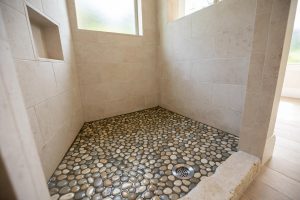
Bullnose works best where you want a soft, traditional finish. Think of a subway tile backsplash that ends at a cabinet. Think of a shower niche with rounded corners. Think of a half wall of tile in a powder room. In each case the rounded edge looks like it grew out of the wall. It does not call attention to itself.
It also works well on curved surfaces. A shower curb with a curve, or a column wrapped in tile, is hard to finish with a straight metal strip. Bullnose pieces bend around a gentle curve with a little care.
The weakness is supply. Not every tile line offers bullnose. Large format tiles and many natural stones have no matching bullnose piece at all. When the match is missing, the installer must cut the edge on site and polish it, which costs extra and rarely looks as clean.
What Schluter Trim Is
The idea behind the profile
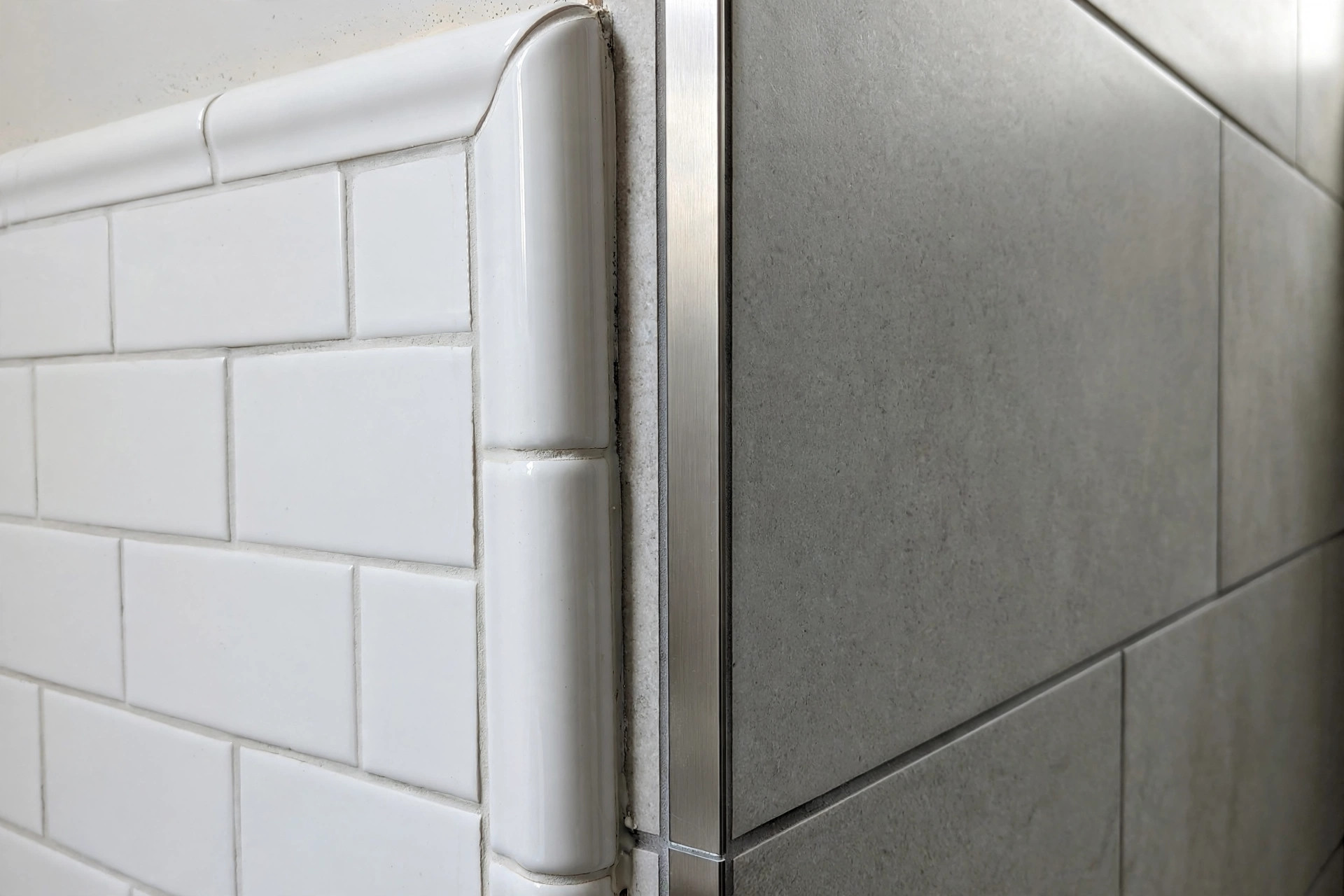
Schluter is the best known brand of tile edge profile, so its name has become the generic word for the whole category. A profile is a long strip, usually eight to ten feet, with an anchoring leg that slides under the last row of tile during setting. The visible face is a slim band of metal, PVC, or sometimes brass. It covers the raw tile edge and presents a thin, straight line.
The company makes dozens of shapes. The best known are Jolly, a rounded metal edge, and Quadec, a square metal edge. Rondec is another rounded option, and there are L shaped and stair nosing versions for steps and counters. The anchoring leg is set in thinset mortar, so the strip becomes part of the tile assembly and will not come loose.
Materials and finishes
The most common material is anodized aluminum. It comes in brushed nickel, matte black, chrome, bronze, and white, among others. Stainless steel versions exist for showers and commercial work. Brass and copper add a warm tone that suits some designs. PVC versions cost less and come in many colors, but they scratch more easily.
Because the strip is metal, the finish is exact and repeatable. A brushed nickel profile looks the same on every wall in the house. That consistency is one reason designers like it for modern rooms.
Head to Head: Bullnose vs Schluter
Looks
Bullnose gives a soft, hand made feel. The rounded edge catches light gently. In a traditional or farmhouse bath, it looks right at home. In a very modern room, it can look old fashioned.
Schluter gives a crisp, thin line. In a modern bath with large format tile, a slim metal edge looks sharp and current. In a traditional room, a chrome strip can look cold or out of place. The finish you pick matters a great deal. Matte black suits modern spaces. Brushed nickel blends with most fixtures.
Neither look is better in the abstract. The right one depends on the room. A good rule: match the trim to the style of the tile. Classic tile gets bullnose. Modern tile gets metal.
Installation
Bullnose installs like ordinary tile. The setter butters the back, presses it to the wall, and grouts the joint. Any competent tile installer can do it. The pieces are small, so they are easy to handle on a ladder or in a tight shower.
Schluter must go in at the right moment. The anchoring leg slides under the tile while the mortar is fresh. That means the installer must plan the layout in advance and cut the strip to length before setting the last row. Corners need care. The strips join with corner pieces or with miter cuts. A sloppy miter looks worse than no trim at all, so this job rewards an experienced hand.
For a do it yourself homeowner, bullnose is the easier choice. Metal profiles are not hard, but the cuts and corners leave less room for error.
Durability
Both last a long time when installed well. Bullnose is ceramic or porcelain, so it resists heat, water, and most chemicals. The weak point is the rounded edge itself. A hard knock from a shampoo bottle can chip the glaze. The chip shows the clay body under the glaze, which looks white or red against a colored tile.
Metal profiles are harder to chip. Aluminum and stainless steel take knocks without showing damage. The weak point is the finish. Brushed and anodized finishes can scratch, and a scratched spot on a black profile shows silver metal underneath. Stainless steel hides scratches best. In a busy family shower, stainless steel Schluter will look newer for longer than a painted aluminum one.
Water protection
In a wet area, the edge detail must keep water out of the wall. Bullnose alone does not seal anything. The joint behind it is grout, and grout is not waterproof. The real protection comes from the waterproof membrane under the tile. As long as the membrane is correct, bullnose is fine.
Schluter profiles add a small advantage. The anchoring leg sits in the mortar bed and the metal face sheds water off the edge. Some profiles are designed to work with waterproofing membranes as part of a system. In a steam shower or a curbless shower, many pros prefer the metal edge for this reason.
Repair
A cracked bullnose piece can be cut out and replaced with a matching piece, as long as the tile line is still made. The repair blends in. If the line is discontinued, the repair will show.
A damaged metal strip is harder to fix. The strip is locked under the tile. Replacing it usually means removing the last row of tile. For that reason, many installers keep the profile a little proud of the tile face so it takes the knocks instead of the tile, and they pick stainless steel in high traffic spots.
Cost and Price
Material cost first. A bullnose piece typically costs two to four times as much as a field tile of the same size. A shower niche might need six to ten pieces, so the added material cost is often fifty to one hundred fifty dollars. That is modest.
Schluter strips cost more per foot. An eight foot aluminum strip runs about twenty to forty dollars depending on finish. Stainless steel runs higher, often forty to eighty dollars for the same length. A typical shower might need three to five strips plus corner pieces. Expect one hundred fifty to four hundred dollars in material for a full shower.
Labor moves the other way. Bullnose takes more setter time. Each piece is set one by one, and the rounded edge must line up with the field tile. Metal trim goes up fast once the layout is planned. On a whole bathroom, the labor savings of Schluter can cancel out its higher material cost. For a clear picture of what the tile work itself runs, see this guide to tile installation cost per square foot.
The cheapest option overall is often to skip both and polish a cut edge, but that looks rough and is a poor choice in a shower. Between the two real options, expect the total job cost to land within a few hundred dollars of each other on a normal bath.
Care and Upkeep
Bullnose needs the same care as the rest of your tile. Wash it with a mild cleaner. Do not use strong acids on natural stone bullnose. Check the grout line at the edge once a year. If the grout cracks, water can work behind the tile. A tube of matching grout and an hour of work fixes it.
Metal trim needs a gentler touch. Do not use abrasive pads or bleach on anodized aluminum. A soft cloth and mild soap keep the finish bright. Black and bronze finishes show water spots, so a quick wipe after a shower helps. Stainless steel is the most forgiving. It takes normal bathroom cleaners and keeps its look for years.
If you have hard water, both options will collect mineral scale at the edge. A mix of water and white vinegar dissolves it. Rinse well after, since long soaking in vinegar can dull some finishes.
Safety
A rounded bullnose edge is kind to bare feet and small hands. There are no sharp points. That is one reason many families pick it for tub surrounds and shower seats where children climb in and out.
Metal profiles are thin but not sharp when made well. The better brands roll or round the exposed edge so it cannot cut skin. Cheap, unknown brands may leave a raw edge. If you buy bargain trim, run a finger along a sample before you commit. In a home with toddlers, the rounded bullnose still wins on safety by a small margin.
Both options are safe on floors at the edge of a tiled step if you use a proper stair nosing profile. Never leave a raw tile edge on a stair tread. It will chip, and the chip becomes a sharp point.
Frequently Asked Questions
Can I mix bullnose and Schluter in one bathroom?
Yes, and many designers do. A common mix is bullnose on the shower niche, where the soft edge feels good to the touch, and metal trim on the long straight walls, where the crisp line looks modern. Keep the finishes in the same family so the room feels planned, not patched.
Does Schluter only come in metal?
No. The brand makes PVC profiles in many colors, and other makers sell plastic and wood trims. Metal is the most popular because it is thin and strong. PVC costs less but scratches sooner, so save it for low traffic spots like a backsplash.
What if my tile has no matching bullnose?
You have three choices. Use a metal profile, which needs no match. Cut the field tile and polish the edge on site, which costs extra labor. Or pick a contrasting bullnose from another line, such as a white pencil trim against colored tile. The last option can look sharp when done with care.
Which is better for a shower niche?
Both work. Bullnose feels softer when you reach for the shampoo. Metal trim gives a tighter, more modern frame and sheds water well. Many pros pick metal for niches in modern showers and bullnose in traditional ones. Either way, slope the bottom shelf of the niche so water drains out.
How do I pick the right Schluter finish?
Match it to the other metal in the room. Brushed nickel trim with brushed nickel faucets looks settled. Matte black trim with black fixtures looks bold. When in doubt, stainless steel or brushed nickel blends with the most fixtures and hides wear best. For help choosing the wall tile itself, this review of the best tile for shower walls is a good starting point.
Does the trim affect resale value?
Not directly. Buyers notice a clean, finished edge, but they rarely ask which brand was used. A neat metal edge in a modern bath and a neat bullnose edge in a classic bath both read as quality work. A raw or chipped edge reads as a cheap job and can hurt a sale. Spend your care on a tidy install either way.
A Final Word
This bullnose tile vs schluter trim comparison comes down to style, skill, and setting. Bullnose is the classic answer. It matches the tile, feels soft, and any good setter can install it. Schluter trim is the modern answer. It gives a crisp line, stands up to knocks, and suits large format tile that has no bullnose option. For a small bath or a traditional design, bullnose is hard to beat. For a large modern shower, the metal edge usually wins. If your bath mixes styles, as many real homes do, use each where it shines. Plan the edge detail before the tile goes up, buy a little extra material, and the finished room will look like someone thought it through. That care shows, whether the edge is round or straight.
For more background, see Daltile, This Old House, and The Spruce. For more background, see The Home Depot, Lowe’s, and LL Flooring. Buying guides are also published by Shaw Floors and Mohawk Flooring. Related guides on this site include engineered hardwood flooring cost per square foot.
References
Daltile. (n.d.). Ceramic and porcelain tile. https://www.daltile.com LL Flooring. (n.d.). Hardwood, vinyl, and tile flooring. https://www.llflooring.com Lowe’s. (n.d.). Home improvement products. https://www.lowes.com Mohawk Flooring. (n.d.). Flooring products. https://www.mohawkflooring.com Shaw Floors. (n.d.). Flooring products. https://www.shawfloors.com The Home Depot. (n.d.). Home improvement products. https://www.homedepot.com The Spruce. (n.d.). Home and garden advice. https://www.thespruce.com This Old House. (n.d.). Home renovation guidance. https://www.thisoldhouse.com
Was this guide helpful?

About Sarah Mitchell
The My Garden US editorial team writes practical, in-depth home and garden guides for American homeowners — tested advice, no fluff.
You May Also Like
Stair Nose for Vinyl Plank Reviews USA: A Buyer’s Guide
July 7, 2026 0 views
Water Based Polyurethane for Floors Reviews: An Honest Guide
September 20, 2026 0 views
Polished Concrete Floors Cost Residential USA: A Plain Guide
January 14, 2026 0 views