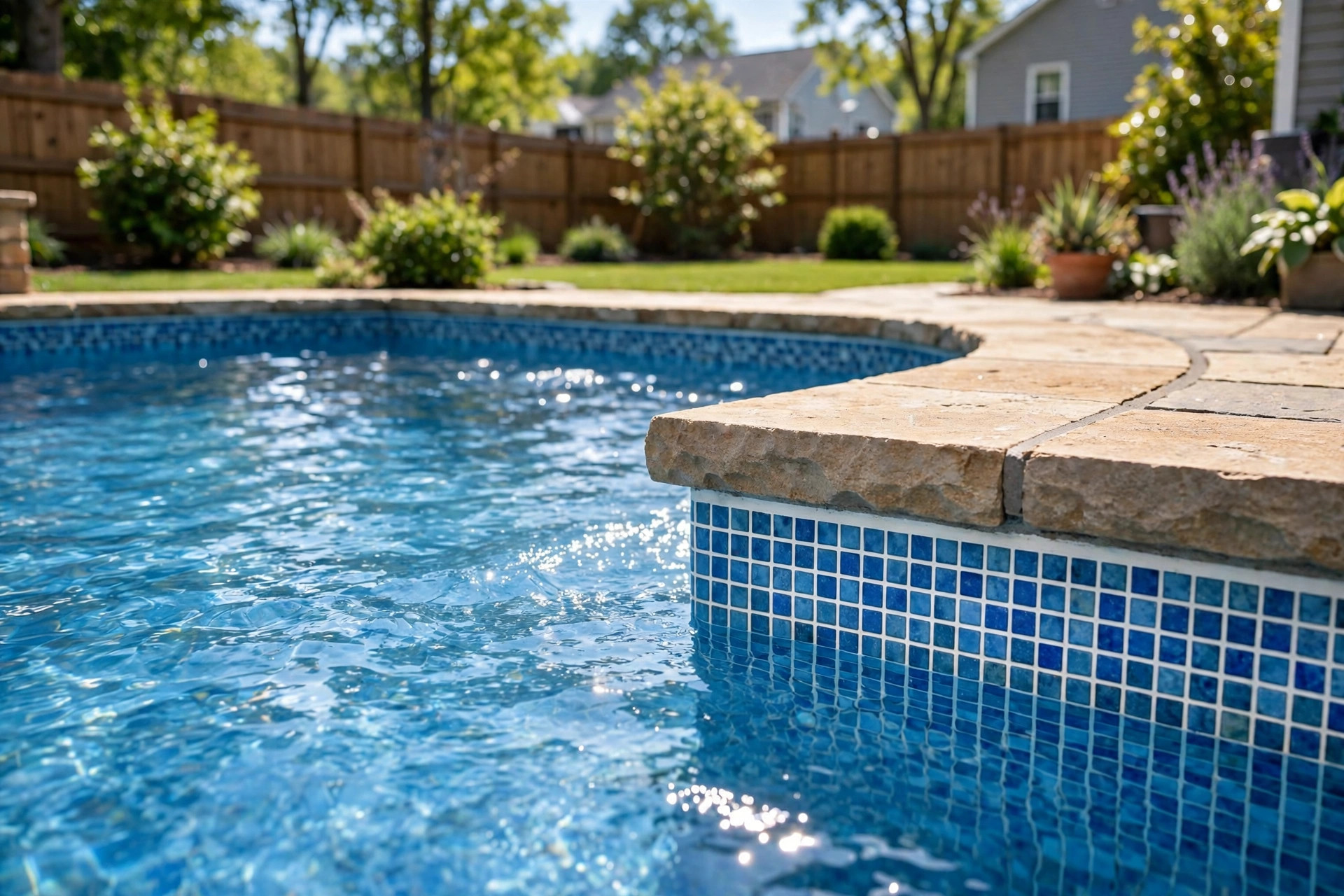

Many pool owners know how to clean pool tile grout only after the problem has grown large. The grout lines around the waterline turn gray, brown, or green. The tile itself may still shine, but the dirty grout makes the whole pool look old. This guide explains the work in plain steps. You will learn why grout gets dirty, which tools and cleaners to use, and how to do the job safely. You will also learn how to keep the grout clean through the season, so the job stays small.
Why Clean Pool Tile Grout Matters
Grout holds the waterline tile in place. It also seals the joint between tile and pool shell. When grout is clean, water cannot sit in pores and pits. When grout is dirty, it tells you that oil, minerals, or algae have found a home there.
Dirty grout is not only ugly. Oils from sunscreen and body lotion collect at the waterline. They stick to grout first because grout is rough and porous. Over time the oil layer traps dirt. That mix can feed algae and mold. Algae at the waterline can then spread to the water. Clear grout lines are part of clear pool water.
Clean grout also protects your money. Pool tile work is costly. If dirty grout is left alone for years, the joints can crack and loosen. Small pieces of grout can fall out. Water can then get behind the tile. Tile replacement is one of the most costly pool repairs. A soft brush and a mild cleaner cost very little by comparison. A few hours of care each season can add years to the life of the waterline tile.
There is a health angle too. Algae and mold that grow in grout lines can irritate skin and eyes. Pool owners with allergies may notice it first. Regular cleaning keeps these growths from taking hold.
What Makes Pool Tile Grout Get Dirty: How to Clean Pool Tile Grout
Grout gets dirty from a few clear causes. It helps to know which one you face, because each one needs a different answer.
Hard water leaves white or gray crust on grout. This crust is calcium scale. It forms when water with high calcium levels evaporates at the waterline. The mineral stays behind. It is common in pools with high pH. Saltwater pools can show scale as well. If you have read about the salt water vs chlorine pool pros and cons, you know that salt systems can push calcium out of solution. That calcium lands on tile and grout first.
Oils leave a dark brown or black line. Sunscreen, tanning oil, and body lotion float on the water. The skimmer does not catch all of them. What is left collects along the edge. Grout soaks it up like a sponge. Once the oil is deep in the pores, plain water will not move it.
Algae leaves green or black stains. It starts in shaded corners and behind steps. If the water is how to fix cloudy pool water guide territory, meaning chlorine is low, algae can grip the grout. Algae in grout is stubborn because its roots sit inside the pores.
Metals in the water can leave colored stains. Iron can turn grout yellow or rust brown. Copper can turn it green or blue. These stains come from source water or from old pipes and heaters. They are less common than oil and scale, but they do happen.
Simple wear also plays a part. Grout is softer than tile. Years of brushing, chemicals, and sun can open tiny pits in the surface. Dirt settles in those pits. Old grout stains more easily than new grout.
What You Will Need: Tools and Cleaners
Good results start with the right tools. You do not need much. A short list will do.
A stiff nylon brush is the first tool. A hand brush with firm bristles works for small areas. A brush on a pole works for long reaches. Do not use a steel wire brush on grout. It will cut the surface and make more pits. A nylon brush is strong enough to move dirt but kind enough to spare the grout.
You will need a sponge and a bucket. The sponge wipes loosened dirt away before it settles back. The bucket holds your cleaning mix. A spray bottle helps you wet the work area.
Old towels or rags are useful for drying test spots. A garden hose gives you clean rinse water.
For cleaners, start mild. A paste of baking soda and water handles light grime. White vinegar helps with light calcium scale. Do not use vinegar on stone coping, since acid can mark stone. For oil and grease, a mild dish soap or a pool tile cleaner made for the waterline works well. Look for a tile cleaner at a pool supply store or a large home center. Many owners keep the pool tile cleaner options at Home Depot in mind for this weekly job.
For heavy scale, you may need a stronger product. A cleaner made to remove calcium scale from pool tile is a common choice. Products sold by specialty pool retailers such as Leslie’s are made for this task. Always read the label. Some strong cleaners should not touch vinyl liners or metal trim. Keep them away from the water as much as you can, and rinse well.
A pumice stone can help with thick scale on tile. It should be used wet and with a light hand. Pumice is safe for most hard tile. Do not use it on grout lines if the grout is old and soft. It can grind the grout away.
Gloves and eye protection matter. Even mild cleaners can sting the eyes. Wear rubber gloves and simple safety glasses. If you use any product with acid, keep the area open to fresh air.
If your pool uses a salt system, check your salt cell and your saltwater system parts from a pool equipment supplier. A clean system keeps calcium levels steady, and steady calcium means less scale on grout.
How to Clean Pool Tile Grout Step by Step
Work on a calm day when the pool is not in use. Start with the water level. Lower it by one or two inches if you can. This lets you reach the whole waterline without working under water. Do not lower the level far below the skimmer. If you cannot lower the water, you can still clean the line that sits above the water.
Test first. Pick a small hidden spot of grout. Apply your cleaner there. Wait five minutes. Rinse it off. If the grout looks clean and undamaged, you can go on. If the spot changes color or feels soft, stop. Choose a milder product.
Wet the area. Spray or splash clean water over a section of tile and grout. Work in sections about three to four feet long. Small sections keep the cleaner from drying on the surface.
Apply your cleaner to the grout lines. If you use a paste, spread it with the sponge or an old toothbrush. If you use a liquid tile cleaner, spray it on. Let it sit for the time the label says. Most mild cleaners need five to ten minutes. Do not let strong cleaners dry on the surface.
Scrub with the nylon brush. Use firm, even strokes along the grout line. Let the cleaner do the work. Pressing too hard will wear the grout. Watch the grout color change as you scrub. If the stain does not move after two passes, try a longer soak rather than harder scrubbing.
Rinse well. Use the hose or a sponge full of clean water. Rinse the cleaner off the tile and out of the grout joints. Leftover cleaner can throw the pool chemistry off balance. Rinse is also the moment to check your work. If a shadow of the stain remains, repeat the step.
Move along the pool. Work your way around the waterline in steady sections. It helps to start at the steps or ladder and go around in one direction. That way you do not skip a spot.
When you finish, bring the water level back up if you lowered it. Run the pump for a few hours. Check the chlorine and pH with a test kit. Cleaning can nudge the chemistry. Guides on basic pool care from Swim University remind owners to test after any cleaning day.
For oil stains, dish soap often works best. A small squirt in warm water, applied with a sponge, cuts the grease. Scrub and rinse. You may need two rounds for old oil. For algae stains, brush the grout, then treat the water itself. Algae in grout almost always means algae in the water. Bring chlorine up to the right level and brush the whole pool. Clean grout alone will not win that fight.
Types of Stains and the Best Approach for Each
Not all grout stains are alike. Here is how to read what you see.
White or gray crust is calcium scale. It feels rough. It sits on top of the grout. Mild scale comes off with vinegar or a mild scale remover. Thick scale may need a product made for pool calcium. Work in small sections. Keep the product off metal rails and lights.
Brown or black sticky film is body oil. It feels slick. It sits at the waterline, right where oil floats. A mild soap or a waterline cleaner made for oils works best. Brush along the line, not across it. Wipe with a clean sponge so the oil does not spread.
Green or black spots are algae. They sit in shaded areas and corners. Brush the grout hard with a nylon brush. Then treat the pool water. Algae needs food and poor sanitation. If you keep chlorine steady and brush weekly, it will not come back. Many filter problems start as algae problems, so it pays to know about the best pool filter for saltwater systems and keep yours running well.
Yellow, orange, or rust stains are metals. They often come with the fill water. A metal stain remover made for pools is the right tool. Test it on a small spot first. If metals are a repeat problem, a pool store can test your water and suggest a metal control product.
Cost and Price
Cleaning pool tile grout is one of the cheapest pool jobs. A bottle of pool tile cleaner costs less than a bag of shock. A stiff nylon brush costs a few dollars. Baking soda and dish soap cost almost nothing. Most owners can clean a full waterline for under twenty dollars in supplies.
Time is the real cost. A small pool may take two hours. A large pool may take a full afternoon. If you hire the job out, a pool service may charge by the hour or by the pool. Prices vary by town, but grout cleaning is far cheaper than tile repair. That is the reason to do it yourself once each season.
If the grout is cracked or missing, the cost rises. Regrouting the waterline is a skilled job. It can cost many times more than cleaning. This is why early cleaning matters. Clean grout does not crack as fast. The seal stays tight. The tile stays put.
Chemicals cost more than cleaners. If stains come from poor water chemistry, fix the water. A test kit and the right chemicals cost more than a brush, but they stop the stains at the source. Test strips and kits are easy to find at pool supply shelves at The Spruce’s recommended retailers and other large stores.
Care and Upkeep Through the Season
Grout stays clean when the water stays balanced. Check pH and chlorine each week. High pH invites calcium scale. Low chlorine invites algae. Both land on grout first. Steady chemistry is the best grout cleaner there is.
Brush the waterline every week. A quick pass with a soft brush takes ten minutes. It stops oil and dirt from settling in. Do this when you skim and brush the walls. It is easy to add to the routine.
Watch the calcium hardness level. If your fill water is hard, the pool gains minerals all season. A pool store can test calcium and suggest the right level for your finish. Keep it in range. Scale forms more slowly when calcium is in range.
Use a waterline cleaning tool once a month in swim season. A sponge with a mild cleaner, wiped along the tile at the waterline, stops oil film from building. In the off season, keep leaves and debris out. Rot in the water can stain the grout line.
If you own a spa attached to the pool, watch it too. Warm water grows algae fast. Spa care tips from hot tub makers such as Hot Spring stress steady sanitation. Clean spa grout with the same mild methods.
Cover the pool when storms come. Wind blows dust, leaves, and dirt into the water. That load settles at the waterline. A cover keeps it out.
Safety
Safety comes first on any pool job. Keep children and pets away from the work area. Cleaners can be slippery. Wet coping can be slick too. Wear shoes with grip.
Read every product label. Use the amount it says, not more. Rinse everything twice. Do not mix cleaners. Mixing can make dangerous fumes. This is true even for mild products.
Keep chemicals out of the pool as much as you can. Some cleaner will get in. That is why you rinse toward a sponge or bucket, not into the water. After the job, test the water. Fix anything that moved.
Pool drains and covers matter for safety around the pool. Federal rules on pool and spa drains exist for a reason. You can read about them at the U.S. Consumer Product Safety Commission. A clean pool is a safer pool, but drains and barriers do the heavy work.
Water quality is a health matter. The U.S. Environmental Protection Agency offers plain guidance on safe water practices. Keep the water clear, the chemistry steady, and the surfaces clean. That covers the basics of a safe swim.
If you use an acid-based cleaner, wear gloves and eye protection without fail. Work with the wind at your back. Keep a hose near for fast rinsing. Store acids away from chlorine products. Never store them side by side.
Frequently Asked Questions
How often should I clean pool tile grout? A light wipe once a month in swim season is enough for most pools. Do a deep clean with a brush and cleaner once each season. If your water is hard or your pool gets heavy use, clean more often. Weekly brushing of the waterline stops most stains from setting.
Can I use bleach on pool tile grout? Bleach can kill algae, but it is not the best choice for grout. It can fade colored grout. It can also harm plants and grass when rinse water runs off. A mild pool tile cleaner or a soap solution is safer for the grout and the yard.
Is it safe to use vinegar on pool grout? Vinegar can help with light calcium scale on grout. Use it diluted and rinse it off. Do not use vinegar on natural stone coping or on metal trim. Acid can etch stone. For heavy scale, use a product made for pool tile.
Why does my pool grout turn black at the waterline? Black lines at the waterline are usually body oil mixed with dirt. Sunscreen and lotion float on the surface. They collect along the edge. Grout soaks them up. A mild soap or a waterline cleaner made for oils will cut through the film. Weekly wiping stops it from building.
Should I hire a pro or do it myself? Most owners can do this job. It needs no special skill. It needs patience and the right brush. Hire a pro if the grout is cracked, missing, or coming out. Regrouting and tile repair are jobs for a trained hand.
Can dirty grout hurt my pool water? Yes. Oil and algae in grout can spread into the water. Oily film makes the water look dull. Algae in grout means the water likely has algae too. Clean grout and balanced water go hand in hand. Spa owners can find more water care detail from spa makers such as Bullfrog Spas.
A Final Word
Learning how to clean pool tile grout is a small skill with a big payoff. The work is simple. Wet the area. Apply a mild cleaner. Scrub with a nylon brush. Rinse well. Do it in small sections, and test first. Keep the water balanced, brush the waterline each week, and the deep clean will stay easy. Clean grout keeps tile in place, water clear, and the pool looking the way it should. Start this season, and the job will feel small every season after.
References
Bullfrog Spas. (n.d.). Hot tubs and spas. https://www.bullfrogspas.com Hot Spring Spas. (n.d.). Hot tubs and spas. https://www.hotspring.com Leslie’s Pool Supplies. (n.d.). Pool supplies and equipment. https://www.lesliespool.com Pool Warehouse. (n.d.). Pool equipment and supplies. https://www.poolwarehouse.com Swim University. (n.d.). Pool and hot tub care guides. https://www.swimuniversity.com The Home Depot. (n.d.). Home improvement products. https://www.homedepot.com The Spruce. (n.d.). Home and garden advice. https://www.thespruce.com U.S. Consumer Product Safety Commission. (n.d.). Product safety information. https://www.cpsc.gov U.S. Environmental Protection Agency. (n.d.). Protecting human health and the environment. https://www.epa.gov
Was this guide helpful?

About Robert Taylor
The My Garden US editorial team writes practical, in-depth home and garden guides for American homeowners — tested advice, no fluff.
You May Also Like
A Full Pool Pump Replacement Cost Estimate for Homeowners
September 7, 2026 0 views
The Best Pool Vacuum for Automatic Cleaning: What to Know Before You Buy
March 10, 2026 0 views
How to Choose the Best Robotic Pool Cleaner for Vinyl Liner Pools
March 16, 2026 0 views