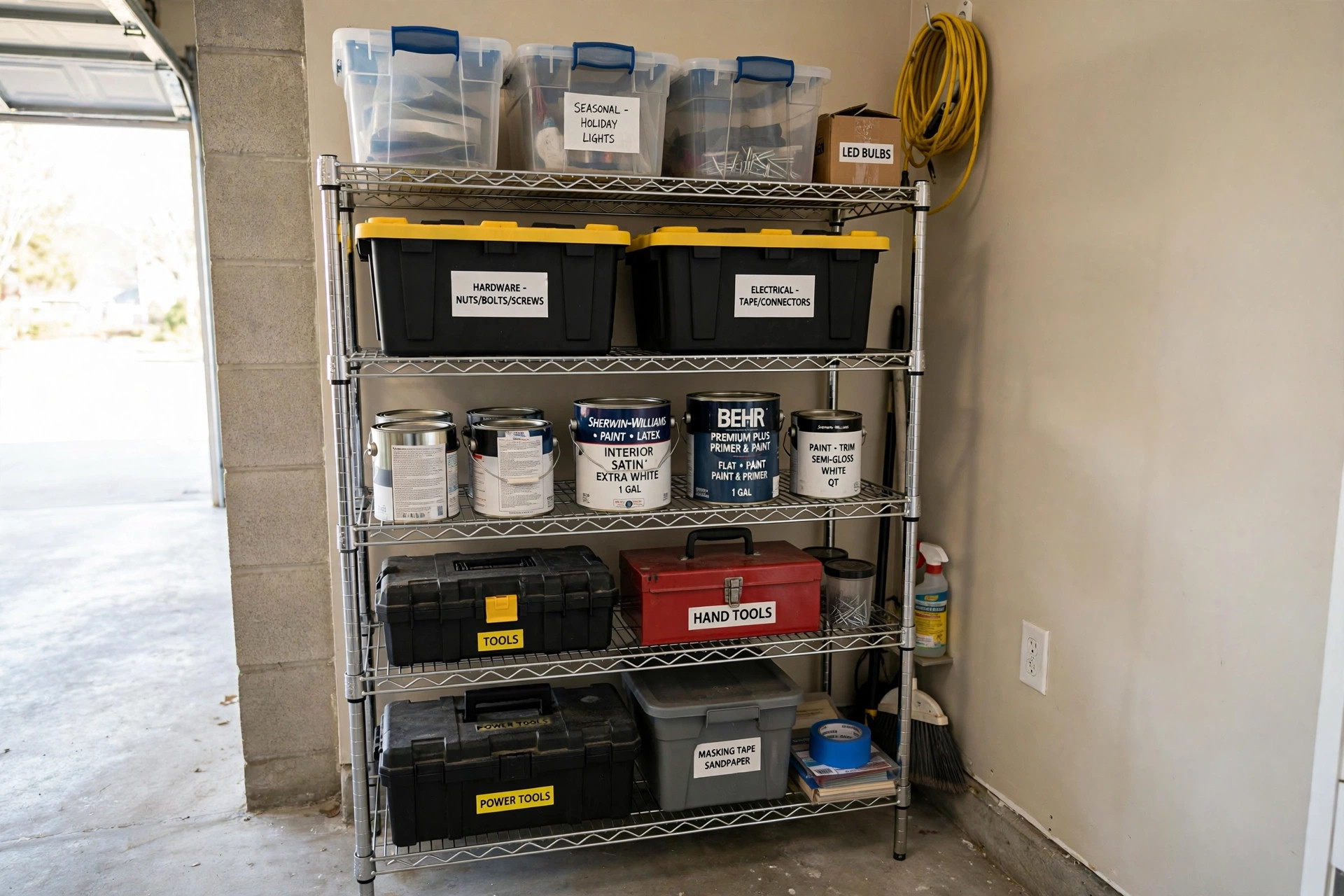

Small rooms can still hold a great deal of goods when the right shelves stand in them. A space saving heavy duty wire shelving buying guide shows the buyer how to pick racks that are narrow, strong, and built to last. Wire shelves made of steel carry paint cans, tools, pantry goods, and cleaning supplies. They fit in closets, corners, garages, and laundry rooms. This guide explains what to look for, how to compare types, what to pay, and how to keep the unit safe and clean.
Why Space Saving Wire Shelving Matters
Many American homes have more things than they have room for. Garages fill with bins. Closets fill with shoes. Pantries fill with cans. Heavy items need strong shelves. Thin bookshelves bow under paint cans. Wood shelves swell in damp garages. Wire shelving solves both problems at once.
Wire shelves are made of steel rods welded into a grid. The grid lets air and light pass through. Dust does not gather as it does on solid boards. Water drips through instead of pooling. The open design also keeps food safe in pantries because air moves around stored goods.
Heavy duty means each shelf carries a rated load. A good unit holds 350 to 800 pounds per shelf when the weight is spread evenly. Space saving means the unit is narrow and tall. Common depths run from 12 to 18 inches. That size slides into tight corners and narrow halls while still holding full-size storage bins.
What to Look for When You Buy: Space Saving Heavy Duty Wire Shelving Buying Guide
Frame and Gauge
Steel thickness decides how much weight the rack can carry. Vendors describe it as gauge. A lower gauge number means thicker steel. Look for 16 or 18 gauge posts for heavy loads. Thinner posts, such as 20 gauge, suit light goods like linens and clothing.
Posts usually come in four pieces that join with slip sleeves. The best designs use posts one inch in diameter with double grooves. The grooves catch the plastic sleeves that hold each shelf. Test the fit when you open the box. Loose sleeves let shelves slip under load.
Shelf Capacity and Total Capacity
Each shelf has its own rating. Four shelves rated at 500 pounds each do not make a 2,000-pound unit. The maker also gives a total unit rating, often lower than the sum. Read both numbers on the label. Divide heavy goods across shelves instead of stacking them on one level. Casters reduce the total rating, so check the number given for use with wheels.
Finish
Chrome plating looks bright and suits dry rooms. Black or white epoxy looks softer and fits home offices and closets. For damp spaces, choose epoxy over chrome. Chrome can pit in humid garages. Some makers sell units with a zinc or nickel finish rated for food storage. If the shelves will hold canned food, pick a finish rated as food safe.
Dimensions and Fit
Measure the space before you shop. Record height, width, and depth in inches. Leave two inches of air on each side so the unit slides in and out. Note door swing and baseboards. A unit that is 72 inches tall needs a room with ceiling clearance above it. Narrow units 12 inches deep fit behind doors and in shallow closets. Wider 18-inch units hold more but need real floor room.
Types and Options
Freestanding Five-Tier Units
The classic design stands on four posts with five shelves. Heights run 60 to 72 inches. Widths run 36 to 48 inches. These units hold the most per dollar. They suit garages, basements, and stock rooms. Many makers sell add-on shelves so you can raise the count to six or seven.
Narrow Three and Four-Tier Units
Narrow units come 24 to 30 inches wide and 12 inches deep. They fit in closets, beside washers, and under stairs. They hold 200 to 400 pounds per shelf. They are the true space savers. Two narrow units on either side of a doorway turn dead wall space into a pantry.
Stackable and Modular Wire Shelves
Some brands sell wire cubes or half-width units that stack. The blocks lock together with clips. This design suits renters who move often. Take the stack apart, move it, and rebuild it in the new room. The trade is lower capacity. Each cube holds 50 to 100 pounds.
Wall-Mounted Wire Shelving
Wall-mounted rails free the floor entirely. The rails bolt to studs. Brackets and wire shelves clip into the rails. This type suits laundry rooms and mudrooms. The rating depends on the wall. Mounted into studs, a 4-foot rail can hold 300 pounds or more. Mounted into drywall anchors alone, the rating falls fast. Always find studs for heavy goods. For more ideas on wall-mounted systems, see the guide to stackable wall mounted storage shelves with free shipping.
Shelving With Wheels
Casters add mobility. You can roll the unit out to clean behind it. Locking casters keep it still when loaded. Buy casters rated for the full load of the unit. Small two-inch wheels jam on garage floors. Three or four-inch wheels roll over thresholds and cracks. If you plan to keep heavy goods on a rolling unit, pick one with a steel frame rated for mobile use.
Cost and Price
Prices vary by size, gauge, and finish. A small three-tier narrow unit costs 25 to 45 dollars. A standard five-tier 48-inch unit costs 60 to 120 dollars. Food-safe or stainless wire costs more, often 150 dollars and up for a full unit. Wall-mounted rail systems cost 30 to 60 dollars per 4-foot section before shelves.
Epoxy-coated units cost a little more than chrome. Wheels add 15 to 30 dollars. Extra shelves sell for 10 to 25 dollars each. Watch for shipping weight. A five-tier unit weighs 40 to 60 pounds, and oversize shipping can add 20 dollars or more.
Sales peak in late winter and early fall when stores clear home goods. Buying two units at once often drops the per-unit price. Compare the rating, not just the price. A cheap 20-gauge unit that bows under load costs more in the long run than a stout 18-gauge unit bought once.
Where to Use Them
Garages come first. Wire shelves hold paint, oil, and tool boxes. The open grid sheds dust and drips. Basements come next. Damp air passes through wire instead of trapping moisture under boards. Laundry rooms benefit too. Detergent and bleach sit on wire shelves where spills fall through instead of pooling. A related guide on heavy duty laundry room shelving buying guide covers that room in detail.
Pantries love narrow wire units. Cans and jars stay visible. You see what you own. Less food goes stale in the back. Closets take the narrow 12-inch units well. Shoes and folded clothes sit at eye level. Home offices use wire shelves for paper and supplies where air flow stops musty smells.
For basement work, the article on affordable basement shelving units for sale lists options that stand up to damp floors. For pantry plans, see pantry shelving units reviews and buying guide.
Mistakes to Avoid
Buyers make the same errors again and again. The first is buying by price alone. A 20-gauge unit costs less, but it bows under paint cans within a year. The second is skipping the tape measure. A unit one inch too wide does not fit behind the door, and returns cost time and freight. The third is ignoring the finish. Chrome looks fine in the store but pits in a damp garage by spring. Pick epoxy for damp rooms.
Another common error is loading one shelf to its limit while the rest stand empty. Spread heavy goods across levels. Put the heaviest bins on the bottom shelf where a slip does least harm. The last error is skipping the wall anchor. It takes five minutes. A tall unit full of goods can walk forward when bumped. Anchor it and forget it.
Care and Upkeep
Wire shelves need little care. Wipe them twice a year with a damp cloth and mild soap. Dry them well after washing. In damp rooms, check for rust each spring. Touch up small chips in the epoxy with appliance paint. Chips left open let rust start.
Keep weight centered. Put heavy items low and light items high. This lowers the center of gravity and stops tipping. Anchor tall units to the wall with the strap or bracket that ships in the box. This matters in homes with children and in quake zones.
Re-level the feet after a move. A rocking unit stresses the sleeves. Tighten any loose sleeve by tapping it down with a rubber mallet. Never stand on wire shelves to reach high goods. Use a step stool. The grid can bend under a person’s full weight on one point.
Safety
Read the load rating before you load. Spread weight across the full shelf. Do not hang goods off the front edge. Edge loads twist the shelf and can slip the sleeves. Keep chemicals in sealed bins on the lowest shelf so spills fall away from food.
Anchor every unit taller than 48 inches. The strap takes five minutes to fit. It stops the unit from walking forward when a child pulls on it. Keep the area in front of the unit clear so doors and drawers open fully.
In garages, keep gasoline and solvents in approved cans away from ignition sources. Wire shelves do not make flammable goods safe. They only hold them. Store heavy power tools low where a fall hurts no one.
Frequently Asked Questions
How much weight can heavy duty wire shelving hold?
It depends on the gauge and the maker. Most home units rate each shelf at 350 to 800 pounds when weight is spread evenly. The unit as a whole has a lower total rating. Casters cut the rating further. Check the label for both numbers and stay under them.
Will wire shelving rust in a garage?
Chrome wire can pit in humid air. Epoxy-coated wire resists rust better and suits damp rooms. Wipe shelves dry after washing. Touch up chips in the coating. In very damp basements, run a dehumidifier and pick epoxy or stainless units.
Can I cut wire shelves to fit a space?
You can, but it voids the rating and the warranty. Cut shelves lose the strength of the factory welds. It is safer to buy the right size. Makers sell widths from 24 to 60 inches, so measure first and pick a stock size.
Are wire shelves safe for food storage?
Yes, when the finish is rated food safe. Many epoxy and stainless units carry that rating. Check the label. The open grid helps air move around cans and jars. Wipe shelves with food-safe cleaner before first use.
Do I need tools to assemble wire shelving?
Most units need no tools. Shelves drop over tapered sleeves on the posts. A rubber mallet helps seat the sleeves. Wall-mounted systems need a drill, a level, and a stud finder. Anchoring straps need a screwdriver.
How do I stop wire shelves from wobbling?
Set all four feet level on a flat floor. Tap each sleeve down firmly with a mallet. Spread weight evenly. Anchor the unit to the wall. If it still wobbles, check that all posts are the same length and that no sleeve is cracked.
A Short Final Word
Good wire shelving is plain, strong, and honest. It does not hide clutter. It shows it. That is its strength. You see what you own, you reach it fast, and air moves around it. Measure your space, pick the right gauge and finish, anchor the unit, and load it with care. A well-chosen rack serves for decades and turns dead corners into working storage.
For more background, see The Container Store, The Home Depot, and Wayfair. For more background, see The Spruce, Apartment Therapy, and Family Handyman. See IKEA for more detail. See also Target for further detail.
References
Apartment Therapy. (n.d.). Home design ideas and inspiration. https://www.apartmenttherapy.com Family Handyman. (n.d.). DIY home repair and maintenance. https://www.familyhandyman.com IKEA. (n.d.). Home furnishings. https://www.ikea.com Target. (n.d.). Retail store. https://www.target.com The Container Store. (n.d.). Storage and organization products. https://www.containerstore.com The Home Depot. (n.d.). Home improvement products. https://www.homedepot.com The Spruce. (n.d.). Home and garden advice. https://www.thespruce.com Wayfair. (n.d.). Furniture and home goods. https://www.wayfair.com
Was this guide helpful?

About Lisa Anderson
The My Garden US editorial team writes practical, in-depth home and garden guides for American homeowners — tested advice, no fluff.
You May Also Like

Budget Friendly Nightstands With Storage Drawers Buying Guide
September 16, 2026 0 views
Where to Buy Workshop Tool Chests in Florida
July 2, 2026 0 views
Lockable Freestanding Wardrobe Closets With Free Shipping
August 12, 2026 0 views