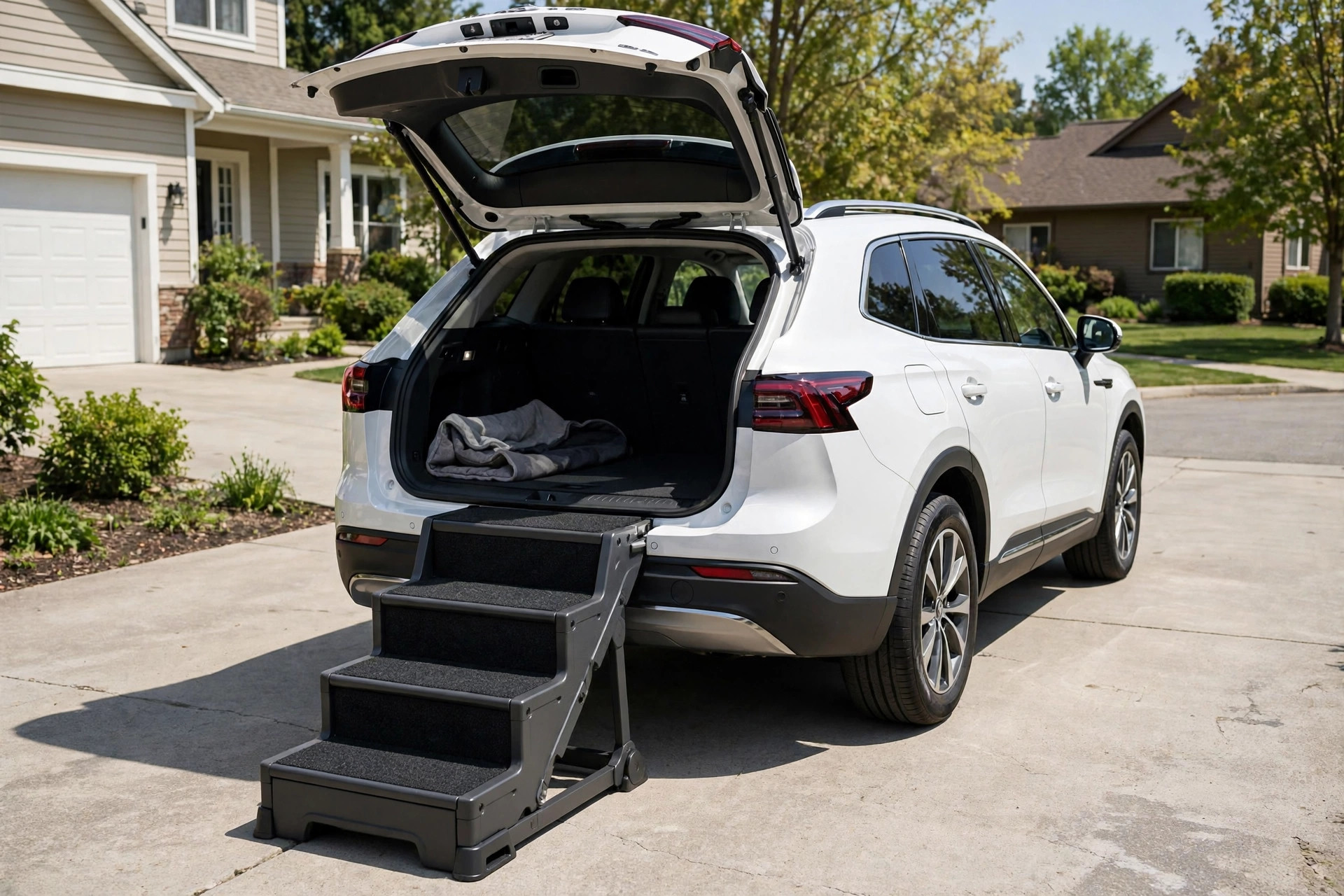

Lifting a heavy dog into an SUV trunk is hard work. It can hurt your back. It can also hurt your dog. A jump from the ground to a high trunk puts stress on legs, hips, and spine. Small dogs may miss the jump. Old dogs may refuse to try. This is where the best pet stairs for suv trunk access dogs earn their place. Pet stairs are simple steps that let a dog climb into the back of an SUV at an easy angle. They fold flat, they weigh little, and they take seconds to set up.
This guide explains what pet stairs do, what to look for, and how much they cost. It also covers care and safety. Every dog is different. But most dogs travel better when the climb is easy.
Why Pet Stairs Matter for SUV Trunk Access
An SUV trunk sits high off the ground. Many models have a trunk floor two to three feet above the road. For a young, large dog this is a small hop. For many others it is a real obstacle.
Old dogs lose strength in their rear legs. A senior dog may want to go along but cannot make the jump. Pet stairs give older dogs back their freedom. They also help small breeds. A dachshund or a beagle may strain just to reach the edge of the trunk. Repeated jumping can wear down joints over time. Vets often link hard impacts to hip and elbow trouble later in life.
Pet stairs matter for owners too. Lifting a seventy-pound dog day after day is a strain on shoulders and lower backs. Some owners travel with two or three dogs. Stairs turn a hard chore into a calm routine. The dog climbs. The owner watches. No lifting, no pushing, no pain.
Stairs also help after surgery. A dog that has had a knee repair or a back operation must avoid jumping. Vets usually tell owners to keep the dog quiet and to avoid leaps for weeks. The best pet stairs for suv trunk access dogs make those rules easy to follow. The dog walks up a few small steps instead of jumping.
What to Look for When You Choose: Best Pet Stairs for Suv Trunk Access Dogs
Not all pet stairs are the same. A poor design can scare a dog or tip over. A good design feels steady from the first use. Here are the points that matter most.
Height and Step Count
Measure your SUV trunk height first. Park on flat ground. Open the trunk. Measure from the ground to the trunk floor. Then pick stairs that reach that height. Most pet stairs have three to five steps. More steps mean a gentler slope. Older dogs do better with more steps and a low rise.
Tread Surface
The step surface must not slip. Look for carpet, rubber, or ribbed plastic. Smooth hard plastic gets slick when it is wet or dusty. A dog that slips once may refuse to use the stairs again. Non-slip tread gives paws a firm grip.
Weight Capacity
Check the rated weight before you buy. Light stairs may hold only twenty-five pounds. Sturdy models can hold one hundred fifty pounds or more. Pick stairs rated well above your dog’s weight. A wide safety margin keeps the stairs steady when the dog shifts its weight mid-climb.
Width and Stability
Wide steps help large dogs feel safe. Narrow steps can feel like a tight rope. A wide base stops the unit from rocking side to side. Some stairs have feet that grip the ground. These are worth the extra cost on gravel or wet grass.
Folding and Storage
Most owners keep the stairs in the trunk or behind a seat. A unit that folds flat takes up little space. Look for a locking hinge. It should stay folded when you carry it and stay open when in use. Heavy units are harder to move and set up each trip.
Weather and Outdoor Use
If you travel in rain or park on grass, pick stairs that shed water. Plastic units wipe clean. Carpet treads hold mud and take time to dry. Some owners keep a small mat at the base to catch dirt.
Assembly
The best pet stairs for suv trunk access dogs need little or no assembly. Many unfold in seconds. Avoid designs with loose parts or tools you can lose. Simple is better, and simple lasts longer.
Types of Pet Stairs and Ramps
Pet stairs come in several forms. Each suits a different dog and a different vehicle.
Folding steps. These are the most common. Three or four steps fold flat like a suitcase. They are light and easy to store. They suit dogs of most sizes. They are a strong choice for daily use.
Telescoping ramps. A ramp gives a smooth slope with no steps. Some dogs prefer a ramp over steps, and some owners find a dog ramp for suv and high bed access works well when the trunk is very high. Telescoping ramps slide to adjust length. They cost more but fit many vehicles.
Foam stairs. Soft foam steps are light and quiet. They are made for indoor use, not trunk access. Skip them for outdoor travel. They soak up water and wear fast.
Fixed wood or plastic steps. Heavy and solid. They stay in a garage or by a porch. They are too bulky for travel but fine as a permanent backyard solution.
Combination step-ramp units. Some products fold out as steps and flip into a ramp. These give you two options in one unit. They are handy if you own more than one dog with different needs.
For most SUV owners, folding steps with a non-slip tread are the right pick. They balance cost, weight, and ease of use. Ramps are better for dogs that fear steps or that have severe joint trouble.
Cost and Price Ranges
Prices vary with size, material, and brand. Here is what most owners can expect.
Budget stairs. Twenty to forty dollars. Light plastic. Three steps. Fine for small dogs under twenty-five pounds. May feel flimsy for larger dogs.
Mid-range stairs. Forty to ninety dollars. Better treads, wider steps, higher weight ratings. This is the sweet spot for most families. Many of the best pet stairs for suv trunk access dogs sit in this range.
Premium units. Ninety to two hundred dollars. Heavy-duty build, high weight capacity, premium grip surfaces. Some fold into very thin shapes. Worth it for large dogs and frequent travel.
Ramps. Fifty to two hundred dollars. Telescoping models cost more than fixed ones. Prices rise with length and weight rating.
Do not buy on price alone. A cheap unit that scares your dog is wasted money. Read reviews from owners with dogs like yours. A mid-range unit with strong reviews beats a cheap unit with weak ones.
How to Train Your Dog to Use the Steps
Most dogs learn in a day or two. A few need more time. Patience is the key.
Start with the stairs flat on the ground. Let the dog sniff them. Give a treat. Then set up one or two steps against a low surface, like a curb or a porch step. Lead the dog up with treats. Keep sessions short.
Move the full unit to the SUV only after the dog is calm on the steps. Park the car. Set the stairs against the trunk. Place a treat on each step. Stand to the side, not behind the dog. Let the dog climb at its own pace.
Never push or pull a frightened dog. Fear ruins trust. If the dog backs away, stop and try again later. Some owners lay a towel over the steps at first. The familiar smell helps.
Reward every success. Soon the dog will run up the steps on its own. Senior dogs often take to stairs faster than young ones, because the steps remove pain.
Care and Upkeep
Pet stairs last for years with simple care. After each trip, shake off dirt and hair. Wipe plastic steps with a damp cloth. Wash carpet treads with mild soap and let them air dry.
Check hinges and latches each month. Tighten any loose screws. Look for cracks in plastic after a long summer of sun. Store the unit out of direct heat when you can. Extreme heat can warp cheap plastic.
Keep the stairs clean for the sake of your dog’s paws. Mud on the tread can make the next climb slippery. A quick brush before each use takes seconds.
Pair the stairs with comfort in the trunk. Many owners add best orthopedic dog bed for senior large dogs padding so the ride is soft after the climb. A dog car seat cover for back seat protection keeps the trunk clean from muddy paws and loose hair.
Safety Rules to Follow
Stairs reduce risk, but they do not remove it. Follow these rules every time.
Set the stairs on firm, level ground. Soft mud or a slope can let the unit sink or slide. Place the top step flush against the trunk edge. A gap between the stairs and the trunk can trap a paw.
Watch the dog on every climb. Never let a dog race up or down. Excitement causes slips. Keep a hand near the collar of an old or unsure dog.
Check the weight rating again if two dogs use the stairs at once. Most units are rated for one dog at a time. Let dogs take turns.
Do not use the stairs as a bridge. They are not meant to span a wide gap. They must rest flat and stable.
In wet weather, dry the treads before use. Water plus dust makes a slick film. Keep a small towel in the trunk for this job.
Resources like the ASPCA and PetMD offer general pet travel safety advice that pairs well with stair use. The AKC also publishes tips on safe car travel with dogs.
Cost of Ownership Over Time
A good set of stairs is a one-time buy for most owners. The unit itself is the main cost. There is no fuel, no battery, and no service plan.
Replacement parts are rare. You may replace a carpet tread after a few years. Some makers sell tread pads on their own. A set of pads costs a few dollars.
Compare this to vet bills. A single joint injury can cost hundreds or thousands of dollars. The best pet stairs for suv trunk access dogs cost a fraction of that. Many owners see the stairs as cheap insurance for their dog’s joints.
Travel frequency matters. If you drive with your dog daily, a premium unit pays for itself in comfort and durability. If you travel once a month, a mid-range unit is enough.
Frequently Asked Questions
Are pet stairs better than a ramp for an SUV trunk?
It depends on the dog. Stairs suit dogs that are used to steps at home. Ramps suit dogs with bad joints that find stepping hard. Many owners try stairs first because they store smaller. Product guides at Chewy and The Spruce Pets compare both options in detail.
Will my dog be scared of the stairs?
Some dogs are wary at first. This is normal. Start slow, use treats, and keep sessions short. Most dogs accept the stairs within a few days. Dogs that have used stairs indoors adapt fastest.
What height do I need for my SUV?
Measure from the ground to your trunk floor. Most SUVs need stairs that reach twenty-four to thirty inches. Buy stairs that meet or beat that height. Extra step depth helps more than extra height.
Can large dogs use pet stairs?
Yes, if the stairs are rated for their weight. Look for a rating well above your dog’s size. Wide steps and a wide base keep large dogs steady. Reviews on Consumer Reports and Amazon often note how a unit handles heavy breeds.
Do the stairs work on uneven ground?
They work best on flat, firm ground. On grass or gravel, pick a unit with grip feet. Avoid soft mud. A small rubber mat under the base adds stability on slick parking lots.
How do I store the stairs between trips?
Fold them flat and slide them into the trunk or behind the back seat. Most units fit with room to spare. Some owners keep them in a large tote bag to keep the car clean. Retailers like Home Depot and Petco stock storage bags that fit most folding units.
A Short Final Word
Pet stairs are a small buy with a large payoff. They spare your back. They spare your dog’s joints. They turn travel into a calm routine instead of a heavy lift. Measure your trunk, pick a steady unit with good tread, and train with patience. The best pet stairs for suv trunk access dogs are the ones your dog climbs without fear, trip after trip.
References
Amazon. (n.d.). Online shopping. https://www.amazon.com American Kennel Club. (n.d.). Dog care and training resources. https://www.akc.org ASPCA. (n.d.). Pet care and animal welfare resources. https://www.aspca.org Chewy. (n.d.). Pet supplies. https://www.chewy.com Consumer Reports. (n.d.). Product reviews and ratings. https://www.consumerreports.org Petco. (n.d.). Pet supplies and services. https://www.petco.com PetMD. (n.d.). Pet health information. https://www.petmd.com The Home Depot. (n.d.). Home improvement products. https://www.homedepot.com The Spruce Pets. (n.d.). Pet care guides and product reviews. https://www.thesprucepets.com
Was this guide helpful?

About Jennifer Lee
The My Garden US editorial team writes practical, in-depth home and garden guides for American homeowners — tested advice, no fluff.
You May Also Like
Dog Raincoat for Large Breeds: A Waterproof USA Buying Guide
June 10, 2026 0 views
Best Litter Genie Refill for Odor Control USA: A Plain Guide for Cat Owners
September 4, 2026 0 views
The Best Cat Brush for Long Haired Shedding Control: A Complete Grooming Guide
August 11, 2026 0 views