
Many American homeowners ask the same question when they look at their furnace: should they choose an electronic air cleaner or a media filter? The debate of electronic air cleaner vs media filter usa comes up in homes from Florida to Maine, because both devices promise cleaner indoor air, yet they work in different ways and carry different costs. This guide explains both in plain words, so you can make a sound choice for your home.
Why the Choice Matters
The air inside a home can hold dust, pet hair, pollen, mold spores, and small bits of debris. A forced-air furnace moves that air through ducts many times each day. If the filter at the furnace does poor work, dust builds up on coils and blowers, and more of it comes out of the vents. Clean air also matters for comfort. People with allergies or asthma often feel better when fewer fine particles move through the house.
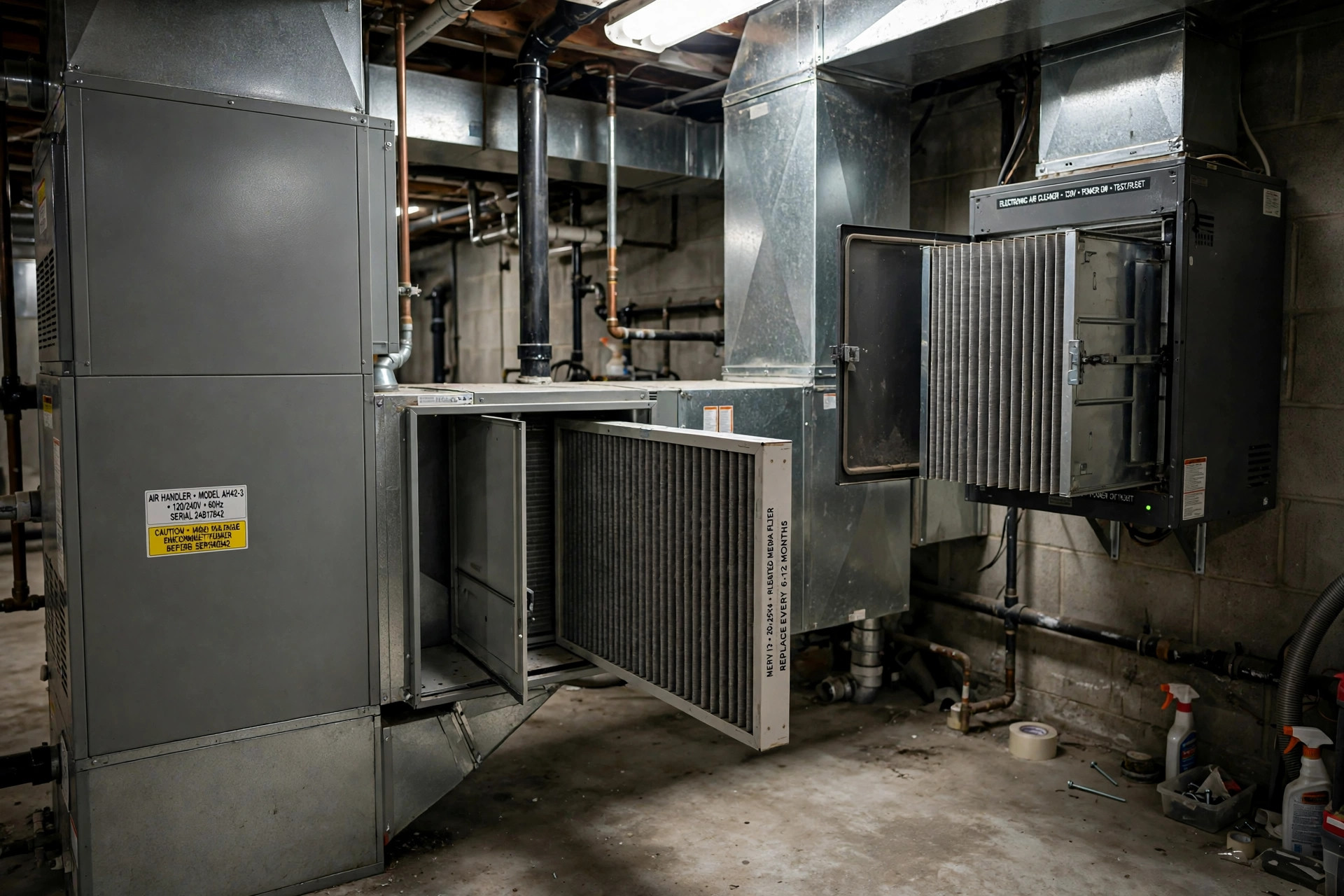
A media filter is the plain, thick filter that sits in the return duct. An electronic air cleaner is a unit with metal plates and a power supply that charges particles with electricity. Both fit in the same spot, near the air handler. Both are far better than the thin one-inch filter that comes with many furnaces. But they differ in upkeep, price, and how they treat very small particles.
How a Media Filter Works: Electronic Air Cleaner vs Media Filter Usa
A media filter is a deep pleated filter, usually four or five inches thick. Air passes through the pleats, and the fibers trap dust and pollen as the air moves. Filters are rated by the MERV scale, a number from 1 to 16. A higher MERV number means the filter catches smaller particles.
Most whole-house media filters are rated MERV 11 to MERV 16. A MERV 11 filter catches much of the dust and pet dander. A MERV 13 filter catches bacteria and many mold spores. A MERV 16 filter catches very fine particles, close to what hospitals use. The rating comes from standard tests, so two filters with the same MERV number catch about the same size of particle.
The media filter has no moving parts and needs no power. When it grows dirty, you open the cabinet and slide in a fresh filter. The old one goes in the trash. That is the whole job.
How an Electronic Air Cleaner Works
An electronic air cleaner uses a different idea. Air first passes through a pre-filter that catches large lint and hair. Then the air moves past charging wires that give the small particles an electric charge. Next, the air passes between metal collector plates with the opposite charge. The charged particles stick to the plates, much like dust sticks to a television screen.
The result is clean air with no thick filter in the way. Because air moves through the unit with little resistance, the blower motor works less hard than it does with a dense media filter. Many units carry a MERV rating of 15 or higher when they are clean. The collector plates are washed, not replaced. You take them out every one to three months, wash them in a sink or dishwasher, dry them, and put them back.
Most electronic air cleaners run on standard house power and use very little electricity. A small light on the cabinet shows the unit has power.
Types and Options on the Market
Media filters come in several forms. The common cabinet filter fits a box that a contractor mounts on the return duct. Cartridges come from the furnace maker or from third parties. Common widths fit ducts from 14 to 25 inches. Brands like Trane and Lennox sell cabinets made for their own furnaces, while others fit many brands.
Electronic air cleaners come in two main types. The true electrostatic unit uses collector plates as described above. The polarized-media unit uses a small voltage to charge a thin disposable filter pad, which then holds particles with electric help. This type gives some of the benefit of both worlds, but the pads must be replaced on schedule.
Homeowners who want simple whole-house cleaning may also look at a humidifier comparison or other heating and cooling topics before they buy, since indoor air health depends on more than one device.
How to Choose Between the Two
Start with your goal. If you want simple, steady filtration with almost no work, the media filter is the easy pick. If you want to catch the smallest particles and you do not mind washing plates, the electronic air cleaner is worth a look.
Check your furnace and duct size. A media filter cabinet adds depth to the return duct, so the installer needs enough room. An electronic unit also needs space and a power outlet nearby. Older furnaces may not have the extra wire or outlet, which adds to the install cost.
Think about who lives in the house. Homes with smokers, pets, or wood stoves produce more particles. An electronic cleaner that is washed on time handles heavy loads well. Homes with strong allergy needs may prefer a MERV 16 media filter, which catches fine particles with no risk of ozone.
Consider your blower. Thick media filters slow the air more than electronic units do. On an older furnace with a weak blower, a dense filter can cut airflow and hurt heating and cooling. In that case the electronic cleaner, with its low air resistance, may be the safer pick. A contractor can measure airflow and tell you if your system can handle a MERV 13 or higher filter. Guidance on proper system sizing and airflow is available from Energy.gov, which covers heating and cooling equipment for American homes.
Cost and Price
A media filter cabinet with one filter installed costs less up front. In the United States, a cabinet and first filter often run from about $200 to $500 for parts, plus labor to mount it on the duct. Replacement filters cost roughly $40 to $90 each, and most homes need one or two per year. Over ten years, the filter cost can add up to $800 to $1,800.
An electronic air cleaner costs more at the start. Units often run from about $600 to $1,200 for the cabinet and power pack, plus installation labor that may include wiring an outlet. The upkeep cost is close to zero, since you wash the plates instead of buying filters. Over ten years, the total cost often ends up near the media filter total, sometimes a bit lower.
Labor rates differ by region. A job that takes two hours in Ohio may cost more in California or New York. Always get the quote in writing before work starts. If you plan a larger heating upgrade, reading about central air conditioner brands or portable ac reviews can help you judge the whole system cost at once.
Care and Upkeep
A media filter asks for very little. Check it every two or three months. Hold it up to a light. If light barely passes through, replace it. Most homes replace the filter twice a year. Homes with pets or construction dust may need three or four changes a year. Mark the date on the filter frame with a pencil so you remember.
An electronic air cleaner asks for washing. Every one to three months, turn off the power, open the cabinet, and slide out the pre-filter and collector plates. Wash the plates in warm soapy water, rinse well, and let them dry fully. Wet plates can arc and snap, and they clean poorly. Never run the unit without the plates in place. Once a year, wipe the charging wires gently and check the power light.
If you skip the washing, an electronic cleaner loses its power fast. Dirty plates hold fewer particles, and dirty wires charge the air poorly. A neglected electronic unit can clean worse than a basic media filter. This is the main reason contractors warn against them. They work well only for owners who keep the schedule.
Filter and parts makers like Goodman and Rheem note in their manuals that dirty filters and coils cut system life, so steady upkeep matters no matter which device you pick.
Safety Points
Both devices are safe when installed and kept as the maker directs. Two points deserve care.
First, some electronic air cleaners make a small amount of ozone as a side effect of the charging wires. Ozone can bother lungs, and the EPA sets limits for indoor ozone from air cleaners. Units sold in the United States must meet federal limits, but people with asthma should still ask the maker for the ozone rating before they buy. Media filters make no ozone at all.
Second, any device mounted on the duct must be installed so it does not leak air or touch live wires. A licensed contractor should do the mounting and wiring. Do not cut into a gas furnace cabinet or vent pipe to make room. If the return duct is too small, the right fix is a new duct section, not a forced fit.
Practical how-to advice for furnace and duct work appears in This Old House and Family Handyman, both of which cover safe installation practice for home heating equipment.
FAQ
Which cleans better, an electronic air cleaner or a media filter? When both are new and clean, they are close. A clean electronic unit and a MERV 16 media filter both catch very fine particles. The difference shows over time. A media filter keeps its rating until it clogs. An electronic unit drops in performance as the plates collect dirt, then returns to full power after washing.
Which is cheaper over ten years? They are often close. The media filter costs less to install but needs $40 to $90 in new filters each year. The electronic unit costs more to install but has almost no yearly cost. Add the labor quotes together with ten years of filters to see which wins in your case.
Does an electronic air cleaner use much electricity? No. Most units draw about as much power as a small light bulb. The cost on your electric bill is only a few dollars a year.
Can I install either one myself? A media filter cabinet takes sheet-metal work on the return duct, which most owners leave to a contractor. An electronic unit also needs a power outlet wired near the duct. Poor duct sealing can leak air and raise bills, so professional installation is the wise course.
Will a MERV 16 filter hurt my furnace? It can if the blower is weak. A dense filter slows airflow, which can freeze a cooling coil in summer or overheat a furnace in winter. Have a contractor check static pressure before you jump to the highest MERV number.
Do I still need room air purifiers? Maybe not. A good whole-house device cleans all the air that passes through the ducts. Room units still help in rooms far from the return vent or in homes where the furnace runs little in mild weather.
A Short Final Word
In the electronic air cleaner vs media filter usa debate, there is no single winner for every home. The media filter wins on simple upkeep and steady results. The electronic air cleaner wins on low air resistance and no filter bills, but only for owners who wash the plates on time. Match the device to your furnace, your air, and your habits, and either one will leave your home air cleaner than the thin filter most furnaces ship with.
References
Carrier. (n.d.). Heating and cooling systems. https://www.carrier.com Consumer Reports. (n.d.). Product reviews and ratings. https://www.consumerreports.org ENERGY STAR. (n.d.). Energy efficient products. https://www.energystar.gov Family Handyman. (n.d.). DIY home repair and maintenance. https://www.familyhandyman.com Goodman. (n.d.). Heating and cooling equipment. https://www.goodmanmfg.com Lennox. (n.d.). Heating and cooling systems. https://www.lennox.com Rheem. (n.d.). Heating, cooling, and water heating. https://www.rheem.com This Old House. (n.d.). Home renovation guidance. https://www.thisoldhouse.com Trane. (n.d.). Heating and air conditioning. https://www.trane.com U.S. Department of Energy. (n.d.). Energy efficiency and renewable energy. https://www.energy.gov
Was this guide helpful?

About Jennifer Lee
The My Garden US editorial team writes practical, in-depth home and garden guides for American homeowners — tested advice, no fluff.
You May Also Like
Best Through the Wall AC Reviews USA: A Plain Buyer’s Guide
September 21, 2026 0 views
Reflective Roof Coating Reviews for Flat Roofs
August 9, 2026 0 views
Steam Humidifier for Whole House Reviews: A Complete Guide for USA Homes
September 4, 2026 0 views