
Introduction
When winter arrives early and stays late, a house fills with heavy coats, wet boots, hats, gloves, and scarves. Space by the door fills up fast. Premium over the door organizers for cold climates give that space back. They hang over the top of a door and hold winter gear in deep, strong pockets. No tools are needed. No holes are drilled in the wall. A plain door becomes a storage wall in a few minutes. This guide explains what makes a premium unit worth its price, how to pick the right one, and how to keep it in good shape through cold seasons.
Why It Matters in Cold Regions: Premium Over the Door Organizers for Cold Climates
In cold climates, the gear near the door changes with the month. October brings light jackets. January brings parkas, snow pants, mittens, and lined boots. A plain hook rack cannot hold it all. Coats slip off. Gloves get lost. Scarves pile on the floor.
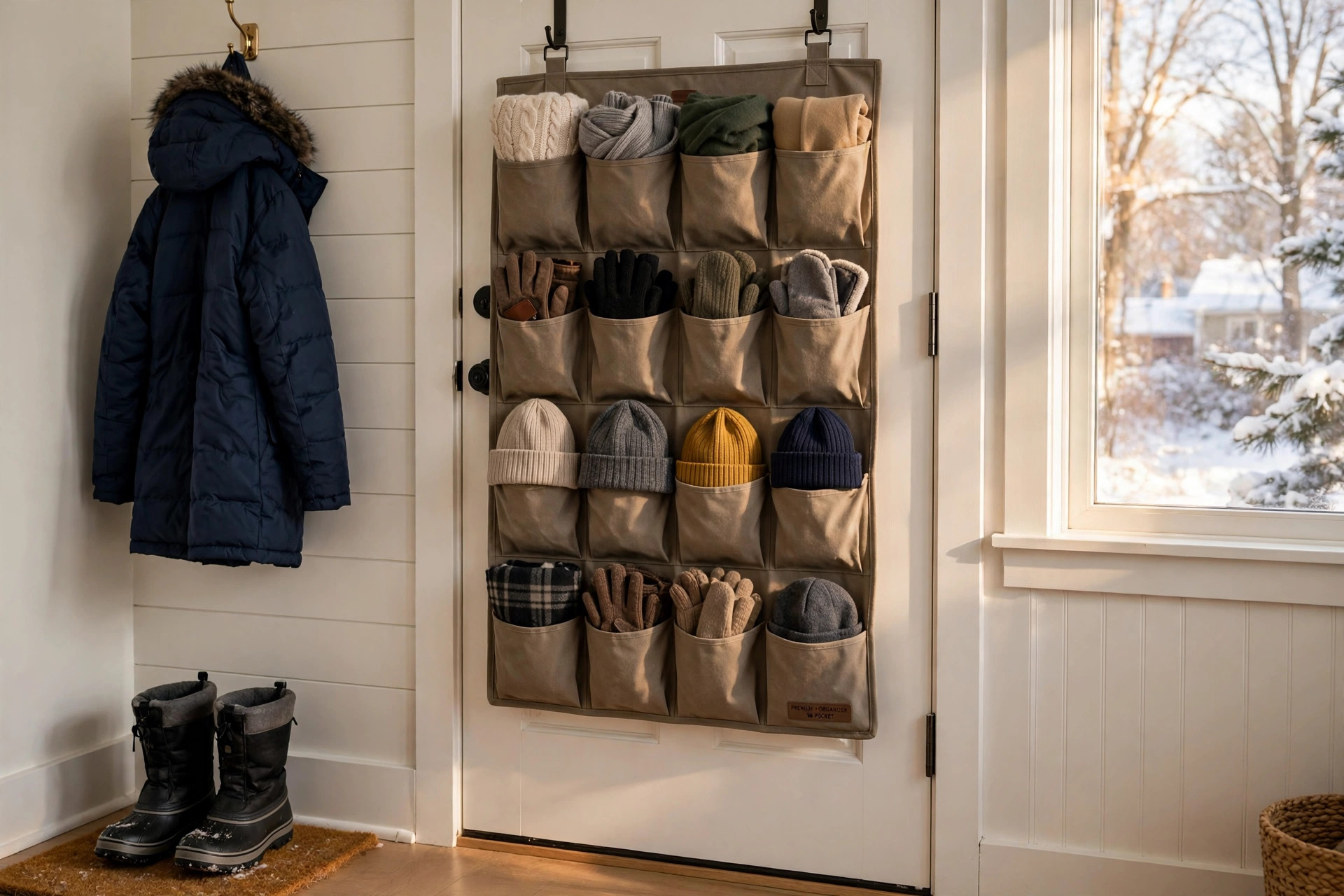
An over-the-door organizer solves this without taking floor space. Each pocket has a job. One holds hats. One holds gloves. One holds the dog leash or the ice scraper. The family walks in, puts each item in its pocket, and the entry stays clear.
Premium models matter in cold regions because cheap ones fail in winter. Thin fabric tears under the weight of heavy gloves. Clear plastic turns stiff and cracks when the air is cold. Weak hooks bend under a wet coat. A premium over the door organizer for cold climates uses thick canvas, reinforced seams, and metal hooks. It is built for weight and cold. It lasts for years, not one season.
These units also help homes that have no mudroom. Many houses in cold states have only a small entry or none at all. A hallway door, a closet door, or a basement door can carry the load instead. Some families pair the door organizer with mudroom storage benches to handle boots and heavy coats together. When the season ends, bulky gear can move to top rated attic storage solutions for cold climates, while lighter items shift to luxury under bed storage containers until the snow returns.
What to Look For
Not every door organizer survives a real winter. Premium quality shows in small details. Look for these points before you buy.
Hooks
The hooks carry all the weight. Metal hooks beat plastic ones. Flat hooks slide over the top of the door without scratching the frame. Two hooks are common. Three hooks hold more weight and stop the unit from swinging. Check that the hooks fit your door. Most doors are one and three eighths inches thick. Measure yours with a ruler.
Fabric and Pockets
Heavy canvas or thick Oxford cloth holds up best. Premium over the door organizers for cold climates use fabric that stays flexible when the room is cold. Seams should be double stitched. Pockets should be deep enough for mittens, scarves, and rolled hats. Clear vinyl pockets let you see what is inside, but plain fabric pockets last longer in freezing air. Some units mix both. That can be a good middle ground.
Size and Door Fit
Most units are about twenty inches wide and sixty inches tall. Measure your door height first. The bottom pocket should hang a few inches above the floor. On a standard door, the organizer reaches near the floor. On a tall door, it may hang short. Some brands sell extra-long models for tall doors. Check the product page for exact measurements before you order. Big-box home improvement stores like Home Depot list full dimensions on each product page, which makes it easy to compare models side by side.
Weight Capacity
A premium unit should hold at least twenty to thirty pounds of winter gear. Some hold fifty pounds or more. Add up what you plan to store. A wet parka can weigh six pounds. A pair of snow boots can weigh four. Gloves, hats, and scarves add more. Pick a unit rated well above your total.
Backing and Stability
A flat back panel keeps pockets from pressing against the door. Some units add side straps or bottom loops. These stop the organizer from swinging when the door opens and closes. A unit that swings spills gloves on the floor. Stability is one of the main differences between a cheap model and a premium one.
Types and Options
Canvas Pocket Organizers
These are the most common type. They have rows of fabric pockets on a canvas backing. Pockets run from small to large. They work well for gloves, hats, scarves, and small tools. Premium versions use thick canvas and strong thread. They cost more, but they hold winter weight without tearing.
Clear Vinyl Organizers
Clear pockets make it easy to find things. You can see each pair of gloves at a glance. The drawback is cold air. Thin vinyl can stiffen and crack in a cold entry or garage. If you choose clear, pick a premium brand that uses cold-rated vinyl. Use it on an interior door, not an unheated garage door. Style guides from Apartment Therapy often show how clear organizers blend into small entries without looking cluttered.
Wire and Metal Racks
Some premium units use a metal frame with baskets instead of pockets. These breathe better, so wet gloves dry faster. They also hold more weight than fabric. The trade-off is depth. Baskets are shallower than pockets, so small items can fall out. They work best for bulky items like hats and scarves.
Shoe-Style Organizers With Deep Pockets
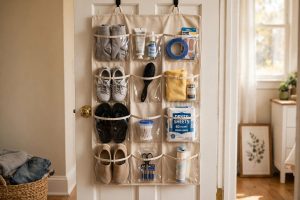
Over-the-door shoe organizers are popular in winter. The tall pockets that fit shoes also fit rolled scarves, mittens, and hats. In cold climates, many families use a shoe-style organizer for winter boots and liners. Look for deep pockets and strong backing. A premium over the door organizer for cold climates in this style often has mesh pockets for airflow, which helps wet gear dry between uses.
Insulated and Lined Models
A few premium brands sell lined organizers. The lining adds warmth and padding. These work well on doors that face an unheated entry or mudroom. They cost the most, but they protect gear from damp cold.
Cost and Price
Prices vary by build quality. Basic fabric organizers sell for ten to twenty dollars. They work for light use. Premium over the door organizers for cold climates usually sell for twenty-five to sixty dollars. Heavy-duty metal basket racks can reach seventy to ninety dollars.
The price gap reflects real differences. Premium units use thicker fabric, stronger hooks, and better stitching. A twenty-dollar unit may last one winter. A fifty-dollar unit may last five. When you count cost per year, the premium unit often wins.
Watch for sales in late summer and early fall. Storage brands clear winter stock in spring. Online stores carry wide selections. Specialty storage retailers like The Container Store and flat-pack furniture giants like IKEA both stock door organizers in many styles, and marketplaces such as Amazon let you read hundreds of owner reviews before you buy. Review sites like The Spruce test door organizers and publish picks for different needs, which can help narrow the field.
Shipping matters too. A unit that costs thirty dollars with free shipping beats one that costs twenty-five with a ten-dollar shipping fee. Some stores, such as Wayfair and Lowe’s, offer free shipping over a set amount, so it can pay to bundle the organizer with other home goods.
Care and Upkeep
Cold climates are hard on storage gear. Road salt, snow melt, and damp air all take a toll. A few habits keep your organizer in good shape.
Shake out each pocket once a week. Salt and grit collect in the corners. Wipe the fabric with a damp cloth. Let it dry fully before you load it again. Damp fabric can grow mildew, even in winter.
Check the hooks each month. Tighten or straighten any that have bent. A bent hook can scratch the door or fail without warning. If the hooks have felt pads, check that the pads are still in place. They protect the door finish.
Wash the organizer in spring. Most canvas units can go in the washing machine on a gentle cycle. Air dry them flat. Do not use the dryer. Heat can shrink the fabric and warp the hooks. Storage experts at Family Handyman recommend a spring deep-clean of all entry gear, and the door organizer is a good place to start.
Store the unit flat or rolled in summer if you do not need it. This keeps the pockets from stretching. A dry attic or closet works well. Keep it away from direct sun, which fades the fabric.
Safety
Door organizers are safe when used with care. Keep a few rules in mind.
Do not overload the unit. Stay under the rated weight. An overloaded organizer can pull the hooks off the door. It can also make the door hard to close. A door that does not latch is a fire safety risk.
Keep the organizer off bedroom doors where small children sleep. Pockets at a child’s height can tempt climbing. A child pulling on the unit can tip it down. Put the organizer on a closet or entry door instead.
Watch for sharp hooks. Some metal hooks have rough edges. File down any sharp spots, or cover them with felt pads. This protects hands and the door frame.
Keep wet gear from touching walls or floors for long. Pull damp items out to dry. Standing water can stain floors and trim. Mesh pockets help here because air moves through them.
If the organizer hangs on an exterior door, check the door seal. A thick hook can break the weather seal at the top of the door. Cold air then leaks in. Felt pads and thin flat hooks reduce this problem.
Frequently Asked Questions
Will an over-the-door organizer fit any door?
Most fit standard interior doors. Measure your door thickness and height first. Flat hooks need a small gap at the top. If your door fits tight in the frame, the hooks may not slide on. Some brands sell slim hooks for tight doors. Glass-paneled doors and louvered doors are poor choices because the pockets press on the glass or slats.
Can it hold heavy winter coats?
Pockets hold small items, not full coats. Hang coats on the hooks at the top if the unit has them. Most organizers are not built to hold a wet parka in a pocket. Use the pockets for gloves, hats, scarves, and liners. Hang the coat on a wall hook or a sturdy rack nearby.
Will cold air damage the fabric?
Premium canvas holds up well in cold air. It stays flexible and strong. Cheap thin fabric and thin vinyl suffer more. Keep the unit on an interior door when you can. If it must hang on a door to an unheated space, pick a premium lined model.
How do I stop it from swinging?
Pick a unit with three hooks instead of two. Add adhesive pads or a bottom strap if the maker includes one. Keep the heaviest items in the middle pockets, not at the edges. Do not slam the door. A gentle close keeps the pockets still.
Can I use it in a rental home?
Yes. That is one of its best features. Over-the-door organizers hang without screws or nails. They leave no holes in the wall. When you move, lift the unit off the door and take it with you. This makes them popular with renters in cold cities.
A Final Word
Premium over the door organizers for cold climates are a small buy with a big payoff. They turn a plain door into winter storage. They keep gloves, hats, and scarves in order through the long cold months. Pick a strong build, hang it with care, and keep it clean. It will serve your home winter after winter.
References
Amazon. (n.d.). Online shopping. https://www.amazon.com Apartment Therapy. (n.d.). Home design ideas and inspiration. https://www.apartmenttherapy.com Family Handyman. (n.d.). DIY home repair and maintenance. https://www.familyhandyman.com IKEA. (n.d.). Home furnishings. https://www.ikea.com Lowe’s. (n.d.). Home improvement products. https://www.lowes.com The Container Store. (n.d.). Storage and organization products. https://www.containerstore.com The Home Depot. (n.d.). Home improvement products. https://www.homedepot.com The Spruce. (n.d.). Home and garden advice. https://www.thespruce.com Wayfair. (n.d.). Furniture and home goods. https://www.wayfair.com
Was this guide helpful?

About Robert Taylor
The My Garden US editorial team writes practical, in-depth home and garden guides for American homeowners — tested advice, no fluff.
You May Also Like

Top Rated Freestanding Wardrobe Closets for USA Homes
May 5, 2026 0 views
Bookcases With Storage Doors: Reviews and Buying Guide
April 13, 2026 0 views
Outdoor Deck Storage Boxes Price Comparison USA
August 18, 2026 0 views