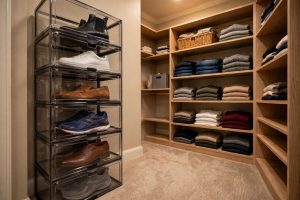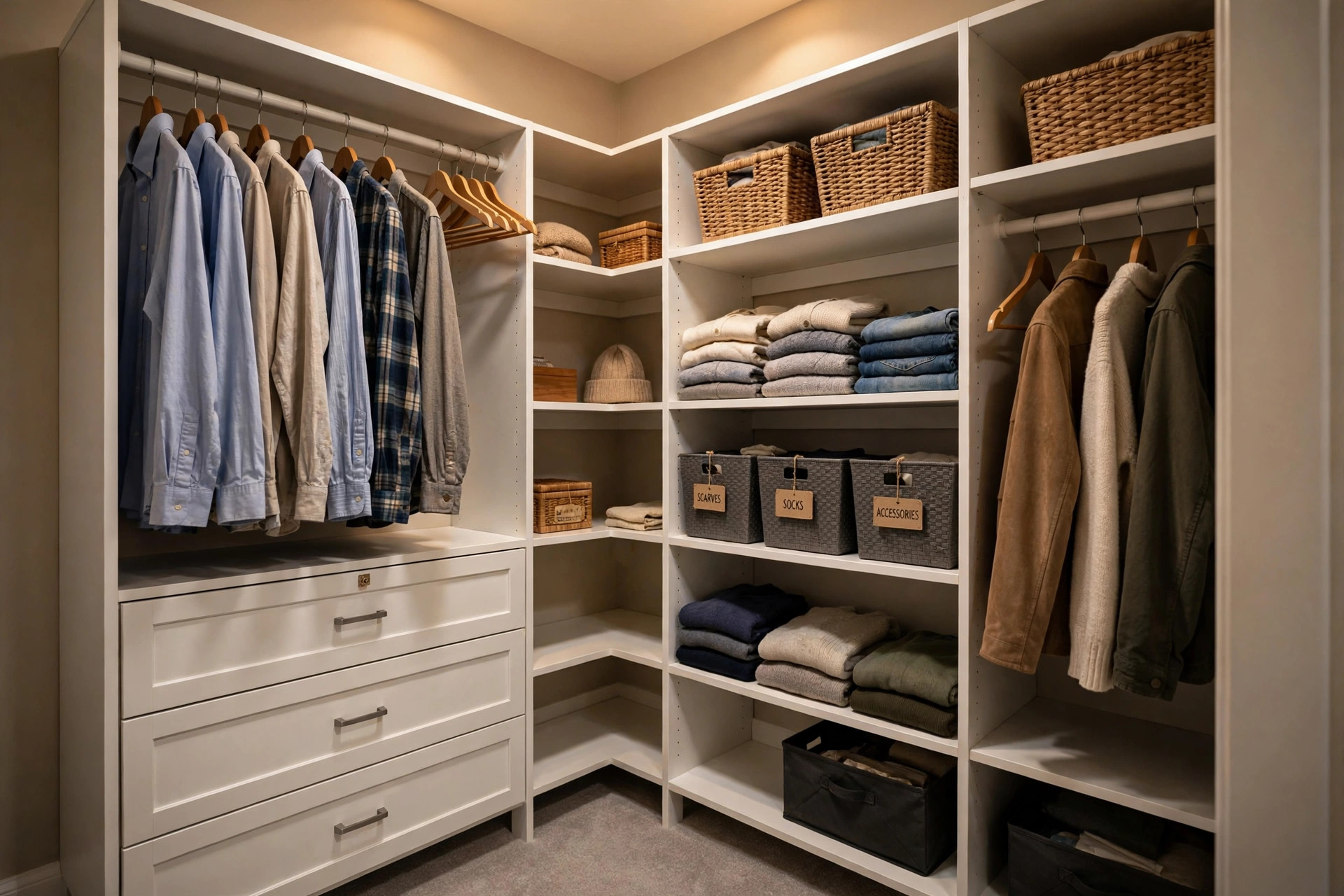

Space saving corner closet organizers for southern states solve this exact problem. These are racks, shelves, and rod systems made to fit the corner angle of a closet. They turn dead space into hanging room and shelf room. This guide explains why they matter, what to look for, and how to choose one for a warm, humid home. The two corners stay dark and empty. This is common in homes across the South. Ranch houses in Texas, colonials in Georgia, bungalows in Florida, all tend to have the same problem. The corner of the closet is hard to reach, so nothing goes there.
Why Corner Organizers Matter in Southern Homes
The South brings its own storage problems. Winters are short, but summers are long. A family in Louisiana or South Carolina keeps light clothes out nearly all year. Winter coats take less space, but summer shirts, shorts, and sandals take more. The closet fills up fast.
Heat and damp air are the bigger issue. Many southern homes sit near the coast or the Gulf. Humid air gets into closets and stays there. Clothes that sit in a dark corner can pick up a musty smell. Shoes can grow mold. A corner organizer helps because it lifts things off the floor and spreads them out. Air moves around each item. That is the first step in keeping clothes fresh in a damp climate. Good home organization guides often make the same point about air flow in closets.
Corner space is also common in southern floor plans. Many homes built in the 1970s through the 1990s have reach-in closets with a single rod. The corners are nearly impossible to reach without crawling. A pull-out rod or a rotating rack brings the clothes to you.
There is a money angle too. Adding a new closet or tearing out walls costs thousands of dollars. A corner organizer costs a small fraction of that. For a homeowner in Mississippi or Alabama on a tight budget, it is one of the cheapest ways to gain real storage. Renters like them too, since many systems install without drilling.
What to Look for When You Buy: Space Saving Corner Closet Organizers for Southern States
Start by measuring. Measure the width of each closet wall at the corner. Measure the depth from the back wall to the door frame. Note the ceiling height. Write the numbers down and bring them when you shop. A unit that is two inches too wide is useless.
Look at how the unit handles the corner. The best space saving corner closet organizers for southern states use the angle itself. Some have shelves cut at forty-five degrees. Some have a curved rod that wraps the corner. Some have a lazy-susan style rack that turns. Each style has a cost. Simple angled shelves are cheap. Rotating racks cost more but are easier to use.
Check the weight rating. Hanging rods full of clothes are heavy. Cheap particle board sags under weight. Look for metal frames, solid wood, or high-density composite. The product page should list a weight limit per shelf.
Think about humidity. Southern closets need materials that stand up to damp air. Powder-coated steel and sealed wood resist moisture well. Raw particle board swells when it soaks up damp. Many closet storage systems now list moisture resistance in their specs, which is worth checking.
Look for open design. Closed boxes trap damp air. Open shelves and wire racks let air move. Wire shelving also lets you see what you own. In a small closet, that saves time in the morning.
Types of Corner Closet Organizers
Angled shelf towers. These are tall units with shelves cut to fit the corner. They sit on the floor and stack upward. They are good for folded clothes, bins, and shoes. They cost the least and are easy to put together. Their weak point is hanging space, since they have no rod.
Corner rod kits. These kits add a rod section into the corner, often in an L shape. They connect to the existing rods on each wall. They are a good pick for people with many shirts and jackets. Installation takes an afternoon and basic tools.
Rotating carousel racks. These work like a lazy susan. You spin the rack and the clothes come to you. They are the easiest to use in a deep corner. They cost the most of the three types. They are a smart pick for older homeowners who cannot reach deep into a closet. Reviews of closet organizer systems often rate these highly for reach-in closets.
Corner drawers and cubes. These fit into the lower corner, where hanging rods leave a gap. They give drawer space for socks, underwear, and small items. Some stack like cubes. They pair well with a rod kit above them.
Freestanding corner wardrobes. These are full cabinets that sit in the corner. They have doors, so they protect clothes from dust and damp. They cost more and take up floor space. They suit a bedroom corner that has no built-in closet at all. For comparison, heavy-duty freestanding wardrobe closets come in many sizes that fit southern bedrooms. More wardrobe and storage lines are easy to browse at IKEA and The Home Depot.
If your bedroom also needs more dresser room, nightstands with storage drawers can take some of the load off the closet.
Picking the Right Size and Fit
Most southern closets fall into two groups. Reach-in closets are shallow, often twenty-four inches deep, with a door in the middle. Walk-in closets are larger and you can step inside. The corner organizer you pick must match the type.
For a reach-in closet, choose a unit no deeper than the closet walls. A tower that sticks out past the door frame will block the doors. Stay one inch short of that number.
For a walk-in closet, you have more room. A rotating carousel or an L-shaped rod kit works well. You can also combine two systems, one tower on each side of the corner.
Check door swing. Bedroom doors and closet doors open into the room. A tall corner tower near the door can block it. Stand in the doorway and swing the door. Make sure the unit clears it.
Renters should look for tension-mounted or freestanding units. These need no screws in the wall. They come apart when you move. Many rental-friendly storage ideas focus on this kind of gear.
Cost and Price Ranges
Prices for space saving corner closet organizers for southern states run in clear bands.
– Basic angled shelf towers: fifteen to forty dollars. Made of wire or coated particle board. Good for shoes and folded clothes. – Corner rod kits: thirty to eighty dollars. Metal rods and brackets. Often need a drill to install. – Corner drawer cubes: twenty to sixty dollars per set. Stackable. Fine for small items. – Rotating carousel racks: sixty to one hundred fifty dollars. The smoothest to use. Highest cost per foot of storage. – Freestanding corner wardrobes: one hundred to four hundred dollars. Full cabinets with doors. Biggest gain in storage, biggest footprint.
Installation adds cost if you hire help. A handyman in the South often charges forty to seventy dollars an hour for closet work. Most kits take one to two hours. Many homeowners do the job themselves on a Saturday. Basic tools are a drill, a level, a stud finder, and a tape measure. Guides from home improvement experts walk through the steps in plain language.
Shipping matters in rural areas. A heavy wardrobe can cost fifty dollars or more to ship to a small town in Arkansas or West Virginia. Check the shipping fee before you order. Big-box home stores with local pickup can save that fee.
Dealing With Southern Humidity
This section matters more than any other for southern buyers. Warm damp air is the enemy of stored clothes. A closet organizer should fight it, not feed it.
Do not push the unit tight against the wall. Leave a one-inch gap behind it. Air needs to move behind the shelves. If the back of the unit sits flat on drywall in a damp room, mold can grow there unseen.
Use bins with lids for items you store long term. Winter coats, holiday clothes, and spare bedding stay cleaner in a lidded bin. But do not seal everyday clothes in plastic. They need air. A wire basket works better for shirts and shorts.
Add a moisture absorber. Small desiccant tubs sit on a shelf and pull damp from the air. Replace them every few months in summer. In very damp homes, a small closet dehumidifier or a rod-style heating bar helps too. Look for them at large retailers or Target stores near you.
Wash or air out the organizer once a year. Pull the clothes off. Wipe the shelves with a damp cloth and mild soap. Let the unit dry fully before you reload it.
Keep shoes off the floor. Floor-level shoes trap damp against the carpet or wood. A corner shelf tower with a shoe rack at the bottom lifts them up. That small change cuts odor and mold in summer.
Care and Upkeep
A corner organizer needs little care, but a little care goes far.
Tighten the screws twice a year. Closet rods work loose with daily use. A quick check with a screwdriver takes five minutes. Pay attention to the corner joints, since they carry the most weight.
Do not overload the top shelf. Most units rate the top shelf for light items only. Put hats, bags, and spare linens up there. Put heavy shoes and books lower down.
Clean wire racks with a damp cloth. Dust builds up on the wires and falls onto clothes below. A quick wipe every few months keeps things clean.
Watch for rust on cheap metal parts. In coastal areas of Florida, Texas, and the Carolinas, salt air can rust bare steel. Choose powder-coated parts from the start. If you see a rust spot, sand it lightly and touch it up with paint.
Rotate seasonal clothes. When summer ends, move heavy coats to the easy-to-reach spots. When spring comes, swap them back. This keeps the organizer working all year and lets you check for damp problems each season.
Safety Tips
Anchor tall towers to the wall. A tower over four feet tall can tip if a child climbs it or if it is bumped. Use the anti-tip strap or bracket that comes in the box. Screw it into a wall stud, not just drywall. This is the single most important safety step.
Keep heavy items low. Put the heaviest bins on the bottom shelf. A top-heavy tower is a tip risk even when it is anchored.
Do not hang more than the weight limit. A rod that sags can snap and drop clothes on someone. Check the rating on the box before you load it.
Leave a clear path. In a walk-in closet, do not let the corner unit block the walkway. You need room to step back and see what you own. A crowded closet is a tripping risk, especially at night.
Check for sharp edges. Cheap wire shelves can have rough ends. Cover rough spots with edge caps or tape.
Frequently Asked Questions
Will a corner organizer fit a standard southern reach-in closet? Most reach-in closets have corners about twenty-four inches deep. Angled shelf towers and corner rod kits are made for that size. Measure first, and pick a unit one inch short of your depth.
Do I need tools to install one? It depends on the type. Freestanding towers need no tools beyond what is in the box. Rod kits need a drill, a level, and a stud finder. Rotating carousels usually need a drill too. Plan for one to two hours of work.
How do I stop mold on clothes in a humid closet? Leave gaps for air flow. Do not pack shelves tight. Use open wire shelves instead of closed boxes for everyday clothes. Add a moisture absorber tub on one shelf. Wipe the unit down once a year. These steps work in the dampest Gulf Coast homes.
Are corner organizers good for renters? Yes. Freestanding towers and tension-mounted rods need no screws, and they come apart when you move. Check your lease first.
Can one unit hold both hanging clothes and shoes? Some can. L-shaped rod kits with a lower shelf hold shirts above and shoes below. Corner towers with a rod attachment do the same. If you own many shoes, pair a tower with a small shoe rack at its base.
What material lasts longest in southern humidity? Powder-coated steel and sealed solid wood last the longest. Coated wire shelving is a close second. Avoid raw particle board, which swells in damp air. If your closet has poor ventilation, steel is the safest pick.
A Short Final Word
Space saving corner closet organizers for southern states are a small fix with a big payoff. They take the darkest, hardest-to-reach part of the closet and make it useful. They cost little. They install in an afternoon. And in warm, damp homes, they do something extra: they lift clothes off the floor, spread them out, and let air move. That keeps wardrobes fresher from Texas to the Carolinas.
Measure your corner. Pick a unit that fits your closet type and budget. Anchor it well and leave room for air. A corner that sat empty for years will earn its keep every day.
References
Apartment Therapy. (n.d.). Home design ideas and inspiration. https://www.apartmenttherapy.com Family Handyman. (n.d.). DIY home repair and maintenance. https://www.familyhandyman.com IKEA. (n.d.). Home furnishings. https://www.ikea.com Lowe’s. (n.d.). Home improvement products. https://www.lowes.com Target. (n.d.). Retail store. https://www.target.com The Container Store. (n.d.). Storage and organization products. https://www.containerstore.com The Home Depot. (n.d.). Home improvement products. https://www.homedepot.com The Spruce. (n.d.). Home and garden advice. https://www.thespruce.com Walmart. (n.d.). Everyday low prices. https://www.walmart.com
Was this guide helpful?

About Robert Taylor
The My Garden US editorial team writes practical, in-depth home and garden guides for American homeowners — tested advice, no fluff.
You May Also Like
Basement Shelving Units Price Comparison USA: A Practical Guide to Costs and Choices
February 27, 2026 0 views
Lockable Kids Closet Organizers with Free Shipping
April 11, 2026 0 views
Affordable Sports Equipment Organizers for Sale: A Buyer’s Guide
February 15, 2026 0 views