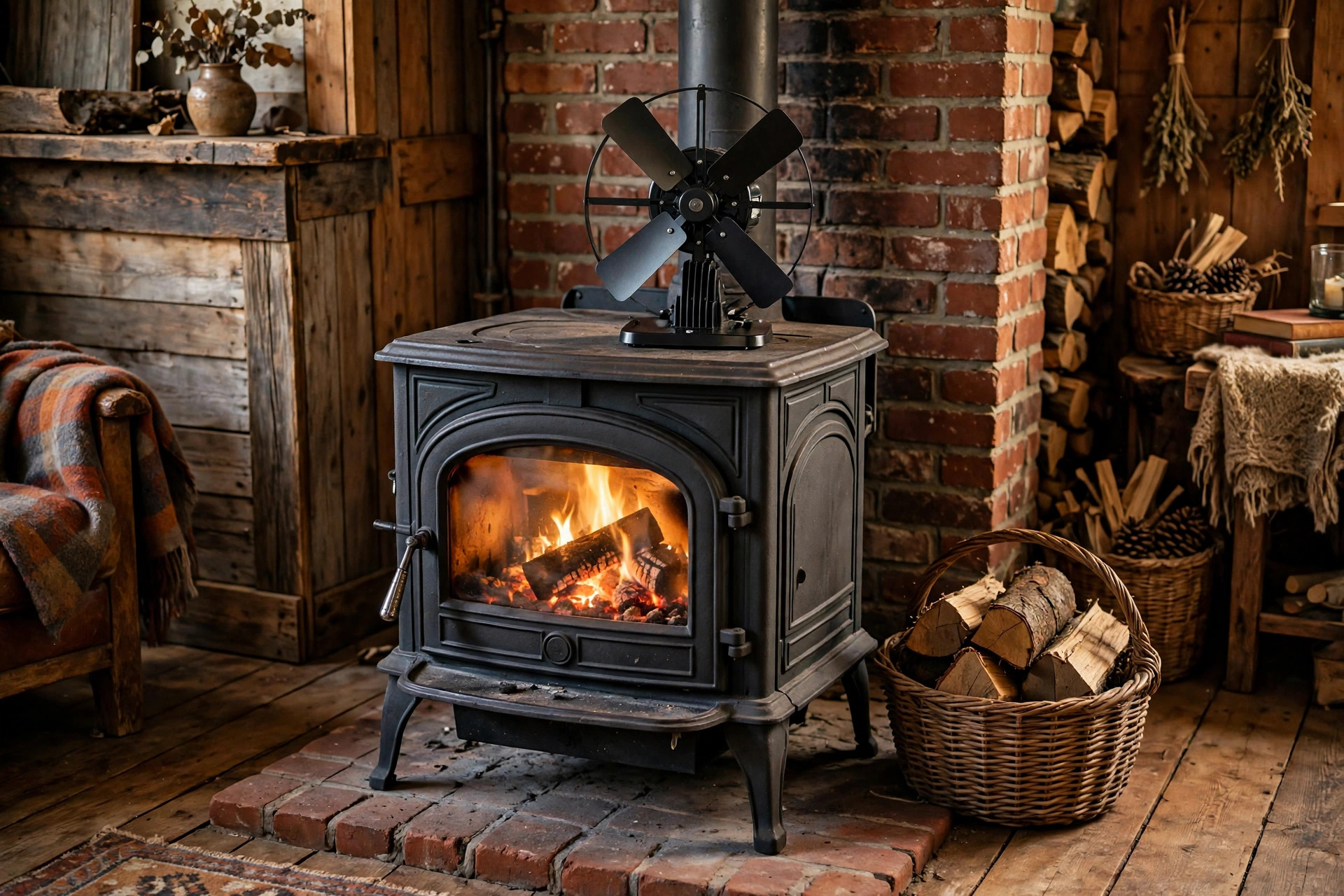
A heat powered stove fan is a small tool that sits on top of a wood burning stove. It needs no plug and no batteries. The heat of the stove makes the blades turn. The turning blades push warm air out into the room. This simple idea has helped many American homes heat more space with less wood. If you are shopping for one, this heat powered stove fans price comparison usa guide will help you know what to pay, what to look for, and which fan fits your stove.
Prices in the United States run from about fifteen dollars to about eighty dollars. The price rests on the size of the fan, the number of blades, the metal used, and the name on the box. A basic fan with two blades may cost fifteen to twenty-five dollars. A mid-range fan with four blades may cost twenty-five to forty-five dollars. A large or twin-blade model with quiet parts may cost forty-five to eighty dollars. These are common street prices from major United States sellers. Sale prices can dip lower in the spring, when stove gear is off season.
Why a Heat Powered Stove Fan Matters
A wood stove gets very hot on top, but the heat tends to rise straight up and stay near the ceiling. The floor and the far corners of the room stay cold. A heat powered fan breaks up that layer of trapped heat. It moves the warm air out and down into the living space. Rooms feel warmer at the same wood setting.
This can save wood. When heat spreads well, the stove does not need to be filled as often. Over one winter, that can mean fewer cords bought or cut. Many owners say the room warms faster in the morning after a cold night. The fan also needs no wire, so it works in cabins, shops, and rooms far from an outlet. During a power cut, the stove still runs, and the fan still runs.
How the Fan Works: Heat Powered Stove Fans Price Comparison Usa
The base of the fan gets hot from the stove top. Inside the base sits a small heat engine. It turns heat into motion. When the base reaches about 140 degrees Fahrenheit, the blades begin to turn. As the stove gets hotter, the blades spin faster. When the stove cools, the blades slow and stop. There is no switch to set. The fan regulates itself by heat alone.
Some models have a small strip of metal that lifts the base if the stove gets too hot. This guard keeps the fan from damage. It is a sign of a careful design. Look for it if you burn your stove hard.
What to Look for When You Choose
Number of Blades
Two-blade fans are the cheapest. They move a fair amount of air in small rooms. Four-blade fans are the most popular. They move more air and start at lower heat. Some large models use six blades or two fan heads on one base. Those are best for big rooms and open plans. More blades usually mean more air flow, but also a higher price.
Size and Reach
Fan blades range from about six inches to ten inches across. A small stove needs a small fan. A big stove in a big room needs a large fan. Check the maker’s air flow rating, often stated in cubic feet per minute. A rating near 100 to 130 is common for small rooms. Ratings near 200 to 300 suit larger spaces. These numbers are not strict, but they help you compare.
Start Temperature
Most fans start near 140 degrees Fahrenheit. Good fans reach full speed near 480 to 660 degrees. If your stove top runs cool, look for a low start point. If you run a hot fire, check the top safe limit. Stay inside the maker’s range.
Noise Level
A well-made fan is quiet. Cheap fans may click or whir. If the stove sits near a reading chair, pay a little more for a quiet model. Many reviews note the noise level. Sellers like Home Depot and Lowe’s carry a range of brands, and their product pages often list real owner notes on noise.
Build and Metal
Anodized aluminum is the common metal. It stands heat well and costs less than steel. Heavier bases sit more steady on the stove. Look for a firm base with no wobble. A tip-over guard is a plus in homes with pets.
Types and Options
Heat powered fans fall into a few main types. Each fits a different home.
Standard four-blade fans. The middle of the market. Good for stoves that heat one or two rooms. Price: twenty-five to forty-five dollars.
Twin-blade or dual-head fans. Two fan heads on a wide base. Made for large stoves and great rooms. Price: forty to eighty dollars. They move a lot of air, but they need a wide, flat stove top.
Two-blade budget fans. Small and cheap. Good for cabins, workshops, and single rooms. Price: fifteen to twenty-five dollars.
Mini fans. Tiny models for small stoves and camp use. They move less air. Price: fifteen to thirty dollars.
Some makers add extras: a thermometer strip on the base, a built-in handle, or a fold of heat color that marks the range. These extras add a few dollars. A well-known stove maker such as Napoleon and hearth brands such as Heatilator offer stove gear that meets the same careful standards as their stoves.
Heat Powered Stove Fans Price Comparison USA: Costs in Detail
Here is a closer look at what United States buyers pay in stores and online.
Budget tier: fifteen to twenty-five dollars. Two-blade fans from house brands. Fine for small rooms. Expect light metal and basic finish. Good if this is your first fan and you want to try the idea.
Mid tier: twenty-five to forty-five dollars. Four-blade fans from known names. Better air flow, lower start heat, quieter parts. This tier fits most American homes with wood burning stoves and is the best value for most buyers. This tier is the sweet spot for most shoppers.
Upper tier: forty-five to eighty dollars. Large fans, twin heads, and heavy builds. Made for big rooms, open plans, and owners who burn all winter. The price buys more air flow and a longer life.
Watch for shipping costs. Online prices may look low until a shipping fee is added. Big-box stores often carry these fans in season, so you can buy in person and skip the fee. Off-season sales in spring can cut twenty to thirty percent off the price.
Also check what the box includes. Some fans ship with a small stove thermometer. That is a nice extra worth a few dollars. A thermometer helps you run the stove in its best range, which the EPA’s stove guidance supports for clean and safe burning.
Where to Buy
United States buyers have many good stops. Home centers carry fans from fall through winter. Hearth shops carry them year round and can give advice. Online sellers list many brands with owner reviews. Compare the total price with tax and shipping before you buy. The same fan can cost ten dollars more or less between sellers, which is why this price comparison matters. Keep the receipt and the box until the first burn, so you can return the fan if the blades do not spin at your normal stove heat.
The Family Handyman site and This Old House both run wood heat guides that explain how stove heat moves through a home. Reading those guides can help you place the fan where it does the most good. The Spruce also reviews home heating gear in plain terms.
How to Set Up Your Fan
Place the fan on the flat top of the stove, toward the back. Keep it away from the flue pipe, which is the hottest spot. The base must sit flat. Do not place it on a curved or ribbed part of the stove. The fan should point away from the pipe so the air moves into the room.
Wait for the stove to warm up. The blades will start on their own. Do not push them with your hand. A finger near moving blades can get hurt, and oil from your skin can mark the hot metal. Let the fan do its work.
For stoves set inside a fireplace opening, some owners add fireplace glass doors to slow heat loss up the flue. A fan on the stove top then pushes more of the stove’s heat into the room instead of letting it escape.
Care and Upkeep
A heat powered fan needs little care. Dust the blades now and then with a dry cloth. Let the fan cool before you touch it. Never wash it with water. Water on hot metal can crack the parts and can warp the base.
Check the base each fall before the burn season. It should sit flat with no rock. If the fan has a heat guard strip, make sure it still lifts and falls freely. If the blades drag or the fan clicks loudly, the bearing may be dry. A small drop of heat-safe oil on the shaft can quiet it. If the shaft is bent, the fan is past repair and should be replaced.
Store the fan in a dry place in the summer. Keep the box if you have it. A fan that sits still all summer works best if it is kept clean and dry.
Owners who heat with pellet stoves for heating can use these fans too, as long as the stove top gets hot enough and flat enough for the base. The same rules of placement and care apply.
Safety
Heat powered fans are safe when used with care, but they sit on a very hot surface. Follow these rules.
First, never let children or pets touch the fan or the stove. The base is as hot as the stove top. A burn can happen in a second. Keep a hearth gate if small children are in the home.
Second, keep the area clear. Do not hang cloth or paper near the stove. Do not set the fan near the flue pipe. The EPA notes that safe clearances around stoves cut the risk of fire, and the same sense applies to anything you set on the stove.
Third, watch for overheat. If the fan’s guard strip lifts, the stove is too hot. Let the fire burn down. Do not cool the fan with water.
Fourth, never take the fan apart while it is hot. The inner parts can burn you. If the fan stops working, let the stove cool fully before you look at it.
FAQ
Do heat powered stove fans really work? Yes. They move warm air from above the stove into the room. They will not heat a whole house by themselves, but they make the stove’s heat reach farther. Most owners notice the difference in the first week.
How long do they last? A good fan lasts three to five years of regular winter use. Cheap fans may last one or two seasons. Heat and dust wear the bearing over time. Careful use and off-season storage add life.
Can I use one on a pellet stove? Yes, if the stove top is flat and hot enough. Many pellet stove tops run cooler than wood stove tops, so check the start temperature of the fan first. A low-start model works best.
Will the fan scratch my stove top? It can leave marks if it is dragged. Lift it straight up to move it. Put a thin stove mat under it if you want to guard the finish.
Is a four-blade fan worth the extra cost over a two-blade fan? For most homes, yes. The four-blade fan starts at lower heat and moves more air. The price gap is often ten to twenty dollars, and the extra comfort is worth it.
When is the best time to buy? Late winter and spring bring the best sale prices. Fall brings the widest stock. If you want a specific brand, buy in early fall before the stock runs low.
A Short Final Word
A heat powered stove fan is a small buy with a clear job. It spreads the heat you already make. It needs no power and little care. Prices in the United States run from about fifteen to eighty dollars, with the best value near twenty-five to forty-five dollars. Match the fan to your stove size and room size. Buy from a seller you trust. Set it on a flat spot, keep it clean, and respect the heat. Your room will feel the change on the first cold night.
References
Family Handyman. (n.d.). DIY home repair and maintenance. https://www.familyhandyman.com Heatilator. (n.d.). Fireplaces and fireplace products. https://www.heatilator.com Lowe’s. (n.d.). Home improvement products. https://www.lowes.com Napoleon. (n.d.). Fireplaces, grills, and heating products. https://www.napoleon.com The Home Depot. (n.d.). Home improvement products. https://www.homedepot.com The Spruce. (n.d.). Home and garden advice. https://www.thespruce.com This Old House. (n.d.). Home renovation guidance. https://www.thisoldhouse.com U.S. Environmental Protection Agency. (n.d.). Protecting human health and the environment. https://www.epa.gov
Was this guide helpful?

About David Wilson
The My Garden US editorial team writes practical, in-depth home and garden guides for American homeowners — tested advice, no fluff.