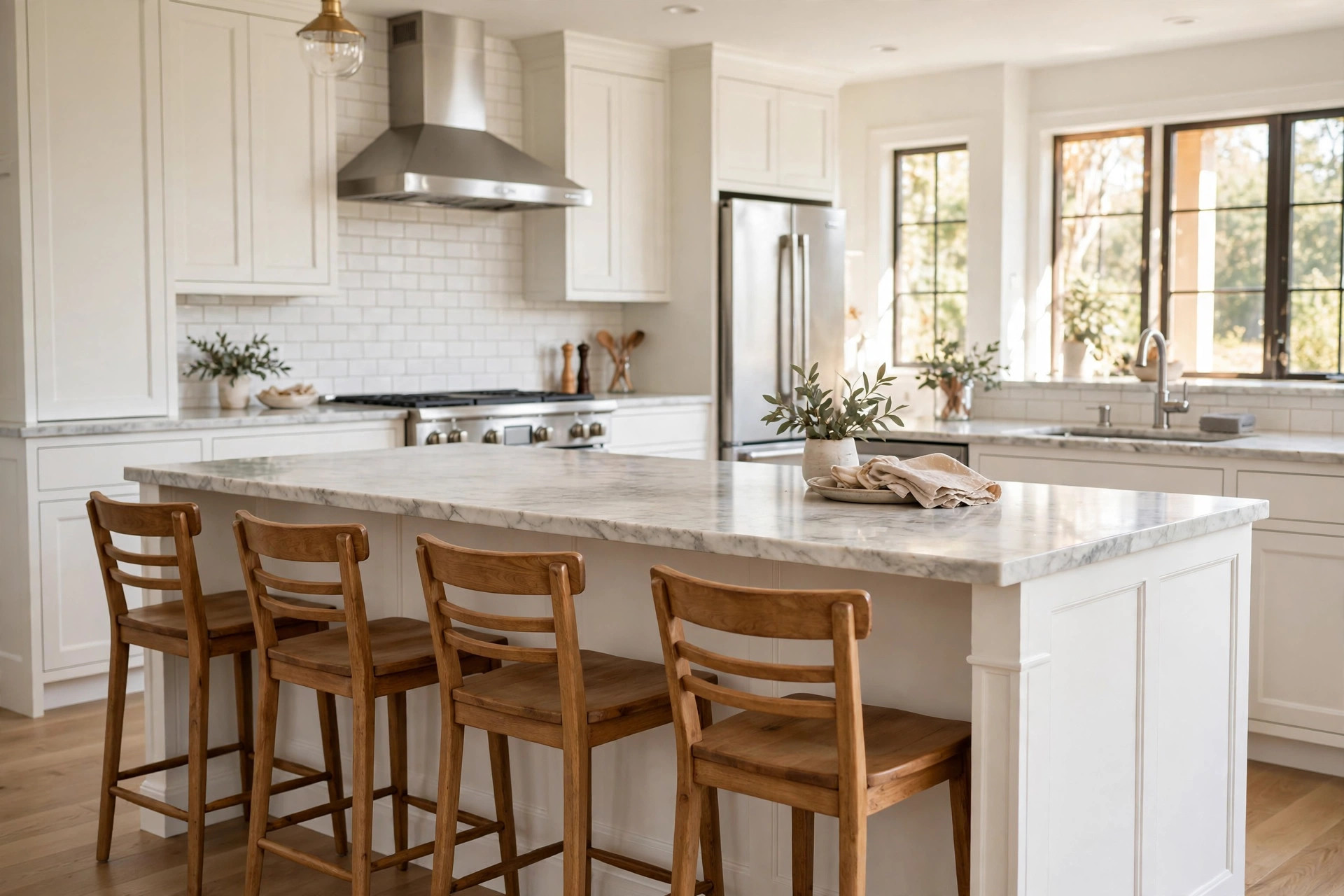

This kitchen island stools buying guide usa will help you pick the right seats for your kitchen island. The kitchen island has become the center of the American home. It is where families eat breakfast, where children do homework, and where guests gather during a party. The stools you place around it matter more than most people think. A stool that is too tall makes meals feel awkward. A stool that is too short leaves your guests straining to reach the counter. This guide walks you through every choice you need to make, from height and style to material and price, so you can buy with confidence.
Why the Right Stools Matter
Stools shape how your kitchen feels and works. The right stools invite people to sit and stay. They make the island useful for eating, working, and talking. The wrong stools sit empty while guests stand nearby with their plates in their hands.
Comfort comes first. Most people spend more time at the island than they expect. A morning cup of coffee can last thirty minutes. A family dinner can last an hour. If the seat is hard or the back gives no support, people will move to the dining table instead. Good stools turn the island into a second dining area and raise the value of your kitchen.
Look and style come second. Stools are large objects that sit in plain view. They set the tone for the whole kitchen. Metal stools give a modern look. Wooden stools give a warm, classic look. Upholstered stools soften a room that has many hard surfaces. When the stools match the style of your kitchen, the whole space feels finished.
Function comes third. Some families need stools that tuck fully under the counter to keep walkways clear. Others need swivel seats so children can turn toward the television. Older family members may need arms and backs for support. Knowing how you will use the stools guides every other decision.
How to Choose the Right Height: Kitchen Island Stools Buying Guide Usa
Height is the single most important measure in this kitchen island stools buying guide usa. A wrong height ruins comfort at once.
First, measure the height of your island countertop from the floor. Most kitchen islands in the United States are 36 inches high, which is the same as standard counter height. Some raised bars are 42 inches high. Write down your number before you shop.
Next, leave 10 to 12 inches of space between the top of the stool seat and the underside of the counter. This space gives room for your legs and lets you slide in and out with ease. A seat that is 24 to 26 inches high fits a 36-inch counter. A seat that is 28 to 30 inches high fits a 42-inch bar.
You can read height tables on the websites of major furniture sellers. The guides at IKEA and Wayfair show clear drawings of counter heights and matching stool heights. These drawings help you picture the fit before you spend money.
If your stools have backs, check the total height too. A high back can block the view from the kitchen to the living room in an open plan. Many buyers pick backless stools or low backs so the sight line stays open across the island.
Also measure the depth of the overhang. The counter should extend at least 12 inches past the base of the island so your knees have room. A 15-inch overhang is better. If the overhang is short, pick a slim stool with no arms so your legs fit.
How Many Stools Do You Need
A common rule is to allow 24 to 30 inches of width per stool. Measure the open side of your island and divide by this number. A six-foot island fits three stools with ease. An eight-foot island fits four.
Leave room between stools. Crowded stools make guests feel pushed together. An arm’s width of space lets each person eat without elbows touching.
If you want kitchen island stools deals near me, buy a set of four at once. Stores often price sets lower than single stools. A matching set also keeps the look clean and even.
Types of Kitchen Island Stools
Backless Stools
Backless stools slide fully under the counter. They keep the kitchen open and neat. They work well in small kitchens where floor space is tight. The drawback is support. Long meals can be tiring with no back. They suit quick breakfasts and short visits.
Low-Back Stools
Low-back stools give some support for your lower back while keeping the sight line open. The back usually rises only a few inches above the seat. They are a good middle choice for open-plan homes.
Full-Back Stools
Full-back stools feel most like real chairs. They are best for long meals and for people who need back support. They take more space and cost more, but they are the most comfortable choice.
Swivel Stools
Swivel stools turn a full circle. Children love them. They let guests turn to face the cook or the television without moving the base. Check that the swivel moves smoothly and locks well. Cheap swivels wear out fast.
Adjustable-Height Stools
Adjustable stools rise and lower with a lever or a gas lift. They fit more than one counter height and work for both children and adults. They look modern and suit lofts and apartments. The moving parts can wear over time, so buy from a maker with a solid warranty.
Stools With Arms
Arms add comfort and help older guests stand up. They need more width, so count them in your spacing plan. Some arms sit high enough to hit the underside of the counter, so check the clearance before you buy.
You can compare these types side by side on review and design sites. The buying advice at CB2 and Crate & Barrel includes photos of each type in real kitchens, which helps you see how each style looks in place.
Materials: What Lasts and What Looks Good
Wood
Wood is the classic choice. It is warm, strong, and easy to repair. Oak and maple are hard woods that stand up to daily use. Pine is cheaper but dents more easily. Painted wood fits farmhouse and coastal kitchens. Stained wood fits traditional homes. Wood seats can be hard, so many buyers add a thin cushion.
Metal
Metal stools give an industrial or modern look. Steel and iron are very strong. Powder-coated finishes resist chips and rust. Metal seats can feel cold and hard, so wood or upholstered tops are common on metal frames. Check welds and joints for a solid build.
Upholstered Stools
Fabric or leather seats add comfort and soften the kitchen. Leather and faux leather wipe clean and suit busy families. Performance fabrics resist stains and suit homes with young children. Plain cotton stains fast and is best for light use. Ask if the covers can be removed and washed.
Rattan and Wicker
Rattan and woven stools bring a light, airy feel. They suit coastal, boho, and sunroom styles. They are less tough than wood or metal and need care to keep the weave tight. Keep them out of heavy rain if your island sits near an open door.
Plastic and Molded Seats
Molded plastic stools are light, cheap, and easy to clean. They suit rental homes and casual spaces. Good molded seats can last for years. Cheap ones flex and crack. Look for thick shells and strong bases.
For ideas on mixing materials with your kitchen style, the design articles at Houzz and The Spruce show hundreds of real kitchens with notes on why each pairing works.
Matching Stools to Your Kitchen Style
Start with your cabinets and floors. If your kitchen is white and gray, black metal stools add contrast. If your kitchen is warm wood, matching wood stools keep the room calm. Color wheels are less important than tone: keep warm tones with warm tones and cool tones with cool tones.
Think about the shape of your island. A square island suits chunky, solid stools. A long, thin island suits slim stools in a row. Round islands suit stools with round seats.
Do not be afraid to mix. Two different stool styles can work if they share a color or material. Some designers pair wood seats with metal frames for a balanced look. The style guides at Apartment Therapy and HGTV show how to mix without making the room feel messy.
Cost and Price: What to Expect
Prices for kitchen island stools in the United States range widely. A plain backless wood stool can cost 40 to 80 dollars. A metal counter stool with a back costs 80 to 150 dollars. Upholstered stools with swivel bases run 150 to 300 dollars. Designer stools from high-end brands can cost 300 to 600 dollars each.
Set a budget for the full set, not for one stool. Four stools at 150 dollars each is 600 dollars before tax and delivery. Many stores charge extra for shipping large items, so check the total at checkout.
Watch for sales. Major furniture sellers run big sales on holiday weekends. West Elm and Article often cut prices during these events. Floor models and open-box items at local stores can save thirty percent or more.
If you are shopping on a tight budget, our page on kitchen island stools where to buy usa lists stores and outlets across the country, and our kitchen island stools texas homes usa guide covers regional stores and delivery options.
Care and Upkeep
Good stools last ten years or more with simple care.
Dust wood stools weekly and wipe spills at once. Oil solid wood once a year to stop cracks. Tighten screws and bolts twice a year, since daily sitting loosens joints over time.
Wipe metal frames with a damp cloth. Touch up chips in powder coating so rust cannot start. Check rubber feet and glides and replace them when they wear, so floors stay scratch-free.
Vacuum upholstered seats weekly. Blot spills, never rub. Use a fabric cleaner that suits the material. Keep leather out of direct sun so it does not fade or dry.
For woven seats, brush out crumbs and dust with a soft brush. Keep rattan away from heat vents, which dry the fibers and make them brittle.
Safety Tips
Safety matters most in homes with children and older adults.
Pick stools with a wide, stable base. Four-legged stools are the most stable. Single-post bases should be heavy at the bottom. Test the stool by leaning on it in the store before you buy.
Keep swivel stools away from hot stoves where a sudden turn could spill food. Lock adjustable stools at one height if small children use them, so the seat cannot drop.
Check weight limits. Most stools hold 250 to 300 pounds. Heavy-duty stools hold more. The limit should be printed on the box or the product page.
Place stools so they do not block walkways. Leave at least 36 inches behind a stool for people to pass. In a busy kitchen, pushed-in backless stools keep the path clear.
Frequently Asked Questions
What is the best height for kitchen island stools?
For a standard 36-inch island, pick a seat 24 to 26 inches high. For a 42-inch bar, pick a seat 28 to 30 inches high. Keep 10 to 12 inches between the seat top and the counter underside.
How many stools fit on a standard island?
Allow 24 to 30 inches per stool. A six-foot island fits three stools. An eight-foot island fits four. Leave space between stools so guests sit in comfort.
Are backless stools comfortable?
Backless stools suit short sits and small kitchens. They tuck away neatly. For long meals, a low back or full back gives more support and comfort.
What is the most durable stool material?
Solid hardwood and steel are the most durable. They stand up to daily use for years. Upholstered and woven stools are comfortable but need more care.
Should kitchen stools match the dining chairs?
They do not need to match exactly. Keep them in the same style family and tone. A shared color or material ties the two areas together.
How much should I spend on kitchen island stools?
Plan 40 to 150 dollars per stool for good quality. Upholstered and swivel models cost more. Buy the best build you can afford, since stools take daily wear.
A Final Word
Choosing kitchen island stools is simple when you follow the steps in this kitchen island stools buying guide usa. Measure your counter. Pick the right seat height. Choose a type that fits how you live. Match the style to your kitchen. Set a budget and buy a solid build. Good stools turn your island into the warm heart of your home, a place where family and friends gather every day.
References
Apartment Therapy. (n.d.). Home design ideas and inspiration. https://www.apartmenttherapy.com Article. (n.d.). Modern furniture. https://www.article.com CB2. (n.d.). Modern furniture and decor. https://www.cb2.com Crate and Barrel. (n.d.). Furniture and home decor. https://www.crateandbarrel.com HGTV. (n.d.). Home and garden ideas. https://www.hgtv.com Houzz. (n.d.). Home design and remodeling. https://www.houzz.com IKEA. (n.d.). Home furnishings. https://www.ikea.com The Spruce. (n.d.). Home and garden advice. https://www.thespruce.com Wayfair. (n.d.). Furniture and home goods. https://www.wayfair.com West Elm. (n.d.). Modern furniture and home decor. https://www.westelm.com
Was this guide helpful?

About Emily Rodriguez
The My Garden US editorial team writes practical, in-depth home and garden guides for American homeowners — tested advice, no fluff.
You May Also Like

Living Room Ottomans for Texas Homes USA: A Plain Guide to Choosing Well
April 10, 2026 0 views
Find Good Entryway Storage Benches Deals Near Me
May 4, 2026 0 views
Leather Recliner Chairs for California Homes: A Complete USA Guide
May 7, 2026 0 views