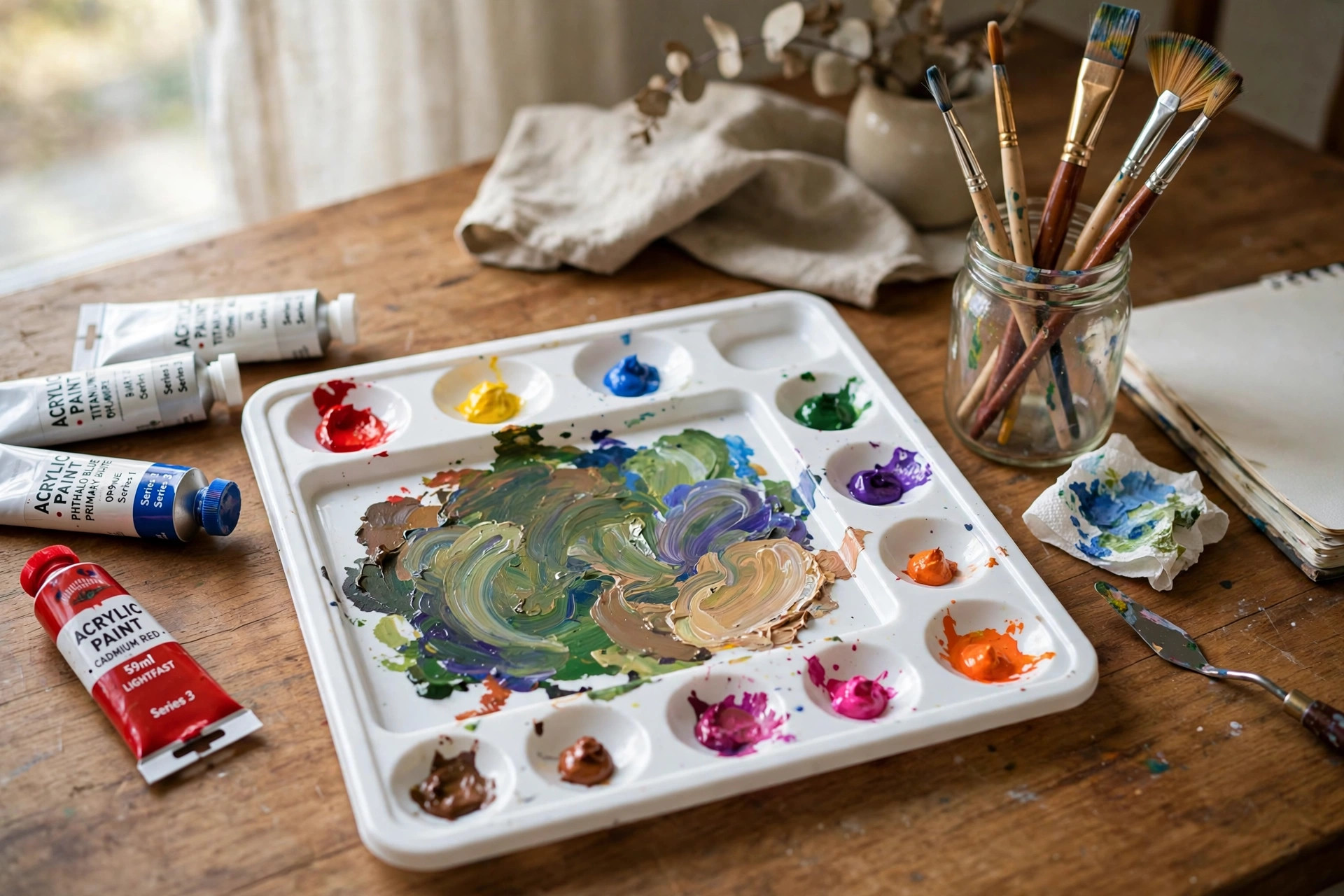

A paint palette for acrylics mixing at home is the flat surface where you lay out your colors, blend them, and test each mix before the brush touches the canvas. Every painter who works with acrylics needs one, because acrylic paint dries fast and you cannot mix well straight from the tube. This guide will help you pick the right palette, use it well, and keep it clean for years.
Why It Matters
The palette is the heart of your painting setup. It is where color choices are made. A good paint palette for acrylics mixing at home gives you room to lay out clean color, space to blend, and a neutral surface that shows the true color of each mix. Without enough mixing space, your colors turn muddy. Without a surface that matches your style, painting becomes harder than it should be.
Acrylic paint has a short open time. This means it starts to dry within minutes of leaving the tube. A palette that keeps the paint moist gives you more time to work. This is why many home painters choose a stay wet palette, which is made to hold moisture and slow the drying time of acrylics. Retailers that sell art supplies, such as Michaels and JOANN, carry several designs made for this purpose.
A palette also helps you save paint and money. When you lay out paint in a neat order and mix only what you need, you waste less. Over the course of many painting sessions, a good system for mixing cuts the cost of supplies. Many painters who work at home find that a simple change of palette improves the look of their finished work, because cleaner mixes give brighter, clearer colors.
If you paint at the kitchen table or in a corner of a spare room, the palette you choose also matters for cleanup. A surface that washes fast or uses throwaway sheets keeps your home clean. For more ideas on keeping a home art space tidy, see our guide on needle felting kits for beginners and watercolor sets for travel painting, which cover the same storage and cleanup ideas in different crafts.
What to Look For When You Choose: Paint Palette for Acrylics Mixing At Home
Surface color and material
Most palettes are white or gray. White shows paint colors bright and clear, but it can make it hard to judge value, which is how light or dark a color is. Gray is a middle value, so it makes it easier to judge both light and dark mixes. Many painters who work at home prefer gray or a clear acrylic sheet placed over gray paper. Specialty art stores such as Blick Art Materials stock both styles so you can compare them side by side.
The material matters too. Wood palettes are classic and hold paint well, but they need sealing with oil before first use. Plastic palettes are cheap and easy to wash. Ceramic and glass palettes are smooth and wipe clean in seconds, which makes them popular for acrylics. Stay wet palettes use a sponge and special paper to keep paint moist for hours or even days.
Size and shape
Choose a palette that fits your work space and the size of your paintings. For small canvas boards, a palette of nine by twelve inches is often enough. For large work, you may want a surface of twelve by sixteen inches or more. Kidney shaped palettes are made to be held in the hand, while flat rectangular palettes sit on a table. Home painters who work at a desk often prefer a flat tray with a lid, since it doubles as storage between sessions.
Wells or flat mixing area
Some palettes have small wells, or cups, around the edge for laying out pure color. Others are fully flat, which gives more room for blending. A mix of both is common: wells hold the colors straight from the tube, and the flat center is used for mixing. If you paint thick with heavy body acrylics, a flat surface gives you the most room to work with a palette knife.
Stay wet or dry
This is the biggest choice for a paint palette for acrylics mixing at home. A standard dry palette is simple and cheap. A stay wet palette adds a wet sponge under a membrane of special paper, and the moisture passes up through the paper to keep the paint workable. If your sessions last longer than thirty minutes, a stay wet palette can save you a great deal of wasted paint. A sealed box with a lid can even keep paint fresh overnight, which is useful if you paint in short sessions after work.
Types and Options
Basic plastic palettes
These are the cheapest option. They are light, easy to carry, and wash with soap and water. Many are made with wells and a flat center. The main drawback is that dried acrylic can be hard to remove, since the plastic is slightly soft and holds onto paint. At a low price, though, they are fine for beginners and children. Large home improvement and craft retailers such as The Home Depot sell basic plastic palettes in their craft aisles.
Wooden palettes
Wood palettes have been used by painters for centuries. They are stiff, warm to hold, and look classic. Before first use, rub the surface with linseed oil and let it dry. This seals the wood so paint does not soak in. Wood is not the best choice for acrylics compared to oils, but many painters still like the feel. Dried acrylic can be scraped off with a palette knife, and the surface gets better with age.
Stay wet palettes
Stay wet palettes are the most popular choice for a paint palette for acrylics mixing at home. A standard design has a shallow tray, a wet sponge, and a sheet of special paper on top. You lay your paint on the paper, and moisture from the sponge keeps it soft. Brands sold at major craft chains offer refill packs of the special paper. A stay wet palette can keep paint workable for a full evening session, and with the lid on, it can hold paint fresh until the next day. This is a big plus for home painters with limited time.
Glass and ceramic palettes
A sheet of glass over gray paper is a favorite of many acrylic painters. Dried paint peels off glass with a razor scraper, so cleanup is fast. Ceramic tiles and old dinner plates work the same way and cost very little. The smooth surface is ideal for mixing clean color with a palette knife. The main risk is breakage, so keep glass palettes away from the edge of the table if children or pets are near.
Paper palettes and pads
Disposable paper palette pads are popular for quick sessions. You tear off a sheet, mix on it, and throw it away when done. The paper is treated so paint does not soak through. This means no cleanup at all, which suits painters who work at the kitchen table and need to clear up fast. The cost per sheet is low, though it adds up over many sessions. Some painters use freezer paper as a cheap homemade version.
Silicone palettes
Silicone mats and trays are a newer option. Dried acrylic peels right off silicone, so cleanup is simple. They are light, hard to break, and easy to store. The surface can feel a bit soft under a stiff palette knife, so they suit brush mixing best. Silicone palettes come in many sizes and are sold by craft and general stores such as Amazon.
Cost and Price
A paint palette for acrylics mixing at home can cost very little or quite a lot, and the right price depends on how often you paint.
| Type | Typical price range | |—|—| | Basic plastic palette | 3 to 8 dollars | | Disposable paper pad | 8 to 15 dollars for a pad of fifty sheets | | Stay wet palette | 15 to 40 dollars, plus refill paper | | Glass or ceramic palette | 10 to 30 dollars | | Wooden palette | 10 to 25 dollars | | Silicone palette | 8 to 20 dollars |
For a beginner who paints once a week, a fifteen dollar stay wet palette is often the best value. It cuts paint waste, and the paint savings can pay for the palette within a few months. If you paint every day, the refill paper for stay wet palettes becomes a steady cost, so some daily painters switch to glass, which has no running cost at all.
Price comparison sites and consumer testing groups such as Consumer Reports publish buying guides for art and craft supplies that can help you compare value across brands. Home repair and craft advice sites such as Bob Vila and This Old House also cover craft room setup, including paint storage and work surfaces that pair well with any palette.
Remember to count the extras. A stay wet palette needs sponge and paper refills. A glass palette may need a scraper. A wooden palette needs sealing oil before first use. These small costs are worth knowing before you buy. Our article on soy candle making wick kits covers the same idea of counting full supply costs before starting a home craft.
Care and Upkeep
Care of your palette depends on the type, but a few habits help with all of them.
Clean up soon after each session. Acrylic paint that dries fully is much harder to remove than paint that is still damp. Wipe the palette with a damp cloth or paper towel before the paint sets. For plastic and wood palettes, warm water and a little dish soap remove most fresh paint.
For a stay wet palette, change the sponge and paper on a regular schedule. Rinse the sponge and let it dry between uses to stop mold. The special paper should be replaced when it tears or stains badly. Store the palette with the lid on to keep dust out.
Glass and ceramic palettes are the easiest to maintain. Let the paint dry, then scrape it off with a razor blade held flat against the surface. Wipe the glass with a damp cloth to finish. Never use a metal scraper on a plastic palette, since it will scratch the surface and make future cleanup harder.
Wooden palettes need a thin coat of oil now and then to keep the seal. Wipe off excess paint with a cloth, and do not soak the wood in water, since soaking can warp it. Store flat palettes flat, not standing on edge, to avoid warping over time.
Home handyman resources such as Family Handyman and project guides at The Spruce offer simple advice on cleaning and storing tools of all kinds, and the same habits that keep hand tools in good shape apply to painting tools.
Safety
Painting at home is safe when you follow a few basic rules. Keep palettes, paints, and cleaning water away from food and drink. Never rinse brushes or palettes in a sink used for food preparation without washing the sink well after. Some acrylic mediums and heavy body paints carry labels that warn against skin contact, so read the labels on your tubes.
Glass palettes can break, so handle them with care and keep them away from children. Razor scrapers should be stored with a guard on the blade. Work in a room with fresh air, since some acrylic mediums and varnishes give off fumes. Keep all supplies out of the reach of small children and pets, since paint tubes look like something to chew.
If you mix paint with a palette knife, keep the blade pointed away from your fingers. These are simple steps, but they keep a home art corner as safe as any other part of the house.
Frequently Asked Questions
What is the best paint palette for acrylics mixing at home for a beginner?
For most beginners, a stay wet palette is the best pick. It keeps acrylic paint workable for a long session, cuts waste, and has a lid for storage. It costs more than a basic plastic palette, but the paint it saves makes it worth the price. Start with a mid size tray and a pack of refill paper.
Can I use a regular dinner plate as a paint palette?
Yes. A plain white ceramic plate works well for mixing acrylics. Paint wipes off easily while wet, and dried paint can be soaked and scrubbed away. A plate costs nothing if you already own one, though it gives you less mixing space than a real palette. Do not use the plate for food after it has held paint.
How do I stop acrylic paint from drying on the palette?
Use a stay wet palette, or mist your paint with a fine spray of water every fifteen minutes or so. You can also cover the palette with plastic wrap during short breaks. Working in a cool room and away from direct sun slows drying as well. Laying out only the paint you need for the next hour is the simplest habit of all.
Should my palette be white or gray?
Both work. White makes colors look bright and clear, which suits painters who like vivid work. Gray is a middle value, so it helps you judge how light or dark a mix really is. Many teachers suggest gray for beginners, since it trains the eye to see value. You can try gray paper under a clear glass sheet to test the feel before you buy.
How often should I clean my palette?
Clean it after every session. Fresh acrylic washes off with water and soap, while dried acrylic needs scraping or soaking. For stay wet palettes, rinse the sponge and replace the paper when it wears out. A clean palette gives cleaner color mixes, so the habit pays off in better paintings.
Is a glass palette safe for acrylics?
Yes. Glass is one of the best surfaces for acrylic paint. It is smooth, non porous, and easy to scrape clean. Use a sheet with smooth, sanded edges, or tape the edges, to avoid cuts. Keep the glass palette on a stable table and away from the edge where it could fall.
A Final Word
A paint palette for acrylics mixing at home is a small tool with a big job. It holds your colors, shapes your mixes, and sets the tone for each painting session. Choose a type that fits how often you paint, how much space you have, and how much cleanup you want to do. Keep it clean, store it well, and it will serve you for many years of painting at home.
References
Amazon. (n.d.). Online shopping. https://www.amazon.com Blick Art Materials. (n.d.). Art and craft supplies. https://www.dickblick.com Bob Vila. (n.d.). Home improvement advice. https://www.bobvila.com Consumer Reports. (n.d.). Product reviews and ratings. https://www.consumerreports.org Family Handyman. (n.d.). DIY home repair and maintenance. https://www.familyhandyman.com JOANN. (n.d.). Fabric and craft supplies. https://www.joann.com Michaels. (n.d.). Arts and crafts supplies. https://www.michaels.com The Home Depot. (n.d.). Home improvement products. https://www.homedepot.com The Spruce. (n.d.). Home and garden advice. https://www.thespruce.com This Old House. (n.d.). Home renovation guidance. https://www.thisoldhouse.com
Was this guide helpful?

About Emily Rodriguez
The My Garden US editorial team writes practical, in-depth home and garden guides for American homeowners — tested advice, no fluff.
You May Also Like

Knitting Machine for Home Sweater Making: A Complete Guide
July 7, 2026 0 views
Stencil Set for Wall Painting DIY Home Decor: A Practical Guide
July 3, 2026 0 views
Sewing Machine Cover for Dust Protection Home Use
June 17, 2026 0 views