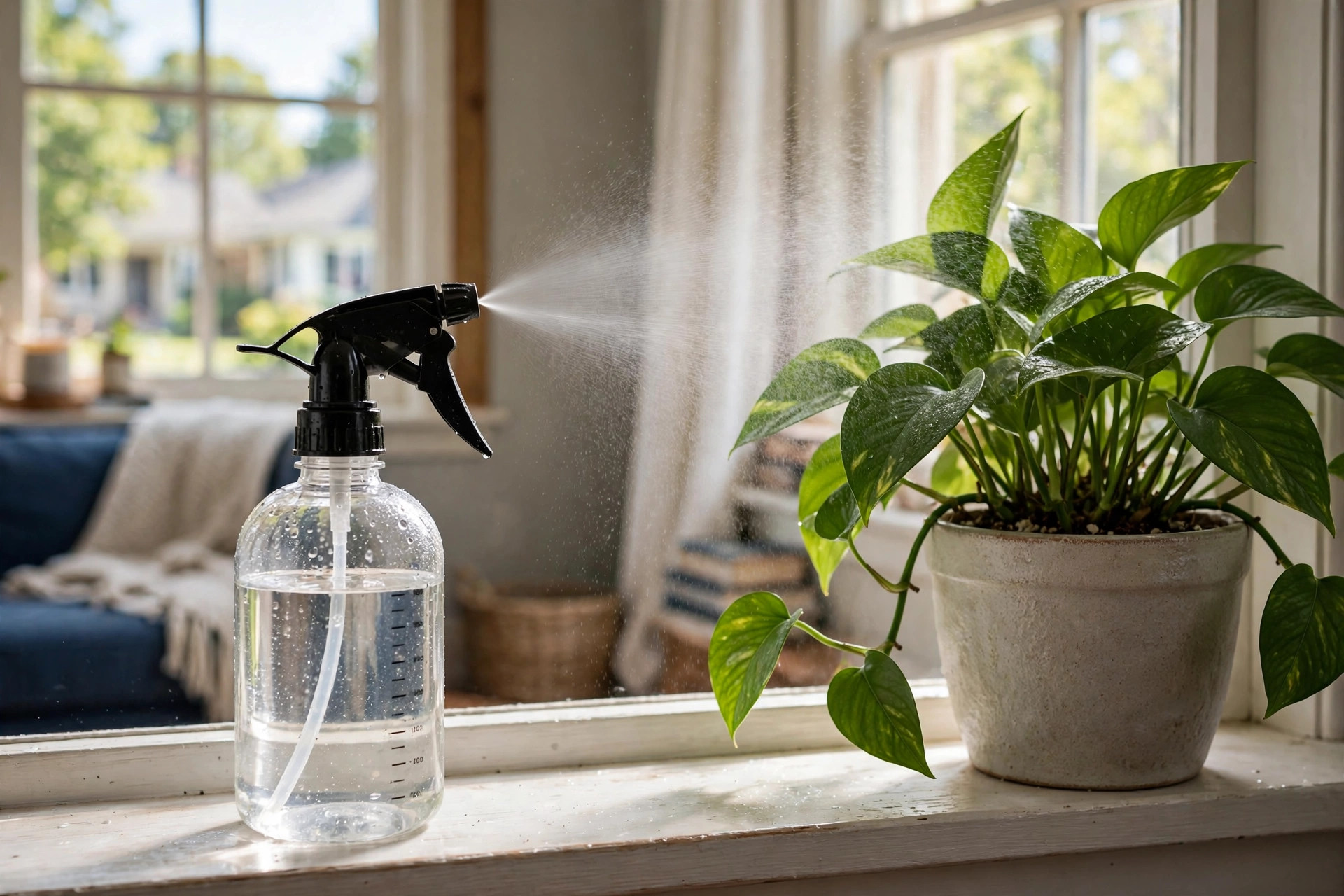
Finding the best garden sprayer for indoor plants can change how you care for your houseplants. Many plant owners water with a cup or a small pitcher. That method often sends too much water to one spot. Soil gets soggy in one place and stays dry in another. Leaves stay dusty. A sprayer fixes these problems with a soft, even mist.
Indoor plants need more than water in the soil. Many come from warm, humid places. Ferns, calatheas, orchids, and peace lilies all love damp air. A sprayer adds moisture around the leaves. It also helps you apply pest sprays and mild fertilizers with care. A fine mist sprayer for tropical plants reaches the undersides of leaves, where pests like to hide.
The best garden sprayer for indoor plants is not the biggest or the strongest. It is the one that gives a soft, fine mist. It should be easy to hold and easy to refill. It should not leak on your floors. This guide explains what to look for, which types work best, what they cost, and how to keep yours in good shape.
Why a Good Sprayer Matters for Indoor Plants
Indoor air is dry in most homes. Heaters in winter and air conditioners in summer pull moisture from the air. Most houseplants prefer humidity between forty and sixty percent. A misting sprayer for houseplants raises humidity right around the plant. That small change can stop brown leaf tips.
Dust is another problem. Leaves collect dust from the air. A dusty leaf cannot take in light as well as a clean one, so growth slows down. A gentle spray of water washes dust away without harming the leaf. A watering can cannot do this job. A sprayer can.
Pest control is easier with a sprayer too. Spider mites, aphids, and mealybugs often attack indoor plants. Many plant owners treat them with neem oil or insecticidal soap, which must coat the leaves in a thin, even film. A fine mist sprayer for tropical plants delivers that even coat. It reaches stems and leaf joints where pests hide.
Fertilizer works the same way. Some fertilizers are made for leaves, not roots. They are called foliar feeds. You mix the feed with water and spray it on the leaves. A good sprayer spreads the mix evenly so no leaf gets too much.
There is also the matter of control. A cup of water gives you little control. A sprayer gives you a lot. You can mist the air, wash the leaves, or dampen the top of the soil.
What to Look for in the Best Garden Sprayer for Indoor Plants
Not all sprayers suit indoor use. Outdoor sprayers are built for power and distance. Indoor sprayers should be built for gentleness and precision. Here is what to check before you buy.
Spray Pattern and Adjustable Nozzle
The nozzle is the most important part. Look for an adjustable nozzle that turns from a fine mist to a steady stream. A fine mist is what you will use most often. It should be even, with no heavy drops or sputtering. Product testing groups such as Consumer Reports stress that an even spray pattern is a key sign of quality in garden sprayers.
Hard water leaves mineral deposits that clog nozzles. Old fertilizer mixes can dry and crust in the tip. Choose a nozzle you can clean with a pin or a small brush. Some sprayers have a filter in the dip tube that keeps small particles out of the nozzle.
Tank Size and Capacity
For indoor use, small is better. A tank between sixteen and thirty-two ounces is ideal for most homes. That is enough water for ten to twenty plants. A larger tank gets heavy and hard to hold. A garden pump sprayer for houseplants with a half-gallon tank is the largest size most indoor growers need.
Check the tank material too. Clear or translucent tanks show the water level at a glance. Thick plastic resists cracks. Glass tanks look nice but break easily. For daily use, plastic is the safer choice.
Build Quality and Materials
A sprayer should last for years. Check the seals and gaskets. Cheap sprayers leak at the pump head or the nozzle base. Leaks are a real problem indoors. Look for sprayers with rubber or silicone seals. These hold up better than thin plastic gaskets.
The trigger or pump handle should feel solid. A flimsy trigger breaks after a few months. If you mist daily, comfort matters. A soft-grip handle reduces hand strain. Plant care guides from The Spruce often note that ergonomic design matters most for tools you use every day.
Ease of Use and Comfort
Refilling should be simple. A wide mouth makes filling easy and cuts down on spills. The pump or trigger should work with little force. If you have weak hands, a continuous mist sprayer is worth a look. One press gives a long, steady mist.
A sprayer with a lock on the trigger will not leak in a cabinet. A flat bottom keeps it from tipping over. Measure your shelf space before you buy.
Types of Sprayers for Indoor Plants
Four main types of sprayers work well indoors. Each has strengths and limits. The right one for your home depends on how many plants you keep and how you plan to use it.
Trigger Spray Bottles
Trigger spray bottles are the most common choice. They are cheap and simple. You squeeze the trigger and get a burst of spray. Most hold sixteen to thirty-two ounces. They work well for a small group of plants and for applying pest treatments in small doses.
The main limit is hand fatigue. Squeezing the trigger many times can tire your hand, and the spray pattern on cheap bottles is often uneven. If you buy this type, choose a bottle with an adjustable nozzle. Home advice sites such as Bob Vila recommend spending a little more for a bottle with a strong trigger and a brass or high-grade plastic nozzle.
Pump Pressure Sprayers
A pump pressure sprayer builds pressure with a few pumps of the handle. Then it sprays on its own until the pressure runs out. These hold more water than trigger bottles. A half-gallon or one-gallon size is common. They suit large plant collections and applying foliar fertilizer to many plants at once.
The spray is steadier than a trigger bottle. You pump once and mist several plants. The downside is size. A one-gallon sprayer is bulky for a small apartment, and the pump needs regular cleaning. A best garden sprayer for pesticides reviews article may mention larger pump models, but for indoor plants, keep the tank small. Keep a separate sprayer for pest chemicals and one for plain water.
Continuous Mist Sprayers
Continuous mist sprayers are a favorite among indoor growers. They use a special valve that stores pressure. One pull of the trigger gives a fine mist that lasts for several seconds. It is ideal for orchids, ferns, and other plants that love humidity. An indoor plant spray bottle with adjustable nozzle settings in this style gives excellent control.
These sprayers hold less water than pump models. Most hold about ten to sixteen ounces. That is fine for daily misting. They are light, comfortable, and less tiring than standard trigger bottles. The price is higher, but the comfort is worth it for daily use.
Electric and Battery Sprayers
Electric sprayers use a small motor or battery to build pressure. You press a button and the spray flows on its own. They suit people with many plants or with hand pain. Some models hold a full gallon.
The downside is cost. Electric sprayers cost much more than manual ones and need charging or batteries. For a small indoor collection, an electric sprayer is more than you need. For a large indoor garden, it can save real time.
Cost and Price of Indoor Plant Sprayers
Prices for indoor plant sprayers fall into clear bands. Basic trigger spray bottles cost three to ten dollars. These are fine for one or two plants. A better trigger bottle with an adjustable brass nozzle costs ten to twenty dollars. This is the sweet spot for most plant owners.
Continuous mist sprayers cost fifteen to thirty dollars. They are worth the price if you mist daily. Pump pressure sprayers in small sizes cost fifteen to forty dollars. Electric and battery sprayers cost forty to over one hundred dollars, and they make sense only for large collections.
Price does not always mean quality. Large home centers such as Lowe’s and Home Depot sell many brands side by side, which makes comparison easy. Watering cans made for indoor plants pair well with a sprayer, and the combined cost often stays under forty dollars.
How to Use and Care for Your Sprayer
Good habits keep your sprayer working for years. Start with clean water. If your tap water is very hard, use filtered or distilled water. Hard water leaves white crusts on leaves and clogs nozzles.
Empty the tank after each use. Stale water grows algae and bacteria. Rinse the tank with warm water and let it air dry. Once a month, wash the tank with a drop of mild dish soap and rinse well.
Clean the nozzle on a regular schedule. Soak it in white vinegar for an hour to dissolve mineral deposits. Then rinse and test the spray. If the spray is still uneven, use a pin to clear the tip. DIY repair guides at Family Handyman show simple ways to fix common sprayer clogs.
Store the sprayer out of direct sun. Sunlight breaks down plastic and grows algae in leftover water. In winter, do not leave a full sprayer in an unheated room. Water expands when it freezes and can crack the tank.
Label your sprayers if you own more than one. Use one sprayer for plain water and another for fertilizer mixes. A trace of weed killer in a water sprayer can kill a houseplant. Write the contents on the tank with a marker.
Safety Tips for Using Garden Sprayers Indoors
Sprayers are safe tools, but they need care indoors. The main risk comes from what you put in the tank. Pest sprays and fertilizers are chemicals. Treat them with respect.
Read every product label before you mix. Use only the amount the label states. More is not better. Too much fertilizer burns leaves. Mix sprays in a ventilated area. Open a window or work near a fan.
Keep all spray mixes away from children and pets. Store sprayers with chemicals in a locked cabinet. Even a water-only sprayer should be stored out of reach of small children.
Never use a sprayer that once held weed killer for your houseplants. Weed killer residue survives many rinses. If you need a garden sprayer made for pesticides, buy a separate unit and mark it clearly. Keep the two sprayers in different places so they cannot be mixed up.
Wear gloves when you apply pest treatments. Wash your hands after you finish. If spray gets on your skin, rinse it off at once. Home and garden retailers such as Gardener’s Supply Company sell gloves and labels made for this kind of work.
Frequently Asked Questions
How often should I mist my indoor plants?
It depends on the plant. Tropical plants like ferns and calatheas enjoy misting once or twice a day. Succulents and cacti need almost no misting. Most houseplants do well with misting two or three times a week. If leaf tips turn brown, the air may be too dry.
Can I use tap water in my plant sprayer?
Yes, in most cases. Tap water is fine for misting. The main issue is hard water. Very hard water leaves white spots on leaves and can clog the nozzle over time. If your water is hard, use filtered or distilled water. A guide to starting seeds indoors gives the same advice, since young seedlings are also sensitive to minerals.
What is the best misting sprayer for houseplants with many leaves?
A continuous mist sprayer is the best choice for leafy plants. It gives a very fine, even mist that coats many leaves at once. The mist lasts for several seconds with one press. That makes it fast to mist a large monstera or a full fern.
Should I use the same sprayer for water and fertilizer?
You can, if you rinse well between uses. Fertilizer residue washes out with soap and water. The strict rule is about pest chemicals and weed killers. Those need a dedicated sprayer.
Why does my sprayer sputter or spray unevenly?
Sputtering has three common causes. The tank may be nearly empty. The nozzle may be partly clogged. Or the pump seal may be worn. Refill the tank first. If the problem stays, clean the nozzle with vinegar. If it still sputters, check the seals. Tool makers such as Fiskars and Corona note that worn seals are the most common cause of weak spray in garden tools, and replacement seals are cheap.
Where should I buy a garden sprayer for indoor plants?
Garden centers, home improvement stores, and online sellers all carry good options. Specialty sellers such as the seed company Burpee also stock indoor gardening tools. Choose a seller with a fair return policy.
A Final Word
The best garden sprayer for indoor plants is a small tool that makes a big difference. It keeps leaves clean. It adds moisture to dry indoor air. It helps you feed and protect your plants with care. You do not need the most expensive model. You need a sprayer with an adjustable nozzle, good seals, and a size that fits your home and your hands.
Start with a quality trigger bottle or a continuous mist sprayer. Keep one sprayer for water and a separate one for treatments. Clean it on a regular schedule. Your plants will show the result in greener leaves and steadier growth. A good sprayer is one of the simplest upgrades a plant owner can make.
References
Bob Vila. (n.d.). Home improvement advice. https://www.bobvila.com Burpee. (n.d.). Seeds, plants, and gardening supplies. https://www.burpee.com Consumer Reports. (n.d.). Product reviews and ratings. https://www.consumerreports.org Corona Tools. (n.d.). Garden and landscape tools. https://www.corona-tools.com Family Handyman. (n.d.). DIY home repair and maintenance. https://www.familyhandyman.com Fiskars. (n.d.). Garden and cutting tools. https://www.fiskars.com Gardener’s Supply Company. (n.d.). Gardening tools and supplies. https://www.gardeners.com Lowe’s. (n.d.). Home improvement products. https://www.lowes.com The Home Depot. (n.d.). Home improvement products. https://www.homedepot.com The Spruce. (n.d.). Home and garden advice. https://www.thespruce.com
Was this guide helpful?

About Michael Thompson
The My Garden US editorial team writes practical, in-depth home and garden guides for American homeowners — tested advice, no fluff.