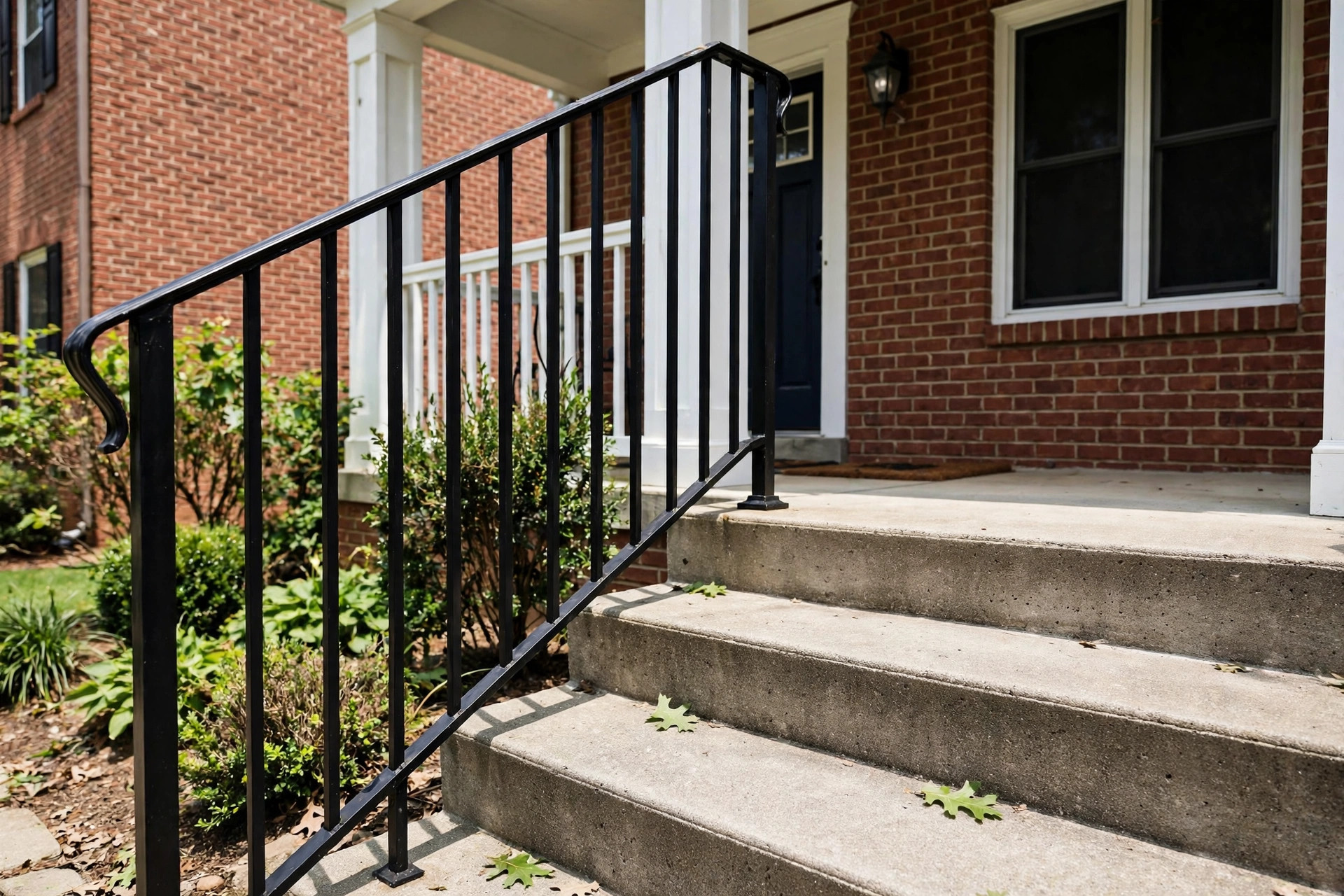

This exterior stair railings reviews and buying guide was written for home owners who want safe steps without spending more than they must. A good railing keeps people steady on stairs. It also adds to the look of a home. Many home owners put off this job. The steps seem fine. The old rail seems fine. Then one wet morning someone slips. That is when a weak rail shows its age. This guide covers the main types, costs, codes, upkeep, and common questions.
Why Exterior Stair Railings Matter
Stairs are one of the most dangerous parts of a house. Falls on steps send thousands of people to the doctor each year. A solid railing gives the hand something firm to hold. It guides the eye and marks the edge of the steps in the dark.
A railing also protects the value of a home. Buyers notice loose rails at once. A straight, firm rail tells a buyer the house has been cared for, and writers at The Spruce note that small exterior repairs like this pay back well at sale time.
Local law matters too. Most cities and towns require railings on stairs with more than three or four risers. The rules set the height, the spacing of balusters, and the strength the rail must hold. Insurance companies may also ask for railings to meet code. A rail that fails an inspection can delay a home sale. A quick check of local code before you buy saves trouble later.
What to Look for When You Shop: Exterior Stair Railings Reviews and Buying Guide
These are the main points to weigh.
Strength and Load Rating
A railing must take a hard push without moving. Building codes in most states call for a rail that can hold about 200 pounds of force in any direction. Quality makers test their products to this mark and print the rating on the box or the web page. Reviews on sites like Consumer Reports stress that a low price means little if the rail bends under weight.
Shake the display model if you shop in a store. A good rail feels dead solid.
Material and Finish
The material sets how the rail looks, how long it lasts, and how much care it needs. Metal is strong and slim. Wood is warm and classic but needs paint or stain. Vinyl and composite need almost no care but cost more up front. Pick the finish for your climate, since sun, rain, snow, and salt air all attack railings in their own way.
Fit for Your Steps
Measure before you buy. Note the number of steps, the rise and run of each step, and the angle of the stairs. Many rail kits are made for common angles, and some are adjustable for odd stairs. If your steps are stone or concrete, you will need masonry anchors. If they are wood, lag bolts into solid framing do the job. Family Handyman has clear guides on measuring stairs for rail kits.
Local Building Code
Call your city or county office, or check its web site, before you order. Most codes want the top of the rail 34 to 38 inches above the stair nosing. Balusters must be close enough that a four-inch ball cannot pass through. Handrails must be graspable, which means a certain shape and size. Buying first and asking later can mean buying twice.
Types of Exterior Stair Railings
Each type has fans. Each has weak points. Here is an honest review of the main choices.
Wrought Iron and Steel
Iron rails have a long history in American homes. They look fine on brick, stone, and older wood houses. Modern steel rails are often hollow tube, which is lighter and cheaper than solid iron. Both are very strong. Both can be shaped into curves and scrolls.
The weak point is rust. Once rust starts, it spreads fast. Look for hot-dip galvanized steel under the powder coat. That double shield lasts far longer than paint alone. Plan to touch up chips with rust-proof paint each year. Reviews from owners on Bob Vila praise the look of iron but warn about the upkeep in wet climates.
Aluminum
Aluminum is the quiet workhorse of the railing world. It will not rust. It is light, so shipping and handling are easy. Many kits use aluminum posts and rails with pickets to match. The finish is usually a baked-on powder coat that holds color for years.
Aluminum is not as stiff as steel, so check the wall thickness if the maker lists it. Thicker stock resists flex. Aluminum is a fine pick for most homes, and it is often the best value when you count the years of low care. If you are also weighing rail choices for cold regions, our guide to budget friendly exterior stair railings for cold climates covers frost-proof options in more depth.
Wood
Wood rails suit farmhouses, cabins, and craftsman homes. Cedar and redwood resist rot on their own. Pressure-treated pine is cheaper but must be sealed. Wood is easy to cut on site, which helps with odd stairs. A handy home owner can build a wood rail with basic tools.
The cost is upkeep. Wood needs stain or paint every two to three years in harsh weather. Wood also moves with the seasons, so screws loosen and pickets warp. Plan a yearly check and tighten. For a full look at regional picks, see our best exterior stair railings for midwest homes article.
Vinyl and Composite
Vinyl rail kits are popular with home owners who hate painting. The material will not rot, rust, or peel. It washes clean with a hose. Most kits snap together, which makes for a fast install. Composite rails, often made for decks, mix wood fiber and plastic for a wood look with less care.
The trade-offs are price and feel. Vinyl costs more than wood up front, and cheap vinyl can look plain or yellow in strong sun. Pick a maker that adds UV blockers to the mix, and hold dark samples in the sun before you buy. This Old House advises buyers to test dark colors this way before they commit.
Cable Railing
Cable rails use thin steel cables stretched between posts. They give an open, modern look and keep the view clear. They suit lake homes and hillside decks. Stainless cable resists rust well.
Cable rails cost more than picket rails, and the cables need re-tensioning now and then as they stretch with time and temperature. Some codes do not allow wide cable spacing for child safety. Check local rules before you fall in love with the look.
Cost and Price Guide
Prices swing widely by material, length, and who does the work. These are rough ranges for American home owners.
– Wood rail, DIY kit: 25 to 60 dollars per linear foot for materials. – Aluminum rail kit: 60 to 120 dollars per linear foot for materials. – Steel or iron rail: 80 to 160 dollars per linear foot for materials, more for custom scrollwork. – Vinyl rail kit: 50 to 110 dollars per linear foot for materials. – Cable rail system: 100 to 200 dollars per linear foot for materials. – Professional install: add 50 to 150 dollars per linear foot for labor, more for masonry drilling.
A simple six-foot stair rail might cost 300 dollars in materials for wood and 900 dollars for cable. Custom iron work on a grand front stair can run into the thousands. Get three quotes if you hire out. Labor rates differ a lot by region. Big-box stores like Lowe’s and Home Depot sell kits with clear per-foot pricing, which makes comparing easy.
Do not forget the small costs. Masonry anchors, drill bits, concrete for post bases, and touch-up paint add up. A permit may cost 50 to 150 dollars. Ask the permit office what it needs.
Installation: Do It Yourself or Hire a Professional
Many rail kits are made for home owners. If you can drill straight holes and follow steps in order, you can likely install a kit rail in a day. Wood posts set in concrete are the classic DIY job. Surface-mount aluminum kits on existing stairs are also friendly.
Hire a pro when the job gets tricky. Stone steps need a hammer drill and the right anchors, and a bad hole in stone is hard to fix. Custom iron rails must be measured and welded to fit. Any rail tied to a permit inspection deserves a licensed installer who knows the local inspector. A pro also carries insurance.
Whether you do it yourself or hire out, the steps are the same. Mark the post spots. Drill or dig. Set posts plumb and let concrete cure. Cut rails to length. Fasten rails level with the stair slope. Check every bolt twice, then test the rail with a firm push before anyone leans on it.
Care and Upkeep Through the Seasons
A little care each year adds a decade to a railing. Walk this checklist each spring.
First, clean. Wash the rail with soap and water. A soft brush takes off pollen and grime. Rinse well. For vinyl, a mild cleaner keeps it bright. For wood, let it dry a day before you stain.
Second, inspect. Grab each post and push. Look for rust spots, soft wood, cracked welds, and loose bolts. Check where the rail meets the steps. Water sits in those joints and starts rot and rust. Mark every weak spot with tape so you fix them all.
Third, repair. Sand rust to bare metal, prime with rust-proof primer, and paint. Tighten every bolt. Replace any rotted wood section at once, since rot spreads. Re-caulk joints where water can enter. If your home has fiber cement siding near the stairs, maker guides from James Hardie show how trim and rails should meet the wall without trapping water. CertainTeed publishes similar detail drawings for exterior trim.
Fourth, protect. Touch up paint before the bare season. Re-stain wood when water stops beading on it. In snow states, keep de-icing salt off metal rails where you can, since salt speeds rust. A plastic shovel near the steps beats a steel one for the rail’s sake.
Home owners who want a full upkeep calendar can look at seasonal guides from Fine Homebuilding, which break exterior care into spring, summer, and fall tasks.
Safety Tips for Families
A code-legal rail is the floor, not the ceiling. These extra steps make stairs safer for everyone.
Keep the rail graspable. A two-by-four laid flat is a poor handrail. Hands need a rounded or shaped grip. If your rail top is wide and flat, add a proper handrail profile under or beside it.
Light the steps. Most stair falls happen in poor light. A small light at the top and bottom of outdoor stairs helps a lot. Solar step lights are cheap and need no wiring. Wire a fixture if the stairs get daily use.
Clear the path. Leaves, ice, and toys turn safe stairs into traps. Sweep often in fall. Keep a bag of ice melt by the door in winter. Fix uneven treads at once.
Teach the habit. Children should hold the rail every time. Older guests may need a reminder that the rail is there for them. A rail only works when hands are on it. For more on low-cost comfort upgrades around entries, our energy efficient exterior stair railings with free shipping roundup covers modern kit options.
Frequently Asked Questions
How tall should an exterior stair railing be?
Most codes call for 34 to 38 inches from the stair nosing to the top of the rail. Some towns use 36 inches as the single standard. Always check your local code, since it has the final word.
How many stairs need a railing?
Most codes require a railing when a stair has four or more risers. That is about 30 inches of total rise. Even with three steps, a rail is a wise add. Short falls still cause real harm, and guests expect a handhold.
What is the best material for an outdoor stair railing?
There is no single best pick. Aluminum wins for low care in most climates. Steel or iron wins for strength and classic looks where rust can be managed. Wood wins for price and for homes where wood fits the style. Vinyl wins for owners who never want to paint. Match the material to your weather, your budget, and how much care you will truly do.
Can I install a stair railing myself?
Yes, if the stairs are wood or concrete and you buy a kit made for DIY. You need a drill, a level, a tape, and patience. Hire a pro for stone steps, custom iron, or any job tied to a permit inspection.
How much does it cost to replace an exterior stair railing?
A simple DIY wood replacement can run 200 to 500 dollars in materials. A pro-installed aluminum or steel rail on a standard front stair often lands between 1,000 and 3,000 dollars. Custom work, long runs, and masonry drilling push the price higher.
How long do exterior stair railings last?
Well-kept aluminum and vinyl rails can last 20 to 30 years. Steel and iron last 15 to 25 years if rust is kept at bay. Wood lasts 10 to 15 years with steady sealing, less if neglected. Yearly checks are the best way to reach the top of the range.
A Final Word
Picking a stair railing is a small job with a big payoff. The right rail keeps your family steady, meets the code, and lifts the look of your home. Start with your climate and your budget. Narrow the field to two materials. Compare rated kits from known sellers. Then install with care or hire it done right. A firm rail under your hand on a rainy night is worth every penny.
References
Bob Vila. (n.d.). Home improvement advice. https://www.bobvila.com CertainTeed. (n.d.). Building materials and exterior products. https://www.certainteed.com Consumer Reports. (n.d.). Product reviews and ratings. https://www.consumerreports.org Family Handyman. (n.d.). DIY home repair and maintenance. https://www.familyhandyman.com Fine Homebuilding. (n.d.). Home building knowledge and craft. https://www.finehomebuilding.com James Hardie. (n.d.). Fiber cement siding and exterior products. https://www.jameshardie.com Lowe’s. (n.d.). Home improvement products. https://www.lowes.com The Home Depot. (n.d.). Home improvement products. https://www.homedepot.com The Spruce. (n.d.). Home and garden advice. https://www.thespruce.com This Old House. (n.d.). Home renovation guidance. https://www.thisoldhouse.com
Was this guide helpful?

About Robert Taylor
The My Garden US editorial team writes practical, in-depth home and garden guides for American homeowners — tested advice, no fluff.
You May Also Like
Premium Seamless Gutter Guards With Free Shipping: A Practical Buying Guide
January 26, 2026 0 views
Budget Friendly Fiber Cement Siding Panels Buying Guide
August 22, 2026 0 views
Weather Resistant Soffit and Fascia Repair for Homeowners
April 17, 2026 0 views