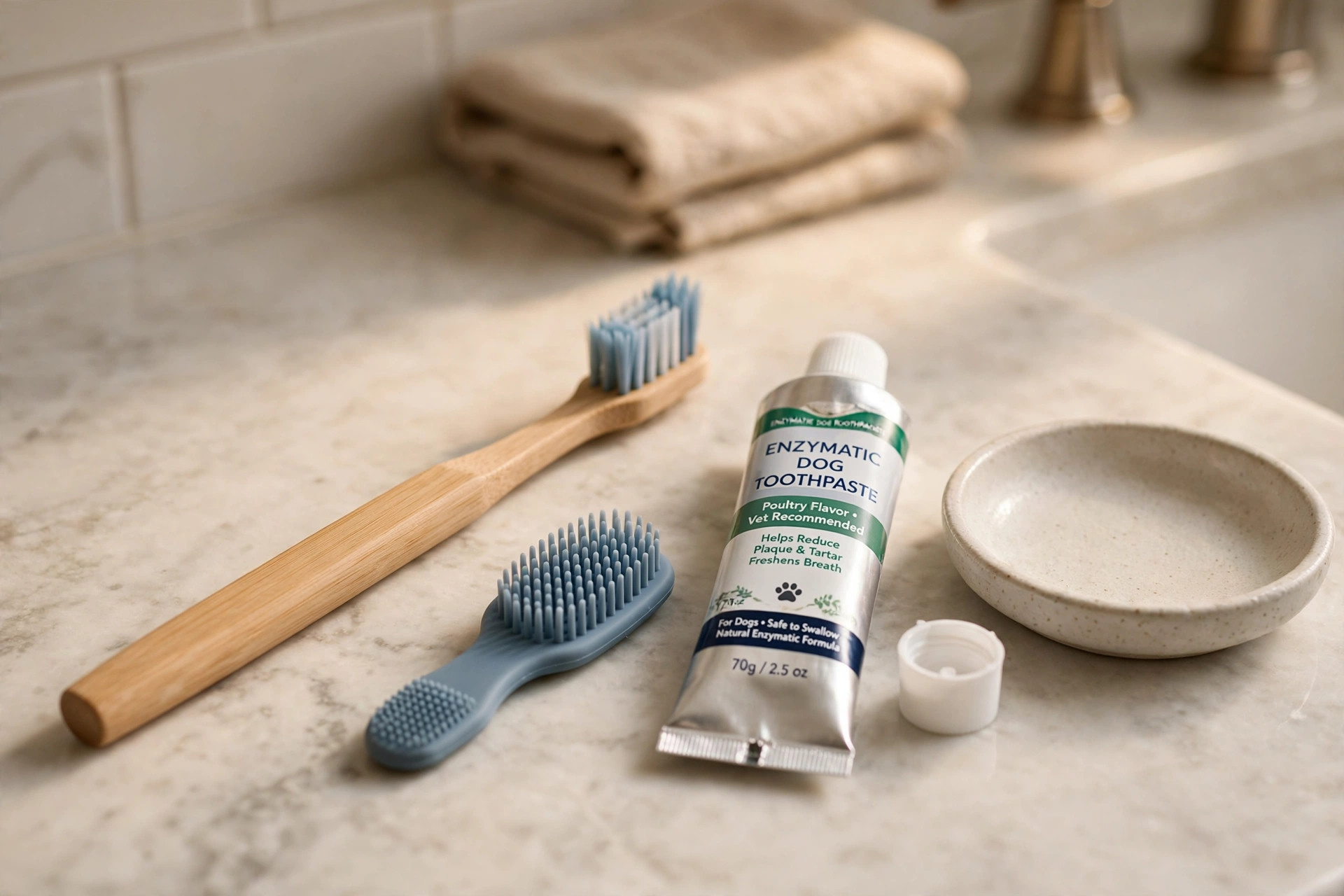

Most dog owners think about food, walks, and vet visits. Teeth often come last. Yet a dog’s mouth needs care just like any other part of the body. Plaque builds up on a dog’s teeth the same way it builds up on human teeth. If no one removes it, it hardens into tartar. Tartar leads to sore gums, bad breath, and tooth loss. In time, mouth disease can spread to the heart and kidneys. A good toothbrush kit is the simplest way to stop this process at home. This guide explains the best dog toothbrush kit for dental health, what each part does, and how to use it well.
Why Your Dog’s Teeth Matter
Dental disease is one of the most common health problems in dogs. Vets report that most dogs over the age of three show some sign of gum disease. The signs start small. The breath turns sour. A thin line of red appears where the gum meets the tooth. The dog may chew on one side or drop food. Many owners miss these signs because dogs rarely complain.
Good dental care starts with simple habits. Brushing removes the soft film of plaque before it hardens. Hardened tartar can only be removed by a vet under anesthesia. That means home care is the first and best defense. A dog toothbrush kit gives you the right tools in one box. It costs little, takes minutes a day, and can add years of comfort to your dog’s life. For general pet health guidance, groups like the American Veterinary Medical Association and the ASPCA publish care basics every owner should know.
What to Look For in a Kit: Best Dog Toothbrush Kit for Dental Health
Not all kits are equal. The best dog toothbrush kit for dental health has three things: a brush that fits your dog’s mouth, a paste made for dogs, and clear use directions. Below is what to check before you buy.
The Brush
Brushes come in three main styles. A long-handled brush looks like a human toothbrush but has a softer head and angled neck. It reaches the back teeth where plaque hides. A dual-head brush has a large head on one end and a small head on the other, which suits homes with more than one dog. A finger brush is a small sleeve that slides over your finger. It gives the most control but reaches less far.
Soft bristles are a must. Hard bristles hurt the gums and make dogs fear the brush. The head should be small enough to fit between the cheek and the back teeth. For small breeds, a head the size of a pea works well. Large dogs can use a head about the size of a dime. Replace the brush every three months, or sooner if the bristles bend.
The Toothpaste
Never use human toothpaste on a dog. Human paste has fluoride and foaming agents that harm dogs when swallowed. Dogs do not spit. They swallow all of it. Dog toothpaste is made to be safe when swallowed.
Dog pastes come in flavors dogs accept, such as poultry, beef, peanut butter, or mint. Enzymatic paste is the most common type. It keeps working after brushing ends, which helps between sessions. Pick a flavor your dog will lick off the brush at first. That makes training much easier. Retailers like Chewy and Petco carry a wide range of enzymatic pastes with clear labels.
Extras That Help
Many kits add useful extras. Dental wipes clean the front teeth on days when brushing is hard. A rubber gum massager soothes sore gums and helps young dogs get used to mouth handling. Some kits include a small guide with pictures. A guide is worth more than it sounds, since the first week sets the habit for years. Store the kit in one place, such as a bathroom drawer, so the routine never slips.
Types of Dog Toothbrush Kits
Kits fall into a few clear groups. Knowing the groups makes the choice simple.
Starter kits hold one brush and one small tube of paste. They suit a first-time owner or a young puppy. The price stays low, and the parts are simple to use.
Multi-brush kits hold two or three brushes, often a long brush, a dual-head brush, and a finger brush. These suit homes with dogs of different sizes. One kit serves the whole house.
Complete care kits hold brushes, paste, dental wipes, a gum massager, and sometimes a breath spray or water additive. These suit owners who want a full routine in one box. They cost more but replace several separate buys.
Puppy kits use extra-soft bristles and mild paste. Puppies teethe between three and six months, and their gums are tender. A gentle kit builds trust early. Start brushing as soon as the adult teeth come in.
Each type can serve well. Match the kit to your dog’s size, age, and temper. The American Kennel Club offers breed-specific dental tips that can help you choose the right fit.
How to Brush Your Dog’s Teeth
A kit only works if the dog accepts it. Most dogs need one to two weeks of short, calm sessions before they sit still. Go slow. Keep each step short and end on a good note.
1. Let the dog sniff the brush and lick a dab of paste off it. Praise the dog. 2. Touch the brush to the front teeth for five seconds. Praise and stop. 3. Lift the lip and brush the outer side of the upper teeth with small circles. 4. Work from the front teeth toward the back teeth on one side, then the other. 5. Brush the lower teeth the same way. 6. Aim for thirty seconds per side once the dog is used to it.
Brush the outer surfaces most. The tongue keeps the inner surfaces fairly clean. Use gentle pressure. If the gums bleed a little at first, do not worry, but see a vet if bleeding lasts. End each session with play or a short walk so the dog links brushing with good things. For a full routine, brush daily or at least three times a week.
A water additive or dental chew can support the routine, but neither replaces brushing. The mechanical action of the bristles is what removes plaque. Dental articles at PetMD explain this point in more depth.
Cost and Price Guide
Dog toothbrush kits are one of the cheapest pet care buys. A basic starter kit runs about five to ten dollars. Multi-brush kits run about eight to fifteen dollars. Complete care kits with wipes and extras run about twelve to twenty-five dollars. Refill paste alone costs four to eight dollars a tube.
The long-term math favors the kit. A professional dental cleaning at the vet often costs several hundred dollars and needs anesthesia. Daily brushing cannot replace vet cleanings, but it stretches the time between them. Most owners find that a ten-dollar kit pays for itself many times over. Shop around at stores such as PetSmart and compare what each kit includes before you decide. For unbiased product testing notes, The Spruce Pets reviews many common kits.
Care and Upkeep of the Kit
Keep the kit clean and it will serve well for months. Rinse the brush head under warm water after each use. Shake off the water and let the brush air-dry standing up. Do not share one brush between dogs, since mouth germs pass easily. Mark each brush with a bit of tape if you own more than one dog.
Store paste in a cool, dry place. Check the tube for an expiry date. Old paste loses its enzymes and flavor, and dogs will refuse it. Wipe the cap after each use so it does not crust shut. Replace finger brushes when the rubber thins or tears.
Keep the whole kit where you will see it. A kit stored in a drawer gets used. A kit stored in a closet gets forgotten. Pair brushing with a fixed daily event, such as your own bedtime routine. This links with other weekly care habits, like a dog ear cleaning routine, and keeps the whole grooming schedule on track.
Safety Notes
Dental care is safe, but a few rules matter. Never use human toothpaste, baking soda, or salt on a dog. Human products can poison a dog or burn the mouth. Use only products made for dogs.
Watch the dog’s mouth as you brush. Loose teeth, lumps on the gums, heavy bleeding, or a tooth that changes color are signs to call the vet. Puppies lose baby teeth, which is normal, but adult teeth should never feel loose.
Do not force a dog that panics. Forcing creates fear that lasts for years. If the dog growls or snaps, stop and try again the next day with shorter steps. Some dogs never accept a brush. For them, dental wipes or a vet-approved chew is a better path. Ask your vet for advice if you are unsure. Hospital standards from the American Animal Hospital Association set the bar for professional dental care when home care is not enough.
Keep the kit out of reach of children and pets when not in use. Toothpaste tubes look like toys to a bored dog, and a chewed tube can cause stomach upset.
Frequently Asked Questions
How often should I brush my dog’s teeth? Daily brushing gives the best result. If daily is too much, brush at least three times a week. Plaque hardens into tartar in about two to three days, so brushing twice a week is the lowest useful rate.
What age should I start brushing? Start when the adult teeth are fully in, around six months. Begin with gentle gum touches even earlier so the puppy learns that mouth handling is normal. Early training makes adult brushing easy.
My dog hates the brush. What can I do? Go back to step one. Let the dog lick paste off your finger for a few days. Then move to a finger brush. Then move to a long brush. Keep sessions under a minute. Most dogs accept the routine within two weeks of patient work.
Can I use a human toothbrush on my dog? A soft human toothbrush can work in a pinch for a large dog, but it is not ideal. Dog brushes have angled necks and softer bristles made for a dog’s mouth. You must still use dog toothpaste, never human paste.
Do dental chews replace brushing? No. Chews help, and a good slow feeder bowl can also slow gulping that harms teeth, but brushing removes more plaque than any chew. Think of chews as a helper, not a replacement.
When does my dog need a vet cleaning? See the vet if breath turns very bad, gums bleed often, the dog drops food, or tartar is thick and brown. Regular vet checkups catch dental disease early. A pet scale for home weigh-ins can also help you track health trends between visits.
A Final Word
The best dog toothbrush kit for dental health is the one you will actually use every day. It does not need to be costly or fancy. A soft brush, a safe paste, and a calm routine do the real work. Start slow, praise often, and make it a habit. Your dog will keep its teeth longer, eat with comfort, and breathe easier. Few pet care tasks give so much for so little. Pick up a kit this week, and give your dog a reason to smile.
References
American Animal Hospital Association. (n.d.). Pet health resources. https://www.aaha.org American Kennel Club. (n.d.). Dog care and training resources. https://www.akc.org American Veterinary Medical Association. (n.d.). Pet care resources. https://www.avma.org ASPCA. (n.d.). Pet care and animal welfare resources. https://www.aspca.org Chewy. (n.d.). Pet supplies. https://www.chewy.com Petco. (n.d.). Pet supplies and services. https://www.petco.com PetMD. (n.d.). Pet health information. https://www.petmd.com PetSmart. (n.d.). Pet supplies and services. https://www.petsmart.com The Spruce Pets. (n.d.). Pet care guides and product reviews. https://www.thesprucepets.com
Was this guide helpful?

About Lisa Anderson
The My Garden US editorial team writes practical, in-depth home and garden guides for American homeowners — tested advice, no fluff.
You May Also Like

Dog Pen for Garage and Basement Containment: A Practical Guide
July 4, 2026 0 views
Pet Door for Screen Door Installation Dogs: A Simple Guide for Dog Owners
July 25, 2026 0 views
The Best Dog Shampoo for Sensitive Itchy Skin
April 18, 2026 1 views