
This energy efficient decorative window film buying guide will help you choose the right film for your home. Window film is a thin sheet that sticks to glass. It serves two purposes at once. It makes windows look better. And it blocks heat, glare, and harmful sun rays. Many American homes now use it. It costs far less than new windows. It installs in an afternoon. And it can cut cooling bills in hot months. This guide explains what to look for, the types you can buy, what you will pay, and how to keep it looking good.
Why It Matters
Glass is a weak point in any home. Sunlight passes through it and heats the room. In summer, this heat forces air conditioners to work harder. Rooms with large windows can feel like ovens by midday. An energy efficient film reflects much of that solar heat back outside. The room stays cooler. The air conditioner runs less.
Film also blocks ultraviolet light. UV rays fade wood floors, rugs, drapes, and furniture. Many quality films block 99 percent of UV. That protection saves real money. A faded sofa or a bleached wood floor costs far more to fix than a roll of film.
Glare is another problem. Bright sun on a television or a computer screen strains the eyes. Film softens that glare while still letting in natural light. Many people prefer this to heavy drapes or blinds, which darken a room completely. With film, the room stays bright. The view stays open. But the harsh light is gone.
The decorative part matters too. Plain windows give little privacy. Film can frost a bathroom window or add a stained glass pattern to a front door. It gives privacy without blocking light. Many homeowners use it on entry doors, street-facing windows, and home offices.
What to Look For: Energy Efficient Decorative Window Film Buying Guide
Start with the film rating. Look for the Solar Heat Gain Coefficient, called SHGC. A lower number means less heat enters. Standard glass has an SHGC near 0.86. A good solar film can bring that down to 0.35 or less. Also check the U-factor, which measures heat loss in winter. Low-e films have a lower U-factor. They help in cold months as well.
Check the visible light transmission, or VLT. This tells you how much light passes through. A film with 70 percent VLT keeps the room bright. A film with 35 percent VLT cuts more heat and glare but darkens the room. Think about the room you want to cover. A living room with a good view needs higher VLT. A west-facing bedroom that bakes in the afternoon can take lower VLT.
Look at UV blockage. Almost all quality films block 99 percent of UV rays. Cheap films may not. Read the label before you buy. UV protection is one of the main reasons to install film, so do not skip this detail.
Ease of install matters. Static cling films need only water and a squeegee. Adhesive films bond more strongly but are harder to remove. For a first project, static cling is the safer choice. You can peel it off and reposition it if you make a mistake.
Think about your other window treatments. Film works well with curtains, shades, and blinds. It does not replace them for night privacy in many rooms. Some people layer film under light curtains to get day privacy, heat control, and night cover in one window. Retailers such as IKEA and Wayfair sell layered window coverings that pair well with film.
Types and Options
Decorative films come in several styles. Each serves a different need. Here are the main types you will find in stores.
Frosted and Privacy Films
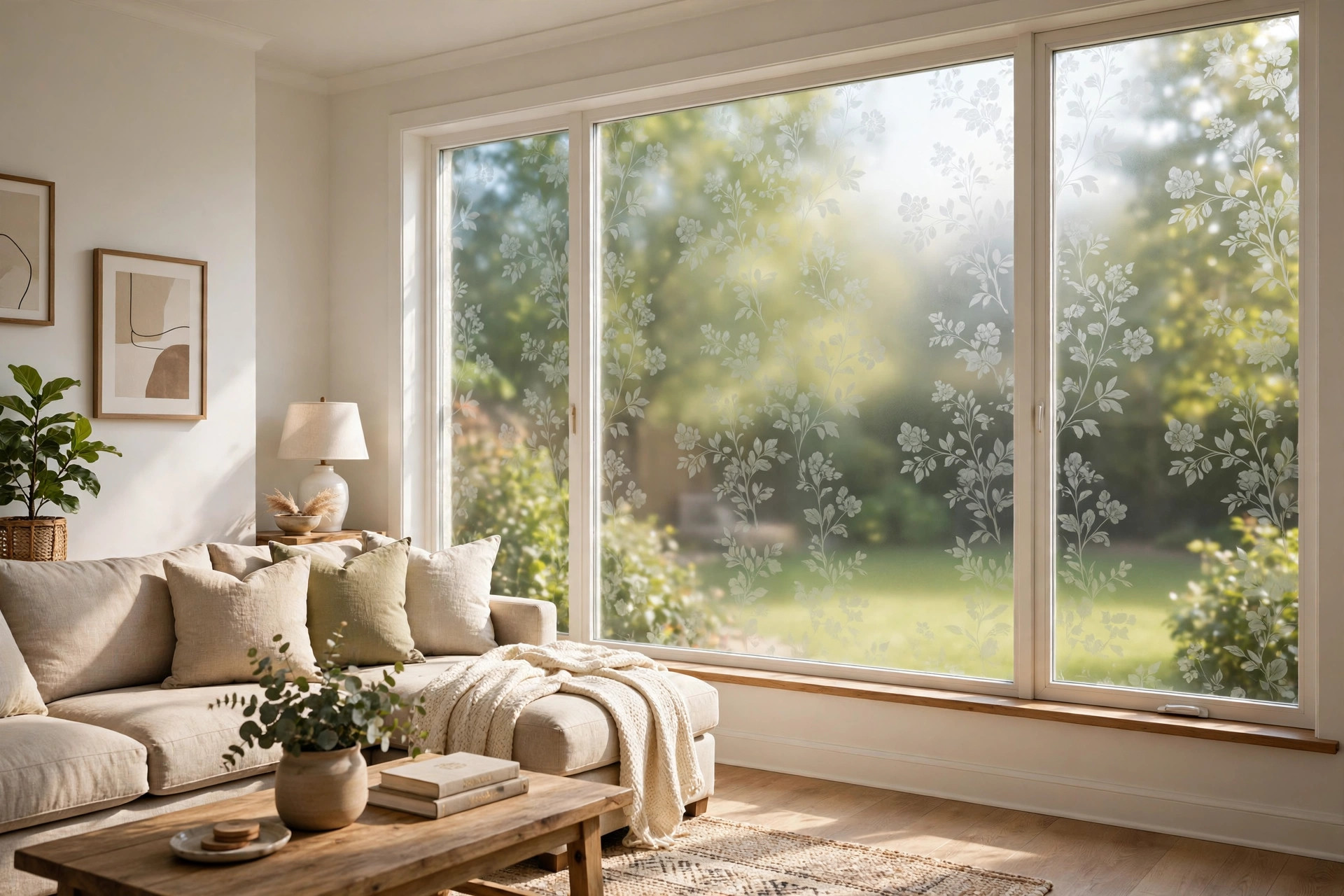
These give the look of etched or sandblasted glass. They blur shapes behind the window. Light still passes through. They are the top choice for bathrooms, laundry rooms, and front doors. Some have patterns such as stripes, dots, or leaves built in.
Stained Glass and Patterned Films
These films look like real stained glass. They come in many designs, from simple leaded diamonds to full floral scenes. They add color and character to plain windows. They are popular on entry doors and small accent windows. They also cut glare, though their heat control is often weaker than true solar films.
Solar Control Films
These are built for energy savings. Many are clear or only lightly tinted. They reflect infrared heat while looking almost invisible on the glass. Some have a slight mirror look on the outside. They are the best choice for large south and west windows that drive up cooling bills. You can learn more about how solar heat gain affects a home from the guides at energy.gov.
Low-E Films
Low-emissivity films reflect heat in both directions. In summer, they push solar heat out. In winter, they keep room heat in. They cost more than plain solar films. But they give year-round value in states with both hot summers and cold winters. The ENERGY STAR program offers useful background on energy efficient windows and coatings.
Mirrored and Reflective Films
These look like a mirror from the outside during the day. They give strong daytime privacy. People outside cannot see in, while you can still see out. They block a lot of heat and glare. At night the effect reverses, so you will still need curtains or blinds after dark. Check with your local rules before using reflective film, since some homeowner groups limit how reflective windows can be.
Cost and Price
Window film is one of the cheapest ways to improve windows. A static cling roll for one window costs between 8 and 25 dollars at home improvement stores and specialty shops like Blinds.com. Larger rolls that cover several windows cost 30 to 80 dollars. High-end low-e or ceramic films cost more, often 60 to 120 dollars per window in materials.
Professional installation adds 5 to 12 dollars per square foot in most American cities. A pro job for a whole house can run 500 to 1,500 dollars. Most homeowners do it themselves. The tools are simple: a spray bottle, a squeegee, a utility knife, and a measuring tape. Plan one to two hours for your first window. The second window goes much faster.
Compare this to new windows. A single replacement window costs 300 to 1,000 dollars installed. For a house with twenty windows, film can deliver much of the comfort gain at a small share of the price. It will not fix drafty frames or broken seals. But for heat, glare, and UV, it is a strong bargain.
Watch for sales in spring. Many stores discount film before summer. Online sellers run deals year round. Buy a little extra film for practice. A 10 percent extra margin covers cutting mistakes.
How to Install It Yourself
Good installation decides the final look. Take your time. The steps below work for most static cling films.
First, measure the glass. Measure the inside of the frame, not the frame itself. Cut the film about one inch larger on each side. You will trim it after it is on the glass.
Second, clean the glass well. Wash it with soapy water. Then scrape it with a razor blade to remove paint specks and old sticker residue. Rinse and dry the edges. Any speck left behind will show as a bump under the film.
Third, spray the glass with water mixed with a few drops of dish soap. Peel the backing off the film. Spray the sticky side too. Lay the film on the wet glass. It will slide, which is what you want. Position it so the extra inch hangs over each edge.
Fourth, squeegee out the water. Start at the center and push toward the edges. Work slowly. Press firmly to push out air bubbles. Small bubbles near the edge can be worked out. Large trapped bubbles mean you should lift and redo that section.
Fifth, trim the edges. Run a sharp utility knife along the frame. Use a straightedge for a clean line. Wipe the edges dry. Let the film cure for 30 days before cleaning it.
Pick a calm day for the job. Wind and dust make the work harder. Keep children and pets out of the room while the backing is off, since film picks up hair and dust fast. If your home uses corded window coverings, review the child safety guidance from the Consumer Product Safety Commission while you plan the room.
Care and Upkeep
Film needs gentle care. Wait 30 days after installation before the first cleaning. This lets the film bond fully to the glass. Clean with a soft cloth or sponge and plain soapy water. Avoid ammonia-based cleaners such as standard blue glass sprays. Ammonia can cloud some films over time.
Do not use razor blades, steel wool, or rough pads on the film. They will scratch it. If an edge starts to peel, press it back down with a damp cloth and a squeegee. For static cling films, you can remove the whole sheet, wash both sides, and reapply it. Adhesive films do not allow this.
Good film lasts 10 to 15 years on most windows. When the film turns purple, hazy, or starts to bubble across large areas, it is time to replace it. Removal is simple. Warm the film with a hair dryer and peel it slowly from a corner. Soak any sticky residue with soapy water and scrape gently.
Safety Notes
Film is safe for most homes, but a few rules apply. Never put dark film on only part of a window. Uneven heat absorption can crack glass, especially on older panes. Cover the full pane edge to edge. Very dark films can also stress insulated double-pane windows. If your windows are double pane, buy film rated for double-pane glass.
Follow the maker instructions for your glass type. Some warranties on new windows forbid aftermarket film. Read your window warranty before you buy. In most cases, light decorative films cause no issue. Dark solar films are the ones that need a check.
At night, mirrored film stops giving privacy. Plan for curtains or shades in bedrooms and bathrooms. Design sites such as HGTV and The Spruce show many ways to layer film with soft window coverings for a finished look.
Keep film away from stovetops and other high-heat spots. It is made for windows, not for heat shields. Also keep the workspace clean during install. A dusty room leads to dust under the film, and that cannot be fixed without a redo.
Frequently Asked Questions
Will window film really lower my cooling bill?
Yes, in most cases. A good solar film cuts solar heat gain by 40 to 60 percent on the windows it covers. If large west or south windows are the main source of afternoon heat, you should notice the room staying cooler. Savings depend on your climate, your air conditioner, and how many windows you treat. Homeowners in hot states like Texas and Arizona report the biggest gains.
Can I put decorative film over tinted glass?
In most cases, yes. Light decorative films work fine over factory-tinted glass. Avoid stacking dark solar film over already dark glass. Too much heat absorption can stress the pane. If your glass is already tinted, choose a frosted or patterned film for looks, not a dark heat-blocking one.
Does film work on double-pane windows?
Yes, but buy film rated for double-pane or insulated glass. The wrong film can trap too much heat between the panes and break the seal. Most major brands label their products clearly. When in doubt, pick a light or medium film and check with the maker.
How does film compare to new energy efficient windows?
Film is far cheaper and installs in hours instead of days. It handles heat, glare, UV, and privacy well. It does not fix drafts, broken seals, or rotted frames. If your windows are old and drafty, new windows are the real fix. If the frames are sound and the problem is sun, film is the smart first step. For related reading on curtains and shades, see our guides to custom sliding panel track blinds for midwest homes and noise reducing bamboo roman shades for texas homes.
Will film damage my windows when I remove it?
Static cling film removes cleanly with no residue. Adhesive film may leave some glue, but soapy water and a plastic scraper take it off. Use a hair dryer to warm stubborn film before peeling. Do not use metal scrapers on coated or tinted factory glass. If you plan to hire cleaning help later, our curtain cleaning services cost guide usa covers what pros charge for window coverings.
Can renters use window film?
Yes. Static cling film is one of the best upgrades a renter can make. It peels off without damage when you move out. Keep the backing paper so you can roll it up and reuse it. Check your lease first, since a few landlords ban window changes of any kind.
A Final Word
Energy efficient decorative window film is a small change with a real payoff. It cools hot rooms, cuts glare, blocks fading UV rays, and adds privacy and style. It costs a fraction of new windows. Most people can install it in a weekend. Start with the worst window in the house, the one that bakes every afternoon. Learn the technique there. Then work through the rest. Your rooms will feel cooler, your furniture will last longer, and your windows will look better too.
References
Blinds.com. (n.d.). Window blinds, shades, and shutters. https://www.blinds.com ENERGY STAR. (n.d.). Energy efficient products. https://www.energystar.gov HGTV. (n.d.). Home and garden ideas. https://www.hgtv.com IKEA. (n.d.). Home furnishings. https://www.ikea.com The Home Depot. (n.d.). Home improvement products. https://www.homedepot.com The Spruce. (n.d.). Home and garden advice. https://www.thespruce.com U.S. Consumer Product Safety Commission. (n.d.). Product safety information. https://www.cpsc.gov U.S. Department of Energy. (n.d.). Energy efficiency and renewable energy. https://www.energy.gov Wayfair. (n.d.). Furniture and home goods. https://www.wayfair.com
Was this guide helpful?

About Robert Taylor
The My Garden US editorial team writes practical, in-depth home and garden guides for American homeowners — tested advice, no fluff.
You May Also Like

Best Outdoor Patio Curtains for Sale: A Plain Buyer’s Guide
January 2, 2026 0 views
Custom Light Filtering Roller Shades Buying Guide
January 24, 2026 0 views
Thermal Insulated Curtains Reviews and Buying Guide
April 17, 2026 0 views