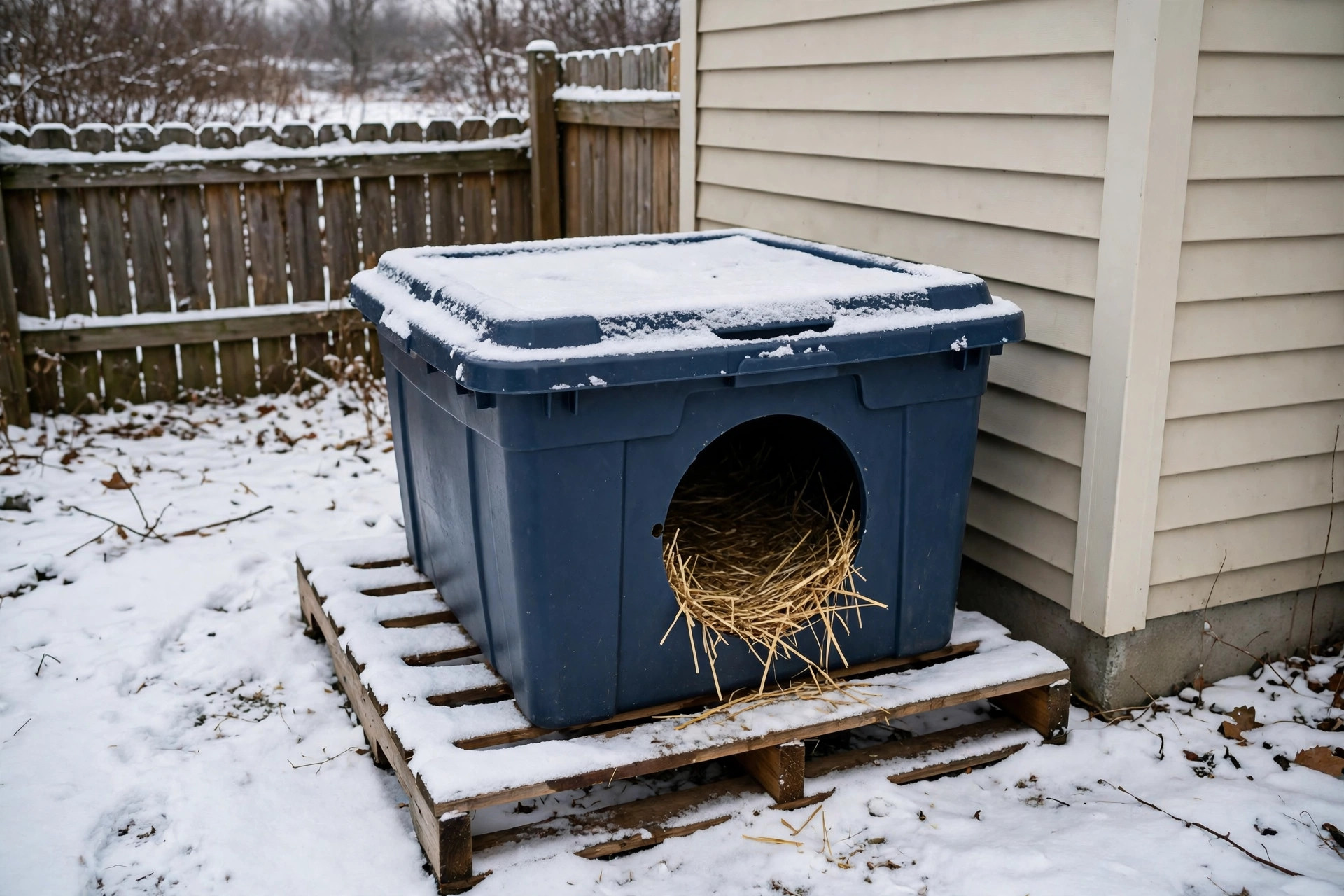

Why an Outdoor Cat Shelter Matters in Winter
Every winter, millions of stray and feral cats face freezing nights across the United States. An outdoor cat shelter for stray cats winter USA caregivers build or buy can mean the difference between life and death. When the wind chill drops below freezing, an unprotected cat can develop frostbite on the ears, paws, and tail in a matter of hours. A simple shelter gives a cat a dry, calm place to rest out of the wind and rain.
A cat that stays in a good shelter through the winter holds its body heat, sleeps more, and needs less food to survive. Caregivers who keep colonies often report that cats look better, fight less, and stay closer to the feeding spot when they have safe shelter. For the person who feeds them, a shelter brings peace of mind on the coldest nights of the year.
This guide walks through how an outdoor cat shelter for stray cats winter USA use should work, what to look for when you buy one, how to build one from cheap parts, what it costs, and how to keep it safe and clean all season.
What to Look for in an Outdoor Cat Shelter: Outdoor Cat Shelter for Stray Cats Winter Usa
A shelter is only as good as its design. The following points decide whether a stray cat will use the shelter or pass it by.
Size and Door Opening
The shelter should be small. A big shelter loses heat fast because a small cat cannot warm a large space. A box about two feet by two feet by two feet is right for one or two cats. If you care for more cats, give them two or three small shelters rather than one large one. The door hole should be about five to six inches wide, which is big enough for a cat and too small for most dogs or coyotes. Some caregivers cut two doors so a cat never feels trapped, though one door holds heat better. In areas with predators, two small doors may be worth the heat loss.
Wind and Rain Protection
The shelter must stand off the ground. Raise it on a pallet, bricks, or two-by-fours so meltwater and rain do not seep in from below. The roof should slope a little so water runs off, and the door should face away from the usual wind. Many caregivers place the shelter against a house wall, under a porch overhang, or inside a larger box as a double wall. A simple lip or overhang above the door keeps blowing rain out.
Insulation and Bedding
Insulation matters more than almost anything else. Many ready-made shelters use rigid foam panels in the walls and floor. Straw is the best bedding, and it should be loose straw, not hay. Straw stays dry because hollow stalks shed water, while hay holds moisture and molds. Replace or fluff the straw every few weeks. Never use blankets, towels, or folded cloth, because cloth holds water, freezes, and can draw heat from a sleeping cat. An outdoor cat shelter for stray cats winter USA buyers choose should list its insulation type clearly.
Heated Options
A heated cat house for outdoor feral cats adds a low-watt pad or a microwavable disk to the shelter. Electric pads made for outdoor use draw only a small amount of power and switch on only when a cat lies on them. They need a safe power cord and an outdoor outlet, and the cord should run through conduit so it cannot be chewed. In areas where power is not an option, a reflective Mylar liner under the straw can bounce a little body heat back at the cat. Heaters help, but a dry, windproof box with deep straw is the core of the job.
Types of Outdoor Cat Shelters
Foam Box Shelters
Large foam coolers or foam shipping boxes make fine winter shelters. Cut a round door, line the inside with straw, and wrap the outside in a heavy plastic bag to keep the foam dry. These cost little or nothing and work well for one cat. The foam itself gives light insulation. Replace them each year or two as the foam breaks down.
Plastic Storage Bin Shelters
A 30-gallon plastic storage bin turned on its side makes a sturdy shelter. Cut a door in one end, nest a smaller bin inside, and pack the gap with straw or foam board for insulation. This design is cheap, waterproof, and lasts for years. It is the most common do-it-yourself choice for colony caregivers across the country.
Wooden Shelters
A wooden doghouse or a home-built plywood box gives the longest life. Line the walls with rigid foam board, seal the seams with caulk, and give it a sloped, overhanging roof. Wood shelters cost more and weigh more, but they look tidier and stand up to storms. Many small workshops and rescue groups sell ready-built wooden cat shelters for the winter season.
Commercial Insulated Shelters
Stores now sell factory-made shelters with foam walls, removable lids, and straw-ready floors. Pet retailers like Chewy and home stores like Home Depot carry them in late fall. These cost more than a do-it-yourself bin, but they are quick to set up and look neat on a porch. Read the size and door dimensions before you buy, since some models run large for a single cat.
Attached Enclosures
Some caregivers pair a shelter with an outdoor cat enclosure for safe garden roaming, which gives the cat a fenced area to move in while still sleeping in the warm box at night. This works well for friendly strays that are being socialized and for owned cats that go outside in the day.
Cost and Price Guide
An outdoor cat shelter for stray cats winter USA shoppers can choose at almost any budget.
– Do-it-yourself foam cooler shelter: often free to about 20 dollars, plus straw. – Do-it-yourself storage bin shelter: about 25 to 60 dollars for two bins, foam board, and straw. – Basic commercial foam or plastic shelter: about 60 to 120 dollars. – Heated outdoor cat house with pad: about 100 to 200 dollars, plus a small electricity cost. – Wooden shelter from a rescue group or builder: about 120 to 250 dollars.
Straw costs only a few dollars a bale at farm stores, and one bale fills many shelters. Check with local trap-neuter-return groups, because many hand out free or low-cost shelters each fall. Reviews and buying guides at The Spruce Pets and general product research at Lowe’s and Wayfair can help you compare models before winter arrives.
Building Your Own Shelter: Step by Step
You can build a strong bin shelter in an afternoon with simple tools.
1. Buy two plastic storage bins, one 30-gallon and one 18-gallon, with lids. Check that the smaller bin fits inside the larger with room around the sides. 2. Cut a five-to-six-inch round or square door in one end of the large bin, about two inches above the bottom so rain cannot run in. 3. Cut a matching door in the smaller bin and set it inside, lining up the doors. 4. Pack the space between the bins with straw or foam board pieces. 5. Cut a foam board floor and roof layer for the inner bin. 6. Fill the inner bin with a thick layer of loose straw, about three to four inches deep. 7. Close both lids. Set the shelter on bricks or a pallet to lift it off the ground. 8. Face the door away from the wind and toward a wall or fence if you can. 9. Cover the top with a heavy tarp or a plywood scrap weighted with a stone for extra rain protection.
Test it by looking inside after the first rain. If the straw is dry, the shelter is doing its job. The ASPCA site at ASPCA offers guidance on community cat care, and health basics are covered well at PetMD.
Care and Upkeep Through Winter
A shelter needs a little care all season. Check the straw once a week and swap out any damp parts. Deepen the straw in the coldest months so the cat can burrow. After heavy snow, clear the door and the path to it so the cat can get in and out. Look at the roof after storms for sagging or torn covers.
Water is a winter problem too. A bowl of water freezes fast, so check it daily or use a heated outdoor water bowl. Feed a little more than in summer, since cats burn extra energy to stay warm. Wet food can freeze, so feed wet food at set times and pick up leftovers, and leave dry food out all day.
In spring, clean the shelter fully. Toss the old straw, wash the bins with a mild soap, rinse well, and let them dry in the sun before storing. If the shelter survived the winter in good shape, it will be ready for next year with fresh straw.
Safety Considerations
Place the shelter where it is safe. Keep it away from busy roads and from spots where dogs run loose. Put it where you can reach it for checks but where strangers will not bother it. Never use an electric heat pad meant only for indoor use, and keep every cord dry and out of reach of chewing teeth.
Trap-neuter-return groups advise against putting shelters right next to food and water bowls, because the smell of food can draw other animals to the sleeping spot. Set food a short distance away and keep the sleeping box quiet and private. If you care for a whole colony, space the shelters apart so shy cats are not forced to share.
For broader pet safety reading, AKC covers outdoor pet care standards, and feral cat colony guidance appears on many rescue and veterinary pages.
Frequently Asked Questions
Will a stray cat actually use a shelter?
Most will, though some need time. Put the shelter out weeks before the hard cold starts so cats learn to trust it. A little catnip or a food trail to the door can help at first. Do not force a cat inside. Shy cats often start sleeping in the shelter on the worst nights only, then use it more as winter goes on.
How many shelters do I need for three cats?
Two small shelters are better than one large one for three cats. Cats that are not bonded may not want to share, and a dominant cat can block the door of a single box. Two or three small shelters give every cat a choice.
Is straw really better than blankets?
Yes. Straw stays dry and keeps its loft, which traps warm air. Cloth absorbs water and can freeze solid, which pulls heat away from the cat. The common rule from winter caregivers is simple: straw for strays, blankets for indoor beds.
Can I put a shelter on a shared porch or in an apartment courtyard?
Often yes, but check your lease or building rules first. Keep the shelter tidy and small, and talk with neighbors so no one moves it. Many apartment caregivers keep one bin shelter in a corner of a balcony with good results.
What temperature is too cold for a cat without shelter?
Most cats struggle below about 32 degrees Fahrenheit, and wind makes it worse. Kittens, thin cats, and sick cats need shelter at much higher temperatures. If your area gets freezing nights, a shelter is worth having even if it is not the deep winter yet.
Should I combine the shelter with other outdoor pet supplies?
A shelter works as part of a simple setup: warm box, food, water, and a dry feeding spot. Indoor comforts like a best cat tree for large cats sturdy tall belong inside the home, not in a feral shelter. Keep the outdoor kit simple, dry, and easy to clean.
Final Word
An outdoor cat shelter for stray cats winter USA caregivers trust does not have to be costly or fancy. A dry box off the ground, filled with deep straw and set out of the wind, will carry a stray cat through the hardest nights of the year. Whether you build one from two bins or buy a ready-made insulated model, the act of putting shelter out before the first hard freeze is what matters. Your quiet neighbors on four legs will thank you with their survival.
References
American Kennel Club. (n.d.). Dog care and training resources. https://www.akc.org ASPCA. (n.d.). Pet care and animal welfare resources. https://www.aspca.org Chewy. (n.d.). Pet supplies. https://www.chewy.com Lowe’s. (n.d.). Home improvement products. https://www.lowes.com PetMD. (n.d.). Pet health information. https://www.petmd.com The Home Depot. (n.d.). Home improvement products. https://www.homedepot.com The Spruce Pets. (n.d.). Pet care guides and product reviews. https://www.thesprucepets.com Wayfair. (n.d.). Furniture and home goods. https://www.wayfair.com
Was this guide helpful?

About Michael Thompson
The My Garden US editorial team writes practical, in-depth home and garden guides for American homeowners — tested advice, no fluff.
You May Also Like

The Best Pet Safe Ice Melt for Driveways Dogs Owners Trust
July 5, 2026 0 views
Cat Scratching Lounge for Large Cats Sturdy: A Complete Guide
May 23, 2026 0 views
Dog Cooling Bandana for Summer Heat Relief: A Plain Guide for Hot Days
April 17, 2026 0 views