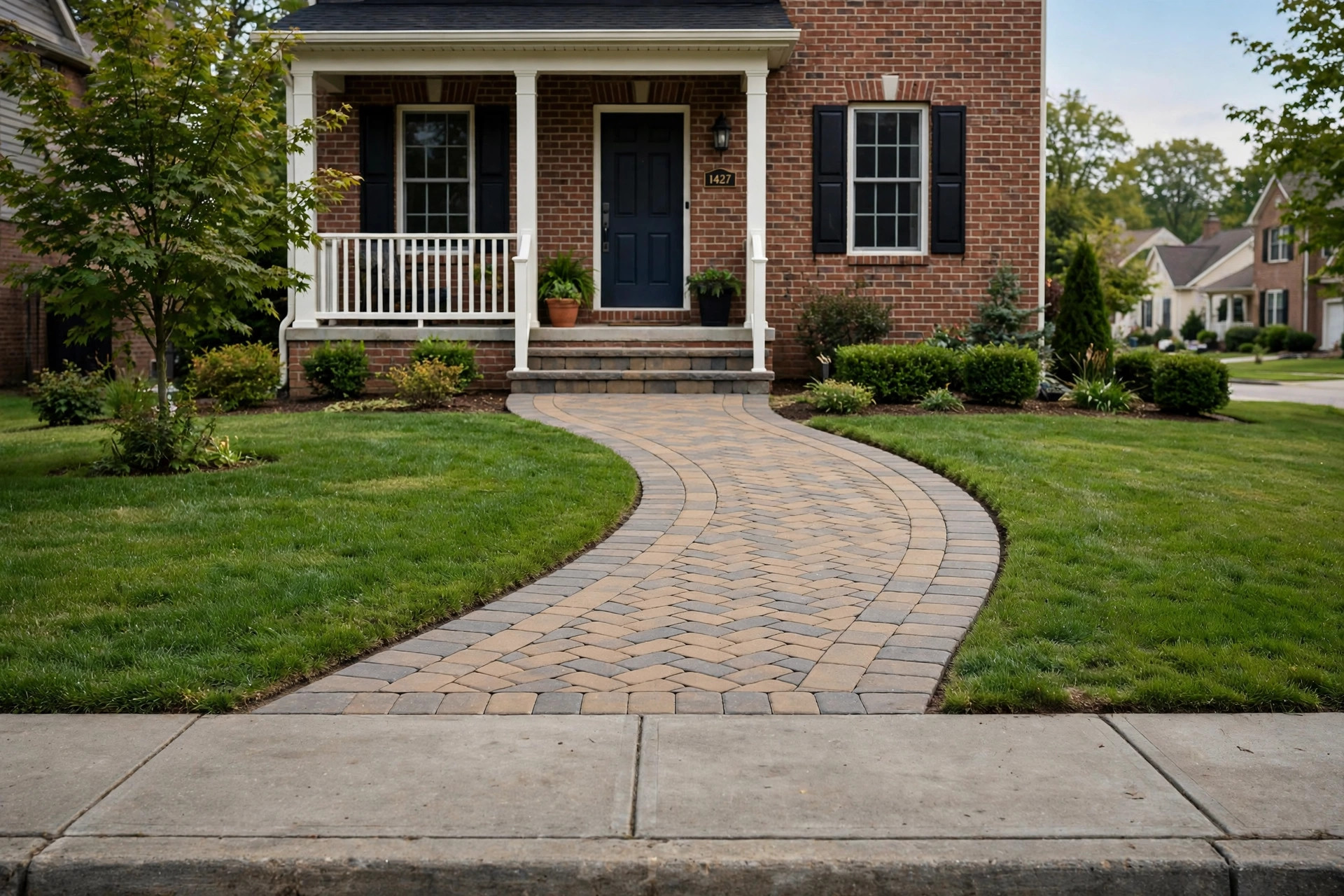

A walkway is the first thing guests see when they come to your door. It carries people to your home in rain and sun. It frames the front of your house. When the path is cracked, uneven, or ugly, the whole home looks tired. That is why so many owners now read top rated paver walkway installation reviews before they hire anyone. Reviews tell the truth about a job. They show how a crew works, how the path holds up after a year, and what the owner paid. This guide sums up what top rated paver walkway installation reviews teach, so you can choose a contractor with a clear head.
Why Reviews Matter Before You Hire
A paver walkway is not a small job. It lasts twenty years or more when it is done right. It fails in two winters when it is done wrong. Reviews give you a window into that future. In top rated paver walkway installation reviews, the best crews get praise for the same things again and again. They show up on time. They dig the base deep enough. They set a clean edge. The path stays flat after rain. The worst crews get the same complaints. Pavers sink near the downspout. Weeds push through the joints. The edge stones drift out of line. These patterns repeat across the country. Reading twenty or thirty reviews takes an hour. That hour can save you thousands of dollars.
Reviews also teach you the right questions to ask. Homeowners who wrote the best reviews often say they wish they had asked more before the job started. They learned the hard way. You can learn from them without paying their price.
What to Look for in Top Rated Installers: Top Rated Paver Walkway Installation Reviews
Top rated paver walkway installation reviews point to a short list of traits that the best firms share. Look for these signs in the reviews, and in the contractor sitting at your kitchen table.
Licenses and Insurance
The best reviewers mention papers, not just prices. A good installer holds a local license where one is required. He carries liability insurance and workers’ comp. Ask for proof. Good firms hand it over without a fuss. Bad firms change the subject. Reviews often note which firms were glad to show documents. Those are the firms to call first.
Base Preparation and Materials
The base makes the walkway. Every paver path needs a bed of crushed stone, four to six inches deep, packed hard with a plate compactor. Then comes a thin layer of coarse sand or fine gravel. Reviews that praise a job years later almost always mention a deep base. Reviews that report sinking pavers almost always blame a thin base. Ask your installer how deep he digs. If he says three inches or less, thank him and move on. The Home Depot project guides show the same standard base depth that pros use, and it is worth reading before you talk to a crew.
Edge Restraint and Drainage
Edge restraint is the hidden border that keeps pavers from spreading. It is usually plastic or metal, pinned into the ground. Drainage is the slope that sends water away from the house. The walkway should fall about one inch every eight feet away from your home. In the reviews, standing water is a common complaint after bad jobs. Ask how the crew handles the slope. Ask what edge product they use. A clear answer is a good sign. Vague answers are a warning.
Warranty and Clean Up
Top rated firms stand behind the work. A one- to three-year workmanship warranty is common. Reviews mention whether the firm honored the warranty when pavers settled. Also note clean up. The best reviews often close with a line like this: “They left the yard cleaner than they found it.” That detail says a lot about a crew.
Types of Paver Walkways
Reviews cover three main paver types. Each has fans. Each has trade offs. Here is what homeowners say about each one.
Concrete Pavers
Concrete pavers are the most common choice. They cost less than stone. They come in many shapes, sizes, and colors. They hold up well in freeze and thaw. Reviewers like that a broken paver can be lifted out and swapped for a new one in minutes. Some reviewers note that colors can fade in strong sun after many years. Most feel the value is hard to beat. Lowe’s stocks a wide range of concrete paver styles, which gives a good sense of the shapes and colors on the market.
Brick Pavers
Brick gives a warm, old style look that suits colonial and ranch homes. Reviews praise the rich color and the way brick fits a traditional house. Brick pavers are fired clay, so the color runs all the way through. They resist fading. The trade off is cost. Brick runs higher than concrete. Some reviewers also note that moss can grow on brick in damp shade. A good installer will warn you about that if your yard is shaded.
Natural Stone
Natural stone, such as bluestone or slate, gives a one of a kind look. No two pieces match. Reviews from owners who chose stone speak of beauty and pride. They also speak of cost. Stone is the most costly option. Installers charge more because each piece must be cut and set by hand. Reviews suggest stone when the budget allows and the house has a high end look to match.
Cost and Price: What Reviews Reveal
Price is the most talked about part of top rated paver walkway installation reviews. Here is what the numbers look like. A plain concrete paver walkway often runs from twelve to twenty dollars per square foot, installed. Brick runs from fifteen to twenty five dollars per square foot. Natural stone can run twenty five to forty dollars or more. A typical front walkway is about forty to sixty square feet. So a plain concrete job often lands between eight hundred and two thousand dollars. Brick and stone jobs run higher.
The reviews teach three price lessons. First, the cheapest bid often costs the most in the end. Owners who chose the lowest price report sinking, weed growth, and callbacks that never came. Second, get at least three bids. Prices for the same job can differ by a third or more. Third, ask what the bid includes. Does it include hauling away the old walkway? Does it include polymeric sand in the joints? Does it include the edge restraint? Reviews show that surprise add ons are a top complaint. This Old House has a helpful overview of what a full paver job includes, and it is a good checklist to read before you sign.
Payment terms matter too. Never pay the full amount up front. A fair schedule is a deposit of about one third, a middle payment when the base is done, and the rest when you are pleased with the finished path. Reviews of the best firms describe exactly this kind of fair schedule.
Care and Upkeep
A paver walkway needs small care to stay level and clean. Reviews from long term owners point to a simple routine. Sweep the path every few weeks. Leaves hold moisture, and moisture feeds weeds. Pull weeds from the joints as soon as you see them. Many reviewers use polymeric sand in the joints. It hardens when wet and blocks weeds better than plain sand.
Sealing is optional but praised in many reviews. A clear sealer guards the color and stops stains from oil or rust. Plan to reseal every three to five years. Power wash the walkway once a year to lift dirt and algae. Many owners hire top rated house power washing services near me for this yearly cleaning, since a pro washer can clean a walkway fast without harming the joint sand. If you power wash it yourself, use a wide spray and keep the nozzle moving so you do not blast sand out of the joints.
Winter care is simple. Do not use rock salt on pavers if you can avoid it. Salt can wear the surface. Use sand or a calcium based ice melt made for pavers. Reviews from cold states note that freeze and thaw can lift pavers a little. Small lifts can be tapped back with a rubber mallet in spring.
Safety Notes
Safety shows up in reviews more than you might expect. A good walkway should be safe to use at night and in wet weather. Ask your installer for pavers with a textured, non slip surface. Smooth stone can be slick when wet. Make sure the path is wide enough. Most reviewers like a walkway at least four feet wide. Two people should be able to walk side by side. Check the step up at the door. A trip edge where the walkway meets the porch is a common complaint in reviews.
Lighting matters for safety too. Low path lights make the walkway safe at night and show off the work. Keep lights low to the ground so they do not glare in the eyes. The Consumer safety pages at CPSC are not about walkways in detail, but their general guidance on home trip and fall safety is worth a look before you plan the path.
Frequently Asked Questions
How long does paver walkway installation take? Most front walkways take two to four days. Day one is tear out and base work. Day two is setting pavers and cutting edges. The last day is sanding the joints and clean up. Rain can add a day. Reviews say the best crews tell you the schedule up front and keep to it.
Can a paver walkway be laid over an old concrete path? Some firms will do it, but reviews are mixed. A thin overlay can work if the old concrete is solid, level, and drains well. If the old path is cracked or heaving, the problems will show through. Most top rated reviewers favor a full tear out and a fresh base.
How deep should the base be? Four to six inches of packed crushed stone is the standard in most reviews and trade guides. Heavy clay soil or harsh winters call for the deeper end. If an installer plans less, ask why.
Will weeds grow between the pavers? They can. Polymeric sand in the joints slows them a lot. Regular sweeping helps too. Reviews say the owners who fight weeds least are the ones whose installers used polymeric sand and a deep, clean base.
How do I judge the reviews themselves? Look for detail. Reviews that name the crew leader, describe the base depth, or report back after a year are worth more than one line of praise. Read the one star and two star reviews of every firm. They show what goes wrong. A few bad reviews among many good ones is normal. A firm with no bad reviews at all may be new.
Should the walkway match the rest of my home exterior? Yes, if you can. The walkway is part of the face your home shows the street. Reviewers often mention how a new path lifted the whole look of the house. If you plan other exterior work, such as new siding, compare notes first. Some owners read reviews for energy efficient gutter installation services for homeowners and premium asphalt shingle roofing for sale in the same season, so the new walkway, roof, and gutters all suit each other.
A Final Word
Top rated paver walkway installation reviews all point to the same truth. The paver you pick matters less than the crew that lays it. A deep base, firm edges, true drainage, and honest clean up are what make a walkway last. Read the reviews with care. Ask the hard questions. Get three bids. Pay in fair stages. Do those things, and the path to your front door will serve you well for decades. The Spruce, Bob Vila, Family Handyman, James Hardie, and CertainTeed sites all carry solid homeowner guides on exterior projects, and they are fine places to keep reading before you hire.
References
Bob Vila. (n.d.). Home improvement advice. https://www.bobvila.com CertainTeed. (n.d.). Building materials and exterior products. https://www.certainteed.com Family Handyman. (n.d.). DIY home repair and maintenance. https://www.familyhandyman.com James Hardie. (n.d.). Fiber cement siding and exterior products. https://www.jameshardie.com Lowe’s. (n.d.). Home improvement products. https://www.lowes.com The Home Depot. (n.d.). Home improvement products. https://www.homedepot.com The Spruce. (n.d.). Home and garden advice. https://www.thespruce.com This Old House. (n.d.). Home renovation guidance. https://www.thisoldhouse.com U.S. Consumer Product Safety Commission. (n.d.). Product safety information. https://www.cpsc.gov
Was this guide helpful?

About Robert Taylor
The My Garden US editorial team writes practical, in-depth home and garden guides for American homeowners — tested advice, no fluff.
You May Also Like

Budget Friendly Seamless Gutter Guards With Free Shipping
April 24, 2026 0 views
Weather Resistant Composite Decking Materials for Sale
January 17, 2026 0 views
Best Home Exterior Design Services Near Me: A Plain Guide to a Better-Looking House
June 7, 2026 0 views