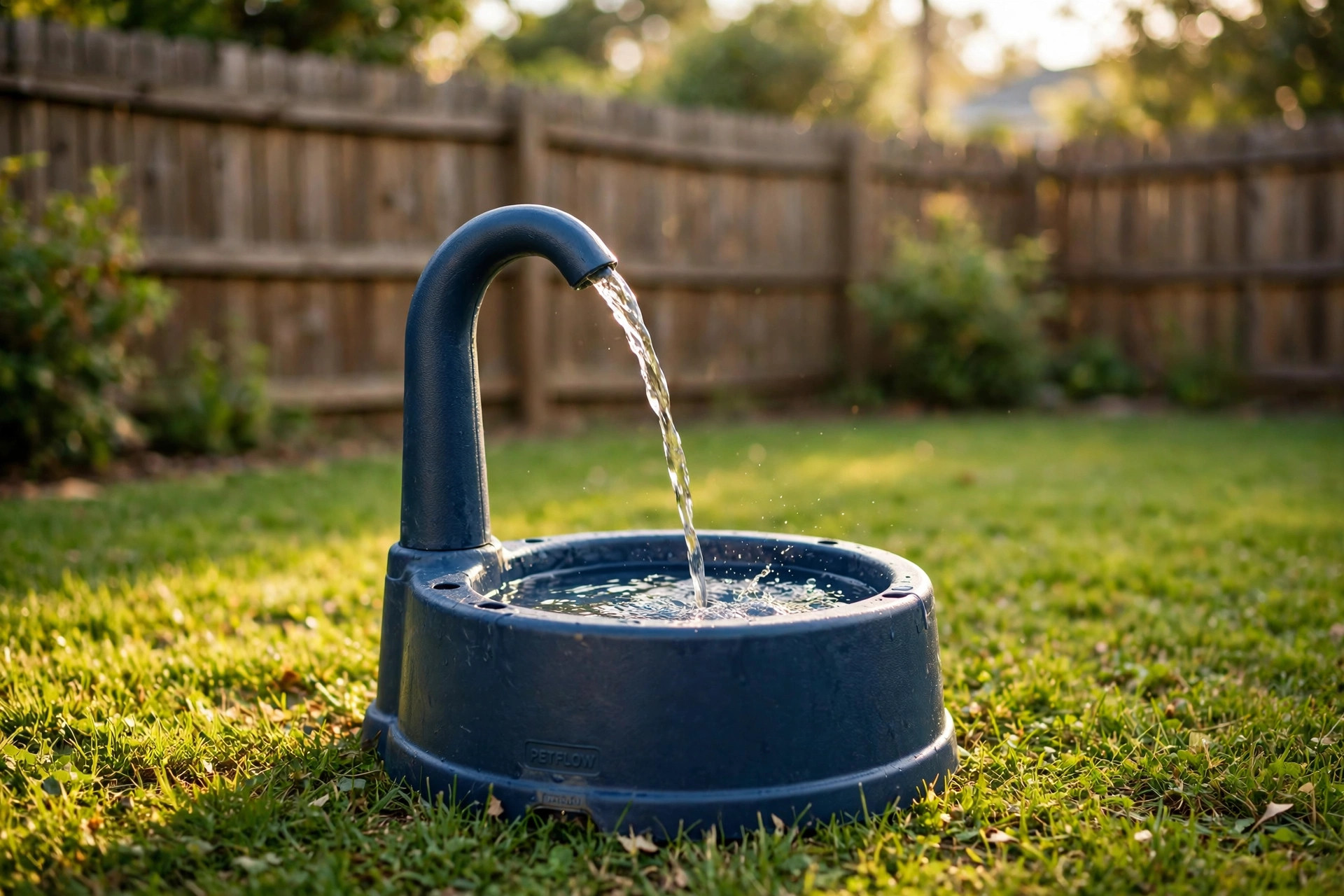

Dogs need fresh water all day, and they need it most when they are active outdoors. An outdoor dog water fountain for backyard play answers both needs at once. It gives your dog a steady supply of moving water and turns drinking time into playtime. In the heat of summer, that small change can keep a dog cooler, happier, and better hydrated than a still bowl in the corner of the yard.
Most dogs prefer running water. A bowl of water left in the sun grows warm, and warm water does not appeal to most dogs. A fountain keeps the water moving, and moving water stays cooler and tastes fresher. Many fountains also add a gentle arc or stream that dogs love to snap at and chase. For a dog that plays hard in the backyard, the fountain becomes part of the game.
This guide covers the reasons to buy one, the features that matter, the main types on the market, what they cost, how to keep them clean, and how to use them safely. It also answers the questions buyers ask most often.
Why an Outdoor Dog Water Fountain Matters
A dog at play loses water fast. Panting is how a dog cools its body, and panting dries the mouth and tongue. On a hot day, a dog that runs, fetches, and digs in the backyard can lose a surprising amount of water in an hour. If the only water nearby is a bowl that has been sitting in the sun since morning, the dog may drink less than it should. Some dogs will skip the bowl and look for water in puddles, bird baths, or a neighbor’s yard. A fountain solves this problem by making fresh water the most attractive choice in the yard.
Hydration protects more than comfort. Low water intake in dogs can lead to dry gums, tiredness, loss of appetite, and in severe cases heat illness. Puppies and older dogs are at higher risk. A constant source of clean moving water removes the guesswork. You do not need to check the bowl every hour or wonder whether the water turned warm while you were at work.
Beyond health, there is the simple matter of fun. Many dogs learn to paw at the stream and splash their faces in the basin. Shy dogs often warm up slowly, then make the fountain part of their daily routine. For dogs that stay alone in the yard during the day, a fountain adds interest to long hours. A dog with something to do is less likely to dig up the flower beds or chew the fence.
How to Choose the Right Fountain: Outdoor Dog Water Fountain for Backyard Play
The best choice depends on your dog, your yard, and your water source. Start with size. A small dog or a single pet does fine with a compact fountain that holds one or two gallons. A large dog, or a home with two or three dogs, needs a larger basin and a stronger pump so the water level does not drop too low during the day.
Look at the pump. The pump is the heart of the fountain. A good outdoor pump is sealed against moisture, runs quietly, and is made for outdoor use. Some fountains use an electric plug. Others use a hose connection that powers the stream with water pressure. Solar models use a small panel and need no cord or hose.
Material matters. Look for food-safe, BPA-free plastic or stainless steel. The basin should feel solid and sit flat on the ground so a playful dog cannot tip it over. Wide, low bases resist tipping better than tall narrow ones. If your dog likes to chew, avoid soft plastic edges and thin cords. Some owners choose a fountain with a chew-proof hose or a cord cover.
Water filtration is a useful feature. Many fountains include a charcoal or foam filter that traps hair, dirt, and debris. Filters keep the water cleaner between refills and help the pump last longer. Check how easy the filter is to change and whether replacement filters are sold separately. A filter you cannot buy again is a problem you will face in a few months.
Think about where the fountain will sit. It should stand on level ground in a spot that gets some shade during the hottest hours. Place it near the area where your dog plays, but not in the middle of the fetch lane where a running dog could crash into it. Easy access to a hose or outdoor outlet makes refills and cleaning simpler.
Types of Outdoor Dog Water Fountains
Hose-powered fountains. These connect to a garden hose and use water pressure to make a stream. Many work like a drinking fountain for people: the dog steps on a pedal or nudges a lever, and water sprays up. Some run a steady stream all day. They are simple, have no pump to burn out, and provide a constant supply of fresh water. The drawback is water use. A fountain that runs all day can waste a good deal of water, so look for models with a shutoff or a timer. The ASPCA offers general guidance on keeping outdoor dogs safe and hydrated in warm weather.
Electric pump fountains. These recycle water from a basin through a filter and back out as a stream. They plug into an outdoor outlet. Because they recycle, they use far less water than hose models. Most include a filter that keeps the water clean. The tradeoffs are the cord, the need for a nearby outlet, and the pump, which needs cleaning and eventual replacement. Choose a model with a quiet pump so the hum does not bother you or the neighbors.
Solar fountains. A small solar panel powers the pump. They cost nothing to run and need no cord, which makes placement flexible. The weakness is power. On cloudy days the stream may slow or stop, and most solar fountains do not store energy for evening use. They work best in yards with strong sun and as a supplement to a bowl, not as the only water source.
Splash pad and sprinkler fountains. These are flat mats or rings that spray jets of water upward when connected to a hose. Dogs love them, and many dogs drink from the jets. They are cheap and fun. Pair one with a proper dog backpack carrier for hiking small breeds for a full day of outdoor adventure.
Step-on fountains. These are the classic dog drinking fountains with a large pedal. The dog learns to press the pedal with its paw, and a stream of water shoots up like a bubbler. Most dogs learn the trick within a few days, and many owners report that their dogs prefer this style to any other. They connect to a hose and give fresh water on demand with little waste.
Cost and Price
Prices vary widely. A basic solar fountain or a small electric pump model can cost between twenty and forty dollars. Mid-range electric fountains with filters, usually made for medium and large dogs, run from forty to ninety dollars. Step-on hose fountains and larger premium models can cost one hundred dollars or more.
Ongoing costs are small but worth noting. Replacement filters for electric fountains typically cost five to fifteen dollars and need changing every two to four weeks in heavy use. Pumps last one to three years and cost fifteen to thirty dollars to replace. Hose models add a small amount to the water bill if they run a steady stream. Solar models have no running cost.
Think of the purchase as a two-part cost: the fountain itself and the yearly upkeep. A forty-dollar fountain with ten-dollar filters changed six times a year costs about one hundred dollars in the first year. That is still less than most vet visits for dehydration-related trouble, and it buys daily convenience all summer. Retailers such as Chewy and PetSmart carry a wide range of models across price points, which makes comparison shopping easy.
Care and Upkeep
A fountain is only as good as its water. Clean water keeps your dog healthy and keeps the pump running. In summer heat, check the water level every day. Dogs splash, drink, and play, and the basin can drop fast. Never let the pump run dry. A pump that runs without water can burn out in a single afternoon.
Empty and scrub the basin at least once a week, more often if several dogs use it. Use a soft brush and mild dish soap, then rinse well so no soap remains. Algae grows quickly in sunlit water, and a weekly scrub prevents most of it.
Clean or replace the filter on the schedule the maker suggests. A clogged filter slows the stream and forces the pump to work harder. If the stream grows weak even with a full basin, the filter or the pump intake is usually the cause. Open the pump housing, pull out any hair or debris, and rinse the intake screen.
At the end of the season, drain the fountain, clean it fully, and store it indoors if your winters bring freezing weather. Water left in a pump can freeze, expand, and crack the housing. The American Kennel Club publishes seasonal care tips that cover winter storage of outdoor pet gear.
Safety Tips
Water and play are a good mix, but a few rules keep the fountain safe. Keep the electrical cord of an electric fountain out of reach. Run it along a fence or bury it in a shallow trench, and use an outdoor-rated extension cord with a covered connection.
Place the fountain where the ground drains well. A ring of mud around the basin breeds bacteria and turns the area into a mess. A gravel pad or a few patio stones under the fountain keep the footing dry and make cleaning easier.
Watch new dogs around the fountain until you know how they behave. Most dogs play gently, but a large excited dog can knock a light fountain over or chew a hose fitting. Supervise the first few sessions and remove the fountain if a dog treats it as a chew toy.
Keep the water free of chemicals. Do not add pool chlorine or algaecide to a dog fountain. If algae is a problem, clean more often and move the fountain into partial shade. On very hot days, add a few ice cubes in the morning for extra cooling. Sites like PetMD and The Spruce Pets offer vet-reviewed advice on safe water and hydration for dogs.
Frequently Asked Questions
How do I get my dog to use the fountain? Start with the fountain off or on a gentle setting. Let the dog sniff it and drink from the basin like a normal bowl. Reward calm interest with praise or a small treat. Once the dog drinks from the basin, turn the stream on low. Most dogs figure it out within a few days. Never force a dog’s face toward the water. Dogs that get nervous around new objects or loud sounds may need extra patience, and some owners use a dog anxiety vest for thunderstorms and fireworks to ease stress during the learning period.
Can the fountain be my dog’s only water source? Only if it is reliable. A hose-powered or electric model that runs all day can serve as the main source while the dog is in the yard. Solar models should not be the only source because they stop on cloudy days. Always keep a backup bowl of water inside the house. The ASPCA reminds owners that fresh water should be available to dogs at all times, indoors and out.
How often should I change the water? Top up the basin daily in hot weather. Do a full change and scrub once a week. If the water looks cloudy, smells off, or has debris floating in it, change it right away. Dogs drink more from water that looks and smells clean.
Will a fountain raise my water bill much? A recycling electric fountain adds very little, since it reuses the same water. A hose model on a steady stream can add a noticeable amount if it runs all day. Use a timer, a shutoff valve, or a step-on model to limit waste. Check your local water rates if you are concerned.
What size fountain does a large dog need? A large dog drinks roughly one ounce of water per pound of body weight each day, and more when active in the heat. Choose a fountain with a basin that holds at least two gallons for one large dog, and more for several dogs. Pair outdoor hydration with the right gear for trips away from home, such as a dog raincoat for large breeds waterproof usa for wet-weather walks. Big-box stores like Home Depot, Lowe’s, and Petco stock larger models in store, so you can judge the size before you buy.
Do fountains work in winter? Most outdoor fountains are made for warm weather. Freezing water can crack basins and pumps. In cold climates, drain and store the fountain in the fall and switch to a heated sheltered bowl. Independent reviews from Consumer Reports sometimes cover outdoor pet products and can help you compare durability claims.
A Short Final Word
An outdoor dog water fountain for backyard play is a small addition that pays off every day of summer. It keeps water fresh and cool, it gives your dog a reason to drink more, and it adds a splash of joy to the yard. Choose a model that fits your dog’s size and your yard’s layout, keep it clean, and watch the water level.
References
American Kennel Club. (n.d.). Dog care and training resources. https://www.akc.org ASPCA. (n.d.). Pet care and animal welfare resources. https://www.aspca.org Chewy. (n.d.). Pet supplies. https://www.chewy.com Consumer Reports. (n.d.). Product reviews and ratings. https://www.consumerreports.org Lowe’s. (n.d.). Home improvement products. https://www.lowes.com Petco. (n.d.). Pet supplies and services. https://www.petco.com PetMD. (n.d.). Pet health information. https://www.petmd.com PetSmart. (n.d.). Pet supplies and services. https://www.petsmart.com The Home Depot. (n.d.). Home improvement products. https://www.homedepot.com The Spruce Pets. (n.d.). Pet care guides and product reviews. https://www.thesprucepets.com
Was this guide helpful?

About Michael Thompson
The My Garden US editorial team writes practical, in-depth home and garden guides for American homeowners — tested advice, no fluff.
You May Also Like
Outdoor Dog House for Two Large Dogs: A Practical Guide
May 10, 2026 0 views
Indoor Rabbit Cage Large for House Bunnies: A Complete Guide
June 12, 2026 0 views
Dog Food Puzzle Toys for Boredom Relief in the USA: A Full Guide
April 23, 2026 0 views