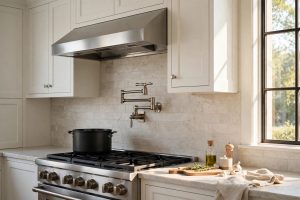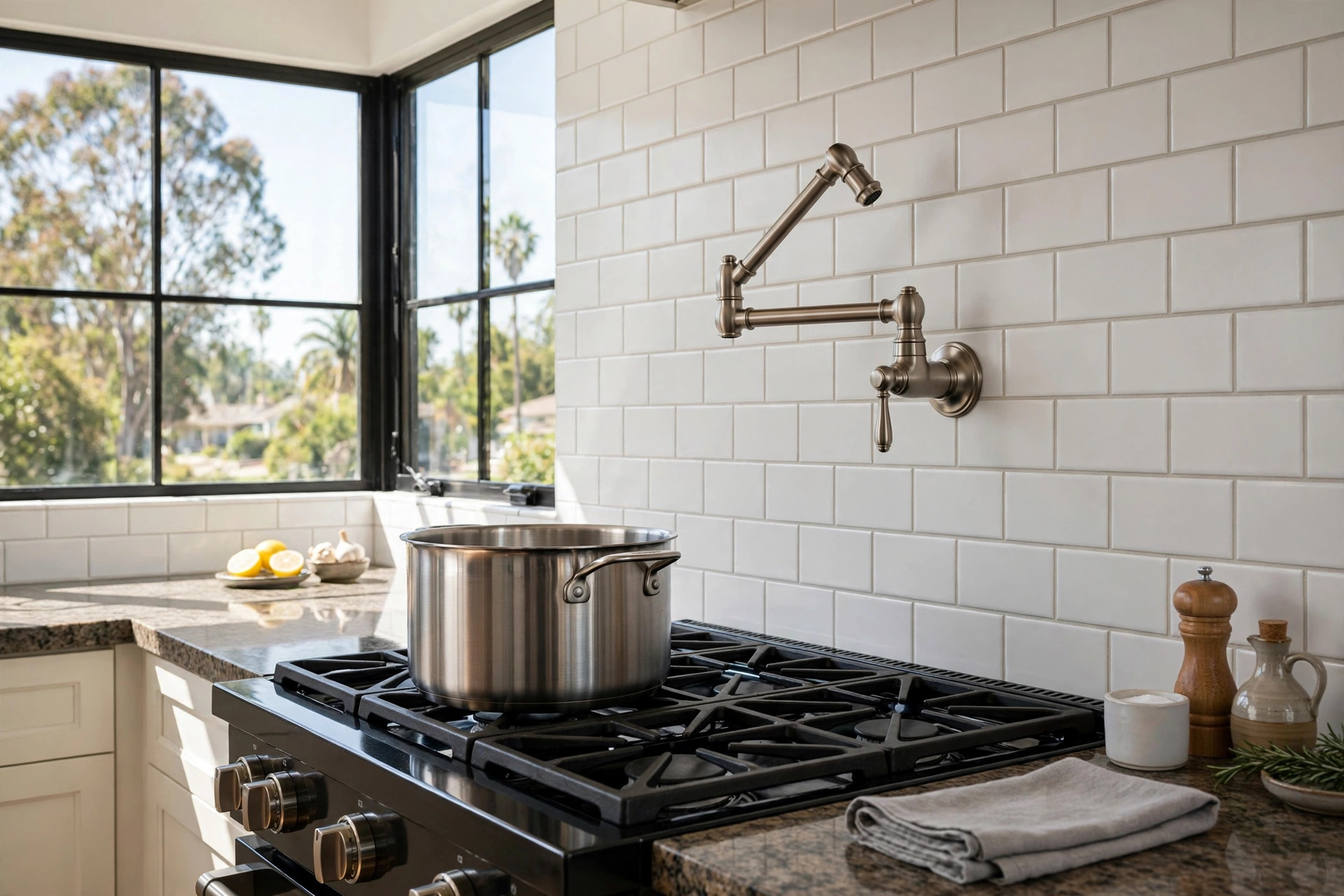
Home cooks in California know the weight of a full stockpot. A pot filler faucet fixes that small daily chore. It is a cold-water tap fixed to the wall above the stove. It swings out, fills the pot right on the burner, and folds back when done. No more carrying a heavy pot of water from the sink. For families in California homes across the USA, the pot filler faucet has moved from a luxury item to a smart, plain upgrade. It suits small kitchens and large ones alike.
Why It Matters
The idea is simple. Filling a large pot at the sink takes strength. Pasta pots hold four to six quarts. Canning pots hold more. Carrying them across the kitchen risks spills on tile floors and burns from hot water. A pot filler faucets california homes usa buyers choose brings the water to the pot instead.
Time is the second reason. Cooks who make soups, stocks, and sauces save steps. They also save water. A short fill at the stove replaces a long walk with a heavy load. Older cooks and cooks with sore backs feel the gain most.
The third reason is value. Kitchen buyers in the USA look at details. A pot filler faucet is a detail they notice. It signals a serious cooking space. For a remodel in California, where home prices are high, small fixtures carry weight.
It also fits the way California kitchens are built. Open plans join the kitchen to the living room. Guests see the cook at work. A pot filler looks smart above the range. It adds to the calm, clean lines of a modern space. Ranch homes, tract homes, and new builds all suit it. The fixture does not ask for much room. It only asks for a water line in the wall.
What to Look For When You Choose: Pot Filler Faucets California Homes Usa
Start with the reach. Pot filler faucets swing on arms. One joint swings one way. Two joints swing further and fold closer to the wall. Measure the distance from the wall to the far burner of your stove. Buy a faucet that reaches it with ease.
Check the spout height next. The spout must clear your tallest pot. Most pots are six to eight inches tall. Stockpots run taller. A spout that sits twelve to sixteen inches above the cooktop gives room. Too high and water splashes. Too low and the pot will not fit.
Look at the flow rate. Kitchen faucets in California follow state water rules. Pot fillers flow faster than sink taps. Many deliver three to five gallons per minute. Faster fill means less wait. Ask the seller for the flow rate before you buy.
Study the shutoff. A good pot filler has a valve at the spout. You turn it on only when you need it. Some have two valves, one at the wall and one at the spout. Two valves add safety. A quality kitchen faucet brand is not in this set, but trusted makers like those on GE Appliances and Bosch partner sites set the standard for shutoff parts.
Pick a finish that matches your range. Brushed nickel suits steel stoves. Oil-rubbed bronze suits farmhouse kitchens. Polished chrome fits modern rooms. Black matte fits bold designs. Match the faucet to your cabinet pulls for a calm look.
Count the cost of parts. The faucet is only part of the bill. You need pipe in the wall, a shutoff valve, and labor. Plan the whole cost before you buy the fixture.
Types and Options
Wall-mount pot fillers are the common kind. They bolt to the wall above the stove. The pipe runs inside the wall. They work with gas and electric ranges.
Deck-mount pot fillers sit on the counter behind the stove. They need space behind the range. Few California kitchens use them, but they suit island cooktops.
Single-arm models swing in a simple arc. They cost less. They fit small kitchens where the faucet only needs to reach one burner.
Double-arm models fold like an elbow. They reach further and fold flat to the wall. Most buyers pick this kind. It suits wide ranges with six burners.
Commercial-style pot fillers look like restaurant taps. They have a tall spring arm and a strong flow. They suit cooks who can at home. They cost more and need strong wall support.
Cold-water-only models are the standard. They tap the cold line only. Hot-water pot fillers exist but cost more to pipe. Most California plumbers advise cold water only. It keeps the job simple and safe.
Finish choices shape the look. Brushed finishes hide water spots. Polished finishes shine but show marks. If your water is hard, a brushed finish stays cleaner between wipes. Ask the store for a finish sample. Hold it next to your range and pulls before you buy.
Lever handles suit busy hands. A lever turns with one push. Knob handles turn slower. Cooks who move fast like levers. Check that the handle clears the wall when the arm swings. A tight fold needs room at the joint.
The back plate matters too. A wide back plate covers an old paint line or a patch. A narrow plate suits a clean new wall. Measure the plate against the tile pattern so it lands on a flat spot.
Cost and Price
Prices run wide. A basic pot filler faucet costs sixty to one hundred and fifty dollars. A mid-range model costs one hundred and fifty to four hundred dollars. Designer and commercial models cost four hundred to one thousand dollars or more.
Installation costs more in California than in most states. Expect two hundred to five hundred dollars for labor if the wall is open during a remodel. If the wall is closed, the job costs more. The plumber must open the wall, run the pipe, and patch the drywall. That can add three hundred to eight hundred dollars.
Retrofit jobs carry risk. Older California homes may have small walls behind the stove. The plumber must check for studs, pipes, and wires. Get a written quote before work starts.
Compare prices at home centers. Big stores like Home Depot and Lowe’s carry wide lines of pot fillers in stock and online. Independent test groups like Consumer Reports publish faucet ratings that help buyers compare build quality. Advice sites like The Spruce and Bob Vila walk through install steps in plain words.
Care and Upkeep
A pot filler needs little care. Wipe it with a soft cloth after use. Steam from the stove coats the faucet with grease. A mild soap and water mix clears it. Do not use harsh cleaners. They dull the finish.
Check the joints once a year. The swing arms have washers. They wear with use. A slow drip at the joint means the washer needs a new part. Turn off the water to the faucet before you fix it.
Flush the line now and then. If you cook little, water sits in the pipe. Run the faucet for thirty seconds each week. Fresh water keeps the taste clean.
Watch for leaks in the wall. A wet spot behind the stove is a warning. Call a plumber at once. Water damage in California homes costs far more than a small repair.
In winter, pipes rarely freeze in most of California. Homes in the mountains face real cold. An exposed pipe to an outside wall can freeze. A plumber can route the pipe through warm wall space.
Keep the spout tip clear. Small screens catch grit in some models. Unscrew the tip once a year and rinse it. Grit blocks flow and strains the joint. This takes five minutes with a cloth and a pair of pliers wrapped in tape.
Safety
Safety comes first with any stove fixture. The faucet sits above heat. Choose a model rated for high heat. Keep paper towels and plastic away from the spout.
Teach the house how it works. A guest may turn the tap and walk away. Show them the shutoff. Turn the water off at the wall valve when you leave town.
Gas stoves need care. Do not let the faucet touch the flame. The spout should sit above the grate by a safe gap. Follow the stove maker’s clearances.
Check local codes. California plumbing rules change by city. Some cities ask for a permit to add a water line. Ask your plumber or the city office. A permitted job keeps your insurance safe.
Water quality matters too. Cold water from the tap is fine for cooking. If your area has hard water, scale may build in the spout. Soak the spout tip in vinegar once a year.
Pair the upgrade with sound choices elsewhere in the kitchen. A good stainless range hood clears steam from the pot filler area. Bright kitchen island hanging lights help you see the pot as it fills. And a dishwasher with a third rack handles the big pot after the meal.
Energy use is small. A pot filler uses no power. But cooking habits matter. The federal Energy Star program gives plain tips for cutting kitchen energy use. A maker like Whirlpool shows efficient ranges that pair well with a pot filler.
Frequently Asked Questions
Do I need a plumber to install a pot filler faucet? Yes. The job needs a water line inside the wall. A licensed plumber runs the pipe and sets the valve. The fixture then bolts on with basic tools. Do not run water lines yourself unless you know the code.
Can I add a pot filler without a remodel? You can, but it costs more. The plumber must open the finished wall, run the pipe, and patch it. The patch then needs paint. If you plan a kitchen remodel in the next year, wait and add it then.
Does a pot filler raise home value? It helps. Buyers in California like cooking upgrades. A pot filler will not add thousands on its own. But as part of a strong kitchen, it makes the home stand out.
How high above the stove should a pot filler sit? Most installers set it twelve to eighteen inches above the cooktop. The exact height rests on your tallest pot. Set the pot on the burner and measure. Add two inches of room above the pot.
Is hot water worth the extra pipe? Rarely. Cold water heats fast on the stove. A hot line doubles the pipe work and the leak risk. Most cooks pick cold water only.
How long does a pot filler faucet last? A good one lasts ten to twenty years. The washers wear first. New washers are cheap and easy to fit. A solid brass body outlives cheap zinc bodies. Buy the best build you can afford.
Will a pot filler leak behind the wall? It can, like any pipe. A good install with a shutoff valve cuts the risk. Turn the valve off when you travel. Check the wall for damp spots once a year.
A Short Final Word
A pot filler faucet is a small change with a plain gain. It saves steps, saves strength, and suits the way California homes cook. Pick a solid model, size the reach to your stove, and hire a good plumber. The pot stays on the burner. The water comes to it. That is the whole idea, and it works.
References
Bob Vila. (n.d.). Home improvement advice. https://www.bobvila.com Bosch. (n.d.). Home appliances. https://www.bosch-home.com Consumer Reports. (n.d.). Product reviews and ratings. https://www.consumerreports.org ENERGY STAR. (n.d.). Energy efficient products. https://www.energystar.gov GE Appliances. (n.d.). Kitchen and home appliances. https://www.geappliances.com Lowe’s. (n.d.). Home improvement products. https://www.lowes.com Moen. (n.d.). Faucets and plumbing fixtures. https://www.moen.com The Home Depot. (n.d.). Home improvement products. https://www.homedepot.com The Spruce. (n.d.). Home and garden advice. https://www.thespruce.com Whirlpool. (n.d.). Home appliances. https://www.whirlpool.com
Was this guide helpful?

About James Carter
The My Garden US editorial team writes practical, in-depth home and garden guides for American homeowners — tested advice, no fluff.