
Old floors make a whole house look tired. Stained carpet, chipped tile, and worn wood drag down every room. The good news is that you do not need a large budget to fix them. The cheapest way to redo floors in the USA is easier today than it was even ten years ago. New materials cost less. Many of them go down without glue or nails. A careful homeowner can redo a room in a single weekend.
This guide walks through the lowest cost ways to redo floors across America. It covers what to look for, the best budget options, real prices, care, and safety. It also answers common questions from people doing this job for the first time.
Why Redoing Floors Matters
Floors take more wear than any other surface in a home. Shoes, pets, spills, and sunlight wear them down year after year. When floors look worn, buyers notice. Renters notice. Even guests notice before they notice the walls.
Fresh floors change how a home feels. A room with new floors looks clean and bright. It smells better too, since old carpet and worn wood hold odors from pets and smoke. For sellers, new floors can raise a home value more than almost any other small project. For renters and owners on a budget, cheap floor redo projects are one of the smartest ways to improve a living space.
There is also a health reason. Old carpet holds dust, pollen, and dust mites. Hard surfaces are easier to keep clean. People with allergies often feel better once carpet comes out and a smooth floor goes in.
What to Look For in Low Cost Flooring: Cheapest Way to Redo Floors Usa Guide
The cheapest way to redo floors is not always the material with the lowest price tag. You must weigh several things before you buy.
Cost per Square Foot
Material price is only part of the cost. Tools, glue, underlayment, trim, and labor add up fast. A floor that costs two dollars per square foot but needs hired labor can cost more in the end than a four dollar floor you lay yourself. Always count the full cost of the job, not just the box price.
Measure your room with care. Buy ten percent more than you need for waste and cuts. Most budget flooring is sold by the box, so round up to whole boxes.
Room Use and Traffic
Think about what happens in each room. Kitchens and baths get water and spills. Entryways get mud and grit. Bedrooms get light foot traffic. The best low cost floor replacement for a rental bedroom may fail in a busy family kitchen. Match the material to the room.
Homes with dogs or cats need scratch resistant floors. Guides like the best flooring for kitchens with dogs show how pet owners can pair budget floors with animals without constant repair.
Ease of Installation
Labor is the biggest cost in most floor jobs. A click-lock floor that floats over the old floor needs no glue, no nails, and no special skill. Peel and stick tiles need only a clean surface and a steady hand. When you do the work yourself, you save half the cost of the project or more.
Low Cost Flooring Types and Options
Several materials stand out as the cheapest ways to redo floors in the USA. Each has strong points and weak points.
Luxury Vinyl Plank (LVP)
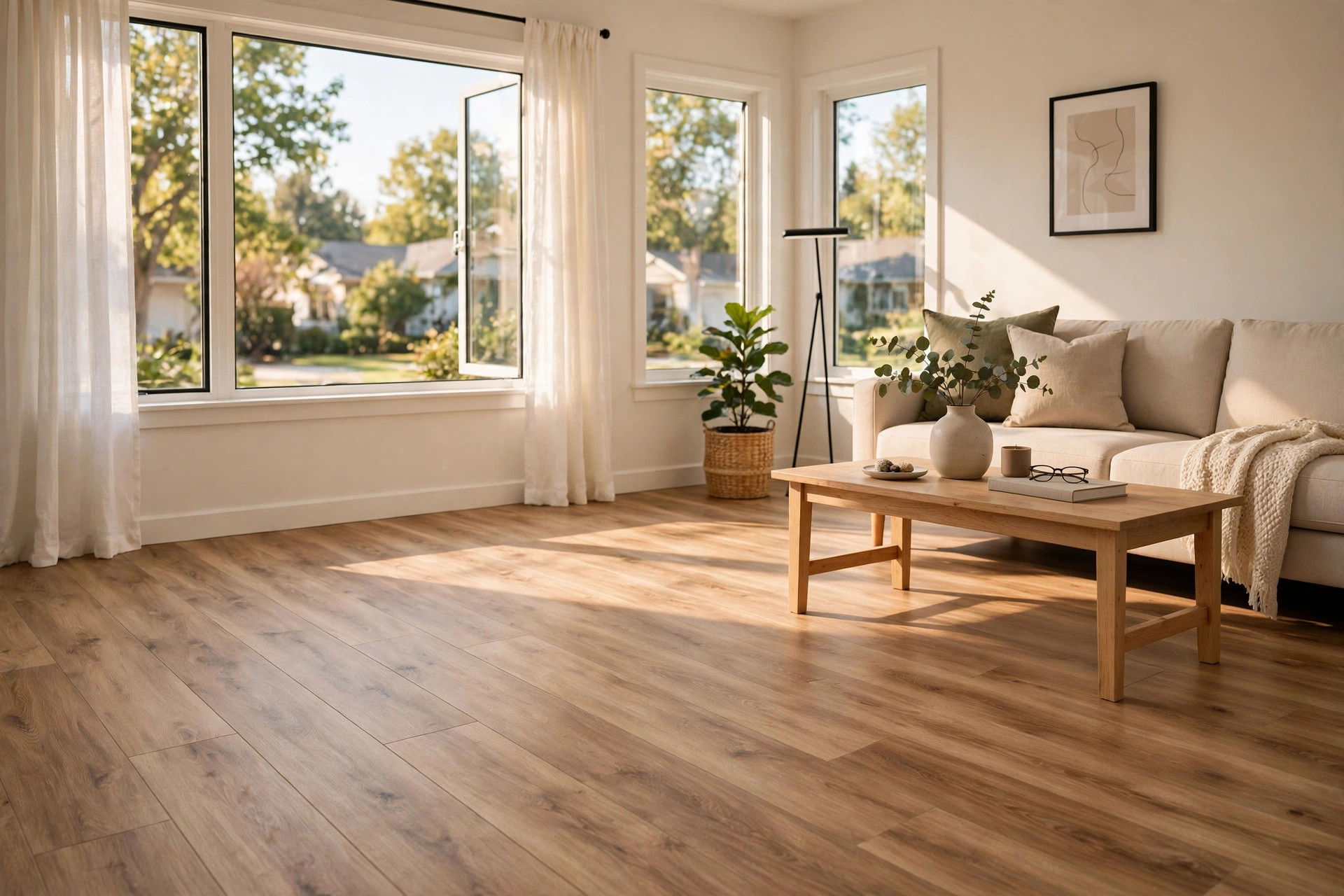
Luxury vinyl plank is the most popular budget floor in America today. It looks like wood. It feels solid underfoot. It resists water, which makes it good for kitchens and bathrooms. Prices start near two dollars per square foot for the material. Click-lock planks float over most old floors, so you can often skip tearing out the old surface.
If you want more detail on top brands, luxury vinyl plank flooring reviews can help you compare wear layers, warranties, and prices before you buy. Big names in the field include Shaw Floors and Mohawk Flooring, both of which make vinyl plank lines sold across the country.
Laminate Flooring
Laminate is the classic low cost wood look. A printed image of wood grain sits under a clear wear layer. It is hard, light, and easy to click together. Prices run from one to three dollars per square foot. Modern laminate looks far better than the shiny floors of the 1990s. Most types resist scratches well.
Laminate does not like standing water. Do not use it in bathrooms or laundry rooms. Wipe spills quickly in kitchens.
Peel and Stick Vinyl Tile
Peel and stick tile is the lowest cost floor of all. Tiles cost well under one dollar per square foot in many cases. You peel the backing and press each tile to a clean floor. It is a good choice for small rooms, rentals, and quick fixes. Patterns now mimic stone and wood quite well.
The weak point is grip. Cheap tiles can curl at the edges over time, mainly in hot rooms. Prep work matters more than with any other floor. The old surface must be smooth, clean, and dry.
Carpet Tiles
Carpet tiles are squares of carpet with sticky backs. They cost one to three dollars per square foot. They are quiet, soft, and warm. They suit bedrooms, basements, and playrooms. If one tile stains, you pull it up and replace just that square. That saves money over the years.
Carpet tiles do not suit wet rooms. Vacuum them often and they can last many years.
Painted and Stained Concrete or Wood
The cheapest way to redo floors can be to paint what you already have. Concrete floors take paint or stain for less than one dollar per square foot in materials. Old wood floors can be sanded and stained instead of replaced. A gallon of floor paint covers a small room. A fresh coat of porch and floor enamel over an ugly floor can look neat and clean for years.
This option works best in basements, garages, sunrooms, and rental units. It does not give the warm look of wood or vinyl, but nothing costs less.
Refinishing Old Hardwood
If your home already has wood floors under old carpet, you may own a treasure. Sanding and refinishing costs one to three dollars per square foot if you rent a sander and do it yourself. The result is real hardwood, which looks better than any budget product. Many older American homes hide oak or pine floors under carpet that was laid in the 1970s and 1980s. Pull up a corner of the carpet and look before you buy new material.
Cost and Price: What You Will Pay
Real prices for budget flooring in the USA vary by region and store, but these ranges hold true in most states:
– Peel and stick vinyl tile: $0.50 to $1.50 per square foot for materials – Laminate flooring: $1.00 to $3.00 per square foot for materials – Luxury vinyl plank: $2.00 to $5.00 per square foot for materials – Carpet tiles: $1.00 to $3.00 per square foot for materials – Floor paint or concrete stain: under $1.00 per square foot in materials – DIY hardwood refinish: $1.00 to $3.00 per square foot in materials and rental
Professional labor adds two to six dollars per square foot in most markets. That is why the cheapest way to redo floors almost always means doing the work yourself. A 200 square foot bedroom can cost under $400 in materials with peel and stick or laminate, versus $1,200 or more with hired labor and mid range material.
Shop around before you buy. Prices move with sales. Home Depot and Lowe’s run floor sales often, and closeout deals can cut prices in half. LL Flooring also sells discount hardwood and vinyl with regular clearance stock. Check the tile installation cost per square foot guide if you are weighing tile against these cheaper options, since tile labor often costs more than the tile itself.
Underlayment adds cost too. Some vinyl planks come with padding built in. Others need a separate roll of underlayment at twenty to fifty cents per square foot. Trim and transition strips finish the edges and cost a few dollars each.
Care and Upkeep
Cheap floors last longer with simple care. Sweep or vacuum often. Grit acts like sandpaper on vinyl and laminate. Use felt pads under chair and table legs. Place mats at doors to catch dirt and water.
Mop vinyl and laminate with a damp mop, not a soaking wet one. Too much water seeps into seams and lifts edges. Use cleaners made for the floor type. Harsh chemicals dull the finish on vinyl and can cloud laminate.
Recaulk edges in kitchens and baths once a year if you used a floating floor. Water that gets under the edge causes swelling. Fix curled peel and stick tiles at once with a little floor adhesive before the curl grows.
Carpet tiles need regular vacuuming. Rotate high traffic tiles with tiles from under furniture to even out wear. Keep a few spare tiles in a closet for quick swaps.
Painted floors need touch ups. Keep a small can of the paint for chips and scuffs. A fresh topcoat of clear sealer every few years keeps the color strong.
Good upkeep can double the life of a budget floor. The Spruce and This Old House both publish clear care guides for vinyl, laminate, and tile that are worth reading after your install.
Safety
Floor work is safe if you take a few plain steps. Wear a dust mask when sanding old floors or pulling up old tile. Old vinyl and old tile from before 1980 may hold asbestos in the tile or the glue. Do not sand or scrape suspect material. Have it tested, or cover it with a new floating floor instead of removing it.
Knee pads save your joints during a lay-down job. Gloves protect hands from sharp cut edges on vinyl and laminate. Keep the room aired out when using adhesives, stains, or oil based paints. Keep children and pets out of the work area until fumes clear and the floor sets.
Wet floors are slick. New vinyl can be slippery when wet, so add rugs or runners in kitchens and baths. Stairs need extra care. Use proper stair nosing pieces, never plain plank, on step edges.
FAQ
What is the absolute cheapest way to redo floors?
Painting or staining the floor you already have is the cheapest option, at under one dollar per square foot in materials. Peel and stick vinyl tile is the cheapest new floor you can lay, often under one dollar per square foot. Both are good low cost floor replacement choices for rentals and quick updates.
Can I lay new flooring over old flooring?
In many cases, yes. Click-lock vinyl plank and laminate float right over old vinyl, tile, or wood if the old floor is flat, firm, and dry. This saves the cost and mess of tear out. Carpet must come out first. Uneven floors need leveling compound before the new floor goes down.
How long does a cheap floor redo take?
A single room of 150 to 200 square feet takes most DIY workers one to two days with click-lock plank or laminate. Peel and stick tile in a small bath can finish in a few hours. Sanding and refinishing wood takes three to four days with drying time between coats.
Do budget floors hurt home value?
No, if they are neat and well laid. Replacing stained carpet with clean vinyl plank or laminate usually helps home value. Poorly laid floors with gaps and curled edges hurt value. Take your time with cuts and seams. A careful budget job beats a sloppy expensive job.
Is it cheaper to DIY or hire a pro?
DIY is much cheaper. Labor often equals or exceeds material cost. A homeowner who lays their own floor saves two to six dollars per square foot. Watch maker videos, read the install guide in the box, and start in a closet or small room to learn the skill.
Where should I buy cheap flooring in the USA?
Big stores with frequent sales give the best prices. Compare Daltile for tile closeouts, Shaw Floors and Mohawk Flooring for vinyl and laminate deals, and the big home centers for store brand lines. Buying a full room from one batch keeps colors matched.
A Final Word
The cheapest way to redo floors in the USA comes down to three choices. Pick a low cost material like vinyl plank, laminate, or peel and stick tile. Lay it yourself to skip labor cost. Prep the old floor well so the new floor lasts. With those three steps, a tired room can look new for a few hundred dollars and one weekend of work. Start with one room. Learn the skill. Then move through the house with confidence.
References
Daltile. (n.d.). Ceramic and porcelain tile. https://www.daltile.com LL Flooring. (n.d.). Hardwood, vinyl, and tile flooring. https://www.llflooring.com Lowe’s. (n.d.). Home improvement products. https://www.lowes.com Mohawk Flooring. (n.d.). Flooring products. https://www.mohawkflooring.com Shaw Floors. (n.d.). Flooring products. https://www.shawfloors.com The Home Depot. (n.d.). Home improvement products. https://www.homedepot.com The Spruce. (n.d.). Home and garden advice. https://www.thespruce.com This Old House. (n.d.). Home renovation guidance. https://www.thisoldhouse.com
Was this guide helpful?

About Jennifer Lee
The My Garden US editorial team writes practical, in-depth home and garden guides for American homeowners — tested advice, no fluff.
You May Also Like
Sealing Natural Stone Tile Floors Guide USA
January 6, 2026 0 views
Marble Look Porcelain Tile Reviews: What USA Homeowners Should Know Before Buying
April 17, 2026 0 views
Saltillo Tile for Kitchen Floor Reviews: A USA Buyer’s Guide
April 19, 2026 0 views