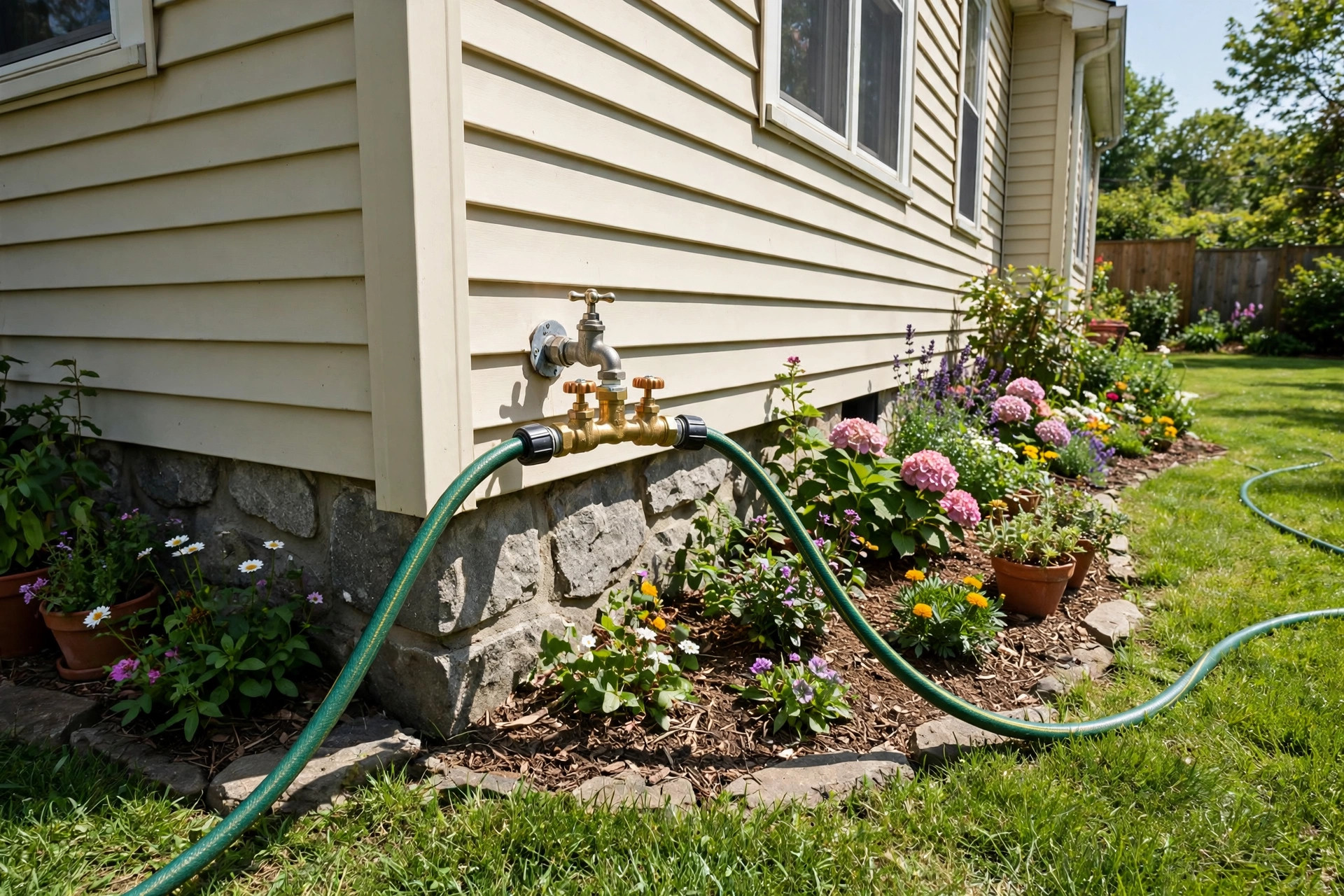

Most houses have one outdoor tap for the whole yard. That one tap must serve the lawn, the flower beds, the vegetable patch, and the patio. Swapping hoses all day is slow work. The best garden hose splitter two way solves this small but real problem. It screws onto the tap and splits the water into two lines. Each line has its own valve, so you can run one hose, the other hose, or both at the same time.
This guide explains what to look for, what to avoid, and how to keep a splitter working for years. The advice is plain and practical. It fits beginners who just bought a house, and it fits gardeners who want less hassle in the yard.
Why a Two Way Splitter Matters
A two way splitter does one job well. It turns one tap into two. That sounds simple, and it is. But the change in daily garden work is large. You can water the roses with one hose while the sprinkler runs on the lawn. You can fill a bucket for washing the car while a soaker hose waters the beds.
Without a splitter, every change means a trip back to the tap. You unscrew one hose, screw on the other, and walk back. Do that ten times in one afternoon and you lose real time. A splitter removes that back and forth. Both hoses stay connected. You turn a small valve instead of changing fittings.
A splitter also protects the tap. Threads wear out each time a hose is removed and put back. Metal against metal grinds a little every time. With a splitter, the tap threads get used once. The daily wear moves to the splitter valves, which are cheaper to replace. This small saving adds up over years.
The second valve matters more than people think. Some cheap splitters have no valves at all. They just split the flow. Then both hoses run whenever the tap is on. That wastes water and removes control. The best garden hose for large yards is only useful if you can shut its water off without walking back. A proper two way splitter has one valve per outlet. That is the whole point.
Gardeners with tips on how to use soaker hose effectively often keep a soaker line on one outlet all season. The other outlet stays free for hand watering. This setup is one of the most common uses for a splitter. It is simple, and it works.
How to Choose the Best Garden Hose Splitter Two Way
Buying a splitter is easy. Most hardware stores carry several kinds, and the trusted guide at Bob Vila covers the basics of watering gear. Still, a few checks separate a good one from a leaky one. Look at these points before you pay.
Check the Material
The best garden hose splitter two way is made of brass or heavy metal. Brass is the classic choice. It resists rust, it handles pressure, and it lasts for many seasons. Solid brass splitters feel heavy in the hand. That weight is a good sign.
Some splitters use aluminum or zinc alloy. These cost less and weigh less. They can work fine for light use. But cheap metal threads can strip if you tighten too hard. Plastic splitters are the cheapest of all. They crack in sun and cold. Avoid plastic if the splitter will sit outdoors year round.
Look at the Valves
Each outlet should have its own valve. Turn the valve handle. It should move smoothly, not stiff and not loose. Rubber or plastic valve handles are common. Metal handles last longer but get hot in summer sun. Either is fine as long as the movement is smooth.
Check that the valve shuts off fully. A valve that drips when closed is worse than no valve at all. In the store, you cannot test with water. Look for a valve stem with a rubber washer or a ball valve design. Ball valves shut off more fully than simple gate valves. The team at Family Handyman has noted that full shut-off valves are worth the extra dollar.
Check the Thread Fit
American garden taps use standard garden hose threads. A good splitter screws on by hand without force. If you must wrench it hard in the store, the threads are poor. The splitter should also come with a rubber washer in the inlet. Without that washer, the joint will leak. Spare washers are cheap, and stores like Lowe’s sell them in packs.
Types of Two Way Hose Splitters
Three main types sit on store shelves. Each has its place. Pick the one that fits your water pressure and your climate.
Standard Brass Y Splitter
This is the most common type. It looks like the letter Y. The top screws onto the tap. Two arms point down or out, each with a valve. A Y splitter is the best garden hose splitter two way for most homes.
The Y shape gives good clearance. Two hoses hang without kinking at the joint. For heavy hoses, this matters. Kinks at the tap are a common cause of leaks.
Heavy Duty Metal Splitter
Heavy duty splitters suit homes with high water pressure or long hose runs. The thicker body resists the stress when two heavy hoses pull in different directions.
If your tap feeds a garden hose nozzle with multiple settings on a long hose, a heavy duty splitter holds up better. The extra strength pays off when the hose gets dragged across the yard.
Plastic or Zinc Two Way Splitter
Budget splitters use zinc alloy or plastic. They cost five to ten dollars. For a small patio garden with light use, they can serve well. For daily garden watering, they wear out faster. Sun makes plastic brittle. Frost cracks cheap metal. If you live where winters are hard, this type should come inside in the fall.
Consumer testing guides, such as those at Consumer Reports, remind buyers that cheap fittings often cost more over time because they need replacing. A brass splitter bought once can outlast three plastic ones.
Cost and Price
Most good brass models cost between ten and twenty five dollars.
Price does not tell the whole story. A twelve dollar brass splitter that lasts ten years is cheaper than a six dollar plastic one replaced every two years. Also count the cost of leaks. A splitter that drips at the tap can waste hundreds of gallons in a season. That shows up on the water bill.
Some brands add extras. Foam grip handles, swivel inlets, and quick connect ends push the price up. A swivel inlet is worth it. It lets you tighten the splitter without twisting the hoses. Quick connect ends are nice if you swap tools often. Gardeners who follow guides at The Spruce often praise the swivel feature for older taps that sit close to the wall.
Buy from a store with a clear return policy. Big retailers like Home Depot and Lowe’s accept returns on fittings that leak. Keep the receipt for a month. Test the splitter under full pressure before the return window closes.
How to Install and Use a Two Way Splitter
Installation takes five minutes. No tools are needed for most models.
First, turn off the tap. Remove the old hose. Clean the tap threads with a cloth. Dirt and old tape on the threads cause leaks.
Second, check the rubber washer inside the splitter inlet. It should sit flat and fill the ring. If the washer is thin or cracked, replace it. Corona Tools and other garden suppliers sell washer packs for a dollar or two.
Third, screw the splitter onto the tap by hand. Turn until it is snug, then give it a quarter turn more. Do not over-tighten. Brass threads seal well with hand pressure plus a small extra turn. If the splitter has a swivel inlet, hold the body still and turn only the swivel nut.
Fourth, attach one hose to each outlet. Close both valves. Turn the tap on fully. Open one valve at a time and check every joint for drips. A small drip at the tap joint usually means the washer is not seated right.
To use the splitter, keep the tap open and use the valves to control each hose. Close both valves when you finish for the day. In fall, drain the hoses and store the splitter indoors if you live where pipes freeze.
Seed and garden suppliers such as Burpee remind gardeners that steady, controlled watering gives better results than blast watering. A splitter with good valves helps you control flow to each hose. For delicate seedlings, a gentle flow from one valve is better than full pressure.
Care and Upkeep
A splitter needs little care, but a little care makes it last. Check the washers once a year. Rubber washers harden with age and sun. A hardened washer leaks. Replacing washers takes a minute and costs almost nothing.
Keep the valves moving. If a valve sits closed all winter, it can stick. Open and close each valve a few times in spring. A drop of silicone spray on the valve stem keeps it smooth. Do not use oil based sprays on rubber parts. They can break the rubber down.
Watch for mineral buildup. In areas with hard water, white crust can form on the threads and valves. Soak the splitter in white vinegar for an hour to dissolve the crust. Rinse well before use. This simple step is also recommended by tool makers like Fiskars for keeping metal garden gear in shape.
In cold climates, remove the splitter before the first hard freeze. Water trapped inside can crack the body. Store it in a garage or shed. Hoses should be drained and stored too. The garden planners at Gardener’s Supply list fall cleanup as one of the key steps for long tool life.
If a valve starts to leak around the stem, tighten the small packing nut under the handle. A quarter turn often stops the drip. If it still leaks, the valve may need a new washer or a full replacement. At that point, compare the repair cost to a new splitter. Often a new brass splitter is the better buy.
Safety
Water pressure can surprise people. A garden tap can push forty to eighty pounds per square inch. That pressure can burst a weak fitting. Always buy a splitter rated for normal home water pressure. The package or the maker site should state the rating.
Never stand in front of a hose end when you open a valve. The first burst of water can carry dirt and rust. Point the hose at the ground until the water runs clear.
Keep drinking water safe. A hose left lying in a puddle or a pool can suck dirty water back into the pipes when pressure drops. This is called backflow. Use a simple backflow preventer on the tap if your local code calls for it. Hardware stores carry them, and they screw on like a splitter.
Watch for hot water in the hose. A dark hose in summer sun can hold water hot enough to scald. Let the water run a few seconds before you water plants or fill a pet bowl. Kids should not play with the valves without an adult nearby.
Frequently Asked Questions
Can I run both hoses at full pressure at the same time?
No, not quite. One tap feeds both outlets, so the water splits between them. Each hose gets less pressure than a single hose would get alone. For light watering this is fine. If you need full pressure for two jobs at once, you need a second tap. Most gardeners find the shared pressure is enough for daily work.
Will a two way splitter fit my tap?
Almost certainly yes. Most American outdoor taps use standard three quarter inch garden hose threads. Nearly every splitter sold in the United States uses that standard. If your tap is very old or unusual, take a photo to the store. Staff can match it.
Do I need plumber’s tape on the threads?
Garden hose threads seal with the rubber washer, not with tape. Do not wrap the threads in tape. Tape can bunch up and cause leaks on hose fittings. Make sure the washer is in place and in good shape. That is what stops the drip.
Can I leave the splitter on the tap all year?
In warm climates, yes. In cold climates, no. Remove it before winter. Freezing water can crack the metal and ruin the valves. Store it in a dry place. Many gardeners mark fall cleanup on the calendar and pull all fittings at the same time.
What is the difference between a two way and a four way splitter?
A two way splitter gives two outlets. A four way splitter gives four. Four way models are bulkier and heavier. They suit large gardens with many zones. For most homes, two outlets are enough. The best garden hose splitter two way is simpler, lighter, and less likely to leak than a four way model.
Why does my splitter leak at the tap even with a new washer?
The tap threads may be worn or bent. Old brass taps get dents from years of use. A new washer cannot seal against a damaged thread face. Try a thicker washer, or add a second washer. If it still leaks, the tap itself may need repair. A plumber can replace a worn hose bib in under an hour.
A Final Word
The best garden hose splitter two way is a small tool that earns its keep. It costs little, installs in minutes, and saves trips back to the tap all season. Choose brass, check the valves, and keep the washers fresh. Do that and the splitter will serve your garden for many years. One tap becomes two, and garden work becomes simpler.
References
Bob Vila. (n.d.). Home improvement advice. https://www.bobvila.com Burpee. (n.d.). Seeds, plants, and gardening supplies. https://www.burpee.com Consumer Reports. (n.d.). Product reviews and ratings. https://www.consumerreports.org Corona Tools. (n.d.). Garden and landscape tools. https://www.corona-tools.com Family Handyman. (n.d.). DIY home repair and maintenance. https://www.familyhandyman.com Fiskars. (n.d.). Garden and cutting tools. https://www.fiskars.com Gardener’s Supply Company. (n.d.). Gardening tools and supplies. https://www.gardeners.com Lowe’s. (n.d.). Home improvement products. https://www.lowes.com The Home Depot. (n.d.). Home improvement products. https://www.homedepot.com The Spruce. (n.d.). Home and garden advice. https://www.thespruce.com
Was this guide helpful?

About Emily Rodriguez
The My Garden US editorial team writes practical, in-depth home and garden guides for American homeowners — tested advice, no fluff.
You May Also Like
Best Garden Tool Bag for Professionals: A Working Guide
April 8, 2026 0 views
How to Grow Microgreens Indoors Kit: A Complete Guide for Beginners
April 27, 2026 0 views
How to Grow Carrots in Raised Beds: A Complete Beginner’s Guide
June 29, 2026 0 views