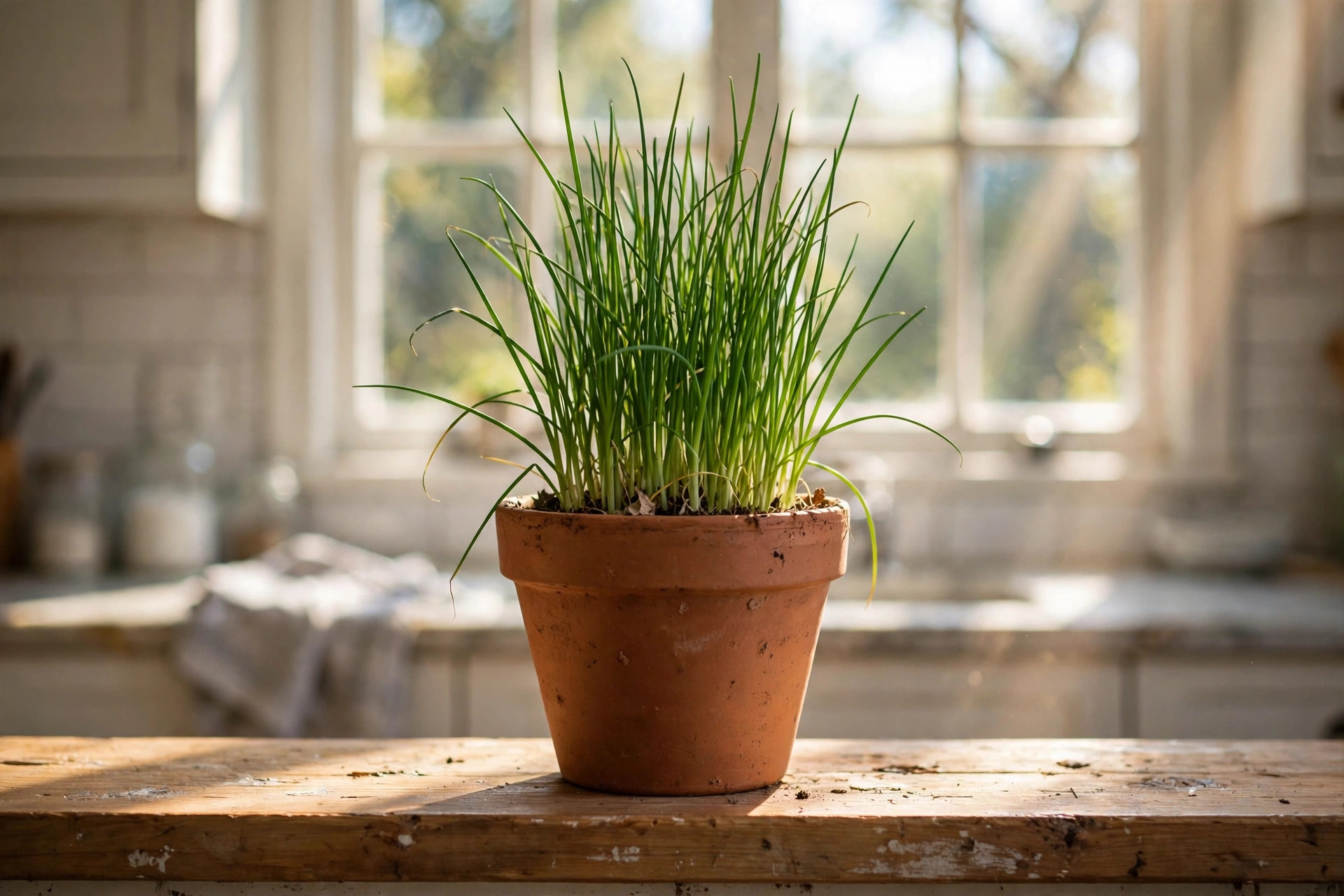

Chives are one of the easiest herbs to keep in the house. If you want to know how to grow chives indoors pots, you have come to the right place. This guide walks you through every step, from the first seed to the last snip. You do not need a garden. You do not need special skill. You only need a pot, some soil, a little light, and a little patience.
A pot of chives on the kitchen sill is more than a plant. It is a small supply of fresh flavor. You snip a few leaves and drop them on a baked potato or into an omelet. The taste is mild and sweet, like a young onion. In winter, when the ground outside is hard and cold, the green leaves on your sill remind you that spring will return.
Many people fear that herbs need expert care. That is not true of chives. They are tough plants. They forgive mistakes. A missed watering rarely kills them. A dim room slows them but does not end them. With plain care, a single pot can give you cuttings for months, and even for years.
Why It Matters
Fresh chives cost a good deal at the store. They come in small plastic packs. Half the pack often goes limp before you use it. A pot at home ends this waste. You cut only what you need. The rest keeps on growing. Over a year, one pot can replace many store packs.
There is also the matter of taste. A chive leaf loses flavor the longer it sits. Store packs may have traveled far. Your own pot gives you leaves that are minutes old. The difference is plain on the tongue.
Growing food in the house has a quiet value too. It teaches children where food comes from. It gives the kitchen a living thing to tend. In a city apartment, a row of pots is a small garden. Chives are a good first plant for that garden because they ask so little and give so much.
What to Look For: How to Grow Chives Indoors Pots
The Right Pot
Choose a pot that is at least six inches wide and six inches deep. Chives grow in clumps, and the roots need room to spread. A wider pot lets you grow a fuller clump. It must have holes in the bottom. Water must drain out. If water sits in the soil, the roots will rot.
Clay pots are a fine choice. They breathe, and they dry out between waterings. Plastic pots hold water longer, which helps if you forget to water. Either will do. Put a saucer under the pot to catch what drains out.
The Right Soil
Chives want soil that drains well but holds some moisture. A plain potting mix from the store works. You can learn more about soil and feeding by reading about how to make compost tea for plants if you want a gentle, homemade feed. Do not use heavy garden soil from outside. It packs down too hard in a pot, and it may carry pests.
Seed or Starts
You can start chives from seed or from small plants. Seed is cheap. It takes a bit longer, but it works well. Small plants from a nursery give you leaves sooner. Either path leads to the same pot.
If you buy seed, check the date on the packet. Fresh seed grows better. Look for common chives, also called garden chives. Garlic chives are a different plant with flat leaves. They are good too, but the taste is not the same.
How to Choose Your Method
Starting from Seed
Fill your pot with damp potting mix. Leave one inch of space at the top. Scatter the seed thinly over the surface. Press them down gently. Cover them with a thin layer of mix, about a quarter of an inch.
Water lightly. Then cover the pot with plastic wrap or a clear bag. This holds in moisture. Set the pot in a warm spot, near but not on a heater. Seed starts to grow in about two to three weeks.
When green blades show, take the cover off. Move the pot to a bright spot. Keep the soil damp but not soaked.
Starting from Plants
Buy a small pot of chives at a garden center or food store. Many grocery stores sell living herb pots. Slide the plant out of its small pot. If the roots are wrapped in a tight ball, loosen them gently with your fingers.
Set the plant in your larger pot at the same depth it was before. Fill around it with potting mix. Water well. Give it a day in a mild spot before you move it to full sun on the sill.
Splitting a Clump
If a friend has chives, ask for a division. Dig or pull a small clump with roots attached. Plant it in your pot right away. Water well. This is the fastest way of all to get a full pot.
Light, Water, and Warmth
Light
Chives want six or more hours of bright light each day. A south-facing window is best. An east or west window will do. Turn the pot a quarter turn every few days so all sides get light. This keeps the plant even and upright.
If your windows are dim in winter, a small grow light can help. Place it a few inches above the leaves and leave it on for twelve to sixteen hours a day. A basic plan for lights is covered in our guide to a seed starting under lights schedule. Chives under lights grow fast and strong.
Water
Water when the top inch of soil feels dry. Push your finger in to check. Water until it runs out of the bottom holes. Empty the saucer after half an hour. Do not let the pot sit in standing water.
Chives like even moisture. Too little water makes the leaf tips brown. Too much water makes the base soft and dark. Aim for soil that feels like a wrung-out sponge.
Warmth
Chives grow best between sixty and seventy degrees. Normal room heat suits them. They can take cooler rooms too. They even go through a rest in cold. If your plant slows in a chilly room, do not worry. It will pick up when warmth returns.
Types and Options
There are two main kinds of chives.
Common chives have thin, round, hollow leaves. The flowers are purple balls. The taste is mild onion. This is the kind most people mean when they say chives.
Garlic chives have flat leaves. The flowers are white stars. The taste has a hint of garlic. They grow just as well in pots indoors.
You can grow both in the same wide pot or in separate pots. Keep them apart if you want to tell them apart by taste at a glance.
Chive varieties from seed companies differ little for home use. A plain packet of common chives will serve most cooks well. Specialty seed sellers such as Burpee carry fresh stock each season.
Cost and Price
Growing chives indoors is cheap. Here is what you may spend:
– A packet of seed: about two to four dollars. – A small bag of potting mix: about five to eight dollars. – A six-inch pot with saucer: about three to six dollars. – A living herb plant from the store: about four to six dollars.
One pot can yield leaves for a year or more. Compare that with store packs, which cost two to three dollars each and last only days. The pot pays for itself in a month or two.
If you add a small grow light, expect to spend fifteen to thirty dollars for a basic one. Tools for potting and trimming, such as hand tools and scissors, add a few dollars more. Helpful buying advice appears on sites like The Spruce and Bob Vila.
Cutting and Using the Leaves
Wait until the leaves are at least six inches tall before you cut. Use clean scissors. Cut a handful of leaves about one inch above the soil. Never cut more than a third of the plant at one time. The plant needs its leaves to make food.
Cut from the outside of the clump first. The new growth comes from the center. After cutting, the leaves grow back in a week or two.
Snip chives with scissors rather than chopping with a knife. Scissors keep the round leaves open. Add them to food at the end of cooking. Heat kills their fresh taste. Stir them into dips, eggs, soups, salads, and baked potatoes.
You can dry or freeze extra chives, but fresh is best. If you must save them, freeze snipped leaves in a bag. They keep their flavor better frozen than dried.
Care and Upkeep
Feeding
Chives are light feeders. Too much food gives soft, weak leaves. Feed once a month during spring and summer with a half-strength liquid houseplant food. Stop feeding in late fall and winter when growth slows. Guides on indoor plant care at Gardener’s Supply and Home Depot explain simple feeding plans.
Repotting
After a year or two, the clump may fill the pot. The center may look crowded. Lift the plant out in spring. Split the clump in half with a knife. Replant one half in fresh mix. Give the other half away or plant it in a second pot. This keeps the plant strong.
Cleaning the Leaves
Dust settles on indoor plants. Rinse the leaves under a gentle spray of water every few weeks. This also washes off any tiny pests. Let the plant dry in bright air so no water sits in the crown.
Flowers
If your chives bloom indoors, the purple flowers are pretty and safe to eat. But flowering slows leaf growth. Snip the flower stems off when they appear if you want more leaves. Or leave a few for beauty and let them go to seed.
Safety
Chives are safe for people. They are a common food. No part of the plant is known to harm humans.
Keep one caution in mind. Chives, like onions, can be harmful to cats and dogs. If you have pets that chew plants, put the pot out of their reach. The ASPCA lists plants that are safe and unsafe for pets, and it is wise to check any new houseplant against such a list.
When you use potting mix, wash your hands after. Some mixes carry dust that can bother the lungs. Work near open air if you can. Store any plant food out of reach of children and pets.
FAQ
How long does it take for chives to grow indoors?
Seed takes about two to three weeks to sprout. Leaves reach cutting size in about two to three months from seed. Plants from the store give you leaves in a week or two.
Can chives grow in a small pot?
A small pot works for a short time. But a pot six inches wide and six inches deep gives better results. The roots need room. Crowded roots mean thin leaves.
Do chives need direct sun?
They do best with several hours of direct sun or very bright light. A bright south window is ideal. In low light they grow slow and pale. A grow light fixes this.
How often should I water indoor chives?
Check the soil every few days. Water when the top inch is dry. In warm rooms this may be twice a week. In cool rooms it may be once a week. Always let extra water drain out.
Will chives keep growing after I cut them?
Yes. That is their best trait. Cut leaves grow back from the base. One clump can be cut many times. Rest the plant for a week or two between heavy cuts.
Can I grow chives indoors all year?
Yes. That is the main reason people grow them inside. Keep the pot on a bright sill through winter. Growth may slow in the darkest months. It picks up again in spring.
A Short Final Word
Learning how to grow chives indoors pots is one of the simplest steps a home cook can take. The cost is small. The work is light. The reward is fresh green flavor at arm’s reach, in every season.
Start with one pot. Learn its rhythm. Watch how fast the leaves return after a cut. Soon you will snip without thinking, the way you reach for salt. And when that pot outgrows its home, you will know enough to split it, share it, and start a second one. For more ideas on growing food in small spaces, look at raised bed options like those in our raised garden bed on legs reviews. Good tools make the work easier, and honest tool reviews appear at Consumer Reports and Family Handyman. Pruning shears and hand tools from makers like Fiskars and Corona keep the job neat, and big home stores like Lowe’s stock pots, soil, and lights in one trip.
References
ASPCA. (n.d.). Pet care and animal welfare resources. https://www.aspca.org Bob Vila. (n.d.). Home improvement advice. https://www.bobvila.com Burpee. (n.d.). Seeds, plants, and gardening supplies. https://www.burpee.com Consumer Reports. (n.d.). Product reviews and ratings. https://www.consumerreports.org Corona Tools. (n.d.). Garden and landscape tools. https://www.corona-tools.com Family Handyman. (n.d.). DIY home repair and maintenance. https://www.familyhandyman.com Fiskars. (n.d.). Garden and cutting tools. https://www.fiskars.com Gardener’s Supply Company. (n.d.). Gardening tools and supplies. https://www.gardeners.com Lowe’s. (n.d.). Home improvement products. https://www.lowes.com The Home Depot. (n.d.). Home improvement products. https://www.homedepot.com The Spruce. (n.d.). Home and garden advice. https://www.thespruce.com
Was this guide helpful?

About Robert Taylor
The My Garden US editorial team writes practical, in-depth home and garden guides for American homeowners — tested advice, no fluff.
You May Also Like
Best Garden Watering Timer Reviews: What to Know Before You Buy
August 3, 2026 0 views
How to Pick the Best Garden Cart for Farmers Market Days
August 18, 2026 0 views
Best Garden Gloves for Digging Reviews: What Serious Gardeners Should Know
February 15, 2026 0 views