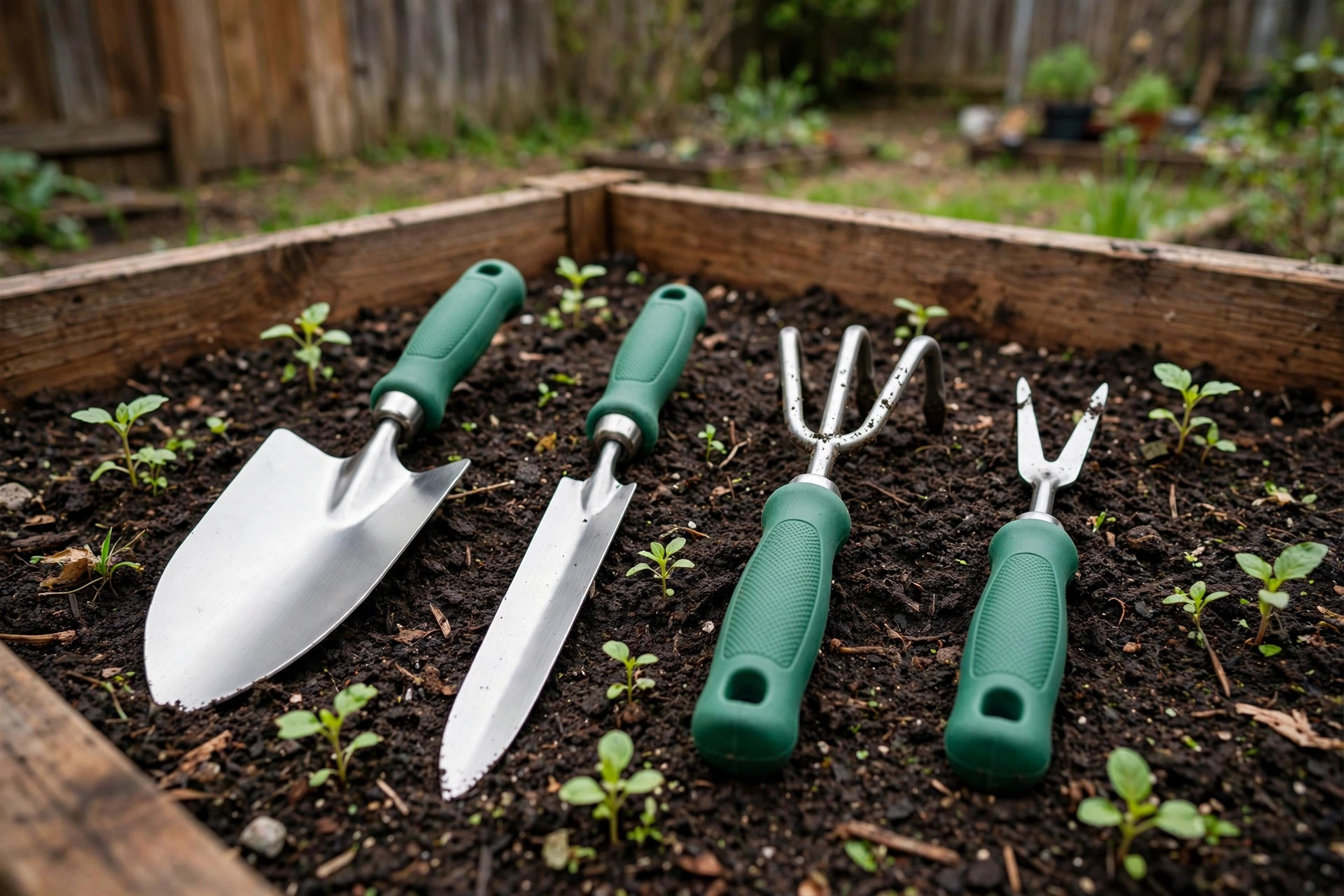

Every gardener starts with a single hand tool. The trowel is that tool. It digs the planting hole. It mixes the soil. It lifts the weed. When you look for the best garden trowel set for beginners, you are looking for more than one trowel. You are looking for a small kit that does the main jobs in a new garden. This guide will help you choose well. It explains what matters, what to look for, and how to care for your tools. It is written for people who are starting their first garden and want simple, honest advice.
Why a Good Trowel Set Matters
A new gardener does most work by hand. The ground is dug by hand. The plants are set by hand. The weeds are pulled by hand. A trowel is the tool that makes all of this work easy. With a good trowel, a hole is dug in seconds. The plant sits in the hole at the right depth. The soil is packed down firm. Without a good trowel, the same work takes much longer. The gardener gets tired. The plants suffer.
A set is better than a single trowel. A set gives you a trowel for digging. It gives you a smaller one for detail work. It often gives you a weeder and a cultivator too. Each tool has its own job. When you use the right tool for each job, the work goes faster and the garden looks better. For a beginner, this is important. The first season sets the habits. Good tools make good habits easy.
Cheap tools break. The handle snaps. The blade bends. The paint peels. A beginner who buys the cheapest set often buys twice. A good set lasts for years. It does not have to cost much. It only has to be well made. That is why the search for the best garden trowel set for beginners is worth some care. A small amount of study now saves money and trouble later. Sites such as Fiskars show how well-made hand tools are built to last.
What to Look For When You Buy: Best Garden Trowel Set for Beginners
The Handle
The handle is where your hand meets the tool. It must feel good in your hand. Look for a handle with a soft grip. Wood handles are classic. They feel warm and natural. Rubber or plastic grips are common now. They are easy to hold when wet. Many gardeners like the rubber grips. They give a firm hold and hurt the hand less.
The handle should be long enough to hold with a full fist. It should not be so long that it feels clumsy. Some sets have extra-large grips. These help people with sore hands. They also help when the work takes a long time. If you plan to spend an hour at the bed, a good grip matters.
Check how the handle joins the blade. A weak joint is the first thing to break. The best tools use a full tang or a strong rivet. You can feel the strength when you hold the tool. It should feel like one solid piece. There should be no wobble and no rattle.
The Blade
The blade does the cutting and the digging. It must be strong. Look for steel. Stainless steel does not rust. Carbon steel is very strong but needs care. Aluminum is light but bends more easily. For most beginners, stainless steel is the best choice. It holds up in damp soil. It cleans easily.
The blade should have depth marks on it. These small lines show inches. They help you plant at the right depth. Seed packets tell you how deep to plant. The marks on the blade make it easy to follow those directions. This is a small detail. It makes a real difference for a beginner.
The edge of the blade should be sharp enough to cut through roots. It should not be sharp like a knife. A working edge is enough. Some trowels have one serrated edge. This edge saws through small roots. It is a useful feature. Many gardeners find it helpful. Corona Tools makes hand tools with these practical features in mind.
The Rest of the Set
Most sets have three to five pieces. The common set has a trowel, a transplanter, a weeder, and a cultivator. The transplanter is a narrow trowel. It moves seedlings. The weeder lifts weeds by the root. The cultivator loosens the soil surface. Together, these tools do almost all hand work in a small garden.
Some sets add a small fork or a soil scoop. Some add a storage pouch. A pouch is handy. It keeps the tools together in the shed. A carry tote is even better. It lets you bring the whole set to the garden in one trip. Think about what you will do most. A vegetable gardener needs the transplanter. A flower gardener needs the weeder. Choose the set that fits your plan.
Types and Options
Trowel sets come in a few styles. The classic set has simple tools with no extras. This is the best choice for most beginners. It costs less. It covers the basics. The deluxe set adds more pieces. It may have a weeder with a long handle. It may have a kneeling pad. These extras are nice but not needed at first.
Gardeners who work with containers may want a smaller set. Container sets have shorter tools. They fit in small pots. They are light in the hand. Gardeners with large beds may want full-size tools. The choice depends on the size of your garden. Measure your beds before you buy. This sounds simple. It is often forgotten.
There are also sets made for children. These have small handles and bright colors. They are fine for kids who garden with an adult. They are not strong enough for real work. A beginner adult should buy an adult set. The tools will hold up better. They will feel right in the hand. Gardener’s Supply Company offers sets sized for different gardens and gardeners.
You may also see sets sold with gloves and a kneeler. These bundles can be a good value. Read garden tool set for beginners reviews before you choose a bundle. The gloves in cheap bundles are often thin. The kneeler may be flimsy. A good bundle saves money. A bad one wastes it.
Cost and Price
A good trowel set does not cost much. Most sets sell for a low to middle price. You can find a decent set for the price of a bag of good soil. This is good news for a beginner. You do not need to spend much to start well.
Watch out for sets that cost very little. A set that sells for a few dollars is often made of weak metal. The handles break in the first season. The blades bend on the first root. You save a little at the store. You lose much more when the tool fails. It is better to buy one good set than two cheap ones.
On the other hand, there is no need to buy the most costly set. Expensive sets are made for heavy daily use. A beginner does not need that. The middle of the price range is the sweet spot. The tools are strong. The price is fair. Reviews on Consumer Reports and The Spruce can help you compare value at different prices.
Sets go on sale in spring. Garden centers clear stock in late summer. You can find a good set for less if you shop at the right time. Do not wait too long, though. The best sets sell out fast in planting season. Buy early and you will have the tools when the soil is ready.
Care and Upkeep
Good tools last when they are cared for. The care is simple. It takes only a few minutes. Clean the tools after each use. Knock off the soil. Wipe the blade with a cloth. If the soil is wet, let the tool dry before you store it. Damp tools rust. Dry tools do not.
Oil the metal now and then. A light coat of oil keeps the blade smooth. It stops rust from forming. Any light oil will do. Wipe off the extra oil with a rag. This is a good habit to build in the first season. It takes one minute. It adds years to the life of the tool.
Store the tools in a dry place. Hang them on the shed wall. Keep them in a bucket of sand mixed with oil. This old trick works well. The sand cleans the blade. The oil protects it. Do not leave tools out in the rain. Do not leave them buried in the garden. A tool left in the soil will be lost or rusted by spring. Family Handyman has more advice on keeping hand tools in good shape.
Sharpen the blade when it gets dull. A file or a whetstone works fine. Follow the angle of the edge. Take off only a little metal. The blade does not need to be razor sharp. It only needs a clean working edge. If a handle cracks, sand it smooth. If it breaks, replace the tool. Do not keep using a broken handle. It is not safe.
Safety
Garden tools are safe when they are used with care. Always watch where you put your hands. Keep the blade pointed away from your body. When you reach into the soil, look first. You do not want to grab a sharp edge by mistake.
Wear gloves. Gloves protect the hands from blisters. They protect against thorns and rough edges. Choose gloves that fit well. Loose gloves slip. Tight gloves hurt. Good gloves are as important as good tools. When you check best garden trowel for planting reviews, look for comments about grip and hand comfort too.
Keep tools out of reach of small children. A trowel is a real tool. It can cut. Store the set on a high shelf or in a locked shed. Teach older children how to use tools safely. Show them how to carry a trowel. Show them how to set it down. These small lessons prevent accidents.
Work with good posture. Kneel on a pad, not on bare ground. A kneeler with handles helps you stand up again. Do not bend for a long time without a break. The garden will wait. Your back will thank you.
Frequently Asked Questions
How many pieces should a beginner trowel set have?
Three to five pieces is enough. A trowel, a transplanter, a weeder, and a cultivator cover the main jobs. More pieces are nice but not needed at first. Start simple. Add tools as you learn what you use most.
What is the best metal for a trowel blade?
Stainless steel is the best choice for most beginners. It does not rust. It stays strong in damp soil. It is easy to clean. Carbon steel is strong too, but it needs more care. Weak metals bend and should be avoided.
Can I use a trowel set in containers and pots?
Yes. A trowel set works well for pots and planters. Small pots need small tools, so a compact set may be better. For large pots, a full-size trowel is fine. Many beginners start with containers before they dig a garden bed. Burpee has guides on starting plants in containers.
How do I know if a set is strong enough?
Hold the tool and press the blade against a hard surface. It should not bend. Check the joint between the handle and the blade. It should feel solid. Read reviews from other buyers. Honest reviews tell you how a set holds up after one season of real use.
Should I buy the set online or at a garden center?
Both are fine. A garden center lets you hold the tools. You can feel the grip and the weight. This is a real advantage. Online stores often have more choice and better prices. Stores like Home Depot and Lowe’s sell good sets both in store and online. If you buy online, read the reviews first.
Do I need to oil my trowel set?
Yes, now and then. A light coat of oil on the metal stops rust. It keeps the blade moving smoothly through the soil. You do not need to oil after every use. Once a month in the growing season is enough. Wipe off the extra oil before you store the tools. Bob Vila offers simple guides for basic tool care.
A Short Final Word
The best garden trowel set for beginners is the one that fits your hand, holds up in the soil, and covers the basic jobs. You do not need the biggest set or the most costly one. You need a solid trowel, a few good companions, and the habit of cleaning them after use. Buy with care. Read the reviews. Feel the grip if you can. Then get out to the garden. The soil is waiting, and a good set of tools will make the first season a happy one.
References
Bob Vila. (n.d.). Home improvement advice. https://www.bobvila.com Burpee. (n.d.). Seeds, plants, and gardening supplies. https://www.burpee.com Consumer Reports. (n.d.). Product reviews and ratings. https://www.consumerreports.org Corona Tools. (n.d.). Garden and landscape tools. https://www.corona-tools.com Family Handyman. (n.d.). DIY home repair and maintenance. https://www.familyhandyman.com Fiskars. (n.d.). Garden and cutting tools. https://www.fiskars.com Gardener’s Supply Company. (n.d.). Gardening tools and supplies. https://www.gardeners.com Lowe’s. (n.d.). Home improvement products. https://www.lowes.com The Home Depot. (n.d.). Home improvement products. https://www.homedepot.com The Spruce. (n.d.). Home and garden advice. https://www.thespruce.com
Was this guide helpful?

About Jennifer Lee
The My Garden US editorial team writes practical, in-depth home and garden guides for American homeowners — tested advice, no fluff.
You May Also Like
Finding the Best Garden Hose Reel for RV Life
June 3, 2026 0 views
How Much Soil Do You Need? A Raised Bed Soil Calculator Guide
March 11, 2026 0 views
How to Grow Tomatoes Upside Down: A Simple Guide
August 12, 2026 0 views