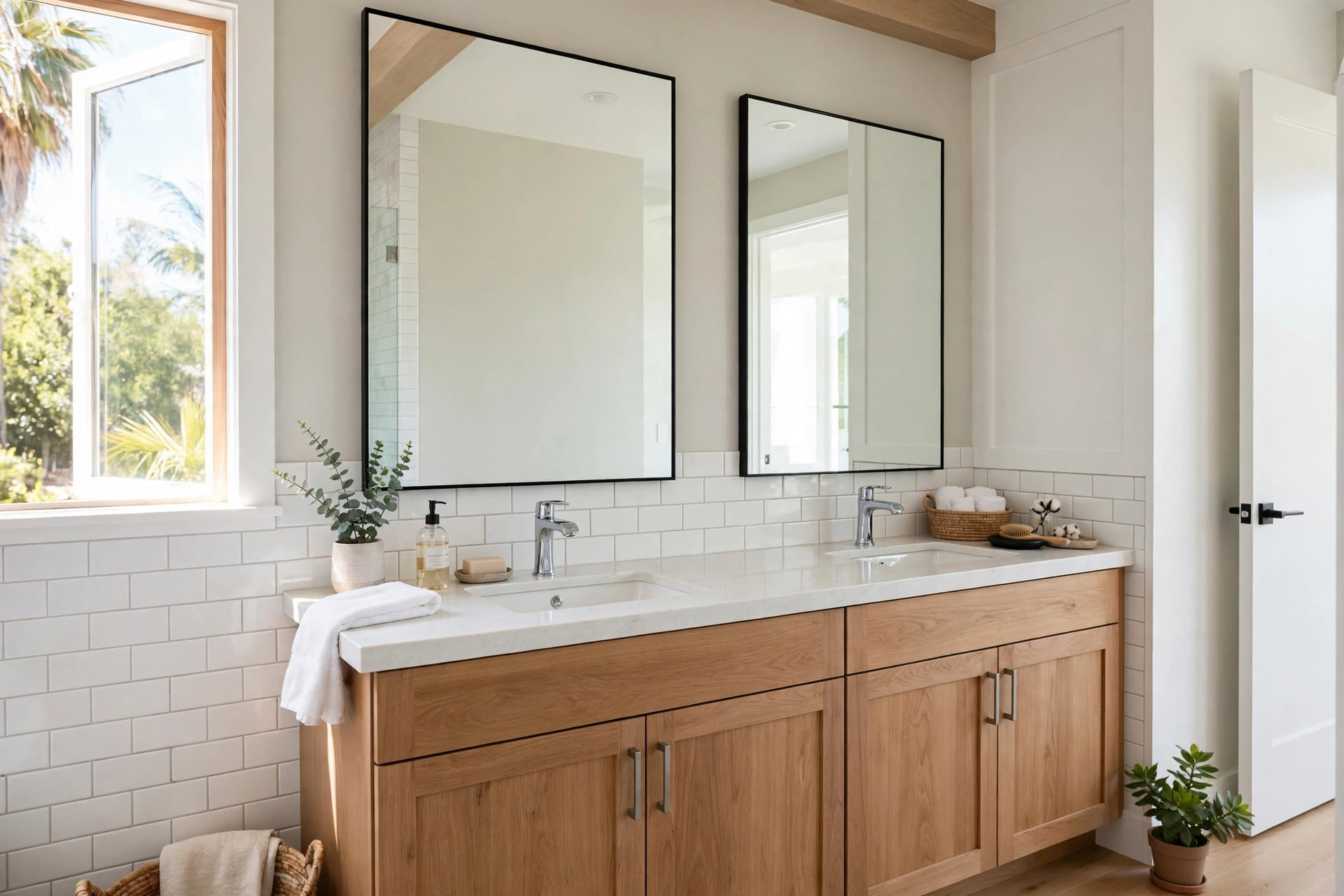

Many families in the state begin their day at the same sink. Two adults brush their teeth at once. Children wash their hands while a parent shaves. Double sink vanities solve this problem in a direct way. They give two people their own basin, their own space, and their own pace. In California, where the average home often holds busy schedules and shared bathrooms, this simple change makes the morning far less tense.
This guide looks at double sink vanities for California homes across the USA market. It covers why they matter, what to look for, the main types, the true cost, and how to keep them in good shape. The focus stays on plain facts that help a buyer choose well.
Why Double Sink Vanities Matter in California Homes
Space is dear in much of the state. Many California homes were built in the last fifty years with a master bath that measures eight to ten feet wide. A single sink in that space leaves room on the counter that often fills with clutter. Two basins turn that same counter into a working space for two people.
Time is the other reason. A couple that rises at six often fights for the same few minutes. A double sink removes the wait. One person can brush teeth while the other washes a face. The gain is small each day, but it adds up across years. Many owners say it is the change they feel most in daily life.
There is also a question of value. Buyers in the USA notice the master bath early in a showing. A wide vanity with two sinks reads as a sign of a well-kept home. It is not a promise of a higher sale price, but it is a detail that many buyers like. A look at current bathroom design ideas shows how often double sinks appear in remodeled homes.
Water is a third reason, and it matters more here than in most states. California has faced long dry spells. A double sink does not by itself save water. But when each basin has its own low-flow faucet, a family can wash quickly and use less than with one running tap left on. Many new vanities ship with faucets that meet the state standard of 1.2 gallons per minute or less. You can read more about water-wise fixture design from American Standard.
What to Look For When You Choose: Double Sink Vanities California Homes Usa
Measure First
A double sink vanity needs room. As a rule, each basin should have at least 30 inches of clear width. That means most units start at 60 inches wide. A 72-inch unit gives more elbow room. Take your tape measure to the wall before you shop. Note the width, the depth from the wall, and the door swing. A vanity that is too deep can make a small bath feel tight.
Cabinet Quality
The cabinet carries the weight of two sinks, the stone or solid top, and daily use. Solid wood frames last longer than particle board. Plywood sides hold up better in damp air. Look at the joints. Dovetail or mortise joints beat simple staples. Soft-close drawers keep the cabinet quiet and protect the finish.
Countertop Material
Quartz is the most common choice today. It resists stains and needs no sealing. Granite is strong but wants a seal once a year. Marble looks rich but stains with toothpaste and hard water. Solid surface tops are smooth and easy to fix. Pick the material that fits your care habits, not just your taste.
Basin Style
Undermount basins sit below the top and leave a smooth counter that wipes clean. Vessel basins sit on top like bowls and make a bold style statement, but they catch dust at the base. Drop-in basins rest in a cut hole and are simple to replace. For a busy family bath, undermount basins win on daily care.
Faucet Spread and Height
Each sink needs its own faucet. Check the spread, which is the distance between the hot and cold handles. A standard spread is eight inches. Centerset faucets use four inches. Taller faucets suit vessel basins. Keep the spout height matched to the basin depth so water does not splash. Guidance on faucet styles and finishes can be found on Delta Faucet.
Storage Layout
Two people bring twice the clutter. A good double vanity gives each side its own drawers. Look for deep lower drawers for tall bottles. Shallow top drawers hold small items. Some units have a center stack of drawers between the sinks. That center section is a good place for shared items like cleaning supplies.
California Building Notes
Plumbing in California must meet the state plumbing code. A double sink may need two drain traps or a shared trap with a proper vent. If you move the drain line, you may need a permit. Homes near the coast face salt air, which can wear cheap metal hardware. Choose solid brass or stainless steel for hinges and pulls. If your home sits in an earthquake zone, the vanity should be fixed to wall studs with strong anchors, not just drywall screws.
For a broader look at vanity options beyond this state, see the general bathroom sink vanities buying guide.
Types and Options
Stock Vanities
Stock units come in set sizes from large makers. You can buy a 60-inch or 72-inch double vanity at Home Depot or Lowe’s and take it home the same day. Prices are low. Sizes are fixed. Finishes are limited to a few colors. This is the right choice when the budget is tight and the space is standard.
Semi-Custom Vanities
Semi-custom lines let you pick the size, the finish, and the top. They cost more and take weeks to arrive. They fit odd wall widths and match your trim color. Many California remodelers pick this level. It gives a custom look without the full custom price.
Custom Vanities
A cabinet shop builds the unit to your exact plan. You choose every drawer, every door, and every inch of width. This suits old homes with odd corners or baths that are wider than normal. The cost is high, and the wait can be two months or more. But the fit is perfect.
Floating Vanities
Floating units hang on the wall and leave the floor clear. They make a small bath feel larger. They also make floor cleaning easy. Each floating vanity must be tied to solid studs or blocking in the wall. In earthquake country, this tie must be very strong. Check that your wall can carry the load before you buy.
Freestanding Vanities
Freestanding units sit on legs or a base frame like old furniture. They suit homes with a vintage or farmhouse style. Many have less storage than a full cabinet. They are easy to move during a remodel. If you like the idea of a freestanding piece elsewhere in the bath, the freestanding soaking tubs guide covers a related choice.
Materials by Region
California’s dry inland air suits wood cabinets well. Coastal homes face damp salt air, so sealed finishes matter more there. In desert areas like Palm Springs, heat can dry out cheap glue joints. Solid construction pays off in every zone. You can compare building advice for older homes at This Old House.
Cost and Price
The price range is wide. A stock 60-inch double vanity with a basic top may cost 600 to 1,200 dollars. A semi-custom unit of the same size runs 1,500 to 3,500 dollars. A custom build starts near 3,000 dollars and can pass 8,000 with stone tops and fine hardware.
Faucets add to the bill. A pair of decent mid-range faucets costs 200 to 600 dollars together. High-end brands cost more. Many buyers pick Moen or Kohler fixtures for their long warranties.
Labor is the next part. A simple swap, where the new vanity sits on the old plumbing, may cost 500 to 1,000 dollars in labor. If the plumber must move drains or add vents, the cost can reach 2,000 dollars or more. California labor rates run high, so get two or three quotes.
Do not forget small costs. A new mirror, lights, and paint can add 300 to 800 dollars. A tile backsplash adds more. Set aside ten percent extra for surprises behind the old cabinet. Water damage and mold are common finds in older baths.
Check store prices and read customer reviews before you buy. The Bob Vila site and The Spruce both carry detailed buying advice for bath remodels.
Care and Upkeep
A double vanity needs the same care as any bath cabinet, done twice over. Wipe the counter daily. Water left to sit will stain even quartz over time. Dry the area around each faucet base. This is where most water damage starts.
Clean the basins each week with a mild cleaner. Skip harsh acids on natural stone. Use a soft cloth, not a scrub pad. Hard water spots are common in much of California. A mix of equal parts water and white vinegar cuts the spots on chrome and porcelain. Rinse well after.
Check the plumbing twice a year. Look under the cabinet with a flashlight. Feel the supply lines for dampness. Look at the drain joints for slow drips. A small leak caught early costs little. A leak left for months can ruin the cabinet floor.
Seal natural stone once a year. Test the seal by dropping a little water on the top. If it beads, the seal holds. If it soaks in dark, reseal. Keep the room vented. A bath fan that runs during and after a shower cuts moisture in half. In damp months, leave the cabinet doors open for an hour to air the inside.
Polish wood cabinets once a year with a light furniture oil. Tighten loose knobs and pulls. Replace worn caulk at the wall joint. Fresh caulk keeps water out of the wall. These small steps keep the vanity sound for twenty years or more.
Safety
Two sinks mean twice the water in one spot. That raises two safety points. First, the floor must stay dry. A non-slip bath mat in front of the vanity helps. Mop up spills at once. Second, the plumbing must be sound. A burst supply line can flood a home in minutes. Know where your main water shutoff sits. Test it once a year so it does not freeze in place.
Hot water needs care too. Set the water heater to 120 degrees. This is hot enough for comfort and cool enough to cut scald risk. Anti-scald mixing valves at each faucet add one more guard. They are worth the small cost in a home with children or older adults.
Electrical safety matters in the bath. Outlets near the sink must be GFCI protected. If your home is old, have an electrician check. Hair dryers and electric razors sit close to water here. A working GFCI can stop a shock.
Fix the vanity to the wall. A freestanding cabinet can tip if a child climbs a drawer. Wall anchors stop this. In earthquake zones, use rated straps or bolts into studs. This is not a small detail. It is the step that keeps a heavy cabinet in place when the ground moves.
Frequently Asked Questions
How wide must a double sink vanity be?
Most units start at 60 inches wide. That gives each basin about 30 inches. A 72-inch unit is more comfortable for two adults. Measure your wall first. Leave room for the door to open and for a person to stand at each sink.
Can I fit a double sink in a small bathroom?
It depends on the layout. If the wall is at least 60 inches wide and the door swing is clear, it can work. A floating vanity helps a small bath feel open. But do not force it. A cramped double sink is worse than a roomy single one.
Do double sink vanities use more water?
Not by rule. Two basins do not use more water if each has a low-flow faucet. The key is habit. Turn the tap off while brushing teeth. Choose faucets rated at 1.2 gallons per minute or less. That is the California standard for new installs.
Should the two faucets match?
Matching faucets look best. Buy them as a pair from the same line. This keeps the finish and the style the same. It also keeps the parts the same when you need a repair years later.
How long does installation take?
A simple swap takes one day. The old unit comes out in the morning. The new one goes in by evening. If drains move or tile work is needed, plan three to five days. Custom cabinet builds add weeks before the install day even starts.
Is a double sink vanity worth it for resale?
In most cases, yes. Buyers like a master bath that serves two people at once. It is one of the most requested bath features. It will not pay back its full cost in every market, but it helps a home show well. A focused guide to double sink vanities covers more detail on styles and sizing.
A Short Final Word
Double sink vanities suit the way California homes live. They cut the morning wait. They add storage. They suit both stock budgets and custom plans. The rules are simple. Measure well. Buy a solid cabinet. Pick a top you can care for. Hire a licensed plumber for the drain work. Fix the unit to the wall. Do these things, and the vanity will serve the household for decades.
References
American Standard. (n.d.). Bathroom and kitchen products. https://www.americanstandard.com Bob Vila. (n.d.). Home improvement advice. https://www.bobvila.com Delta Faucet. (n.d.). Kitchen and bathroom faucets. https://www.deltafaucet.com HGTV. (n.d.). Home and garden ideas. https://www.hgtv.com Kohler. (n.d.). Bathroom and kitchen fixtures. https://www.kohler.com Lowe’s. (n.d.). Home improvement products. https://www.lowes.com Moen. (n.d.). Faucets and plumbing fixtures. https://www.moen.com The Home Depot. (n.d.). Home improvement products. https://www.homedepot.com The Spruce. (n.d.). Home and garden advice. https://www.thespruce.com This Old House. (n.d.). Home renovation guidance. https://www.thisoldhouse.com
Was this guide helpful?

About David Wilson
The My Garden US editorial team writes practical, in-depth home and garden guides for American homeowners — tested advice, no fluff.
You May Also Like
Bathroom Wall Tiles California Homes USA: A Plain Buying and Care Guide
February 17, 2026 0 views
Freestanding Soaking Tubs: USA Online Deals Worth a Look
March 22, 2026 0 views
Shower Grab Bars: Where to Buy in the USA
April 29, 2026 0 views