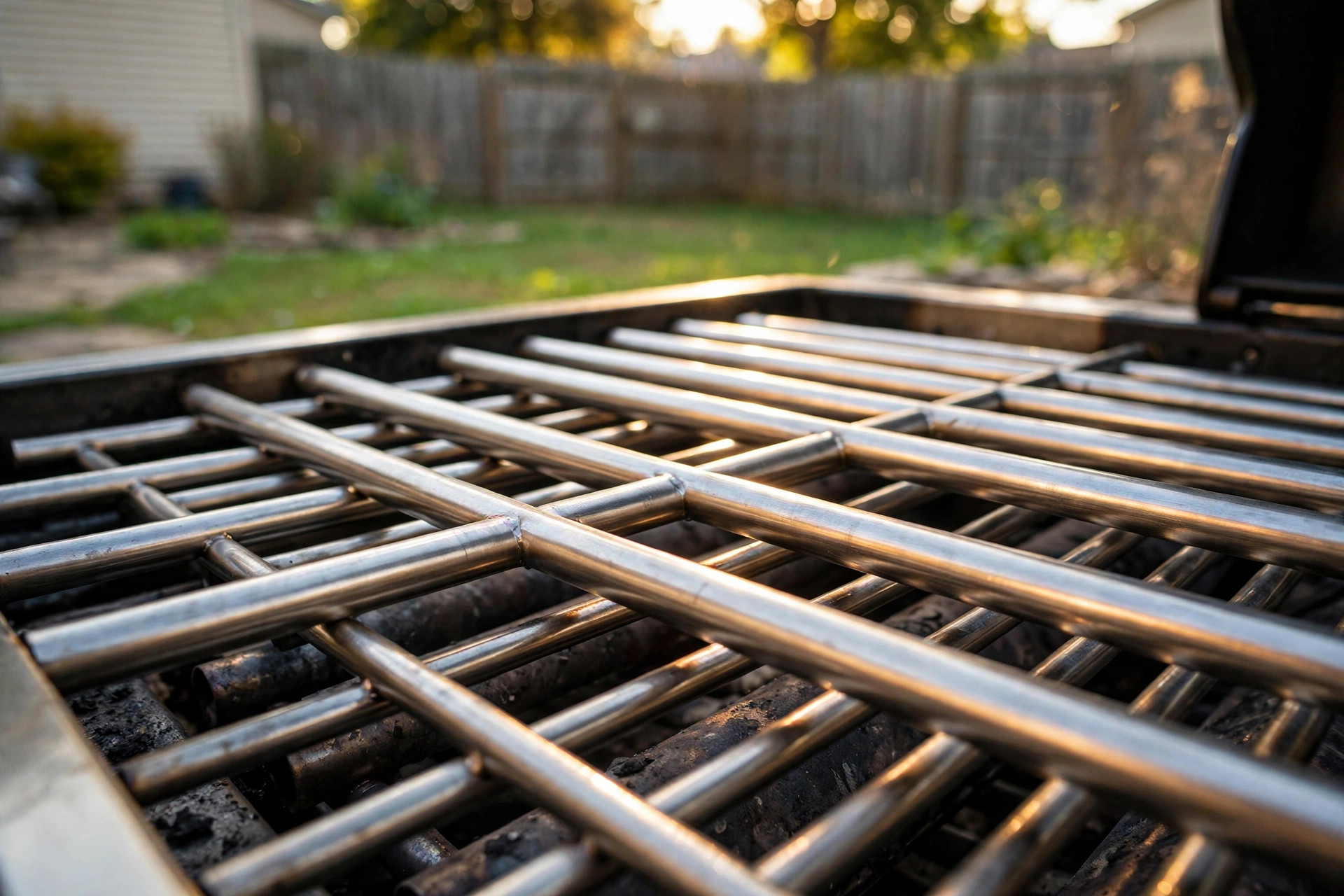

Every grill reaches a day when the cooking grates fail. They rust, warp, or chip beyond saving. When that day comes, many owners look for the best grill replacement grates stainless they can find. Stainless steel is the most common choice for a reason. It stands up to heat, resists rust, and cleans with less effort than plain steel or cast iron. But not every stainless grate is equal. The grade of steel, the thickness of the rods, and the fit for your grill all matter. This guide walks through each of these points in plain terms. By the end, you will know how to pick the right set, what to pay, and how to keep new grates in good shape for years.
Why Grates Wear Out
Grates live a hard life. They sit in the heat zone of a fire that can reach well above 500 degrees. Grease drips on them every time you cook. Moisture from rain, dew, and humidity attacks them between cooks. Even the cleaning brush takes its toll, scraping metal against metal each time you scrub.
Chrome-plated grates fail first. The chrome layer flakes once the heat cycles weaken it. The steel under the chrome then rusts fast. Porcelain-coated cast iron lasts longer, but the coating cracks with age. Once moisture gets under the coating, rust spreads under the surface and the grate swells. Stainless steel grates avoid these failure modes. There is no coating to flake and no plain iron to rust from within. When stainless grates do wear out, the usual cause is heat fatigue. The rods warp or thin spots form where the flame hits them hardest. A good stainless set can still last five to ten years in a home grill, far longer than chrome plating.
What to Look for When You Buy: Best Grill Replacement Grates Stainless
Choosing the best grill replacement grates stainless comes down to a handful of checks. Each one is simple, and skipping any of them can lead to a poor fit or a short life.
Measure Your Grill First
This is the most common mistake. Shoppers buy grates that are close in size but not exact. A grate that is too short lets grease fall past it onto the burners. A grate that is too wide will not sit in the channel. Measure the inside of the firebox where the grates rest. Write down the width and the depth. Check how many grates your grill uses. Many three-burner grills use three separate grates, while some models use one or two large pieces. If you have the old grates, measure them directly. Rod spacing matters too, because food sits on the gaps. Most home grates have gaps between half an inch and three quarters of an inch.
Brand model numbers help when the grill is still in production. Many grill makers sell exact replacement cooking grates that fit their own models. If your grill is older or the brand is gone, aftermarket universal grates fill the gap. These come in standard sizes and often include bars that can be trimmed or adjusted.
Check the Steel Grade
Stainless steel is not one thing. The most common grades in grill grates are 304 and 430. Grade 304 is the better steel. It has more nickel and chromium, which gives it stronger rust resistance and better behavior in high heat. Grade 430 has no nickel. It costs less and still resists rust, but it can show surface staining sooner in wet climates.
How do you tell the grades apart? A magnet test gives a rough answer. Grade 430 is magnetic. Grade 304 is mostly not magnetic, though light work during manufacturing can give it a slight pull. Product listings from reputable sellers usually state the grade. When a listing hides the grade, treat it as the lower one. A guide to stainless steel cooking grates can help you read product claims with a sharper eye.
Look at Rod Thickness and Build
Rod diameter is a direct sign of quality. Thick rods hold heat better and give you stronger sear marks. They also warp less over time. Look for rods of at least 7 millimeters in diameter for a solid home grate. Heavy sets use 8 to 9 millimeter rods. Thin wire grates, the kind that look like a cooling rack, heat fast but cool fast, and they dent with hard scraping.
Welded construction beats tied construction. Welded rods stay rigid for years. Grates held together with pins or ties can loosen as the metal expands and contracts through heat cycles. Also check the cross bars under the rods. More cross bars mean less sag in the middle of the grate.
Decide on Rod Style or Plate Style
Most stainless grates use round rods. They are simple, easy to clean, and give classic sear lines. Some owners prefer flat V-shaped bars or solid stainless plates. These spread heat more evenly and keep small food from falling through. The trade-off is that solid plates trap grease and need more care to keep clean. For most home cooks, round rods are the right pick. They do the job, cost less, and last a long time.
Types of Stainless Replacement Grates
Shoppers meet three main categories. Each suits a different grill and budget.
OEM replacement grates. These come from the grill maker and fit one model line. The fit is exact. The downside is price, and old models may be out of stock. Check the maker’s parts page before you look elsewhere.
Universal stainless grates. These are made by third parties in standard sizes. Many have adjustable designs that cover a range of widths. They cost less than OEM parts and work well when exact parts are gone. Quality varies, so read the steel grade and rod thickness before you buy.
Custom cut grates. Some shops cut stainless rod grates to your exact measurements. This is the best route for odd sizes, old grills, and built-in outdoor kitchens. Expect to pay more and wait longer.
If your search for the best grill replacement grates stainless turns up kits with warming racks or flavorizer bars, treat them as separate buys. A grate set is one part. Warming racks and heat tents are others. Buying them together can save money, but check that each piece fits your model.
Cost and Price Ranges
Stainless replacement grates cost more than chrome or porcelain parts, and the money is well spent. Prices vary with size, grade, and rod thickness.
A small two-burner grate set in 430 grade stainless often sells for 25 to 45 dollars. A three-burner set in 304 grade with thick rods can run 60 to 120 dollars. Large sets for six-burner grills or heavy round rod sets can reach 150 dollars or more. Custom cut sets cost the most, often 150 to 300 dollars depending on size and steel.
Compared with the price of a new grill, these numbers are small. A mid-range gas grill costs 400 to 900 dollars. A fresh set of grates for under 100 dollars can add five years to a grill that still has a sound firebox and burners. Retailers such as home improvement stores carry a wide range of sizes, which makes it easy to compare prices in one place. Before you spend, inspect the rest of the grill. If the burners are shot and the firebox is rusted through, a full replacement may be the wiser buy. For a guide on when repair makes sense, see our notes on gas grill safety tips for homeowners.
Care and Upkeep
New stainless grates will last a long time if you treat them right. The care is simple and takes only a few minutes per cook.
Heat the grates before cooking. Five to ten minutes of high heat burns off old grease. Then brush with a sturdy grill brush. Brass bristles are gentler than steel and still do the job. Avoid wire brushes with loose bristles, as broken wires can end up in food.
Oil the food, not the grates. A thin coat of oil on the meat or vegetables keeps sticking low. Pouring oil straight on hot grates can cause flare-ups.
Clean after each cook. While the grates are still warm, give them a final brush. Deep clean once a month with a paste of baking soda and water. Let it sit, scrub, and rinse. Skip harsh oven cleaners, which can pit the surface.
Keep the grill covered. A fitted cover keeps rain off the grates. This matters more for 430 grade steel, which stains faster in damp air. If you live near the sea, salt air speeds up staining on any grade. Rinse the grates with fresh water now and then.
Season new grates lightly. Stainless does not need seasoning the way cast iron does, but a light coat of cooking oil heated on the grates for the first use helps food release and builds a thin protective layer. Some pitmasters swear by detailed grate seasoning methods for all grate types.
With this routine, a quality stainless set can serve a decade. Pair good grate care with the right outdoor cooking gear and your whole setup stays in top shape.
Safety Notes
Grill repair work calls for care. Let the grill cool fully before you touch the grates. Old grates can have sharp edges where the coating has failed. Wear work gloves when you lift them out.
Check the fit before you light the grill. A grate that rocks or sits uneven can tip a heavy pan. Never cook on a grate that does not sit flat in its channel. If the new grates are adjustable, tighten every fastener and test them cold first.
Watch for grease fires when you cook on fresh grates for the first time. New steel runs hot and clean, so dripping fat may flare more than you expect. Keep the lid handy to smother a flare-up, and keep children and pets away from the grill while it is lit. If your gas grill ignition is not working, fix the ignition before you cook, since lighting a grill by hand carries its own risks.
Independent testing labs publish grill safety and performance reviews that are worth a look before you buy any major grill part.
Frequently Asked Questions
Are stainless steel grill grates better than cast iron? Each has strengths. Stainless resists rust and needs little care. Cast iron holds heat a bit better and gives deep sear marks, but it needs regular oiling to stop rust. For owners who want low upkeep, stainless is the better pick.
What grade of stainless steel is best for grill grates? Grade 304 is the best common choice. It resists rust and handles high heat well. Grade 430 is cheaper and still works, but it may show stains sooner. When the listing names no grade, assume the lower one.
How do I know what size grates my grill needs? Measure the firebox where the grates rest, not the old grates if they are warped. Note width, depth, and the number of pieces. Compare with the product listing. When in doubt, buy from a seller with an easy return policy.
Can I put stainless grates in a grill that came with cast iron? Often yes, if the size matches. The heat behavior changes a little, so you may need to adjust cooking times. Check that the grate sits level in the channel before you cook.
How long do stainless grill grates last? A good set lasts five to ten years in home use. Thick 304 grade rods last the longest. Heavy use, salt air, and poor cleaning shorten the life.
Do stainless grates need seasoning? No, not in the cast iron sense. A light oil coating on first use helps food release. Regular cooking builds a thin patina that improves release over time.
A Short Final Word
The best grill replacement grates stainless for your grill are the ones that fit exactly, use solid 304 grade steel, and carry rods thick enough to hold heat. Measure first, read the grade, and check the build quality. Spend the extra money on thick rods and good welds. Then keep the grates brushed, covered, and clean. A set bought with care can outlast the burners it sits above, and it can turn a tired old grill back into a machine you look forward to using. Grill makers such as Weber, Char-Broil, Traeger, Napoleon, Big Green Egg, and Broil King all sell parts and advice worth reading before you order.
References
AmazingRibs.com. (n.d.). Barbecue and grilling science. https://www.amazingribs.com Big Green Egg. (n.d.). Kamado grills and outdoor cooking. https://www.biggreenegg.com Broil King. (n.d.). Gas and charcoal grills. https://www.broilkingbbq.com Char-Broil. (n.d.). Gas and charcoal grills. https://www.charbroil.com Consumer Reports. (n.d.). Product reviews and ratings. https://www.consumerreports.org Napoleon. (n.d.). Fireplaces, grills, and heating products. https://www.napoleon.com The Home Depot. (n.d.). Home improvement products. https://www.homedepot.com The Spruce Eats. (n.d.). Recipes and cooking guides. https://www.thespruceeats.com Traeger. (n.d.). Wood pellet grills. https://www.traeger.com Weber. (n.d.). Grills and outdoor cooking. https://www.weber.com
Was this guide helpful?

About David Wilson
The My Garden US editorial team writes practical, in-depth home and garden guides for American homeowners — tested advice, no fluff.
You May Also Like
Best Grill for Apartment Dwellers Reviews: What Really Works on a Balcony or Small Patio
September 17, 2026 0 views
Best Outdoor Grill for Florida Humidity
May 1, 2026 0 views
How to Make Beef Jerky on Smoker: A Plain Guide to Safe, Smoky Results
June 9, 2026 0 views