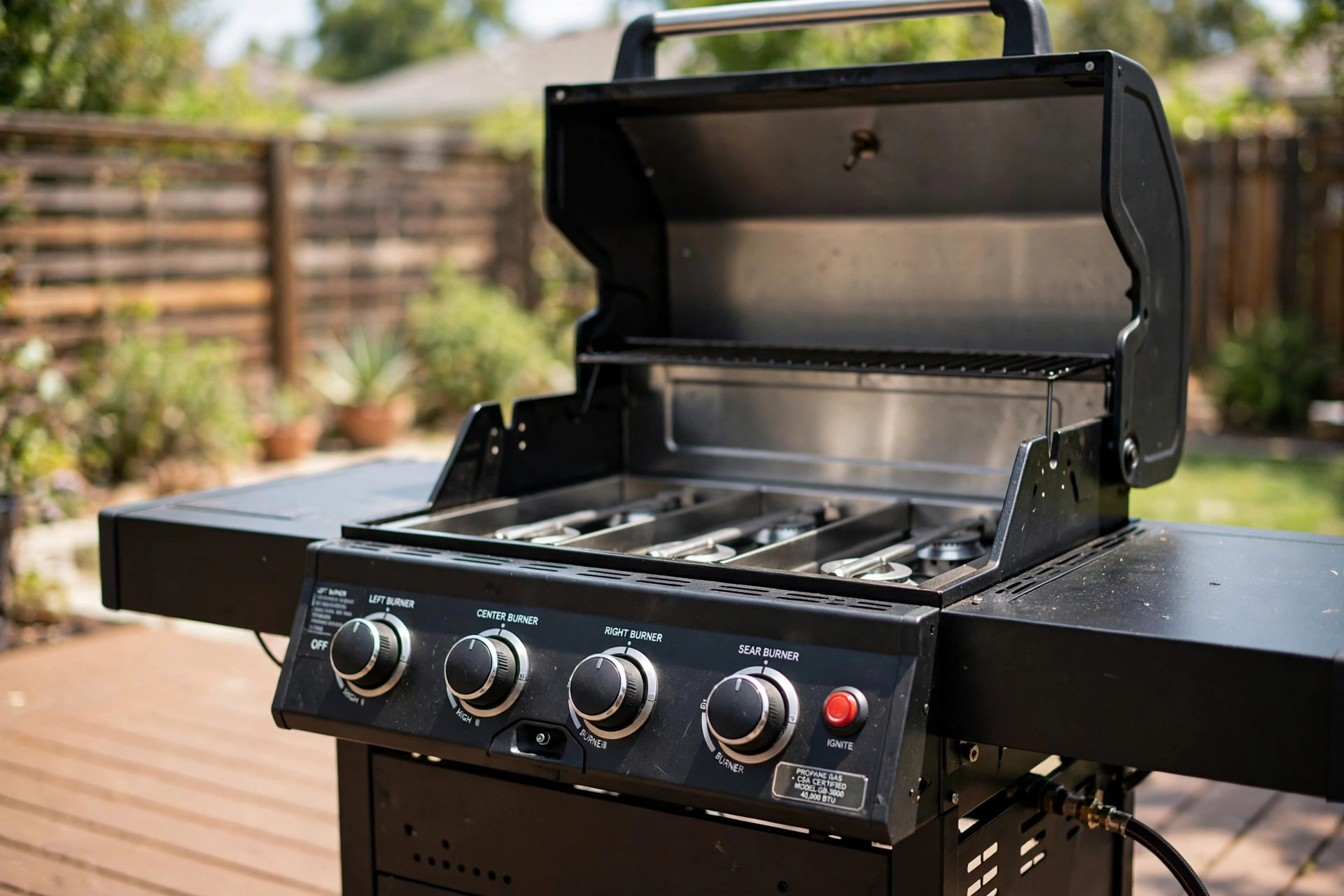

Few things test a cook’s patience like a gas grill ignition not working when guests are on their way. You press the button, you hear a weak click or nothing at all, and the burners sit cold. The good news is that most ignition failures are simple. A dead battery, a loose wire, or a dirty electrode is behind the vast majority of problems, and all of them can be fixed at home with ordinary tools. This guide walks through the whole process, from safe diagnosis to repair, in plain steps. Read it once, gather a few basic supplies, and you will know exactly what to do.
Why the Ignition Matters
A working igniter is not a luxury. It is the safest way to start a gas grill. A strong spark lights the gas the moment the valve opens, so gas does not build up inside the cook box. When the igniter fails, many cooks reach for a match, which works but requires care and a clear plan. A grill that lights reliably also heats more evenly, because the burners start together and settle into a steady flame. In short, a sound ignition system gives you safety, convenience, and better cooking. Fixing it is worth an hour of your time.
Start With Safety: Gas Grill Ignition Not Working Fix
Before you touch anything, put safety first.
– Turn all burner valves to the off position. – Close the tank valve fully on a propane grill. – Move the grill away from house walls and wooden decks while you work, or at least give yourself clear room. – Keep children and pets away from the work area. – Never light a burner while your face or hands are over the cooking grate.
If you smell gas at any point while the valves are closed, stop. Move away from the grill and do not touch any electrical parts. A leak is a job for a professional, not a home fix.
What to Check First
Most fixes for a gas grill ignition not working fall into three groups: the power source, the spark path, and the gas flow. Check them in that order. Start with the simplest answer before you take anything apart.
1. Check the Battery
Many modern grills use a battery-powered electronic ignition. The battery usually hides inside the igniter button housing or in a small box behind the control panel. Unscrew the button cap and look inside. Replace the battery with a fresh one, usually a single AA cell. Turn the igniter button the correct way as you replace the cap; many buttons must be pressed and twisted to lock. Press the button and listen. A strong, rapid clicking sound means the module is alive. This one step solves more failures than any other.
2. Listen to the Click
Press the ignition button with the grill lid open and your ear near the control panel. A healthy system gives a fast, snapping series of clicks. A single dull click or silence points to the module or the battery. If the clicking sounds normal but the burners will not light, the fault is further down the spark path.
3. Look at the Spark
For this test you need the burners off and the tank valve open, but you will not light the grill. Have a friend press the igniter while you watch each burner tube in low light. A good electrode throws a small blue-white spark at the burner port, steady and rhythmic. No spark at one burner means a local problem at that electrode. No spark anywhere means the problem sits upstream, at the module or the wiring.
Common Causes and Their Fixes
Dead or Weak Battery
Batteries drain with heat and moisture. A grill that lived outside all winter often wakes up with a dead cell in spring. Replace the battery yearly as part of your routine care. If the new battery does not help, check that the metal contact inside the cap is clean and springy. Corrosion on the contact can be scraped off gently with a small file or a pencil eraser. Brands that sell parts for their own models, such as Weber and Char-Broil, publish owner’s manuals that show the exact battery location for each model.
Loose or Damaged Wiring
Wires run from the ignition module to each electrode. Heat, grease, and mice all attack them. Pull the wire gently from the electrode and inspect the full length. Look for cracks in the insulation, bare copper, or connectors that slide off too easily. A loose spade connector can be squeezed slightly with pliers so it grips tighter. A wire with burned or cracked insulation should be replaced; spare wires are cheap and are often sold as universal parts. While you are there, trace the wire to the module and confirm it is fully seated on the module terminal.
Dirty or Cracked Electrode
The electrode is the small ceramic-and-metal finger that sits near each burner port. Grease drips, food bits, and soot coat it over time. A dirty electrode cannot throw a spark across its gap. Rub the metal tip and the ceramic body with a clean rag, then scrub gently with a wire brush or a toothbrush. Straighten the tip if it has bent, and check that the gap between the electrode tip and the burner is about one-eighth of an inch. A cracked ceramic body is a bigger problem. Cracks let the spark jump to the wrong place, and a cracked electrode must be replaced. New electrodes are sold by the grill maker and by parts retailers such as The Home Depot.
Faulty Spark Module
The module, sometimes called the spark generator, is the small box the wires connect to. If the battery is fresh, the wiring is sound, and nothing sparks, the module itself is likely dead. Replacing it is a simple swap: unplug the old wires one by one, plug them into the new module in the same order, and mount the new box where the old one sat. Modules are not expensive, and universal models fit many grills. Check your model number against the part listing before you order.
Blocked Burner Ports or Gas Flow
Sometimes the ignition is fine but the gas never reaches the spark. Look at the burner tubes through the cooking grates. Spider webs, rust flakes, and grease can block the small flame ports. A blocked port near the electrode keeps the spark from catching. Clean the ports with a thin wire or a venturi brush, and brush loose debris off the burner tubes. If you suspect a regulator fault, read our gas grill regulator replacement guide for a full walkthrough of that separate repair.
Types of Ignition Systems
It helps to know which system your grill uses. The fix is different for each.
Push-Button Piezo
Older and simpler grills use a piezo igniter. Pressing the button hammers a crystal that makes one spark at a time. There is no battery. These are tough but they wear out, and the button spring weakens with age. If a piezo button gives no snap at all, replace the whole piezo unit.
Battery-Powered Electronic
This is the most common system today. A battery powers a module that sends a train of sparks to every burner. It lights all burners at once, which is convenient. Battery and module faults cover nearly every failure in this design.
Rotary or Crossover Ignition
Some grills light one burner and let the flame cross over to the others through small slots in the burner tubes. If the main burner lights but the neighbors do not, clean the crossover slots. Grease fills them and stops the flame from traveling.
Match-Light Backup
Many grills ship with a match holder, a long wire arm that keeps your hand clear of the burners. If your igniter fails on cookout day, open the lid, turn the burner on low, and use the match holder to light the gas. It is a safe backup when the spark system is down. It is not a permanent answer, but it saves the evening.
Step-by-Step Repair Plan
Follow this plan in order. Most cooks finish in under an hour.
1. Close the tank valve and turn all burner knobs to off. 2. Remove the cooking grates and heat tents so you can see the burners and electrodes. 3. Replace the ignition battery with a fresh cell. 4. Press the igniter and listen for rapid clicking. 5. Watch each electrode in low light and confirm a steady spark. 6. Clean dirty electrodes with a brush and set the gap correctly. 7. Inspect every wire for cracks, burns, and loose connectors. 8. Clean blocked burner ports with a thin wire. 9. Open the tank valve slowly, press the igniter, and test each burner. 10. If nothing sparks, replace the spark module.
Work through the list without skipping steps. The fault is almost always found by step seven.
Cost and Price
Ignition repairs are among the cheapest grill fixes. A replacement AA battery costs a dollar or two. A universal spark module runs about ten to twenty dollars. A single electrode costs roughly five to fifteen dollars, and a set of wires costs about the same. Full ignition kits, which bundle the module, electrodes, and wiring for a specific grill, run twenty to forty dollars. Compare that with a service call, which often starts at seventy-five dollars before parts. A little diagnosis keeps the money in your pocket. For a clear picture of what new grills cost when repair is no longer sensible, see the buying guidance at Consumer Reports.
Care and Upkeep
A few habits keep the ignition strong for years.
– Replace the igniter battery every spring. – Brush the electrodes clean once a month during grilling season. – Keep the grill covered when it is not in use to slow corrosion. – Clean the burner ports as part of your regular burner care. Our how to clean gas grill burners properly guide covers the full process. – Check the wire connectors once a season and squeeze them tight if they loosen. – Before winter, follow the steps in our how to winterize gas grill for storage guide so the grill wakes up ready in spring.
Grills from different makers share the same ignition principles, but part shapes differ. Napoleon, Broil King, and Traeger each publish parts diagrams for their models, which makes it easy to order the exact electrode or module for your grill. Even a kamado-style cooker like those from Big Green Egg follows the same spark-and-gas logic in its electric starters.
Safety Reminders
Gas deserves respect. Keep these rules in mind every time you work on the grill.
– Always turn the tank valve off before you remove or adjust any gas part. – Open the lid before you turn on the gas and press the igniter. A closed lid traps gas. – If a burner does not light within five seconds, turn the gas off, wait five minutes, and try again. – Keep a fire extinguisher near your grilling area. – Never store spare propane tanks inside the house or garage.
These rules sound simple because they are. Simple rules prevent the accidents that make the news. For broader safety standards on outdoor products, the federal guidance at Consumer Reports and the testing notes at The Spruce Eats are worth a look. Deep barbecue science, including how flame and airflow behave inside a grill, is covered well at AmazingRibs.
Frequently Asked Questions
Why does my gas grill click but not light?
The click tells you the module has power. The failure is downstream. Look at the electrodes first. A dirty tip, a bent arm, or a cracked ceramic body stops the spark from reaching the gas. Clean the electrode, set the gap, and check the wire. If the spark looks strong but nothing catches, the burner ports near the electrode are probably blocked.
Can I replace a grill igniter myself?
Yes. This is one of the friendliest repairs a homeowner can do. The module unplugs and the new one plugs in. Electrodes bolt or clip into place with one screw or a small bracket. No gas lines need to be opened for ignition work, which keeps the job safe. Keep the tank valve closed while you work.
How often should I replace the ignition battery?
Once a year is a good rule. Do it in spring when you first fire up the grill. A fresh battery at the start of the season prevents the most common failure. If you grill through winter, check it again in fall.
Is it safe to light a gas grill with a match?
Yes, when done correctly. Open the lid fully. Turn one burner to low. Use the long match holder that came with the grill so your hand stays clear. Light the match, hold it near the burner port, and let the gas catch. This method is standard practice when the electronic system fails.
Why does only one burner light?
The ignition may feed one burner first, or the crossover slots between burners may be clogged. Clean the crossover slots with a small brush so flame can travel. Check that the second burner has its own working electrode if your grill uses one per burner.
When should I call a professional?
Call for help if you smell gas with the valves closed, if the tank or regulator is damaged, or if the grill is more than a decade old and multiple parts are failing at once. A professional can also handle any repair that requires opening a gas line.
A Short Final Word
A gas grill ignition not working feels like a ruined weekend, but it is almost never a big problem. Fresh batteries, clean electrodes, and sound wiring fix the great majority of cases. Work through the steps in order, respect the safety rules, and your grill will be back to lighting on the first click. The steaks will thank you.
References
AmazingRibs.com. (n.d.). Barbecue and grilling science. https://www.amazingribs.com Big Green Egg. (n.d.). Kamado grills and outdoor cooking. https://www.biggreenegg.com Broil King. (n.d.). Gas and charcoal grills. https://www.broilkingbbq.com Char-Broil. (n.d.). Gas and charcoal grills. https://www.charbroil.com Consumer Reports. (n.d.). Product reviews and ratings. https://www.consumerreports.org Napoleon. (n.d.). Fireplaces, grills, and heating products. https://www.napoleon.com The Home Depot. (n.d.). Home improvement products. https://www.homedepot.com The Spruce Eats. (n.d.). Recipes and cooking guides. https://www.thespruceeats.com Traeger. (n.d.). Wood pellet grills. https://www.traeger.com Weber. (n.d.). Grills and outdoor cooking. https://www.weber.com
Was this guide helpful?

About David Wilson
The My Garden US editorial team writes practical, in-depth home and garden guides for American homeowners — tested advice, no fluff.
You May Also Like
Best BBQ for Fathers Day Gift: How to Choose the Right One
May 15, 2026 0 views
Outdoor Kitchen Cabinets Weatherproof Reviews: A Buyer’s Guide
June 23, 2026 0 views
Best Charcoal for Smoking Brisket Reviews: A Plain Guide
March 6, 2026 0 views