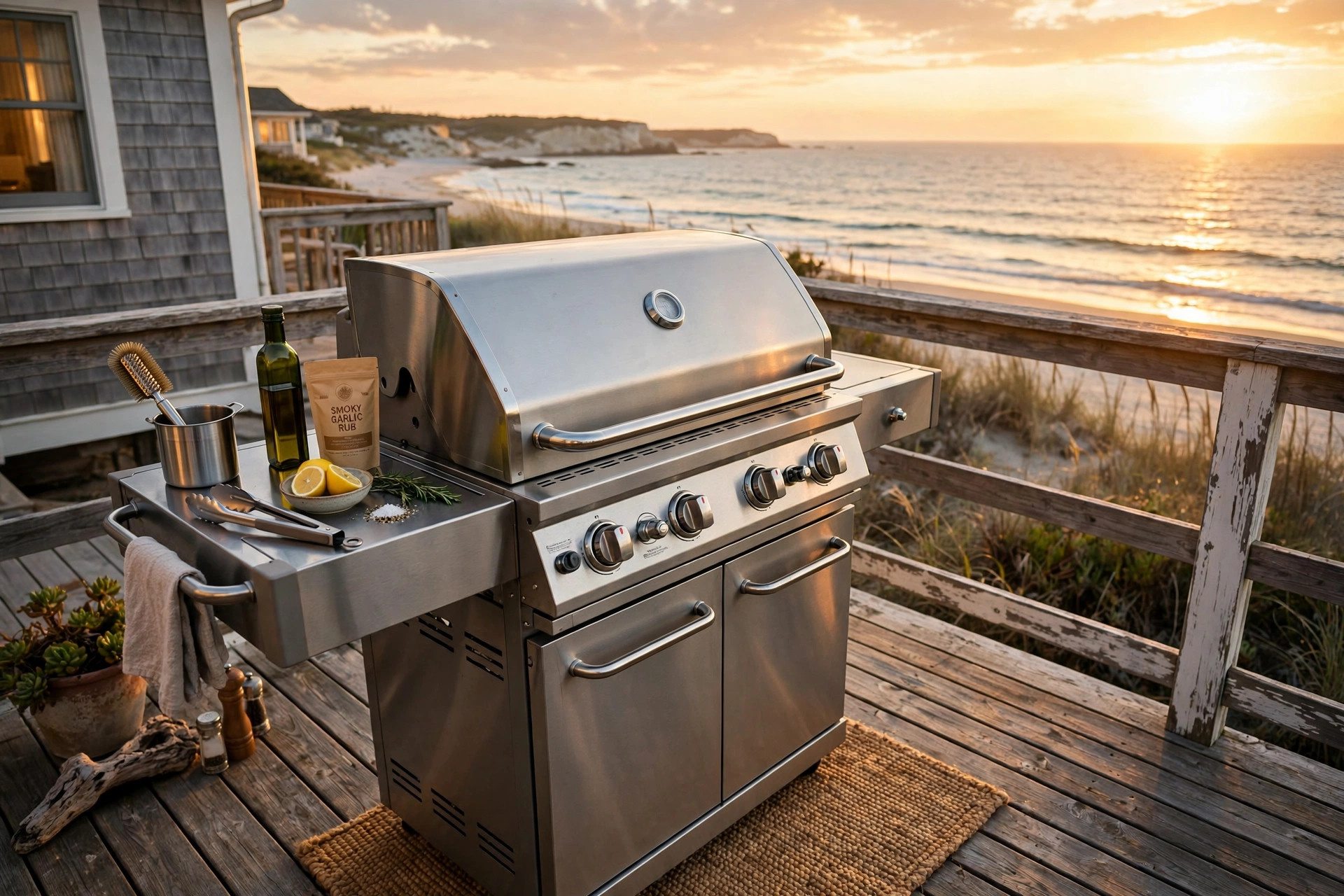

A beach house is a place of rest. The sea is near. The wind is fresh. And in the evening, nothing beats the smell of food on a grill. But the best grill for beach house reviews will tell you one plain fact: the coast is hard on metal. Salt air eats cheap steel. Wind knocks over light carts. Sand gets into burners. This guide walks through what the top reviews say, so you can pick a grill that lasts by the water.
Why a Beach House Grill Is Different
A grill at home on a quiet street faces rain and sun. A grill at the beach faces salt spray every single day. Salt in the air lands on every surface. It speeds up rust. It pits chrome. It clogs small gas jets. Reviews from coastal owners repeat this point again and again.
Wind is the second problem. A beach house deck sits high and open. A sudden gust can blow out a weak burner or tip a top-heavy grill. Good reviews praise grills with wide bases, locking wheels, and heavy lids.
The third problem is use. Beach houses often sit empty for weeks. A grill may rest through a whole off-season under a cover, or with no cover at all. When you return in June, it must still light. Reviews score grills on how well they wake up after months of rest.
For these reasons, the best grill for beach house reviews is not always the best grill for a city backyard. Coastal reviewers care less about fancy lights and more about steel grade, lid weight, and rust warranties.
What to Look for When You Read Reviews: Best Grill for Beach House Reviews
Stainless Steel Grade
The single most cited point in coastal reviews is steel grade. Look for 304-grade stainless steel on the lid, firebox, and cooking grids. It holds up far better in salt air than 430-grade steel or painted carbon steel. Many reviewers test grills side by side for one season and report that 304 steel shows almost no rust while lesser grades spot and pit. The Weber site and owner forums carry long threads on this subject.
Burner Count and Wind Guards
Coastal reviewers like three or more burners. More burners mean more even heat when the wind steals it from one side. Some grills add wind guards or tight-fitting lids that keep flames steady. Reviews often test this on real windy days and note which grills keep their temperature.
Size and Weight
A grill for a beach house deck needs a wide stance. Narrow, tall carts tip in gusts. Reviews favor grills with four locking casters and a low center of gravity. If you plan to store the grill in a shed or garage between visits, a folding side shelf helps it fit through the door.
Warranty on Rust
A rust-through warranty is the promise that matters most at the shore. Top brands now give ten years or more on the firebox and lid. Read the fine print. Some warranties exclude coastal use. Reviews often call out which brands honor claims near the sea and which do not.
Ignition That Survives the Off-Season
Electronic ignitions fail when parts corrode. Reviewers like grills with simple, sealed push-button ignitions, or grills that can be lit with a match through a small port. A grill you cannot light is just garden art.
Types of Grills for a Beach House
Gas Grills
Gas grills win most coastal review lists. They light fast after months of rest. They give steady heat in wind. They are easy to clean, which matters when salt and sand are in the air. Stainless gas grills from brands like Napoleon and Broil King earn high marks for thick steel and strong warranties. A full-size three-burner gas grill suits a family beach house. A two-burner model suits a small deck.
Propane is the usual fuel. A 20-pound tank lasts many beach weekends. If the house has a natural gas line on the deck, a conversion kit removes the tank problem for good. Reviews note that natural gas grills never run dry at the worst moment.
Charcoal Kettles and Kamado Grills
Charcoal gives deep flavor, and a simple kettle has few parts to rust. Many coastal cooks keep a kettle as a second grill. Reviews praise the classic design for its low cost and easy care. If you want strong heat and smoke in one unit, read up on the best kamado grill for the money before you buy. A ceramic kamado shrugs off salt air, though its metal bands and hinges still need care.
Pellet Grills
Pellet grills add real wood smoke with push-button ease. At the beach, the main worry is the electronics and the pellet hopper, which must stay dry. Reviews from Traeger owners near the coast say a good cover and a dry storage spot keep the grill running for years. Pellet grills suit a beach house with a covered porch more than an open deck.
Portable and Tabletop Grills
For a small beach cottage or a rental, a portable grill may be the smart buy. It stores inside, away from the salt, and comes out only for cooking. Reviewers like sturdy tabletop gas models that sit low and steady in the wind.
How the Top Review Sites Rate Them
Consumer testing groups put grills through the same tasks: searing steaks, cooking chicken low and slow, and lighting after a simulated off-season. Consumer Reports publishes evenness scores and predicted reliability ratings that many buyers trust. Food sites such as The Spruce Eats run hands-on tests in real backyards and note cleaning ease. Technique sites like AmazingRibs.com judge heat control and smoke flavor in deep detail.
When you read the best grill for beach house reviews, look past the star count. Read the long-term notes. A grill that earns five stars in a week may earn three stars after a year by the sea. Owner reviews from coastal towns are worth more than lab scores alone.
Big stores also carry useful review banks. The review pages on Home Depot let you filter by state, so you can read notes from buyers in Florida, the Carolinas, and California. Their comments on rust after one season are plain and honest.
Cost and Price
Prices for coastal-ready grills run wider than many buyers expect.
– Budget range, 200 to 400 dollars. Simple two-burner gas grills and charcoal kettles. Few rust warranties. Fine if you store the grill indoors between visits. – Mid range, 500 to 1,000 dollars. The sweet spot in most of the best grill for beach house reviews. Three-burner stainless gas grills with 304-grade steel, decent warranties, and sturdy carts live here. – Premium range, 1,200 to 3,000 dollars and up. Heavy-gauge steel, thick cooking grates, long rust warranties, and built-in options for an outdoor kitchen. Brands such as Big Green Egg and high-end gas lines sit in this tier.
Remember the hidden costs. A quality cover runs 50 to 100 dollars. A spare propane tank runs about 60 dollars. Stainless cleaner and a grill brush add a little more. Over five years, a 700-dollar grill with a ten-year warranty often costs less than two 300-dollar grills that rust out.
If you are still weighing fuel types, it helps to compare notes on a best charcoal grill for backyard bbq write-up, since charcoal costs differ from gas costs over a season.
Care and Upkeep by the Sea
A grill can last a decade at the beach if you tend it. Reviews from long-term coastal owners share the same habits.
Cover it every time. A fitted, vented cover is the cheapest insurance you own. Vents matter. A cover that traps wet air can rust a grill faster than no cover at all. For model-specific fits, see our notes on the best grill cover for weber kettle, since a snug fit keeps wind from tearing the cover loose.
Rinse off salt. Once a month during the season, wipe the outside with fresh water and a soft cloth. Salt left on steel does slow damage. Dry the grill after rain so water does not pool in the drip pan.
Clean the grates while warm. A stiff brush on warm grates takes off food in a minute. For deep cleans, soak cast-iron grates, dry them fully, and rub on a thin coat of cooking oil. Stainless grates need less care but still like a scrub.
Check the burners each spring. Spiders and sand love burner tubes. Pull the grates, look down the tubes, and clear any blockage with a thin brush or pipe cleaner. A blocked burner burns uneven and can flash back.
Oil the moving parts. Hinges, caster wheels, and lid handles take a drop of food-safe oil once a season. This stops the small squeaks that turn into seized joints.
Store fuel right. Keep propane tanks upright, outside, and away from the house wall. Never store a tank in a closed shed with the grill. For pellet grills, empty the hopper before a long absence so damp pellets do not swell and jam the auger. Char-Broil care guides give the same advice across gas models.
Safety at the Beach House
Salt air and wind change the safety picture a little. Keep these rules in mind.
Place the grill at least ten feet from the house, the deck railing, and any overhang. Wind can throw heat sideways. Never grill under a low porch roof unless the space is built for it.
Anchor a light grill. A grill that tips in a gust can spill hot coals or crack a gas line. Lock the casters and, on very open decks, chain the grill to a post when a storm is coming.
Check gas lines each season. Rub soapy water on the hose joints and watch for bubbles. Replace any hose that is cracked or stiff. Salt speeds the aging of rubber.
Keep a fire plan. A small extinguisher or a bucket of sand near the grill is cheap peace of mind. Beach towns often sit far from the nearest fire station.
Teach guests the rules. Rental guests may not know your grill. A short printed card by the door, with the lighting steps and the shut-off steps, prevents most accidents.
Frequently Asked Questions
What is the best grill for a beach house? Most reviews point to a three-burner stainless gas grill built with 304-grade steel, locking casters, and a long rust warranty. It lights fast, holds heat in wind, and resists salt air.
Does salt air really ruin grills? Yes. Salt speeds rust on plain steel and painted metal. It also pits chrome and can clog small gas jets. Rinsing and covering the grill slows the damage a great deal.
Is a gas or charcoal grill better at the beach? Gas wins for ease. It lights after months of rest and holds steady heat in wind. Charcoal wins for flavor and simple parts. Many coastal owners keep one of each.
How long should a beach house grill last? A good stainless grill with regular care lasts eight to twelve years by the sea. A cheap painted grill may last two or three seasons. The rust warranty is a fair guide to expected life.
Should I bring the grill inside for winter? If the beach house sits empty all winter, yes. A garage or shed keeps salt spray off the metal for months. Clean the grill, cover it, and disconnect the tank first.
Are expensive grills worth it for a vacation home? Often yes, because you cannot watch the grill between visits. Thick steel and a strong warranty protect your money when the grill must survive on its own.
A Short Final Word
The best grill for beach house reviews all circle the same advice. Buy more steel than you think you need. Read the rust warranty before the feature list. Cover the grill every night. A simple, heavy, well-made grill will feed your family for many summers, while a thin, cheap one will stain your deck with rust by the second year. Choose once, choose well, and spend your beach evenings cooking instead of scrubbing.
References
AmazingRibs.com. (n.d.). Barbecue and grilling science. https://www.amazingribs.com Big Green Egg. (n.d.). Kamado grills and outdoor cooking. https://www.biggreenegg.com Broil King. (n.d.). Gas and charcoal grills. https://www.broilkingbbq.com Char-Broil. (n.d.). Gas and charcoal grills. https://www.charbroil.com Consumer Reports. (n.d.). Product reviews and ratings. https://www.consumerreports.org Napoleon. (n.d.). Fireplaces, grills, and heating products. https://www.napoleon.com The Home Depot. (n.d.). Home improvement products. https://www.homedepot.com The Spruce Eats. (n.d.). Recipes and cooking guides. https://www.thespruceeats.com Traeger. (n.d.). Wood pellet grills. https://www.traeger.com Weber. (n.d.). Grills and outdoor cooking. https://www.weber.com
Was this guide helpful?

About Jennifer Lee
The My Garden US editorial team writes practical, in-depth home and garden guides for American homeowners — tested advice, no fluff.
You May Also Like
Smoker for Sale Near Me Used: A Practical Guide to Buying Secondhand
January 8, 2026 0 views
Outdoor Kitchen Pergola Ideas for Shade
April 7, 2026 0 views
Best Grill Brush Without Bristles Reviews: A Simple Guide for Safer Grates
July 16, 2026 0 views