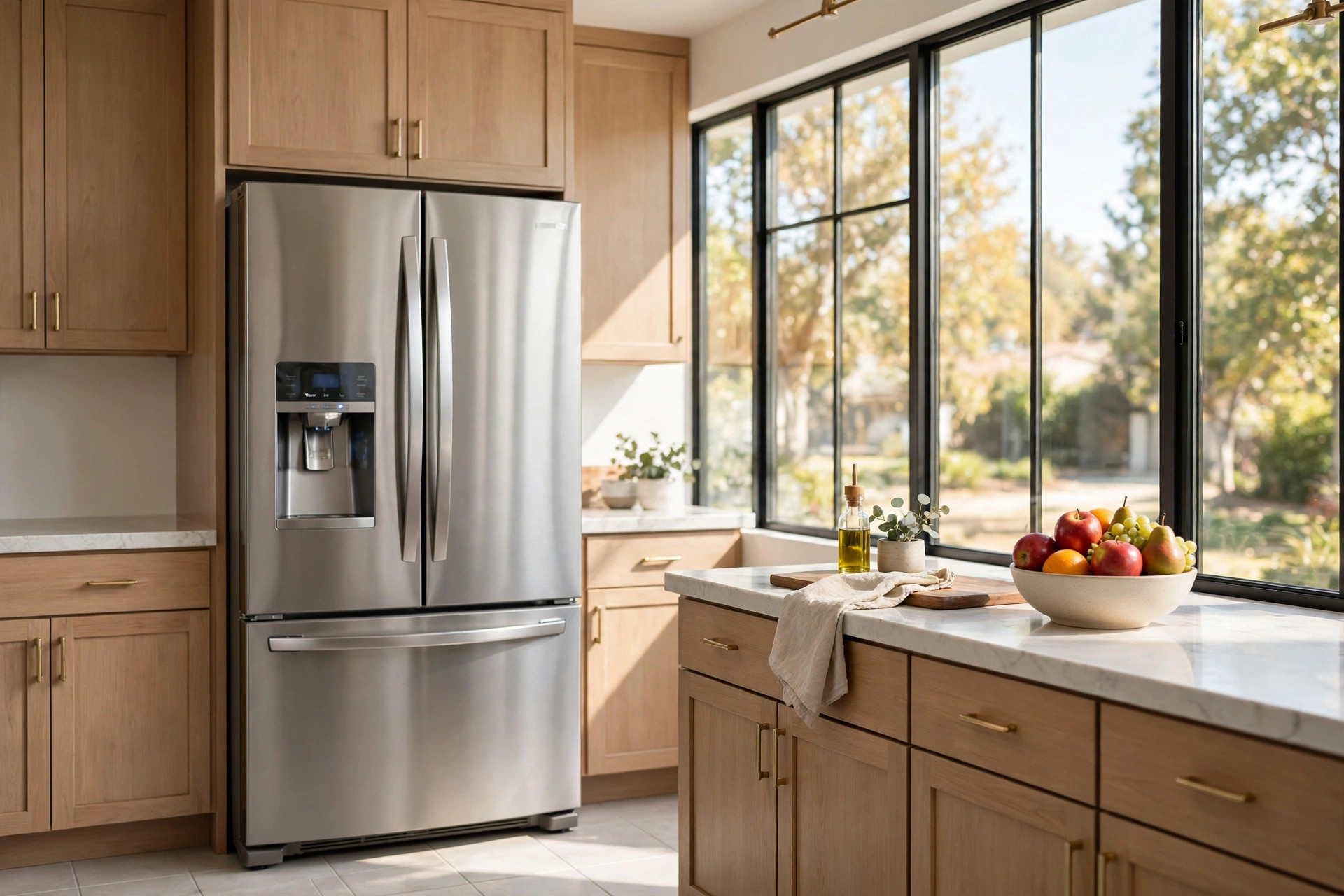

A refrigerator is the hardest working machine in the house. In Florida it works harder still. Heat, humidity, and long cooling seasons put a steady load on every compressor in the state. That is why shoppers look for french door refrigerators florida homes usa models that can stand up to the climate. A French door refrigerator has two doors on top for the fresh food section and a freezer drawer below. The wide shelves suit platters, party trays, and full sheet pans. The bottom freezer keeps frozen goods out of the daily path. For a Florida kitchen, where produce, drinks, and ice get heavy daily use, the layout makes good sense. This guide explains what to look for, what it costs, and how to keep the machine running well for years.
Why the Right Refrigerator Matters in Florida
Florida kitchens run warm. Outdoor air pushes past doors and windows all year. The air conditioner works long hours, and the refrigerator works beside it. When the room stays near eighty degrees, the compressor cycles more often and draws more power. A unit that is too small gets stuffed full, which blocks airflow and warms the shelves. A unit with weak seals lets cold air leak and forces the motor to run all night.
Food safety follows the same logic. Fresh food should stay at or below forty degrees Fahrenheit. The freezer should hold at zero degrees. In a hot garage or a sun-struck kitchen, a cheap refrigerator may drift above these marks. Warm spots near the doors let milk sour and greens wilt. A well built French door model with dual cooling keeps the fresh side steady and the freezer side dry. That steadiness matters most in a state where a storm can knock out power and every degree of stored cold counts.
Energy bills are the third reason. Cooling is the largest cost in many Florida homes. A refrigerator runs around the clock, so even a small difference in daily draw adds up over the year. Energy Star ratings give a fair way to compare models. The label shows the yearly kilowatt hours under test conditions. In a hot climate the real use will run higher, but the ranking between models still holds. A fridge that uses two hundred kilowatt hours less per year saves real money across a ten or fifteen year life.
How to Choose: What to Look For: French Door Refrigerators Florida Homes Usa
Measure the Space First
French door models are wide. Most full size units measure between thirty and thirty six inches across and about seventy inches tall. Depth runs twenty eight to thirty six inches, and the doors need room to swing. Measure the hall, the doorways, and any turns on the delivery path. A common error is to buy a thirty six inch unit and find it will not pass a thirty two inch doorway. Leave one inch of air on each side and behind the unit for cooling. Counter depth models sit flush with the cabinets and look clean, but they give up a few cubic feet of room inside.
Capacity for the Household
Capacity is measured in cubic feet. A couple can manage with twenty two cubic feet. A family of four or five is better served by twenty five to twenty eight cubic feet. Florida homes often host guests in the winter season, so err toward the larger side if the kitchen allows. Look inside the doors. Adjustable gallon bins hold milk and juice where they are easy to reach. Wide deli drawers fit sandwich trays. If you freeze game fish, garden produce, or bulk meat, a deep freezer drawer with dividers keeps things sorted.
Cooling System
The best models use dual or twin cooling. Two evaporators mean the fresh side and the freezer side each get their own air. Odors do not cross over. Humidity stays higher in the fresh section, so greens last longer. Single evaporator models cost less but mix the air, and the fresh side can dry out. Check the product sheet for the words dual cooling or twin cooling before you buy.
Ice and Water
In Florida, an ice maker is close to a necessity. Through the door ice and water saves opening the doors all day, which keeps the cold inside. Look for a filtered water dispenser with a filter you can buy at a local store. Some models have a second ice maker in the freezer for party use. Note that through the door units take space from the door bins. Families that need door storage may prefer an interior dispenser.
Humidity and Coastal Air
Homes near the coast face salt in the air. Salt speeds rust on hinges, handles, and exposed steel. A good finish and stainless trim hold up better than painted metal. Ask the dealer about corrosion warranty terms if you live within a few miles of the water. Inside the unit, humidity controls on the crisper drawers help in a damp climate. Keep the coils clean, because dust and salt film make the unit work harder.
Smart Features
Many new units connect to a phone app. Door alerts tell you when a door sits open too long. Temperature alarms warn of a cooling fault. These features have real value in Florida, where an open door on a hot day warms food fast. Buy the smart features you will use and skip the rest.
For more on matching appliances to the room, see our kitchen island seating guide for American homes, which covers layout choices that pair well with a wide French door unit.
Types and Options
Standard Depth
Standard depth French door refrigerators measure about thirty two to thirty six inches deep with the doors closed. They hold the most food per dollar. In a Florida home with a wide galley or an open plan kitchen, the extra depth is rarely a problem. The doors stick out past standard counters by a few inches, which some owners dislike for the look.
Counter Depth
Counter depth models measure about twenty eight to thirty inches deep. They line up with the cabinets and give the kitchen a built in look. The price runs higher and the capacity runs lower, often two to four cubic feet less than a standard depth sister model. For a Florida condo or a narrow kitchen, the trade is worth it.
Four Door Models
Four door units split the bottom freezer into two drawers. One drawer can run as a flexible zone for wine, thawing meat, or snacks. The extra doors cost more and add more seals to maintain.
Finishes
Stainless steel rules the market. It suits most kitchens and resists fingerprints better in smudge proof grades. Black stainless gives a dark modern look but can show scratches. White and bisque cost less and suit older Florida homes. Some brands now sell matte finishes that hide prints well. Pick the finish that matches your range and dishwasher, or plan to replace the set together.
When you plan the full kitchen, read our stainless range hoods reviews and buying guide for help matching ventilation to your new layout.
Cost and Price
Prices for French door refrigerators in the United States run wide. A basic model from a value brand starts near one thousand two hundred dollars. Mid range units with ice and water, dual cooling, and a good finish run from one thousand eight hundred to two thousand eight hundred dollars. Premium models with four doors, smart screens, and craft ice push past three thousand five hundred dollars.
In Florida, delivery and install add cost. Many homes need old unit haul away, water line hookup for the ice maker, and in some cases a wider path cut through a lanai door. Budget one hundred to two hundred fifty dollars for delivery, haul away, and hookup. Extended warranties run two hundred to four hundred dollars for three to five years. Read the terms. Some plans exclude the sealed cooling system, which is the part you most want covered.
Timing helps. Holiday weekends bring the deepest cuts. Labor Day, Black Friday, and Memorial Day sales often drop prices by twenty to thirty percent. Floor models and open box units at big stores can save more, but check the seals and the door swing before you pay. Consumer Reports and The Spruce publish yearly buying roundups that track price trends across brands.
Running cost matters as much as sticker price. Check the yellow Energy Guide label. A model rated at six hundred kilowatt hours per year costs about ninety dollars a year to run at fifteen cents per kilowatt hour. A model rated at eight hundred costs about one hundred twenty. Over fifteen years the gap reaches four hundred fifty dollars. This Old House notes that proper install and airflow can shave real dollars off those numbers.
If you are shopping the season sales, our stainless range hoods online deals roundup shows how to time appliance buys for the best price.
Care and Upkeep
A refrigerator asks little, but it asks it on schedule. Clean the condenser coils twice a year. Dust and pet hair on the coils make the compressor run hot and long. Pull the unit out, unplug it, and brush the coils with a coil brush or a vacuum wand. In Florida homes with shedding pets, clean them every three months.
Change the water filter on time. Most filters last six months. A clogged filter slows the dispenser and can stress the inlet valve. Write the date on the filter with a marker when you install it. Use only the filter the maker lists for the model.
Wipe the door gaskets with warm soapy water every few months. Grit on the gaskets wears them down and breaks the seal. Test the seal with a dollar bill. Close the door on the bill and pull. If it slides out with no drag, the gasket needs work. Keep the freezer from frosting past a quarter inch. Thick frost blocks airflow.
Set the fresh food side to thirty seven degrees and the freezer to zero. Give a new unit twenty four hours to settle before you load it full. Do not push the unit tight to the wall. It needs air behind it to shed heat, more so in a Florida garage.
Safety
A refrigerator is safe by design, but a few rules matter. Anchor a tall French door unit if small children climb. The doors are heavy and the unit can tip when both top doors stand open and a child hangs on them. Anti tip brackets cost little and fit behind the unit.
Water lines deserve care. A loose compression fitting can drip for weeks inside a wall before anyone sees it. Florida humidity feeds mold fast. Have a plumber or a trained installer hook up the ice maker line, and check the joint after the first day of use. Copper or braided steel lines outlast plain plastic.
Old units need care at disposal. A refrigerator holds refrigerant and oil that a licensed tech must recover. Many Florida counties run bulk pickup with a small fee. The store that delivers the new unit will often haul the old one and handle the refrigerant the right way. Never let children play in a discarded unit. Remove the doors first. Lowe’s and Home Depot both list haul away terms on their appliance pages.
Frequently Asked Questions
What size French door refrigerator fits a standard Florida kitchen? Most Florida kitchens take a thirty six inch wide, twenty five to twenty eight cubic foot model. Measure the opening, the door swing, and the delivery path before you order. Counter depth suits narrow kitchens. Standard depth suits open plans.
Do French door refrigerators use more power in Florida heat? All refrigerators use more power in heat. A French door model is no worse than a side by side of the same size. Buy an Energy Star rated unit, keep the coils clean, and set the fresh side to thirty seven degrees to hold costs down.
How long should a French door refrigerator last in Florida? Ten to fifteen years is the norm with basic care. Heat and humidity work the compressor harder, so clean coils and good airflow matter more here than in cool states. Units in uncooled garages wear faster.
Is dual cooling worth the extra cost? For most Florida buyers, yes. Dual cooling keeps produce crisp longer and stops freezer odors from reaching the fresh side. It also holds temperature steadier during the long hot season. The price gap has narrowed in recent years.
What should I do when a hurricane knocks out power? Keep the doors closed. A full freezer holds safe temperature for about forty eight hours, half full for twenty four, if unopened. After four hours without power, move milk, meat, and leftovers to coolers with ice. When in doubt, throw it out.
A Short Final Word
A French door refrigerator suits the Florida kitchen. The wide top doors fit platters and party trays. The bottom freezer keeps daily food at eye level. The layout cuts door openings, which saves cold air on hot days. Measure well, buy the capacity you need, and pick dual cooling and a good ice maker. Clean the coils, change the filter, and mind the seals. Do these simple things and the unit will serve the household for a decade or more. For brand comparisons, Bosch and Bob Vila both maintain current model reviews that can guide the last choice.
References
Bob Vila. (n.d.). Home improvement advice. https://www.bobvila.com Bosch. (n.d.). Home appliances. https://www.bosch-home.com Consumer Reports. (n.d.). Product reviews and ratings. https://www.consumerreports.org ENERGY STAR. (n.d.). Energy efficient products. https://www.energystar.gov Lowe’s. (n.d.). Home improvement products. https://www.lowes.com The Home Depot. (n.d.). Home improvement products. https://www.homedepot.com The Spruce. (n.d.). Home and garden advice. https://www.thespruce.com This Old House. (n.d.). Home renovation guidance. https://www.thisoldhouse.com
Was this guide helpful?

About Sarah Mitchell
The My Garden US editorial team writes practical, in-depth home and garden guides for American homeowners — tested advice, no fluff.
You May Also Like

Under Counter Wine Fridges for California Homes: A Complete USA Guide
August 4, 2026 0 views
Gas Kitchen Ranges Buying Guide USA: What to Know Before You Buy
May 27, 2026 0 views
Gas Kitchen Ranges for Florida Homes in the USA
March 1, 2026 0 views