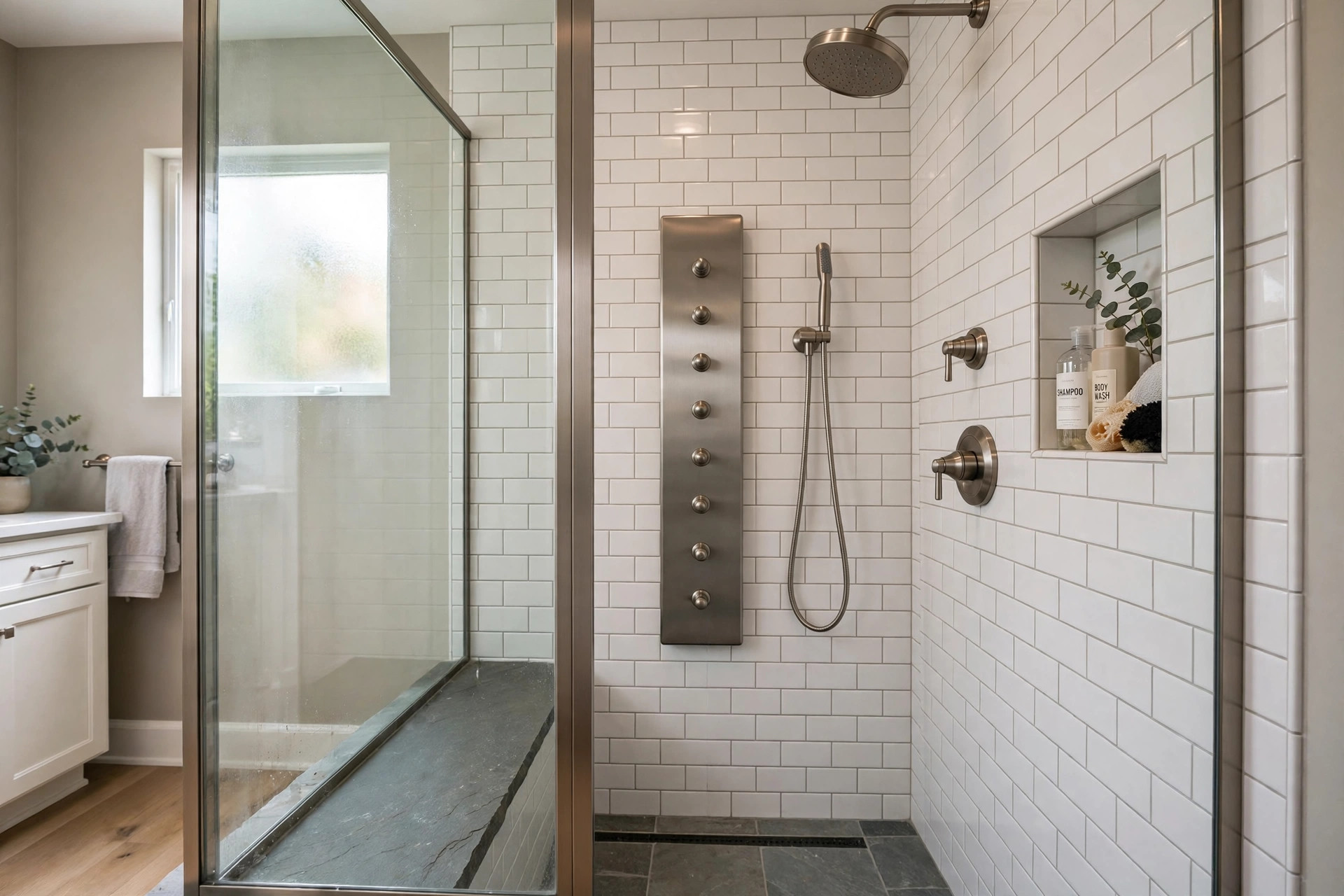

A plain shower sends water from one head above your head. That is all. A shower system with body sprays does more. It sends water from several points on the wall at the same time. Some sprays hit your back. Some hit your shoulders. Some hit your legs. The result feels warm, full, and even. Shoppers who look for the best shower system with body sprays usa want this full-body feeling at home.
These systems have grown common in American bathrooms over the last ten years. They once lived only in hotels and spas. Now builders put them in new homes. Homeowners add them during a bath remodel. Prices have dropped. Choices have grown. Still, buying one is not simple. You must think about water pressure, plumbing, and space. This guide walks through it all in plain words.
Why Body Sprays Matter
A standard shower head uses one stream of water. Body sprays add small jets built into the wall or a panel. Each jet points at a different part of the body. Together they rinse soap faster. They warm you on cold mornings. Many people with sore muscles find the steady pressure soothing.
Body sprays also use water in a smarter way. One strong head can blast water past you. Several small sprays surround you. Less water falls to the drain unused. Makers of shower systems often note that well-placed sprays can rinse faster with the same amount of water.
There is a comfort side too. A good shower sets the tone for the day. People spend more time in a shower they enjoy. A system with body sprays can make an old bath feel new. If you plan to sell your home, buyers notice an upgraded shower. It reads as a sign of care.
What to Look for When You Choose: Best Shower System with Body Sprays Usa
Water Pressure in Your Home
Body sprays need steady pressure. Each spray adds to the flow. A weak well pump or old pipes may leave sprays dribbling. Before you buy, test your pressure. A simple gauge screws onto an outside faucet. Most systems want at least 40 pounds per square inch. Ideal range is 45 to 60. If your pressure is low, talk to a plumber before you order.
Number and Placement of Sprays
Most sets have two, three, four, or six body sprays. Two sprays give a light touch. Four to six give the full spa feel. Look at how the sprays sit on the panel. They should line up with your height. Many sets let you aim each spray. That matters if the shower is used by people of different heights.
Valve and Diverter Quality
The valve is the heart of the system. It blends hot and cold water. It sends water to the head, the hand shower, or the sprays. A thermostatic valve keeps the temperature steady when a toilet flushes or a washer starts. A pressure-balance valve costs less but swings more in heat. For a multi-spray system, thermostatic control is the better pick.
Finish and Build
Brass bodies last longer than plastic. Solid brass valves cost more but hold up for years. Finishes include chrome, brushed nickel, matte black, and oil-rubbed bronze. Chrome is easy to clean. Dark finishes show water spots more. Pick a finish that matches your faucet and <a href="//”>dual flush toilet trim if you want a matched bath.
Size of Your Shower
Measure before you shop. A three-spray panel fits a small stall. A six-spray column needs a wide wall and elbow room. Body sprays also need clearance. You do not want a jet aimed straight at a glass door seam. Sketch your stall with rough marks where each spray will land.
Types of Shower Systems with Body Sprays
Shower Towers and Panels
A shower tower is a tall panel that mounts on the wall. It holds the sprays, the rain head, and the hand shower in one column. No pipes inside the wall. This makes towers the easiest choice for a remodel. You keep your old valve or add a simple mixer. Water comes up through a hose behind the panel. Towers suit renters and quick upgrades.
In-Wall Systems
In-wall systems hide the pipes behind tile. Only the spray heads, the shower head, and the knobs show. The look is clean. The install is bigger. A plumber opens the wall and runs new lines. These systems shine in a full gut remodel. They last for decades. They also cost more in labor.
Combination Kits
Kits mix parts. A rain head from one set pairs with wall jets and a hand shower. Many major makers sell matched kits. Moen and Delta Faucet offer kits where every part shares a finish and a valve family. Kits give freedom. You pick the number of sprays and the head style you like. Just check that one valve can feed all the outlets at once.
Digital and Smart Systems
New systems add digital controls. A small screen sets the temperature to the degree. Some let two users save their own settings. A few link to a phone app. These cost the most. They also need power near the shower. If you like gadgets, they are fun. If you want simple and solid, a good manual valve still wins.
Cost and Price
Prices vary wide. A basic two-spray tower panel can cost 120 to 250 dollars. Mid-range kits with four sprays and a rain head run 300 to 800 dollars. High-end in-wall systems from names like Kohler can reach 1,500 dollars or more before labor.
Labor adds to the bill. A plumber may charge 150 to 400 dollars to swap in a tower panel. A full in-wall install with tile work can add 1,000 to 3,000 dollars. Ask for a fixed quote in writing. Ask whether the price covers new shut-off valves and drywall repair. Get two or three quotes before you sign. Prices vary by town. A small local plumber may charge less than a large shop. Check that the quote lists parts and labor on separate lines. Some towns ask for a permit when you move water lines. The plumber often pulls the permit for you. Ask about the wait time too. A simple panel swap takes half a day. A full in-wall job with tile can take three to five days.
Think about water use too. More sprays can mean more gallons per minute. Federal rules in the United States limit shower heads to 2.5 gallons per minute. Some states set lower caps. Check the total flow rating of the system. A plumber can add flow limiters if your home runs on a well or a small water heater. If your heater runs out fast, look at <a href="//”>instant hot water tank options before you add sprays.
Care and Upkeep
Body sprays clog like any nozzle. Hard water leaves white crust on the jets. Wipe the faces with a soft cloth each week. Every few months, soak removable nozzles in white vinegar for an hour. Do not use harsh acid cleaners on dark finishes. They eat the coating.
Rubber nozzles help. Many modern sprays use soft silicone tips. You rub them with a thumb to break off scale. This takes seconds. It keeps the pattern even.
Check for leaks twice a year. Look behind the access panel. Feel for damp spots on the wall. A small drip inside a wall can rot wood for months unseen. If you see mold or a musty smell, call a plumber. A <a href="//”>sewer camera inspection is for drains, but the same idea applies: catch hidden water trouble early.
Keep the finish bright. Dry the panel after heavy use if your water is hard. Use a mild soap, not bleach. Bleach dulls nickel and bronze. A microfiber cloth works best.
Safety
Hot water can burn. Set your water heater to 120 degrees. This is the level safety groups advise. A thermostatic valve adds a second guard. It stops the shower from turning scalding when cold water drops.
Wet floors cause falls. Body sprays throw water wider than a single head. Make sure your stall or tub has a good threshold. Add a non-slip mat. If older folks use the shower, a grab bar is wise. Anchor it to studs, not just tile.
Check local codes. Some towns require a pressure-balance or thermostatic valve by law. Your plumber will know. The U.S. Environmental Protection Agency also runs a water-saving label program. Labeled shower parts meet strict flow tests. They save water and still feel strong.
For buyers who want cleaner water in the spray, a maker like Aquasana sells filtration gear for showers. Filters cut chlorine. Some people like the feel. A filter will not fix hard water scale, but it can soften the smell.
Where to Shop and Learn More
Big-box stores let you see and touch parts before you buy. Home Depot and Lowe’s stock tower panels and kits in store. Their sites list flow rates and valve types. Reading reviews there helps. Look for reviews that mention water pressure and install ease.
Trade sites give deeper how-to help. This Old House covers rough-in plumbing and tile work. Family Handyman shows step photos for valve swaps. Both are worth a read before you hire or start.
Frequently Asked Questions
Do body sprays work with low water pressure?
They can, but weakly. Each spray splits the flow. Under 40 psi, sprays may dribble. A pressure test takes five minutes with a gauge. If pressure is low, fix that first. A plumber can check for clogged pipes or a failing pressure tank.
How many body sprays do I need?
Two sprays suit a small stall and a tight budget. Four sprays cover most adults well. Six sprays give the full spa feel but need strong pressure and a wide wall. More is not always better. Aim and spread matter more than count.
Can I add body sprays to my current shower?
Yes, with a tower panel. It mounts on the wall and feeds from your current shower arm or a new line. No wall tear-out. Full in-wall sprays need a plumber to open the wall. Towers are the common do-it-yourself route.
Do shower systems with body sprays use more water?
They can. Total flow depends on the valve and the number of open outlets. Many systems let you run the sprays alone or with the head. Running only two sprays uses less than a big rain head. Check the rated gallons per minute and your local limits.
Are thermostatic valves worth the extra cost?
For a multi-spray system, yes. They hold the temperature steady when water use shifts elsewhere in the house. With four or six sprays on your skin, a sudden hot burst is worse than with one head. The extra cost buys comfort and safety.
How long do these systems last?
Brass valves and solid panels often last 15 to 20 years with basic care. Plastic towers last less, often 5 to 8 years. Finishes wear faster in hard water. Buy from a maker with spare parts. Cartridges and nozzles should be easy to find years later.
A Final Word
The best shower system with body sprays usa buyers can find is not one single model. It is the system that fits your pressure, your space, and your budget. Test your water first. Pick a solid valve. Match the spray count to your stall. Then enjoy the small daily luxury of warm water from every side. A little care keeps it running for years.
References
Aquasana. (n.d.). Water filtration systems. https://www.aquasana.com Delta Faucet. (n.d.). Kitchen and bathroom faucets. https://www.deltafaucet.com Family Handyman. (n.d.). DIY home repair and maintenance. https://www.familyhandyman.com Kohler. (n.d.). Bathroom and kitchen fixtures. https://www.kohler.com Lowe’s. (n.d.). Home improvement products. https://www.lowes.com Moen. (n.d.). Faucets and plumbing fixtures. https://www.moen.com The Home Depot. (n.d.). Home improvement products. https://www.homedepot.com This Old House. (n.d.). Home renovation guidance. https://www.thisoldhouse.com U.S. Environmental Protection Agency. (n.d.). Protecting human health and the environment. https://www.epa.gov
Was this guide helpful?

About Emily Rodriguez
The My Garden US editorial team writes practical, in-depth home and garden guides for American homeowners — tested advice, no fluff.
You May Also Like
Water Heater Pan With Drain Installation Cost: What You Will Pay in 2026
July 13, 2026 0 views
Heat Tape for Water Pipes Reviews USA: A Plain Guide for Homeowners
August 21, 2026 0 views
Best Tankless Reverse Osmosis System USA: A Simple Guide for Homeowners
May 12, 2026 0 views