
A black fence is one of the simplest ways to change how a backyard feels. It is bold. It is neat. It makes green plants look brighter and pale stone look warmer. These black fence paint ideas for backyard USA homes will help you pick the right shade, the right product, and the right method, whether you hire help or do the work yourself.
Why a Black Fence Works So Well
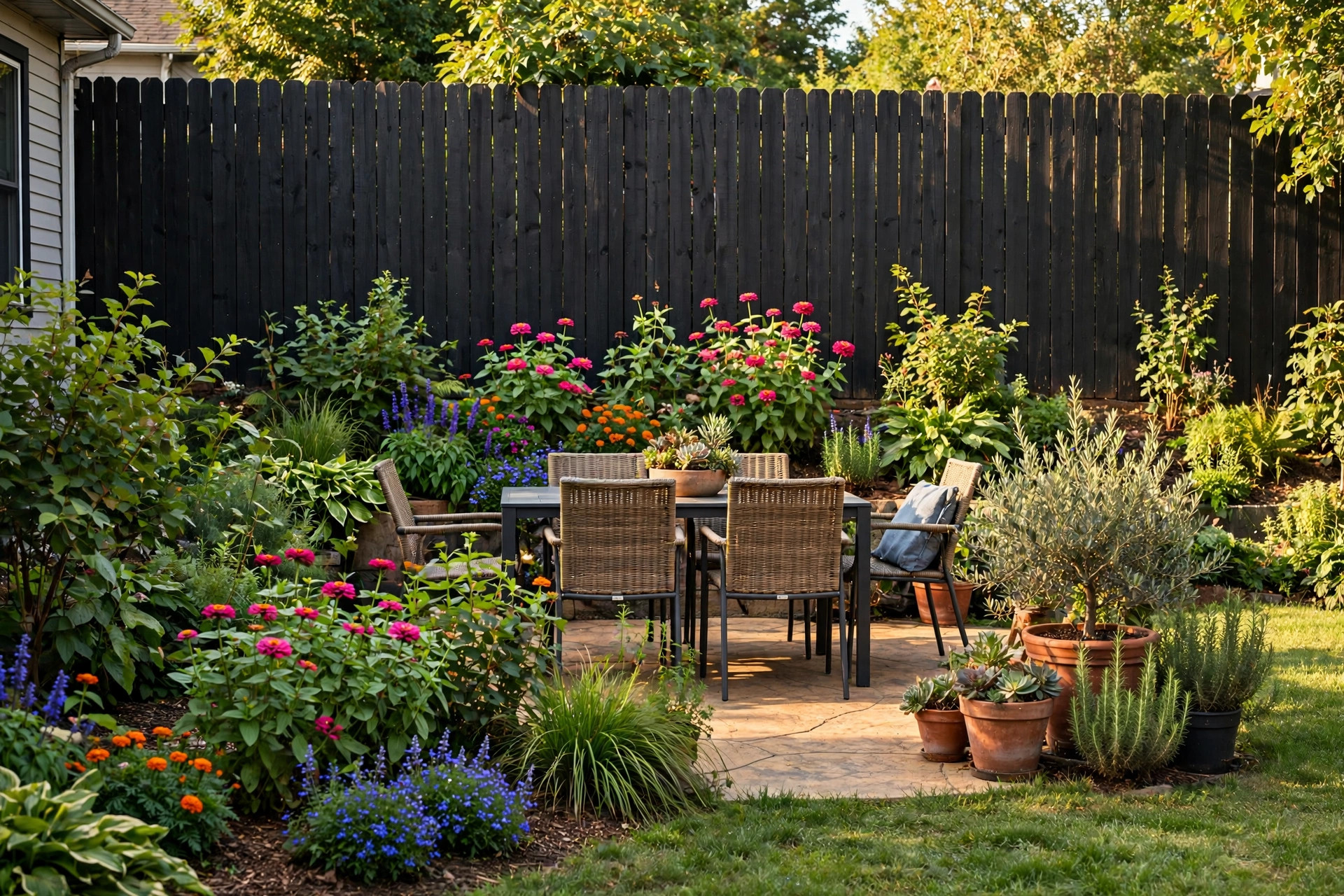
A dark fence recedes. That is a term garden writers use to describe how black pulls back from the eye, so the fence seems to vanish and the yard feels larger. Light fences do the opposite. A white picket fence calls attention to itself. A black fence quietly frames the space and lets the lawn, the beds, and the furniture take the lead.
Black also hides wear. A pale fence shows every mud splash and gray streak. Black paint masks dirt, water marks, and the first signs of age. For busy households, that means the fence keeps its good looks longer between fresh coats.
There is a style reason too. Black fences suit many American tastes. They fit a modern home with clean lines. They also suit a farmhouse, a cottage garden, or a brick colonial. The same color reads crisp on a new cedar fence and classic on an older privacy fence.
Choosing the Right Black Paint: Black Fence Paint Ideas for Backyard Usa
Not all black is the same. Paint chips run from warm blacks with a brown cast to cool blacks with a blue cast. Hold sample cards against your fence at different hours of the day. Morning light, noon glare, and late sun all change how black reads.
Finish matters as well. Flat or matte hides flaws in old wood but shows scuffs more. Satin is the workhorse for fences. It sheds water, wipes clean, and keeps a soft sheen without looking shiny. High gloss is rare on fences, though some homeowners use it on gates for contrast.
For exterior wood, pick a paint or solid stain labeled for outdoor use. Acrylic latex is the common choice in the United States. It resists cracking, cleans up with water, and handles sun and rain. Solid color stains sit between paint and clear stain. They hide the wood grain like paint but soak in like stain, so they peel less on rough lumber. The main paint makers all sell exterior lines made for fences and siding, and their sites carry full color charts and data sheets — see Behr‘s exterior paint pages (https://www.behr.com) or Sherwin-Williams‘ exterior coatings guides (https://www.sherwin-williams.com).
If your fence is metal, use a paint made for metal with a rust-blocking primer. If it is vinyl or composite, use only products rated for vinyl, since dark colors can trap heat and warp some vinyl panels.
A quick word on coverage. Black needs fewer coats than white to cover old color, but raw wood still needs primer first. A paint sprayer made for home use will lay an even coat much faster than a brush on a long run of pickets.
Black Fence Paint Ideas to Consider
Classic Matte Black Privacy Fence
The full-board privacy fence in flat black is the look most people picture. It suits suburban lots where the fence is tall and runs a long way. Matte black softens the mass of a six-foot fence and pairs well with lawns, gravel beds, and simple shrubs.
Black With Natural Wood Top Cap
Add a cedar or redwood cap rail left in its natural tone. The warm wood line across the top breaks up the dark wall and gives the fence a finished edge. Oil the cap once a year to keep its color.
Black Horizontal Slat Fence
Horizontal boards painted black read modern and calm. The long lines make a narrow yard feel wider. Keep gaps even and modest, about a quarter to half inch, so the fence still gives privacy.
Black Picket Fence
A picket fence in black is a fresh take on an old American form. It works with cottages, bungalows, and small town lots. Pointed or dog-ear pickets both look sharp in black. This look pairs nicely with white trim on the house for a crisp contrast.
Black and Green: The Garden Backdrop
Garden designers have long painted fences near-black so that foliage glows against them. Deep greens, silver leaves, and bright flowers all pop against a dark ground. If your backyard is mostly planting beds, this is the idea to choose.
Stained Black Cedar
A semi-solid black stain lets some wood texture show through. It is less stark than full paint and ages with more grace on rustic properties. Stain also avoids the peeling that paint can suffer on rough-sawn lumber.
Black Fence With a Contrasting Gate
Paint the fence black and the gate a different color or finish — a clear-coated cedar gate, a deep bronze, or even a warm red on a modern home. The gate becomes the front door of the backyard. For gate hardware and latch ideas, browse project galleries at This Old House (https://www.thisoldhouse.com).
Black Chain Link Upgrade
Chain link fences can be painted with a special metal paint or replaced with black vinyl-coated mesh. Black chain link nearly disappears against plants, which is why parks and sports fields use it. On a home lot, it is the least costly route to a black boundary.
Prep Work: The Step That Decides Everything
Black paint shows poor prep more than pale paint does. A missed loose flake or a dirty board will stand out. Good preparation takes a weekend on a typical yard fence, but it decides whether the job lasts three years or ten.
Start by cleaning. Wash the fence with a garden hose and a mild detergent, or rent a pressure washer and use a wide fan tip at low pressure. Too much pressure scars soft wood. Let the fence dry for two full days.
Next, scrape and sand. Remove loose and flaking paint with a scraper. Sand rough spots and feather the edges of old paint so the new coat lies flat. Replace or re-nail any loose boards and reset popped nails.
Check the weather forecast. Paint between about 50 and 85 degrees, in dry air, with no rain expected for 48 hours. Black paint gets hot in direct sun, which can make it dry too fast and leave lap marks. Paint in the shade when you can, or work early and late. The Spruce has clear step-by-step fence prep checklists for beginners (https://www.thespruce.com).
Prime bare wood with an exterior primer. On cedar and redwood, use a stain-blocking primer so tannins do not bleed through the black. Old paint that is sound can be painted over after sanding and cleaning, though a coat of primer over repairs is wise.
Cost and Price
A do-it-yourself black fence paint job is one of the cheaper backyard upgrades. The main costs are paint, primer, and tools.
A gallon of quality exterior acrylic paint covers about 300 to 400 square feet per coat on smooth wood, less on rough wood. A typical 150-foot run of six-foot fence is roughly 900 square feet per side, so plan on three to five gallons per side for two coats. At 40 to 70 dollars a gallon, paint alone runs 120 to 350 dollars per side.
Primer adds another 30 to 60 dollars a gallon. Brushes, rollers, drop cloths, and sandpaper add 50 to 100 dollars. A sprayer rental runs about 75 to 150 dollars a day, though many homeowners buy a modest sprayer outright for 150 to 300 dollars. If you would rather hire the work out, compare local quotes the way you would for any exterior job — our notes on fence staining service prices near you explain what fair pricing looks like, and a porch and patio paint buying guide helps you judge the materials a contractor proposes.
Professional painting for a standard backyard fence often falls between 1,500 and 4,000 dollars, depending on fence length, condition, and your region. Homes in the South and Southwest tend to see lower bids, while coastal and Northeastern markets run higher. Get at least three written estimates.
Care and Upkeep
A black fence needs little care, but a few habits keep it looking sharp.
Wash it once a year with a hose and soft brush. This removes pollen, dust, and the film that dulls dark paint. In damp climates, watch for mildew on shaded sections. A mild bleach-and-water solution, rinsed well, handles most growth.
Touch up scratches and chips as they appear. Keep a small sealed jar of the same paint, with the color name and store code written on the lid. Small chips on black paint are easy to spot and easy to fix, and quick touch-ups stop moisture from getting under the film.
Trim plants back from the fence line. Vines and shrubs that press against paint hold moisture and rub the finish. A few inches of air space lets the fence dry after rain.
Expect to recoat every five to eight years in mild climates, sooner in harsh sun or heavy weather. Solid stains may need renewal on the same schedule but are easier to refresh, since they do not need full scraping. Benjamin Moore‘s exterior maintenance guides explain the signs that a recoat is due (https://www.benjaminmoore.com).
Safety
Fence painting is safe work if you take ordinary care. A few points matter.
Lead paint is the big one on old fences. Homes built before 1978 may have lead paint on existing fences. Do not dry-scrape or sand it without a test kit. Home centers sell simple swab tests, and the federal guidance on lead-safe work is clear about when to call a certified firm.
Wear a dust mask or respirator when sanding, and gloves and eye protection when working with primers and cleaners. Keep paint and solvents away from children and pets, and let the fence cure fully before letting dogs rub against it. Store leftover paint sealed, upright, and out of freezing temperatures.
Work ladders with care on uneven ground, and never spray on a windy day. Overspray from a sprayer can travel farther than you think — mask cars, windows, and your neighbor’s side of the fence. Bob Vila‘s outdoor project safety checklists cover the basics well (https://www.bobvila.com).
Frequently Asked Questions
Does a black fence make a small backyard feel smaller? Usually not. Dark colors recede, so a black fence tends to push the boundary back and make planting beds look deeper. A tall solid fence in any color can feel close in a tiny yard, but black handles it better than most colors.
What is the best paint for a black wooden fence in the USA? A 100 percent acrylic latex exterior paint or a solid-color acrylic stain, both rated for outdoor wood. Buy from a major brand so you can match the color years later for touch-ups. Check current product lines at The Home Depot (https://www.homedepot.com) or Lowe’s (https://www.lowes.com) before you shop.
Should I paint or stain my fence black? Paint gives a fuller, more even black and covers old color in fewer coats. Stain, especially solid stain, soaks into rough wood and resists peeling. For old, rough-sawn fences, stain is often the smarter pick. For smooth new lumber, paint wins on looks.
How many coats of black paint does a fence need? Two finish coats over primer on bare wood, or two coats over sound old paint. Black covers well, but thin coats fail early. Put the paint on at the thickness the can calls for.
Will a black fence fade in the sun? All exterior paint fades with time, but quality black paint with UV-resistant pigments holds its color for years. South-facing runs in hot states fade fastest. A satin finish tends to keep its depth longer than flat.
Can I paint a neighbor-shared fence black? Talk to your neighbor first, and check local rules. Many towns treat a shared fence as joint property, and homeowners associations often limit fence colors. A written agreement avoids trouble later. For design inspiration that passes most HOA rules, HGTV‘s outdoor galleries are a useful reference (https://www.hgtv.com).
A Short Final Word
A black fence is a quiet kind of bold. It asks for a weekend of honest prep and a few gallons of good paint, and it pays back with a backyard that looks larger, neater, and more considered. Pick your shade in daylight, prime the bare wood, and paint in cool hours. Done well, these black fence paint ideas for backyard USA homes will serve you for the better part of a decade — and make everything inside the fence look its best. For more fence and exterior project know-how, the project library at Family Handyman (https://www.familyhandyman.com) is worth a browse.
References
Behr. (n.d.). Paints, primers, and stains. https://www.behr.com Benjamin Moore. (n.d.). Paints and stains. https://www.benjaminmoore.com Bob Vila. (n.d.). Home improvement advice. https://www.bobvila.com HGTV. (n.d.). Home and garden ideas. https://www.hgtv.com Lowe’s. (n.d.). Home improvement products. https://www.lowes.com Sherwin-Williams. (n.d.). Paints and coatings. https://www.sherwin-williams.com The Home Depot. (n.d.). Home improvement products. https://www.homedepot.com The Spruce. (n.d.). Home and garden advice. https://www.thespruce.com
Was this guide helpful?

About Emily Rodriguez
The My Garden US editorial team writes practical, in-depth home and garden guides for American homeowners — tested advice, no fluff.
You May Also Like

Wall Decals for Kids Rooms: Reviews and Buying Guide USA
March 13, 2026 0 views
Garage Wall Paint Ideas for Workshops USA: Colors That Work Hard
April 26, 2026 0 views
Painting Brick in Cold Climates: Pros and Cons
August 4, 2026 0 views