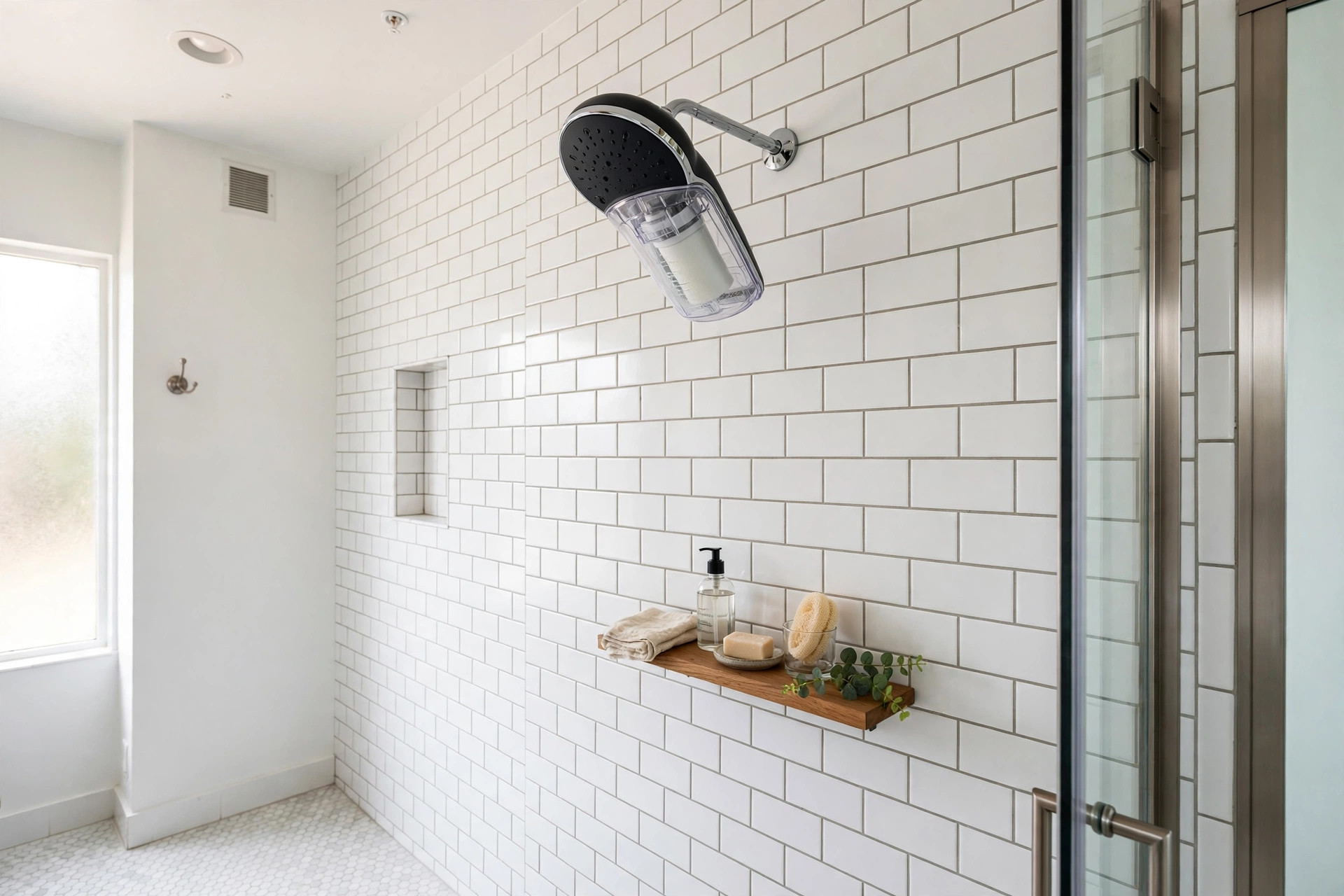

Nearly one in seven American households draws its water from a private well. That water comes with no city bill, but it carries iron, sediment, and hard minerals that city water plants remove. The shower is where those problems show first. A new shower head works fine for a few months. Then the spray weakens, the nozzles clog, and rust-colored stains creep across the tub. This guide will help you find the best shower head for well water USA homes can rely on. It covers what well water does to plumbing, which features matter, what such models cost, and how to keep them clean for years.
Why Well Water Is Hard on Shower Heads
Well water is untreated. It travels from the ground straight to your home. City water passes through a treatment plant first. That single difference changes everything about your plumbing.
Iron is the most common trouble. Even small amounts of iron stain fixtures orange or brown. Iron also feeds a type of bacteria that leaves slimy deposits inside pipes and shower heads. These deposits narrow the water passages and cut the spray to a trickle.
Hard minerals are the second trouble. Calcium and magnesium dissolve into well water as it passes through rock and soil. When the water warms in your pipes, these minerals form a hard crust called scale. Scale builds up inside the shower head and on the spray nozzles. It is the white, chalky crust you see on many old fixtures.
Sediment is the third trouble. Fine sand and silt can enter a well, especially after heavy rain or when the water level drops. These grains wear out washers and seals. They also block the small holes in a spray face. A shower head that is fine in March can sputter by August after a dry summer lowers the well.
Understanding these three enemies matters. A plain shower head built for city water will struggle against them. A head built or chosen for well water holds up far longer. That is why shoppers search for the best shower head for well water USA retailers sell, rather than picking the first box off the shelf.
What to Look For in a Shower Head for Well Water: Best Shower Head for Well Water Usa
A Built-In or Attachable Filter
Many shower heads made for problem water include a filter stage. Some use a replaceable cartridge that catches sediment and reduces iron. Others use mineral stones or vitamin C filters that target chlorine and some metals. A filter does not replace a whole-house system, but it protects the spray nozzles and gives a cleaner shower.
Check whether the filter cartridges are easy to find and replace. A head with a cheap cartridge that no store stocks will cost you more in the long run than a head with cartridges sold at any hardware store.
Self-Cleaning or Rub-Clean Nozzles
Rubber spray nozzles are a small feature with a large payoff. When scale crusts over a rubber nozzle, you rub it with a finger and the crust flakes off. Hard plastic or metal nozzles need soaking in vinegar to get the same result. For well water, choose rubber nozzles whenever you can.
Solid Build and Standard Threads
Well water often runs at higher pressure than city water, because private pumps can be set strong. A flimsy plastic head may crack at the threads under that pressure. Look for a head with metal threads and a solid housing. Standard half-inch threads fit nearly every American shower arm, so installation stays simple.
The Right Flow Rate
Federal rules limit new shower heads to 2.5 gallons per minute. Many well-water homes have a private pump, so they can use the full flow without the weak pressure that troubles some city homes. A high-pressure design helps push water through mineral buildup and keeps the spray strong as the months pass.
Types of Shower Heads That Work With Well Water
Wall-Mount Filtered Shower Heads
The wall-mount head is the classic fixed head. Filtered versions add a chamber between the shower arm and the spray face. This type suits small bathrooms and renters, because it screws on in minutes with no tools beyond a wrench and some thread tape. It is also the cheapest option.
Handheld Filtered Shower Heads
A handheld head sits in a cradle on a hose. It suits families with children, older adults, and anyone who cleans the tub with the shower. The hose makes it easy to rinse scale and soap off the walls. Many handheld models include a filter in the handle. The extra parts mean a few more places for sediment to settle, so regular cleaning matters more.
High-Pressure and Rain Designs
High-pressure heads use small chambers or air mixing to boost the feel of the spray. They hold their pattern longer when nozzles start to crust over. Rain heads are wide and gentle, but their many small holes clog faster on raw well water. If you love a rain head, pair it with a sediment filter at the very least, or be ready to clean it often.
Many homeowners pair the right head with a wider treatment plan. A best shower filter for hard water usa guide can help if scale is your main foe, and a best water softener for well water usa guide helps when the whole house needs softer water.
Cost and Price: What to Expect
A basic filtered shower head for well water costs between 25 and 60 dollars. These models screw onto the shower arm and include a first filter cartridge. Replacement cartridges run 8 to 20 dollars and last three to six months on well water.
Mid-range models cost 60 to 120 dollars. They add better housings, metal threads, and longer filter life. Some include a second spray setting or a handheld wand.
High-end heads cost 120 to 250 dollars. These often come from the big fixture brands and offer stronger warranties and finer finishes. The filter still needs replacing on the same schedule, so the long-term cost is mostly the cartridges, not the head.
Compare this with the cost of doing nothing. A plumber visit to clear a clogged valve can run 150 dollars or more. Replacing a stained tub surround costs far more. A good head plus a best sediment filter for well water usa setup at the tank is cheap insurance.
Stores such as The Home Depot and Lowe’s carry a wide range, and the big fixture makers like Moen, Delta Faucet, and Kohler all offer models suited to hard or mineral-heavy water. Specialty filter makers such as Aquasana focus on the filtration side.
Installation, Care, and Upkeep
Installation takes most people under fifteen minutes. Turn off the water to the shower if you can, though it is not strictly needed. Unscrew the old head with a wrench, protecting the finish with a cloth. Clean the threads on the shower arm. Wrap the threads two or three times with Teflon tape. Screw on the new head by hand, then snug it a quarter turn with the wrench. Run the water for a minute to flush the line.
Care is where well-water owners win or lose. Do these simple jobs on a schedule:
– Rub the spray nozzles with your fingers once a week. This takes ten seconds and stops scale from hardening. – Soak the head in white vinegar every one to three months. Unscrew it, drop it in a bowl of vinegar for an hour, and rinse. Vinegar dissolves calcium and iron crust without harsh chemicals. – Change the filter cartridge on the maker’s schedule, or sooner if the spray weakens. Write the date on the cartridge with a marker so you remember. – Flush the shower line once a year by removing the head and running the water full force for two minutes. This clears sediment that settled in the arm. – Check the washer inside the head each time you remove it. A worn washer causes drips, and drips leave mineral rings.
Homeowners who follow this routine often get five to ten years from a good head, even on raw well water. Those who ignore it may replace a head every year. Practical repair guides from This Old House and Family Handyman cover the same vinegar-soak method plumbers have used for decades.
Safety Notes
Well water can carry things a shower head cannot fix. Bacteria, nitrates, lead from old pipes, and radon in some regions all need proper testing. The Environmental Protection Agency publishes well water guidance for private well owners, including how often to test. Test your well at least once a year for bacteria and nitrates, and test for anything else your local health department advises.
A shower filter improves the shower experience. It does not make unsafe water safe to drink. If your test results show a problem, fix the water at the source with proper treatment before worrying about which head to buy.
Never mix strong acids or bleach cleaners on a head with a filter cartridge inside. Harsh chemicals can damage the filter media and the rubber seals. Plain white vinegar and mild soap are enough for nearly every cleaning job.
Frequently Asked Questions
Will a filtered shower head remove iron from well water?
It reduces iron staining at the shower and protects the nozzles, but it will not remove all iron from your water. Heavy iron needs a dedicated iron filter or softener at the pressure tank. Think of the shower head filter as the last line of defense, not the whole army.
How often should I replace the filter cartridge on well water?
Every three to six months for most wells. If your water is heavy with iron or sediment, lean toward three months. Mark the install date on the cartridge. A weak spray or a return of the rotten-egg smell means the cartridge is spent.
Can I use a water softener with any shower head?
Yes. Softened water is gentler on every fixture in the house. A softener removes the calcium and magnesium that form scale. With a softener in place, even a plain shower head lasts much longer. Many rural homeowners treat the well water first and choose the shower head second.
Do high-pressure shower heads waste water?
No, as long as they meet the 2.5 gallon per minute limit. They feel stronger because of how they shape the spray, not because they use more water. On a private well with its own pump, that strong feel costs you nothing extra in water bills.
Why does my well water smell like rotten eggs in the shower?
That smell is hydrogen sulfide gas, which is common in well water. Warm water releases the gas, so the shower smells worse than the cold tap. A shower filter with the right media can reduce it, but the lasting fix is treating the well water itself.
Is it hard to install a shower head myself?
No. It is one of the simplest home jobs. Unscrew the old head, wrap the threads with tape, and screw on the new one. No plumber is needed unless the shower arm itself is damaged or corroded.
A Final Word
The best shower head for well water USA homes is not the fanciest one on the shelf. It is the one with rubber nozzles, a replaceable filter, solid threads, and cartridges you can actually buy. Test your well water first, treat the big problems at the source, and pick a head built for the fight. Do the small weekly and monthly care, and your shower will spray strong for years on the water your own land provides.
References
Aquasana. (n.d.). Water filtration systems. https://www.aquasana.com Delta Faucet. (n.d.). Kitchen and bathroom faucets. https://www.deltafaucet.com Family Handyman. (n.d.). DIY home repair and maintenance. https://www.familyhandyman.com Kohler. (n.d.). Bathroom and kitchen fixtures. https://www.kohler.com Lowe’s. (n.d.). Home improvement products. https://www.lowes.com Moen. (n.d.). Faucets and plumbing fixtures. https://www.moen.com The Home Depot. (n.d.). Home improvement products. https://www.homedepot.com This Old House. (n.d.). Home renovation guidance. https://www.thisoldhouse.com U.S. Environmental Protection Agency. (n.d.). Protecting human health and the environment. https://www.epa.gov
Was this guide helpful?

About David Wilson
The My Garden US editorial team writes practical, in-depth home and garden guides for American homeowners — tested advice, no fluff.
You May Also Like

Handheld Shower Head with Slide Bar Reviews: What Buyers in the USA Should Know
May 11, 2026 0 views
Heat Pump Water Heater Installation Cost USA: What You Pay in 2026
June 30, 2026 0 views
Toilet Auger vs Plunger Comparison: Which Tool Clears Clogs Best in USA Homes
June 3, 2026 0 views