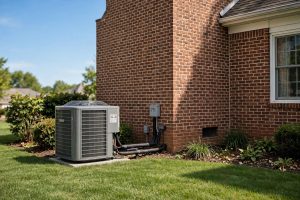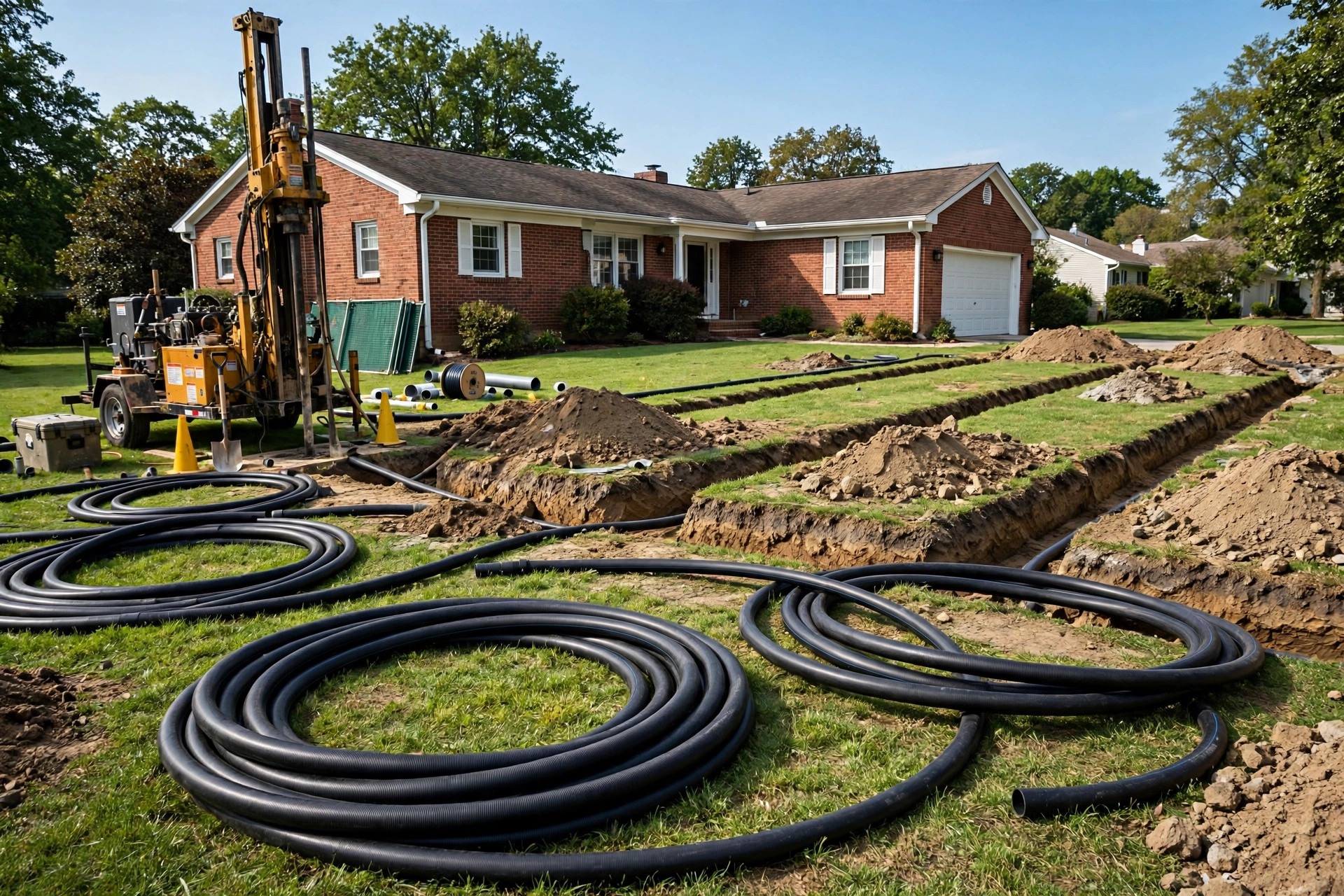

A ground source heat pump installation cost USA homeowners face is one of the highest upfront prices in home heating. The systems are often called geothermal heat pumps. They draw heat from the ground in winter and push heat back into the ground in summer. The earth stays at a steady temperature just a few feet down. This makes the system very efficient. But getting pipes into the ground costs real money. This guide lays out the plain facts: what the price ranges look like, what drives them up or down, and how the long-term math works.
Why It Matters
Heating and cooling take up nearly half of the energy a typical American home uses. A standard furnace burns gas or oil. A ground source heat pump moves heat instead of making it. One unit of electricity can move three or four units of heat. That ratio is called the coefficient of performance. It is printed on every spec sheet. The Department of Energy publishes measured data showing these systems cut heating bills by a large margin in most climates.
The catch is the ground loop. Workers must drill deep wells or dig long trenches. That drilling is the main reason the bill runs so high. A homeowner should know this before calling a contractor. The sticker price shocks people who expect something like a furnace swap. It helps to think of the system as two purchases in one: the heat pump unit itself, and the underground loop field. The loop can last fifty years or more. The indoor unit lasts twenty to twenty-five years.
What to Look for When You Get Quotes: Ground Source Heat Pump Installation Cost Usa
Not every contractor handles ground source work. This is specialty labor. A bad loop design wastes the whole investment.
Check the loop design method. Good installers run a Manual J load calculation for your home. They size the loop to your soil and your climate. Ask to see the numbers. A contractor who sizes by rule of thumb is a risk.
Ask about drill depth and soil type. Clay holds heat well. Sandy or dry soil holds it poorly. The ASHRAE design guides set the standards the better installers follow. If your soil is rocky, expect higher drilling costs.
Demand a written breakdown. The quote should split the heat pump unit, the loop field, ductwork changes, and electrical work into separate lines. This lets you compare quotes fairly. Three quotes is the minimum.
Check certifications. Look for IGSHPA accreditation. The International Ground Source Heat Pump Association trains and tests installers. Membership alone is not proof of skill, but training matters.
Ask for references with age. Call owners whose systems are five or ten years old. New installs always look good. Old ones show the truth about service and running cost.
Ask how they handle design temperature. Every region has a design day, the coldest day the system must handle. A good installer shows you the design temperature for your zip code and the backup heat plan. If the contractor cannot name your design temperature, keep looking.
Review the contract terms. The contract should list the borehole count, the depth of each, the pipe type, and the loop warranty in years. It should state who handles permits and who pays for repair if drilling hits bedrock sooner than planned. Read it twice before you sign.
Types of Ground Source Systems
The basic idea is the same in every system. A water-based fluid runs through buried pipe. It picks up heat from the earth. A heat pump inside the house moves that heat into the air or water that warms the home. The difference between systems is where the pipes go.
Horizontal Loops
Trenches six to eight feet deep hold the pipe. This is the cheapest loop type. It needs a large open yard. A two-thousand-square-foot home may need half an acre of clear land. The Geothermal Exchange Organization notes that horizontal loops suit rural homes with space to spare.
Vertical Loops
Drillers bore holes two hundred to four hundred feet deep. Each borehole holds a U-shaped pipe. This type fits small city lots. It is also the most common type in new American installs. Drilling is the expensive part.
Pond or Lake Loops
If you own a pond of the right size and depth, pipes can sit in the water. This is the cheapest option of all. Few homes qualify. The pond must be deep enough not to freeze solid and large enough to absorb the load.
Open Loop Systems
These draw well water through the heat pump and discharge it back to the ground. They are simple and cheap to build. They need clean, steady well water. Many local codes now restrict them. Check your county rules first.
Ground Source Heat Pump Installation Cost USA: The Price Ranges
Here is where the plain numbers matter. For a typical American home, the full installed price usually lands between $18,000 and $35,000 for a three-ton system. Larger homes or hard drilling sites can push the total past $45,000. These are 2026 figures for a complete job: unit, loop, labor, and tie-in to your ducts.
The heat pump unit itself runs from about $3,000 to $8,000 depending on size and brand. Names like Trane, Carrier, and Lennox all sell ground source units through dealer networks. The loop field is the bigger share. Vertical drilling often costs $2,000 to $4,000 per borehole. A three-ton home usually needs three or four boreholes. That is why drilling alone can exceed $12,000.
Cost per ton is the way pros compare systems. Expect roughly $6,000 to $12,000 per ton installed, loop included. If you want more on this measure, read our guide on geothermal heat pump cost per ton. Air source systems cost far less to install. Our comparison of heat pump vs furnace cost shows how the upfront gap looks against a plain furnace swap.
Site factors move the price up or down:
– Soil and rock. Soft soil drills fast. Hard rock drills slow. Rocky sites can add several thousand dollars. – Loop type. Horizontal loops cost less than vertical drilling. Pond loops cost least of all. – Ductwork. If your ducts are old or the wrong size, replacement adds $3,000 to $7,000. – Electrical panel. The system may need a panel upgrade. That runs $1,000 to $3,000. – Permits and tests. Some counties require water well permits and pressure tests. Budget a few hundred dollars.
Rebates and Tax Credits
The federal tax credit is the largest single discount. As of 2026, the residential clean energy credit covers 30 percent of the full installation cost, with no upper limit. This credit applies to ground source heat pumps but not to ordinary air source units. It comes off your federal taxes, so you must owe enough tax to use it.
Many states add their own rebates. Some utilities offer per-ton rebates for geothermal installs. The EPA and the National Renewable Energy Laboratory both keep data on clean heating programs that can point you to local offers. ENERGY STAR also lists qualifying models on its site at ENERGY STAR. Ask your installer which rebates they handle. Good dealers file the paperwork for you.
Care and Upkeep
A ground source system needs less care than a furnace or a boiler. The loop has no moving parts underground. The indoor unit has a compressor, a fan, and a small pump. Annual service is still wise. A technician should check refrigerant levels, clean or change the air filter, and inspect the loop fluid pressure.
The air filter needs changing every one to three months, just like any forced-air system. Loop fluid rarely needs topping up. If pressure drops year after year, there may be a leak. Leaks are rare but expensive to find. This is why the quality of the original pipe fusion joints matters so much. Ask your installer about the pipe warranty. Many offer twenty-five-year or lifetime coverage on the loop.
Service contracts run about $150 to $300 per year. They cover the annual tune-up and give you priority scheduling. Compressor replacement, if ever needed, runs $1,500 to $3,000. That is similar to air source heat pump repairs. The circulation pump costs less, usually under $600 installed. Because the loop sits underground and out of the weather, it avoids the storm damage and coil corrosion that wear out outdoor air source units. Many owners report that the system simply runs year after year with little attention beyond filter changes and the yearly check.
Safety Points
The system itself is safe. There is no flame, no flue gas, and no carbon monoxide. The loop fluid is usually food-grade antifreeze. Still, a few points matter.
Drilling crews must follow local codes for well sealing. Bad seals can let surface water reach groundwater. Confirm your driller is licensed in your state. Keep pets and children clear of the work area during drilling and trenching. After the job, the loop field should be mapped. You do not want a future fence post or tree planting to pierce a pipe. Get the map in writing.
Frequently Asked Questions
How long does a ground source heat pump last? The indoor unit lasts about twenty to twenty-five years. The buried loop can last fifty years or more. That long loop life changes the math. You may replace the indoor box once while the loop keeps working.
Does it work in very cold climates? Yes. Ground temperature stays steady all year. A system sized for your region handles deep cold. In the coldest zones, a small backup heater may still be installed for the worst nights. Ask your installer how they handle design-day temperatures.
How noisy is it? Quieter than an air source heat pump. The noisy compressor sits inside the house, not outside on a pad. Most owners say they cannot hear it from the next room.
Can it heat my hot water too? Many units include a desuperheater. It captures waste heat and preheats your water tank. In summer this can cover most of your hot water needs. In winter it covers part of them.
Will it raise my home value? Studies of efficient homes suggest buyers pay more for lower energy bills. A documented geothermal system with utility bill history is a selling point. Keep your installation records and energy bills together.
How long until it pays for itself? Simple payback usually lands between seven and twelve years after the tax credit. Homes with high heating bills or high electric rates pay back faster. The loop keeps saving money long after payback ends.
If you are comparing options across brands, start with local dealers and heat pump installation cost guides for your area before you sign.
A Short Final Word
The ground source heat pump installation cost USA homeowners pay is high at the start. The running cost is low for decades. The 30 percent federal credit takes a real bite out of the price. The key steps are simple: get three quotes, check loop design math, verify the driller license, and keep the loop map. Do that, and the system does the rest.
References
ASHRAE. (n.d.). Heating, refrigeration and air-conditioning standards. https://www.ashrae.org Carrier. (n.d.). Heating and cooling systems. https://www.carrier.com ENERGY STAR. (n.d.). Energy efficient products. https://www.energystar.gov Geothermal Exchange Organization. (n.d.). Geothermal heat pump information. https://www.geoexchange.org Lennox. (n.d.). Heating and cooling systems. https://www.lennox.com National Renewable Energy Laboratory. (n.d.). Renewable energy research. https://www.nrel.gov Trane. (n.d.). Heating and air conditioning. https://www.trane.com U.S. Department of Energy. (n.d.). Energy efficiency and renewable energy. https://www.energy.gov U.S. Environmental Protection Agency. (n.d.). Protecting human health and the environment. https://www.epa.gov
Was this guide helpful?

About Robert Taylor
The My Garden US editorial team writes practical, in-depth home and garden guides for American homeowners — tested advice, no fluff.
You May Also Like

Smokeless Fire Pit Reviews 2026 USA: What the Reviews Say and How to Choose
April 28, 2026 0 views
Geothermal Heat Pump Cost Per Ton USA: A Plain Guide for Homeowners
May 6, 2026 0 views
Best Through the Wall AC Reviews USA: A Plain Buyer’s Guide
September 21, 2026 0 views