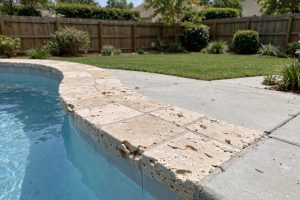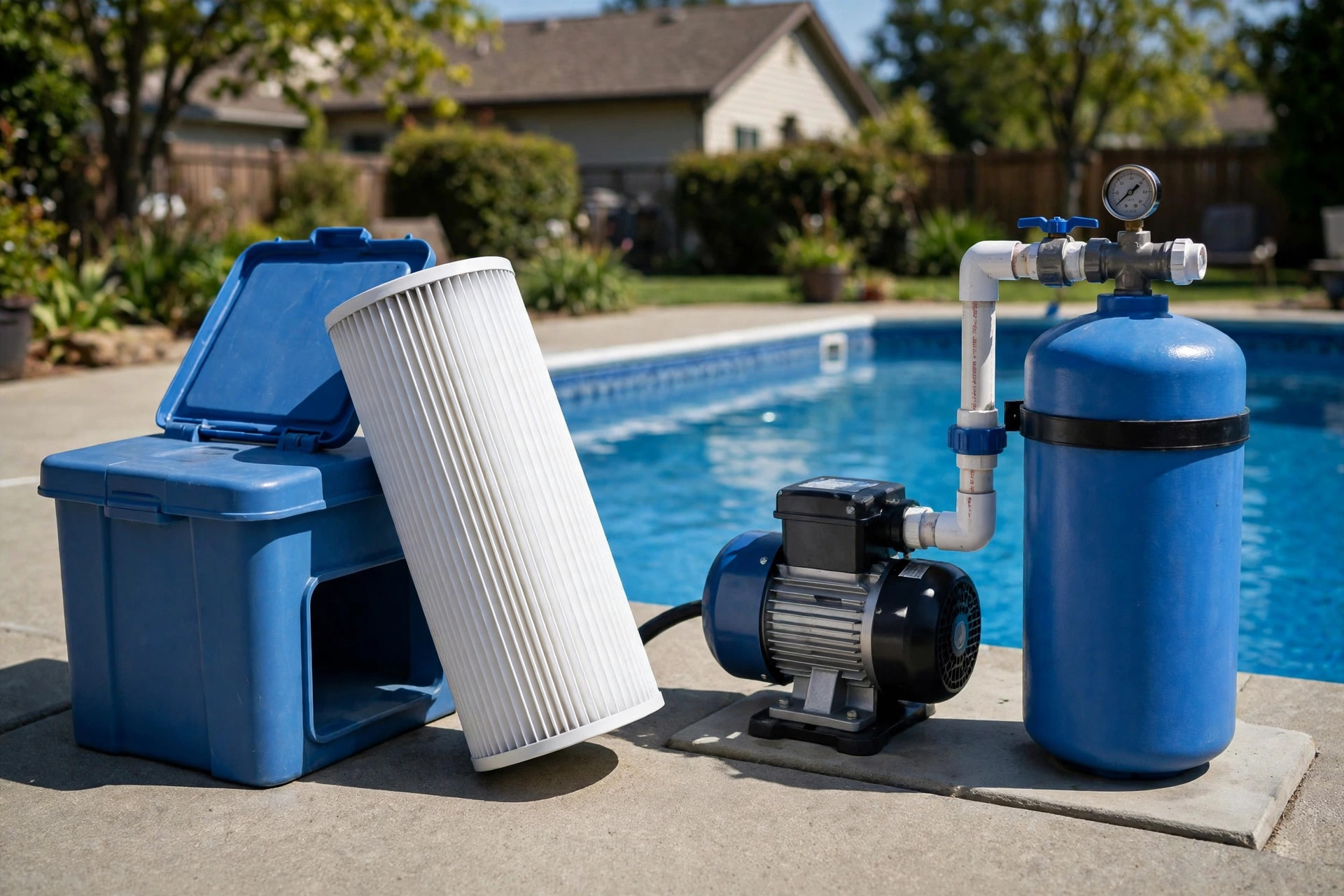

A salt water pool feels soft on the skin and gentle on the eyes. Many owners think the filter needs little care because the salt system makes its own chlorine. That is not true. The filter works just as hard in a salt water pool as in any other pool. Dirt, sand, oils, and plant matter pass through it every day. Over time they build up and slow the water down. When the filter is dirty, the salt cell works harder. Water gets cloudy. Chemicals cost more. This salt water pool filter cleaning guide walks through the full job. It covers cartridge, sand, and D.E. filters. Follow it a few times and the work becomes routine.
Why Filter Cleaning Matters in a Salt Water Pool
A pool filter traps the small debris that the skimmer misses. In a salt water pool, the salt chlorine generator adds another duty. It turns dissolved salt into chlorine as water passes through the cell. When the filter is clogged, water flow drops. Low flow means the salt cell may shut off or produce less chlorine. Algae then has a chance to take hold. Green water follows, and a green pool costs time and money to clear.
A clean filter also protects the pump. A pump that strains against a blocked filter uses more power and wears out sooner. The U.S. Environmental Protection Agency points pool owners toward efficient equipment and good water care to cut energy use and chemical waste.
Signs That It Is Time to Clean: Salt Water Pool Filter Cleaning Guide
Your filter tells you when it needs help. Watch for these signs:
– The pressure gauge on the filter tank reads 8 to 10 psi above the normal clean reading. Mark the clean reading on the gauge with a pen so you can see the change at a glance. – Water flow from the return jets feels weak. – The water looks dull or hazy, even when the chlorine level is fine. – The pump basket fills with fine dirt more often than usual. – The salt system shows a low flow warning or a check cell light.
Do not wait for all of these at once. The pressure gauge alone is enough reason to act. Clean the filter, run the system, and note the new reading.
What You Need Before You Start
Gather your tools before you open anything. You will need a garden hose with a spray nozzle, a bucket, rubber gloves, and eye protection. A soft brush helps with cartridge pleats. Keep a filter cleaner made for pool filters on hand. Simple dish soap does not remove body oils well, and it can leave foam. A spare set of O-rings and silicone-based O-ring lubricant is useful if a seal looks worn.
Turn the pump off before you touch the filter. Flip the breaker or timer so the pump cannot start on its own. If you work on a pressurized tank with the pump on, water can burst out and cause injury. Also check the water level in the pool, since the pump needs water to prime after service.
Cleaning a Cartridge Filter
Cartridge filters are common on salt water pools. They are easy to service and use no backwash water. Here is the full process.
1. Turn off the pump and close the suction and return valves if you have them. 2. Open the air relief valve on top of the tank to release pressure. Wait until the hissing stops. 3. Undo the tank clamp or lid bolts. Lift the lid straight up. 4. Pull the cartridge out by its handle. Note which way it faces so you can put it back the same way. 5. Rinse the cartridge with a garden hose. Work from top to bottom, spraying between the pleats. Do not use a pressure washer. High pressure tears the fabric and shortens the life of the cartridge. 6. For a deep clean, soak the cartridge in a bucket of water mixed with pool filter cleaner for a few hours, or overnight if it is very dirty. Rinse again after soaking. 7. Inspect the pleats. If you see tears, flat spots, or fabric that stays brown after soaking, the cartridge is worn. Most cartridges last two to three years in a salt pool. 8. Clean the inside of the tank and the O-ring groove. Rinse out loose debris. Put a thin coat of lubricant on the O-ring if it is dry. 9. Set the cartridge back in place, close the lid, and tighten the clamp evenly. 10. Start the pump. Open the air relief valve until water spurts out, then close it. Note the new pressure reading.
A cartridge deep clean twice a year is a good habit. A quick rinse every four to eight weeks keeps things steady in between. Many guides at Swim University home cover this rhythm in more detail.
Cleaning a Sand Filter
Sand filters are workhorses. They backwash, which means the filter cleans itself by sending water backward through the sand. But sand still needs full service now and then.
Start with a normal backwash. Turn off the pump. Set the multiport valve to backwash. Turn the pump on and run it until the sight glass runs clear, usually two to three minutes. Turn the pump off, set the valve to rinse, and run it for about thirty seconds. Turn the pump off again and return the valve to filter. This is the weekly or monthly routine.
A deep clean is still needed once or twice a year. Here is how:
1. Turn off the pump and set the valve to closed or winter, or plug the lines. 2. Remove the drain plug at the base of the tank and let the water out. 3. Take off the top of the valve assembly and look down at the sand. Spread the sand with your hand. If you find hard clumps, channel lines, or a crust of calcium, the sand needs work. 4. Use a pool filter sand cleaner, poured in through the top and left to soak as the label directs. Rinse well after. 5. Replace the sand every five to seven years in a salt pool. Salt and calcium wear sand down faster than plain water does. When you replace it, fill the tank half with water first so the laterals at the bottom do not crack under the falling sand.
The Pool Warehouse home and Leslie’s Pool Supplies home both carry sand, cleaners, and replacement parts, and their staff can answer sizing questions.
Cleaning a D.E. Filter
D.E. stands for diatomaceous earth, a fine powder that coats the filter grids. It traps very small particles, which is why D.E. filters give the clearest water. They take a little more care.
The routine is backwash plus fresh D.E. powder. Turn off the pump, set the valve to backwash, run until clear, then rinse. After that, add new D.E. through the skimmer with the pump running. Check your manual for the correct amount, usually one pound per ten square feet of filter area. Never run a D.E. filter without powder on the grids. The grids clog hard and fast without it.
Once a year, take the filter apart for a full clean:
1. Open the tank as you would a cartridge filter. 2. Lift out the grid assembly and hose it down. Spray between the grids. 3. Soak the grids in filter cleaner if they are stained or oily. 4. Check the fabric on each grid. Tears mean the grid must be replaced. A torn grid lets D.E. powder slip into the pool, which shows up as white dust on the pool floor. 5. Clean the tank and manifold, reassemble, and recharge with fresh D.E.
D.E. powder is a lung irritant. Wear a dust mask and gloves when you handle it. Dispose of old powder as your local rules require; it should not go down storm drains.
Salt System Notes: The Cell and the Filter Together
The filter and the salt cell are partners. A dirty cell raises pressure just like a dirty filter. When you service the filter, look at the cell too. Pull it out and check the plates. A white crust of calcium scale means the cell needs its own acid bath. Most makers suggest a mix of one part muriatic acid to four parts water, soaking only until the fizzing stops. Rinse well. Never scrape the plates with metal tools.
After cleaning both, reset the system. Run the pump at full speed for a few minutes and check that the cell reads normal flow. Test your salt level with a test strip or meter. Many salt problems that look like chemistry trouble are really flow trouble. Fix the flow first, then adjust the chemistry. Salt systems are common in hot tubs too, and filter care is much the same; owner guides from Bullfrog Spas and Hot Spring Spas follow these same steps.
Cost and Price
Filter cleaning is cheap work. A bottle of filter cleaner costs about ten to twenty dollars and lasts several cleanings. A garden hose nozzle costs little. The big costs come from neglect:
– A replacement cartridge runs from sixty to several hundred dollars, based on size. – Filter sand is cheap, often under thirty dollars a bag, but hauling it out is the real labor. – D.E. powder costs about fifteen to thirty dollars for a box that lasts a season. – A new pump or a new filter tank costs hundreds to over a thousand dollars.
Retailers like the Home Depot home and the Lowe’s home stock all of these supplies, so you can compare prices in one trip. Spending an hour on cleaning twice a year beats paying for new equipment.
A Simple Cleaning Schedule
Here is a plain schedule you can follow. It fits a salt water pool in a normal climate.
– Weekly: check the pressure gauge and the skimmer basket. – Monthly: backwash sand and D.E. filters when pressure rises 8 to 10 psi. Rinse cartridge filters with the hose. – Twice a year: deep clean. Soak cartridges, chemically clean sand, or tear down a D.E. filter. – Yearly: inspect O-rings, clamps, and the salt cell. Replace worn parts. – Every two to three years: replace cartridge elements. – Every five to seven years: replace filter sand.
Write the dates on a card and tape it inside the equipment box lid. The Family Handyman home and Bob Vila home offer printable pool checklists that fit this routine.
Safety
Pool equipment stores a lot of pressure. Always shut off the pump and open the air relief before opening a filter tank. Keep chemicals away from the filter area while you work. Muriatic acid and chlorine products must never mix; the fumes can be deadly. Store cleaners and acid in a locked, dry spot away from children and pets.
Electrical safety matters too. The pump, timer, and salt system run on house current. Keep hands and hoses away from open electrical boxes. If a wire looks chewed or a box looks corroded, call an electrician. The U.S. Consumer Product Safety Commission home posts pool safety guidance that every owner should read once a season.
FAQ
How often should I clean my salt water pool filter? Check the pressure gauge weekly. Clean or backwash when it reads 8 to 10 psi above the clean mark. A deep clean twice a year is a safe rule for all three filter types.
Does a salt water pool need a special filter? No special filter is required. Standard sand, cartridge, and D.E. filters all work with salt systems. What matters is sizing. The filter must match the pump flow rate. A filter that is too small clogs fast and strains the salt cell.
Can I use a pressure washer on a cartridge? It is not wise. A pressure washer can split the pleat fabric and ruin the cartridge. A garden hose with a firm spray nozzle is enough. Work between the pleats and take your time.
Why does my pressure rise again right after cleaning? Worn cartridges or grids, channeled or crusted sand, or a clogged return line or dirty salt cell are the usual causes. Check each in turn.
Is backwash water safe for the lawn? It is best kept out of storm drains and away from plants you care about. Salt and chemicals can harm grass and flower beds. Many towns have rules about pool discharge. Check local rules before you send backwash water anywhere off your own lot.
How do I know if my filter is sized right? Look at the flow rate on the filter label and compare it with the pump’s flow rate. The filter rating should be equal to or higher than the pump output. If you are unsure, a pool supply shop can size it from your pool gallons and pump model. Getting this right is part of good salt water pool maintenance, as The Spruce notes in its pool guides.
A Final Word
A filter is a quiet worker. It asks for little and gives back clear water. In a salt water pool, its health is tied to the health of the salt cell, the pump, and the water itself. One hour of cleaning, a few times a year, keeps the whole system in balance. Follow this salt water pool filter cleaning guide, keep your pressure readings on a card, and your pool will reward you with clean water all season long.
Related reading: see our guide on the best pool filter for saltwater systems, the honest salt water vs chlorine pool pros cons breakdown, and the full salt water pool maintenance schedule guide.
References
Bob Vila. (n.d.). Home improvement advice. https://www.bobvila.com Bullfrog Spas. (n.d.). Hot tubs and spas. https://www.bullfrogspas.com Family Handyman. (n.d.). DIY home repair and maintenance. https://www.familyhandyman.com Hot Spring Spas. (n.d.). Hot tubs and spas. https://www.hotspring.com Leslie’s Pool Supplies. (n.d.). Pool supplies and equipment. https://www.lesliespool.com Lowe’s. (n.d.). Home improvement products. https://www.lowes.com Pool Warehouse. (n.d.). Pool equipment and supplies. https://www.poolwarehouse.com Swim University. (n.d.). Pool and hot tub care guides. https://www.swimuniversity.com The Home Depot. (n.d.). Home improvement products. https://www.homedepot.com The Spruce. (n.d.). Home and garden advice. https://www.thespruce.com U.S. Consumer Product Safety Commission. (n.d.). Product safety information. https://www.cpsc.gov U.S. Environmental Protection Agency. (n.d.). Protecting human health and the environment. https://www.epa.gov
Was this guide helpful?

About David Wilson
The My Garden US editorial team writes practical, in-depth home and garden guides for American homeowners — tested advice, no fluff.
You May Also Like
Inground Pool Cover Installation Cost: What Owners Should Know
September 12, 2026 0 views
How to Install a Salt Water Chlorinator: A Step by Step Guide
April 7, 2026 0 views
How to Choose the Best Pool Chemical Test Kit Strips
January 2, 2026 0 views