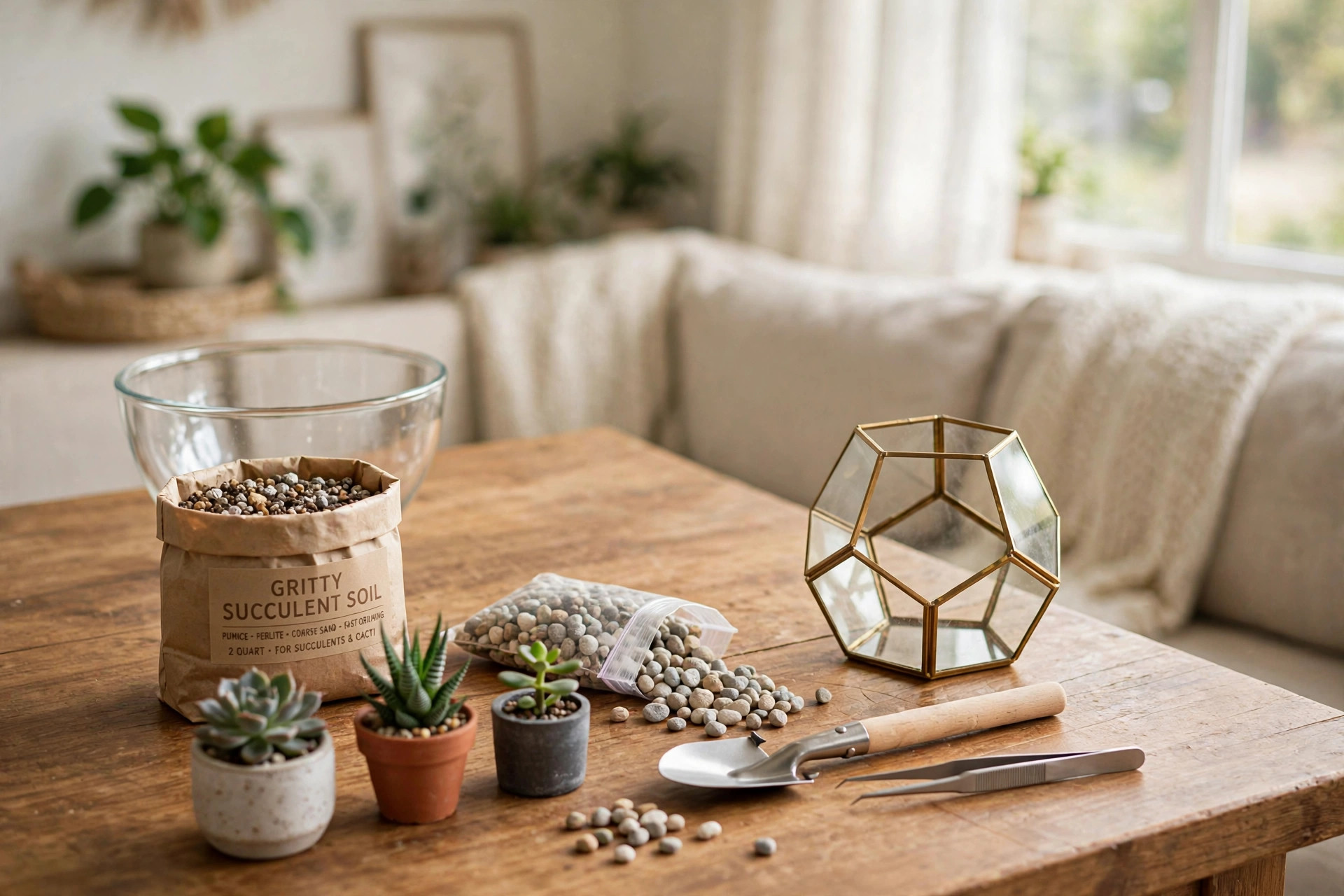

A diy terrarium kit for succulents and plants gives you everything you need to build a small glass garden on your own table. The kit comes with a glass bowl or jar, soil, stones, and small plants. You put the parts together in about an hour. When you finish, you have a living piece of decor that needs very little care.
Many people buy houseplants and lose them in a month. A terrarium is more forgiving. The glass keeps moisture near the plants. The small space makes care simple. A kit takes away the guesswork. It gives you the right parts in the right amounts. This guide explains what a kit includes, how to choose one, what it costs, and how to keep your plants alive.
Why a Terrarium Kit Matters
A terrarium is a garden under glass. It may be open or closed. An open terrarium has no lid. Air moves freely through it. A closed terrarium has a lid. Moisture stays inside and forms its own small cycle. Succulents do best in open terrariums. They come from dry lands. They need air around their leaves.
Building one from scratch can be confusing. You must pick the right soil. You must find small stones for drainage. You must buy plants that fit. A diy terrarium kit for succulents and plants solves all of this. The parts arrive in one box. The instructions tell you what to do first, second, and third. Beginners can finish with good results on the first try.
Terrariums fit almost any home. They sit on a desk, a shelf, or a windowsill. They bring green into a small apartment. They make a good gift for a friend or a child. Many craft stores such as Michaels carry small kits, and they have become a steady seller. People like crafts that stay alive after the fun of making them.
What to Look For in a Kit: Diy Terrarium Kit for Succulents and Plants
Not all kits are equal. Some have full glass bowls. Some use cheap plastic. Some include live plants. Some include only the empty container and supplies. Read the box before you buy.
Glass Quality
The container is the heart of the project. Thick glass is better than thin glass. Thin glass can crack when you press soil into it. Look for glass that is at least 3 millimeters thick. A wide mouth makes it easy to reach inside with your hands. A narrow neck looks pretty but makes planting hard for a beginner.
Soil and Drainage Layers
Succulents hate wet roots. The soil must drain fast. A good kit includes a gritty cactus or succulent mix. It also includes a layer of small pebbles or clay balls for the bottom of the jar. This drainage layer keeps water away from the roots. If a kit includes heavy potting soil, it is not made for succulents. Skip it.
Live Plants or Plants Not Included
Some kits ship with live succulents. This is handy. You start at once. But live plants can suffer in shipping. They may arrive dry or crushed. Check the reviews before you buy. Other kits sell only the hard parts. Then you buy your own plants at a nursery or a home improvement center. This takes more work. But you can pick strong, healthy plants that you like.
Tools
Many kits include small tools. A tiny shovel helps you move soil. Long tweezers help you place plants in deep jars. A small brush cleans soil off leaves. These tools are not needed, but they make the work easier. If you already own craft tools, a basic kit is enough.
Instructions
Clear instructions matter more than people think. Look for a kit with step-by-step pictures. A short plant care card is a good sign. The best makers test their guides with real beginners. Guides from craft sites like Joann and Dick Blick show how a clear guide should look.
Types of Terrarium Kits
Kits come in several shapes and styles. Each suits a different taste and skill level.
Open Bowl Kits
These are the most common. They include a wide glass bowl with no lid. Air flows freely. Succulents thrive in them. They are easy to water and easy to fix if something goes wrong. Beginners should start here.
Geometric Glass Kits
These kits include glass panels you join into shapes. The shapes may be cubes, pyramids, or diamonds. They look modern on a shelf. They take more care to build. The metal edges can be sharp, so handle them with care. Some people enjoy the build itself as a weekend DIY project.
Hanging Globe Kits
These include a glass ball that hangs from a cord or a stand. They hold one or two small plants. They look lovely in a window. They are harder to water without spilling. They suit people who have done a terrarium before.
Closed Jar Kits
These include a jar with a lid. They suit ferns and mosses better than succulents. Some people use them for succulents anyway. That is a mistake. Trapped moisture rots succulent roots. Buy a closed kit only if you want moisture-loving plants.
Full Craft Kits for Kids
Some kits are made for children. They include a plastic container instead of glass. They include bright stones and toy figures. These are safe for small hands. They are a fine first craft for a child. An adult should still help with the planting.
If you enjoy small home crafts, you may also like a diy candle making kit for beginners usa or a diy bath bomb kit for gifts and crafts. These crafts need the same patience and care.
How to Build Your Terrarium Step by Step
Set aside about one hour. Work on a table covered with newspaper. Keep all parts within reach.
First, wash the glass container with warm water. Dry it fully. Any soap film left inside can harm plants.
Second, pour in the drainage layer. Spread pebbles or clay balls about one inch deep across the bottom. Level it with your hand or a small spoon.
Third, add a thin layer of activated charcoal if the kit includes it. Charcoal keeps the soil fresh. It is common in terrarium kits. You can find more on it through garden suppliers such as Gardener’s Supply.
Fourth, add the soil. Pour in the succulent mix to a depth of two to three inches. Make small hollows where each plant will sit.
Fifth, remove each plant from its pot. Shake off loose soil from the roots. Be gentle. Succulent roots are fine and break easily. Place each plant in its hollow. Press soil around the base.
Sixth, add decoration. Small stones, sand patterns, and tiny shells give the terrarium a finished look. Keep decorations light. Do not bury the plant stems.
Seventh, water lightly. Use a spray bottle or a small spoon. Add just enough to dampen the soil. Succulents need far less water than you think. Let the soil dry fully between waterings.
Place the finished terrarium where it gets bright light. An east or south window is ideal. Avoid harsh afternoon sun in summer. Glass can focus sunlight and burn leaves.
Cost and Price
A diy terrarium kit for succulents and plants usually costs between 20 and 60 dollars. Price depends on size, glass quality, and whether live plants are included.
Basic small kits with a glass bowl, soil, and stones cost 20 to 30 dollars. These are a good value for a first try. Mid-range kits with larger glass and live plants cost 35 to 50 dollars. Large geometric kits with many plants can cost 50 to 80 dollars.
Buying parts on your own is often cheaper if you make many terrariums. A bag of succulent soil and a bag of pebbles cost a few dollars each. But for one project, a kit saves time and waste. You use up all the parts. Nothing sits in a closet.
Watch for hidden costs. Some kits need you to buy plants separately. Add 10 to 20 dollars for three small succulents from a nursery such as Burpee. Some kits need a spray bottle. Most homes already have one.
Seasonal sales help. Craft chains lower prices after holidays. A diy wreath making kit for front door decor follows the same sale cycle. Buy in January or July for the best deals.
Care and Upkeep
Succulent terrariums are easy to keep. They are not care-free. A few simple habits keep them healthy for years.
Light matters most. Give your terrarium bright, indirect light for six hours a day. A windowsill works well. If leaves stretch tall and pale, the plant needs more light. Move it closer to the window. If leaves turn brown at the edges, the sun may be too strong. Move it back a foot.
Water sparingly. In most homes, once every two weeks is enough. In winter, once a month is enough. Touch the soil first. Water only when it is fully dry. Pour a small amount at the base of each plant. Never pour water on the leaves. Standing water on leaves can cause rot.
Air flow helps. Even open terrariums can trap damp air. Keep the room ventilated. Do not place the terrarium near a heating vent. Hot dry air dries soil too fast. Do not place it near an air conditioner for the same reason.
Remove dead leaves. Old leaves dry up and fall off. Pick them out with tweezers. Dead leaves hold moisture and can start rot. Check your plants once a week. A quick look takes one minute.
Feed lightly. Succulents need little food. A weak cactus fertilizer once or twice a year is enough. Use half the strength shown on the label. More food does not make them grow faster. It can burn the roots.
Repot when crowded. After a year or two, plants may outgrow the bowl. Move them to a larger container. Or divide them into two terrariums. This is a good time to refresh the soil. Fresh soil gives the roots new room to grow. Home guides from This Old House and Bob Vila cover repotting basics in plain terms.
Safety
Terrarium kits are safe for most homes. A few points deserve care.
Glass can break. Keep terrariums away from the edge of tables. Keep them out of reach of small children and pets. If glass breaks, clean it up at once. Small shards hide in carpet.
Some succulents have sharp edges. Agave leaves can cut skin. Euphorbia plants have a milky sap that irritates eyes and skin. Wear gloves when you handle spiny or unknown plants. Wash your hands after planting.
Soil and stones can be a choking hazard for toddlers. Keep small parts off the floor during the build. Store extra kits on a high shelf.
Fertilizer and charcoal are mild chemicals. Keep them away from food and drink. Follow the label. Use them in a ventilated room.
Frequently Asked Questions
How long does a succulent terrarium last?
A well-made terrarium can last for years. Many last three to five years with simple care. Plants grow slowly in a small bowl. You may need to trim or repot them once a year. Replace the soil every two years to keep it fresh.
Can I use a kit without buying live plants?
Yes. Some kits include only the container, soil, and stones. You buy plants on your own. This lets you pick plants you like. Small succulents cost 3 to 6 dollars each at most garden centers. The Spruce has plant care sheets that help you pick the right ones for your light. See The Spruce for beginner plant lists.
Do succulents need a lid on the terrarium?
No. Succulents do best in open terrariums. A lid traps moisture. Trapped moisture rots their roots. Leave the top open. Air flow keeps them healthy.
Why are my succulent leaves turning soft and clear?
Soft, clear leaves mean too much water. The roots are sitting in wet soil. Stop watering. Let the soil dry out fully. If the stem is mushy, the plant may be lost. Remove it so rot does not spread to other plants. Next time, water half as often.
Can I keep a terrarium in a room with no windows?
Succulents need light. A room with no windows is not enough. You can add a small grow light. A simple desk lamp with a daylight bulb works. Keep it on for 10 to 12 hours a day. Without light, the plants will stretch and fade.
Is a terrarium kit a good gift?
Yes. It is one of the best craft gifts. The receiver gets a fun hour of building and a living gift that lasts. Kits for kids use plastic instead of glass. Kits for adults use real glass and live plants. Wrap the box with care if it holds glass.
A Short Final Word
A diy terrarium kit for succulents and plants is a simple way into a rewarding hobby. You learn how plants grow. You make something with your hands. You end up with a small green world on your shelf. Choose a kit with good glass, gritty soil, and clear instructions. Build it with care. Water it less than you think you should. Your terrarium will thank you with years of quiet green life.
References
Blick Art Materials. (n.d.). Art and craft supplies. https://www.dickblick.com Bob Vila. (n.d.). Home improvement advice. https://www.bobvila.com Burpee. (n.d.). Seeds, plants, and gardening supplies. https://www.burpee.com Family Handyman. (n.d.). DIY home repair and maintenance. https://www.familyhandyman.com Gardener’s Supply Company. (n.d.). Gardening tools and supplies. https://www.gardeners.com JOANN. (n.d.). Fabric and craft supplies. https://www.joann.com Michaels. (n.d.). Arts and crafts supplies. https://www.michaels.com The Home Depot. (n.d.). Home improvement products. https://www.homedepot.com The Spruce. (n.d.). Home and garden advice. https://www.thespruce.com This Old House. (n.d.). Home renovation guidance. https://www.thisoldhouse.com
Was this guide helpful?

About David Wilson
The My Garden US editorial team writes practical, in-depth home and garden guides for American homeowners — tested advice, no fluff.
You May Also Like

DIY Ornament Kit for Christmas Tree Crafts
September 12, 2026 0 views
The Best Craft Storage Drawers for Beads and Findings
May 18, 2026 0 views
The Best Fabric Markers for T Shirt Decorating: A Complete Guide
July 17, 2026 0 views