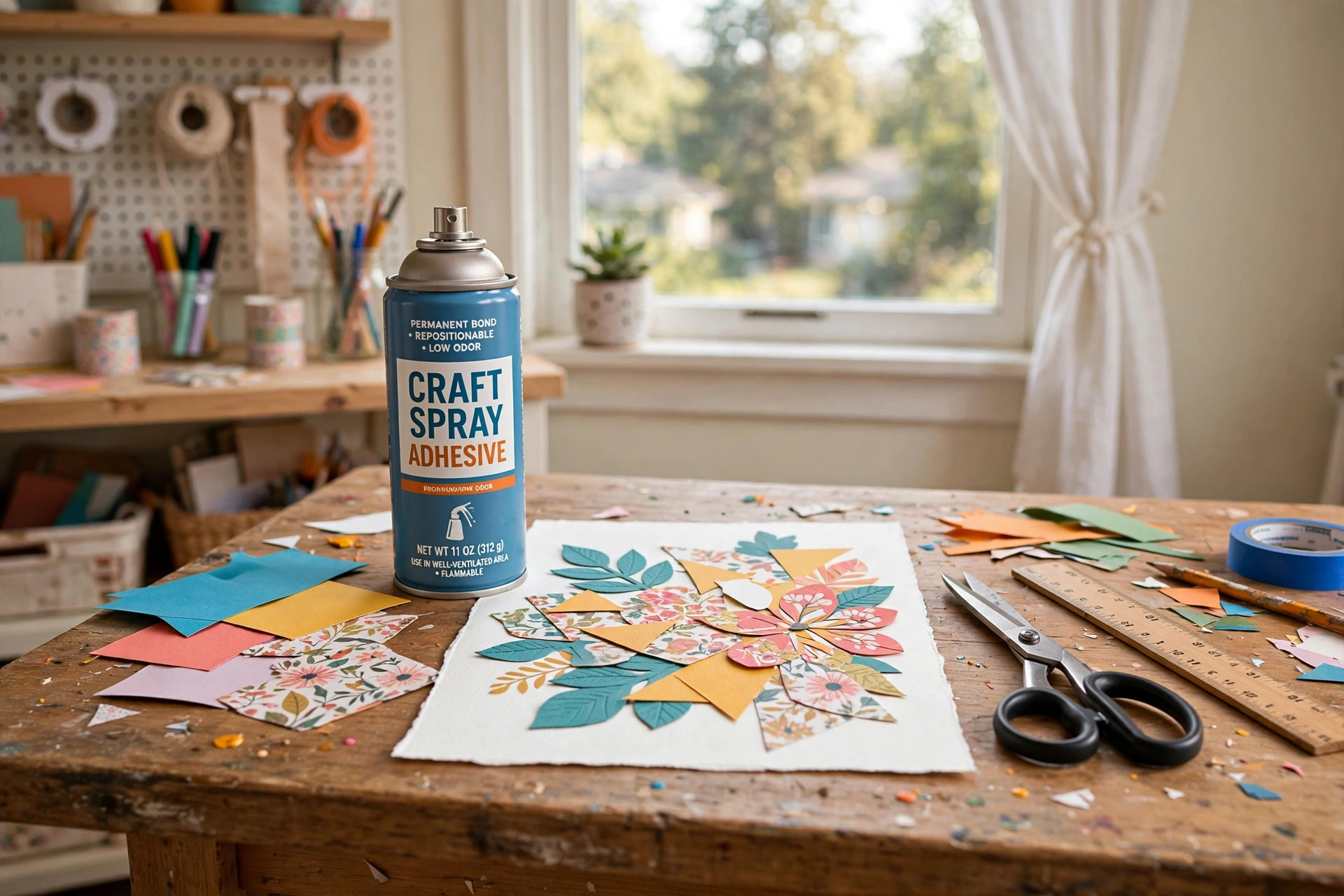

A good paper project depends on the bond that holds it together. Glue sticks leave streaks. Liquid glue leaves lumps and wet spots. Tape shows at the edges. Spray adhesive solves these problems. A light mist lays down a thin, even film of glue across the whole sheet. The result is flat, smooth, and clean. This guide explains how to find the best craft spray adhesive for paper projects, what to look for, and how to use it well.
Why the Right Spray Adhesive Matters
Paper is thin and light, but it is also unforgiving. A heavy coat of glue soaks through tissue paper and thin printer paper. It leaves dark stains that never fade. A weak glue lets edges lift within days. The right spray adhesive avoids both problems. It puts down just enough glue to hold, and no more.
Crafters use spray adhesive for scrapbook pages, paper cards, collage art, paper quilts, decoupage, and party decorations. In each case, the bond must be smooth. A scrapbook page must lie flat in an album. A greeting card must open and close without pages sticking. A wall poster must stay smooth for months. The best craft spray adhesive for paper projects handles all of these jobs when you choose the right type and apply it with care.
Many crafters first buy spray adhesive in a hardware aisle, where the cans are made for foam, metal, and wood. Those products can be too strong for paper. They soak through and wrinkle thin sheets. A spray adhesive made for crafts is formulated for light materials. It has a finer mist and a lower solvent load. For paper work, always choose a product labeled for crafts, paper, or photo-safe use.
What to Look for When You Choose: Best Craft Spray Adhesive for Paper Projects
Bond Strength and Tack
Bond strength tells you how firmly the glue holds. For paper, medium strength is usually enough. Paper is light, so it does not need the heavy grip used for carpet or upholstery. A medium-strength craft spray holds cardstock, poster board, construction paper, and tissue to backing boards without trouble.
Tack is the first grab of the glue. High-tack sprays grab at once and do not let go. Low-tack sprays let you lift and move the paper. For a scrapbook page, a light or medium tack is best. It lets you slide a photo into place before you press it down. For a poster that must stay up for a year, a firmer tack is better. Match the tack to the job.
Open Time and Repositioning
Open time is the window after spraying during which you can still move the paper. Short open times run from a few seconds to a minute. Long open times run from five to fifteen minutes. If your project needs exact placement, choose a longer open time. A product labeled repositionable gives you the most room to fix mistakes. Once the glue cures, the bond becomes firm.
Suitability for Paper Types
Not all paper takes spray glue the same way. Heavy cardstock and poster board handle most craft sprays well. Thin printer paper, tissue paper, and newsprint need a lighter touch and a finer mist. Glossy photo paper can react with some solvents and may show spotting. If you work with photos, use a spray marked photo-safe or acid-free. Check the label for the words paper, craft, and photo safe before you buy.
Spray Pattern and Can Control
A good can gives a fine, even mist. Wide fan patterns cover large sheets fast. Narrow patterns work for small cards and trim. Some cans clog at the nozzle. A clogged nozzle spits drops instead of mist, and the drops soak through paper. Look for cans with a nozzle you can wipe clean and store upside down. Many home improvement stores carry craft-grade spray adhesives, and staff can point you to the lighter formulas.
Fumes and Ventilation
Spray adhesive contains solvents. The fumes are strong and can irritate eyes and lungs. Always spray in a room with open windows or a fan blowing out, or work outside. Some crafters prefer low-odor formulas. These still need ventilation, but they smell less. People with asthma or allergies should wear a simple mask made for spray work. Keep cans away from children and pets.
Types of Craft Spray Adhesives
Permanent Spray Adhesive
Permanent spray gives a firm bond that sets fast and holds for years. It suits posters, signs, mounting prints on foam board, and book covers. Once it cures, you cannot lift the paper without tearing it. Use permanent spray only when you are sure of the placement. It is the wrong choice for a layout you may want to change.
Repositionable Spray Adhesive
Repositionable spray stays tacky for a while after spraying. You can lift and shift the paper several times before the bond firms up. It is ideal for scrapbooks, collages, and templates. The final bond is still strong enough for display, but you get time to make it right. Many crafters keep one can of repositionable spray as their everyday glue.
Photo-Safe and Acid-Free Spray
Paper keepsakes like scrapbooks and family albums need glue that will not yellow or eat away at paper over time. Acid-free spray adhesive is made for this work. It will not stain photos or fade ink. If your project holds memories you want to keep for decades, this is the type to buy. It costs a little more, but it protects the work.
Low-Tack Basting Spray
Low-tack spray gives a very light hold. Quilters and paper-piecing crafters use it to baste layers before stitching. It washes or peels away when you no longer need it. For paper projects, it works well for stencils and temporary masks. The paper lifts off cleanly with no residue.
How to Apply Spray Adhesive to Paper
Good results come from method, not just product. Set up a work area first. Lay down newspaper or a drop cloth to catch overspray. Put the paper on a flat surface. Shake the can well for a full minute. Hold the can six to eight inches from the paper. Spray in steady, overlapping passes. Move side to side at a constant speed. A single light coat is enough for most paper work.
Let the sprayed paper rest for ten to thirty seconds, or as the label directs. Then lay it onto the backing or mount. Start from the center and smooth outward with your hand or a flat ruler. This pushes air bubbles to the edges. If a bubble forms, lift the edge nearest to it and smooth again. Work before the open time runs out.
For thin tissue or newsprint, spray the backing instead of the tissue. Thin paper buckles when wet glue hits it directly. Spraying the board first lets you lay the tissue onto a thin, even film. It stays smooth and flat.
Clean the nozzle after each use. Turn the can upside down and spray until only air comes out. Wipe the nozzle with a cloth. A clean nozzle gives a clean mist next time. Many craft retailers sell small practice pads and replacement nozzles, and sewing and craft shops often stock the lighter formulas meant for paper and fabric.
Cost and Price
Craft spray adhesive is modest in price. Small cans of three to six ounces cost about four to eight dollars. Large cans of eleven to fourteen ounces cost about eight to fourteen dollars. Repositionable and acid-free formulas sit at the higher end of each range.
One can covers many projects. A single light coat over a standard sheet of paper uses very little product. A large can can mount dozens of scrapbook pages or a whole wall of party signs. For this reason, cost per project is low even for the better brands.
Buy the size you will use within a year. Spray cans lose pressure over time. A half-used can stored for two years may spray weakly or clog. If you craft often, the large can saves money. If you craft a few times a year, the small can stays fresh. Online marketplaces and big-box stores let you compare can sizes and prices side by side before you buy.
Care and Upkeep
Store cans upright in a cool, dry place. Keep them away from heat, radiators, and direct sun. Do not store them in a hot car or garage in summer. Heat can raise the pressure inside the can and cause leaks.
Check the shelf life on the label. Most spray adhesives keep for one to two years unopened. Once opened, use within twelve months for best results. Write the date you opened the can on the label with a marker. This simple habit tells you when a can is too old.
Projects mounted with spray adhesive need little upkeep. Keep them out of direct sun and damp rooms. Sun fades paper and weakens glue over time. Humidity can soften bonds and cause edges to lift. A dry, shaded wall or album keeps paper projects looking good for years.
Safety
Read the label before the first spray. Work in a space with good airflow. Open two windows to make a cross breeze, or work outdoors. Keep the spray away from flames, pilot lights, and cigarettes. The contents are flammable.
Wear a dust or spray mask if you spray often or for long sessions. Wear gloves to keep glue off your hands. If glue gets on your skin, rub it off with cooking oil, then wash with soap and water. If spray gets in your eyes, rinse with clean water for several minutes and seek care if irritation lasts.
Store cans where children cannot reach them. Do not puncture or burn a can, even when empty. Dispose of empty cans as your town directs. Many towns take aerosol cans in household hazardous waste pickups. Government safety pages and family advice sites explain safe use of household sprays in plain terms.
Frequently Asked Questions
Will spray adhesive wrinkle thin paper?
It can, if you spray too much or hold the can too close. Use a light coat from six to eight inches away. For very thin tissue, spray the backing board instead of the paper. Let the glue rest a few seconds before you lay the paper down. These steps keep the paper flat.
Is spray adhesive safe for scrapbook photos?
Only if the label says photo-safe or acid-free. Ordinary craft sprays may yellow photos over time. Photo-safe sprays are made to protect prints and paper keepsakes. They cost a little more, and they are worth it for work you want to keep.
Can I reposition paper after spraying?
Yes, if you use repositionable spray. It stays tacky for five to fifteen minutes, and you can lift and shift the paper in that window. Permanent spray does not allow this. Read the label to know which type you have.
How long does the bond last?
A proper bond from a craft spray adhesive lasts for years indoors. Mounted posters and scrapbook pages can stay flat for a decade in dry conditions. Damp rooms and direct sun shorten the life of the bond. Keep finished work dry and shaded.
What should I do if the nozzle clogs?
Turn the can upside down and spray until only air comes out. Wipe the nozzle with a cloth dampened with mineral spirits or rubbing alcohol. If it still spits, soak the nozzle cap in warm soapy water for ten minutes. Some brands sell replacement caps.
Is spray adhesive better than a glue stick for paper projects?
For large areas, yes. Spray adhesive covers a whole sheet in an even film with no streaks or lumps. Glue sticks work well for small cards and quick fixes, but they leave uneven ridges on big sheets. A hot glue gun suits raised or heavy items, while a paper cutter and a good pair of craft scissors handle the cutting side of the work.
Final Word
The best craft spray adhesive for paper projects is a light, craft-grade formula with a fine mist and a tack matched to your work. Permanent spray holds posters and signs for years. Repositionable spray forgives mistakes in scrapbooks and collages. Acid-free spray protects photos and keepsakes. Buy the right type, spray lightly, and let the glue rest before you press. Simple habits give smooth, lasting results every time.
See Blick Art Materials for more detail.
References
Amazon. (n.d.). Online shopping. https://www.amazon.com Blick Art Materials. (n.d.). Art and craft supplies. https://www.dickblick.com Consumer Reports. (n.d.). Product reviews and ratings. https://www.consumerreports.org Good Housekeeping. (n.d.). Product reviews and home advice. https://www.goodhousekeeping.com JOANN. (n.d.). Fabric and craft supplies. https://www.joann.com Michaels. (n.d.). Arts and crafts supplies. https://www.michaels.com Target. (n.d.). Retail store. https://www.target.com The Home Depot. (n.d.). Home improvement products. https://www.homedepot.com
Was this guide helpful?

About Emily Rodriguez
The My Garden US editorial team writes practical, in-depth home and garden guides for American homeowners — tested advice, no fluff.
You May Also Like
The Best Jewelry Pliers Set for Wire Wrapping: A Plain Guide for Beginners
August 21, 2026 0 views
A Plain Guide to the DIY Photo Frame Kit for Wall Gallery Crafts
August 30, 2026 0 views
Best Craft Knife for Vinyl Weeding Cricut: A Plain Buyer’s Guide
August 18, 2026 0 views