
Introduction
A good fan can make the difference between a restless night and sound sleep. The search for the best tower fan for bedroom reviews usa buyers can trust leads many shoppers to the same few questions. How quiet is it? How strong is the airflow? Will it fit beside the bed? This guide answers those questions in plain terms.
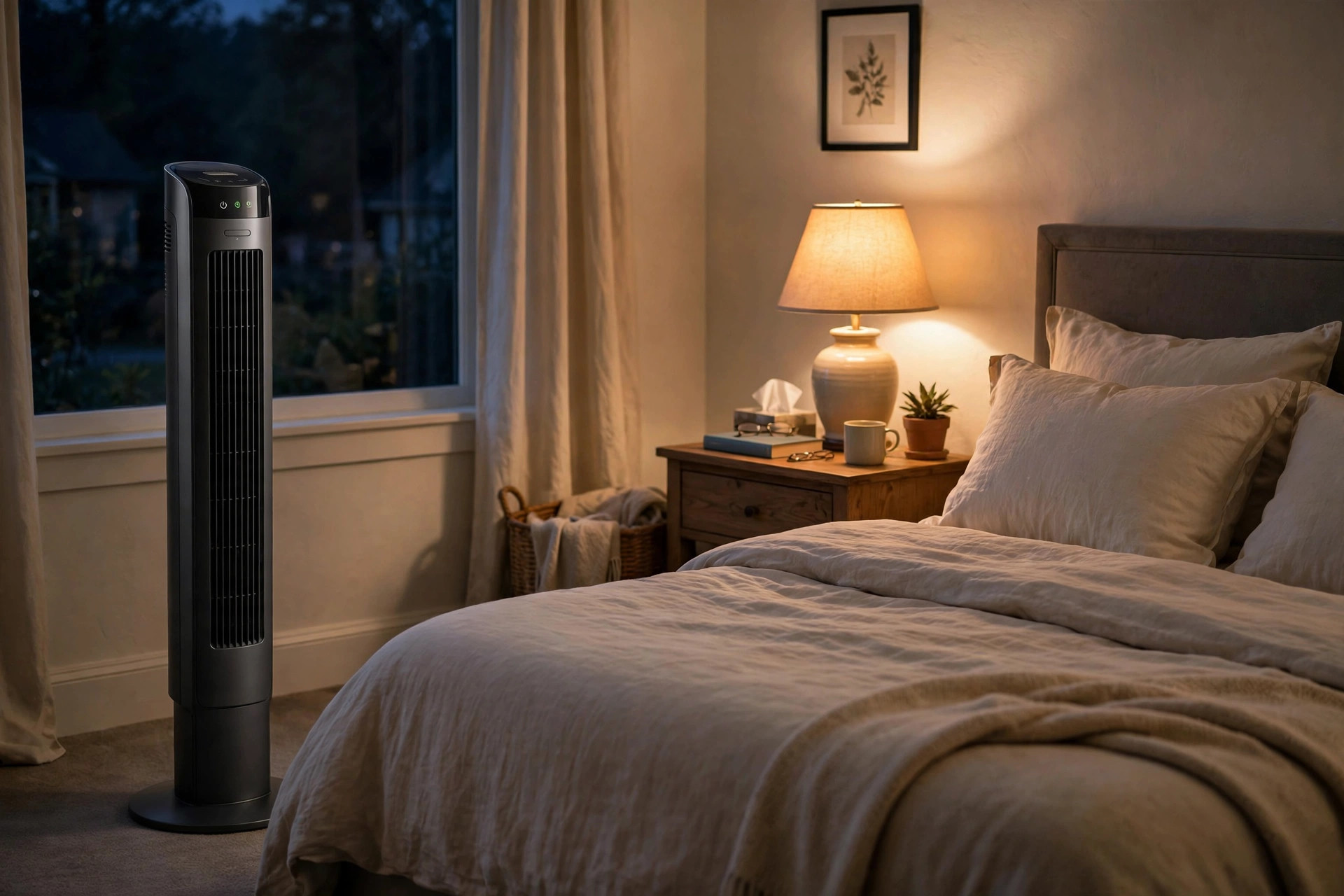
A tower fan is a tall, narrow fan that stands on the floor. It moves air across a wide room with a slow side-to-side swing. Many people prefer it in the bedroom because it takes little floor space and runs with a soft, steady hum. Reviews from American buyers point again and again to three things that matter most: low noise, strong air movement, and simple controls.
In this article, we walk through why a tower fan suits the bedroom, what features to compare, the types on the market, typical costs, care and upkeep, and safety. We close with answers to common questions. By the end, you will know what to look for when you read the best tower fan for bedroom reviews usa stores and magazines publish.
Why a Tower Fan Matters in the Bedroom: Best Tower Fan for Bedroom Reviews Usa
Sleep experts agree that a cool, well-ventilated room helps the body rest. A tower fan moves air over the skin, which cools the body and keeps the room from feeling still and warm. It does this at low cost and with little fuss.
Tower fans have several clear advantages over older box fans and pedestal fans. The slim shape fits in tight corners. There are no exposed blades, which is reassuring for families with small children or pets. Most models offer a night mode that dims the lights and drops the noise to a whisper. These are the details that show up most often in the best tower fan for bedroom reviews usa shoppers leave online.
A tower fan is not an air conditioner. It cannot lower the temperature of a room on its own. But it can make a warm room feel cooler, and it can work with your existing heating and cooling system to keep air in motion. Home comfort guides at ENERGY STAR explain that moving air allows you to set the thermostat a few degrees higher in summer and still feel comfortable, which saves energy.
What to Look For When You Choose
Reading the best tower fan for bedroom reviews usa sources publish will show the same set of features again and again. Here is what each one means and why it matters.
Noise Level
Noise is the first thing to check. A fan that sounds fine in the store can feel loud at midnight. Look for a noise rating measured in decibels. The quietest tower fans run near 25 to 30 decibels on their lowest setting, about as loud as a soft whisper. Anything under 40 decibels on low speed is usually fine for sleep.
Airflow and Coverage
Airflow is measured in cubic feet per minute, or CFM. A bedroom of average size, about 150 square feet, needs a fan with enough reach to move air across the whole room. A wide oscillation angle, often 90 degrees or more, helps the fan cover the full space without turning the room into a wind tunnel.
Speed Settings and Modes
Most tower fans offer three to five speeds. Extra modes add value. Night mode or sleep mode lowers noise and turns off display lights. A natural breeze mode varies the speed to feel like a soft outdoor wind. A timer lets you set the fan to switch off after one to eight hours.
Controls and Remote
A remote control is a small thing that matters at night. It lets you change the speed or switch the fan off without leaving the bed. Some newer fans pair with a phone app or a smart speaker. These extras are nice, but they should not replace the basics of quiet running and solid airflow.
Height and Stability
A taller fan, around 40 to 48 inches, spreads air higher in the room. A wide, weighted base keeps the fan steady. Check that the fan feels solid when it swings. Reviews often mention wobble as a sign of weak build quality.
Display and Lights
Bright lights can disturb sleep. Choose a model with a dim display or a night mode that darkens the panel. This feature appears in many of the best tower fan for bedroom reviews usa readers rate highest.
Types of Tower Fans on the Market
Tower fans come in a few main styles. Knowing the types helps you match a fan to your needs.
Standard oscillating tower fans are the most common. They blow air through a vertical slot and swing side to side. They are simple, affordable, and widely available.
Bladeless tower fans use an enclosed motor to push air through a smooth ring or slot. They cost more, but they are often quieter and very easy to clean. There are no blades to dust.
Tower fans with air purification add a filter to the intake. They clean the air while they cool it. These suit bedrooms in homes near busy roads or in houses with pets, and they pair well with a whole-house humidifier in dry winter months. Home advice pages at This Old House often group air-cleaning fans with other comfort upgrades for the home.
Smart tower fans connect to a phone app or a voice assistant. You can set schedules, check the room temperature, and adjust the fan from another room. The electronics add cost, and the smart features need a stable home network.
Heater and fan combos work in two modes: cooling in summer and gentle heat in winter. These are useful in small bedrooms where you want one unit for year-round comfort, much like a water vapor fireplace that adds warmth without a real flame. Major heating makers such as Carrier and Trane focus on full home systems, but the same ideas about airflow and room size apply when you pick a portable unit.
Cost and Price Ranges
Tower fans for the bedroom fall into three price groups.
Budget models, 30 to 60 dollars. These fans are simple, with three speeds and a remote. They move air well but may run louder on high speed. They suit guest rooms or buyers who only need a fan for a few weeks a year.
Mid-range models, 60 to 120 dollars. This is where most of the best tower fan for bedroom reviews usa shoppers recommend land. You get lower noise, more speeds, a timer, night mode, and a sturdier base. Build quality is clearly better than budget models.
Premium models, 120 to 300 dollars and up. These include bladeless designs, smart controls, air purification, and very quiet motors. The difference in noise between a 40-dollar fan and a 200-dollar fan is real and easy to hear.
Running cost is low. A tower fan draws about 40 to 60 watts, far less than an air conditioner or a whole-home unit. Readers often compare this with the installed cost of a multi-zone mini split, which is far higher but cools the entire house. Running one tower fan all night costs only a few cents in most states. The U.S. Department of Energy notes that fans are among the cheapest ways to keep a room comfortable.
Care and Upkeep
A tower fan needs little care, but a small routine keeps it running well for years.
Dust the housing weekly. Wipe the outside with a damp cloth. Dust on the intake grille blocks airflow and makes the motor work harder.
Clean the intake vents monthly. Most tower fans have a removable rear panel or filter screen. Wash it in warm water with mild soap, let it dry fully, and put it back. For bladeless models, wipe the slot with a cloth.
Store it well in winter. If you put the fan away in the cold months, keep it upright in a dry place. A cloth cover keeps dust out. Do not wrap the cord tightly around the body, which can crack the wire over time.
Check the base. Once a season, make sure the base screws are tight. A loose base causes the wobble that many bad reviews complain about. Handyman guides at Family Handyman list loose fasteners among the simplest fixes in the home.
Replace filters on schedule. For tower fans with air filters, follow the maker schedule, usually every three to six months. A clogged filter cuts both airflow and air quality.
Safety
Tower fans are among the safest portable fans because the moving parts sit inside the housing. Still, a few rules keep the bedroom safe.
Keep the cord clear. Run the cord along the wall so no one trips on it in the dark. Do not run it under a rug, where it can overheat.
Give it space. Leave at least a few inches of open air around the intake and outlet. Blocking the vents makes the motor strain and shortens its life.
Do not use a damaged cord. If the cord is frayed or the plug feels loose, stop using the fan until it is repaired or replaced.
Use the timer at night. A timer that switches the fan off in the early morning hours saves power and avoids waking you with a chill. Many night-mode models combine the timer with dimmed lights.
Keep small items away. Papers, curtains, and loose fabric should sit away from the intake. Bedding should not touch the fan when it swings.
Frequently Asked Questions
Are tower fans good for the bedroom? Yes. They are made for exactly this use. They take little space, run quietly on low settings, and many have night modes that darken the display. That is why they rank so high in the best tower fan for bedroom reviews usa buyers write.
How loud is a quiet tower fan? The quietest models measure about 25 to 30 decibels on low speed. That is close to a whisper. Before you buy, read reviews that mention the fan by name and the word “sleep.” Real users report noise better than any box label.
Do tower fans use much electricity? No. Most use 40 to 60 watts, about the same as a small lamp. Running one every night for a month adds only a small amount to the power bill.
Can a tower fan replace an air conditioner? It depends on the heat. In mild summers, a tower fan can be enough in the bedroom, especially at night. In very hot climates, a fan works best with an air conditioner. The fan moves cool air around so the room feels cooler at a higher thermostat setting.
How do I keep a tower fan quiet? Place it on a level floor, away from walls that can echo the hum. Clean the vents so the motor does not strain. Run it on a lower speed once the room cools down. A rubber mat under the base can cut vibration noise.
What size tower fan does a bedroom need? For most bedrooms, 40 to 48 inches tall is ideal. The fan should reach above the bed line so the air flows over, not under, the covers. For a very small room, a shorter fan still works if it has wide oscillation.
A Short Final Word
The best tower fan for bedroom reviews usa shoppers rely on share a pattern. They point to quiet motors, steady airflow, simple night controls, and solid bases. Price matters less than these basics. Start with your room size and your noise limit, then compare two or three models that meet them. Read a handful of recent reviews from people who use the fan to sleep. Clean the fan when you buy it home, give it room to breathe, and it should give you years of cool, quiet nights. For wider home comfort questions, makers like Lennox and Rheem publish plain-language guides to airflow and home systems, and specialty fan makers such as Vornado and Honeywell Home offer deep product detail on their own tower fan lines.
References
Carrier. (n.d.). Heating and cooling systems. https://www.carrier.com ENERGY STAR. (n.d.). Energy efficient products. https://www.energystar.gov Family Handyman. (n.d.). DIY home repair and maintenance. https://www.familyhandyman.com Honeywell Home. (n.d.). Home comfort and controls. https://www.honeywellhome.com Lennox. (n.d.). Heating and cooling systems. https://www.lennox.com Rheem. (n.d.). Heating, cooling, and water heating. https://www.rheem.com This Old House. (n.d.). Home renovation guidance. https://www.thisoldhouse.com Trane. (n.d.). Heating and air conditioning. https://www.trane.com U.S. Department of Energy. (n.d.). Energy efficiency and renewable energy. https://www.energy.gov Vornado. (n.d.). Air circulation products. https://www.vornado.com
Was this guide helpful?

About David Wilson
The My Garden US editorial team writes practical, in-depth home and garden guides for American homeowners — tested advice, no fluff.
You May Also Like

Smokeless Fire Pit Reviews 2026 USA: What the Reviews Say and How to Choose
April 28, 2026 0 views
Best Thermal Curtains for Winter Reviews USA
April 26, 2026 0 views
Best Geothermal Installers Near Me Reviews: A Homeowner’s Guide
February 2, 2026 0 views