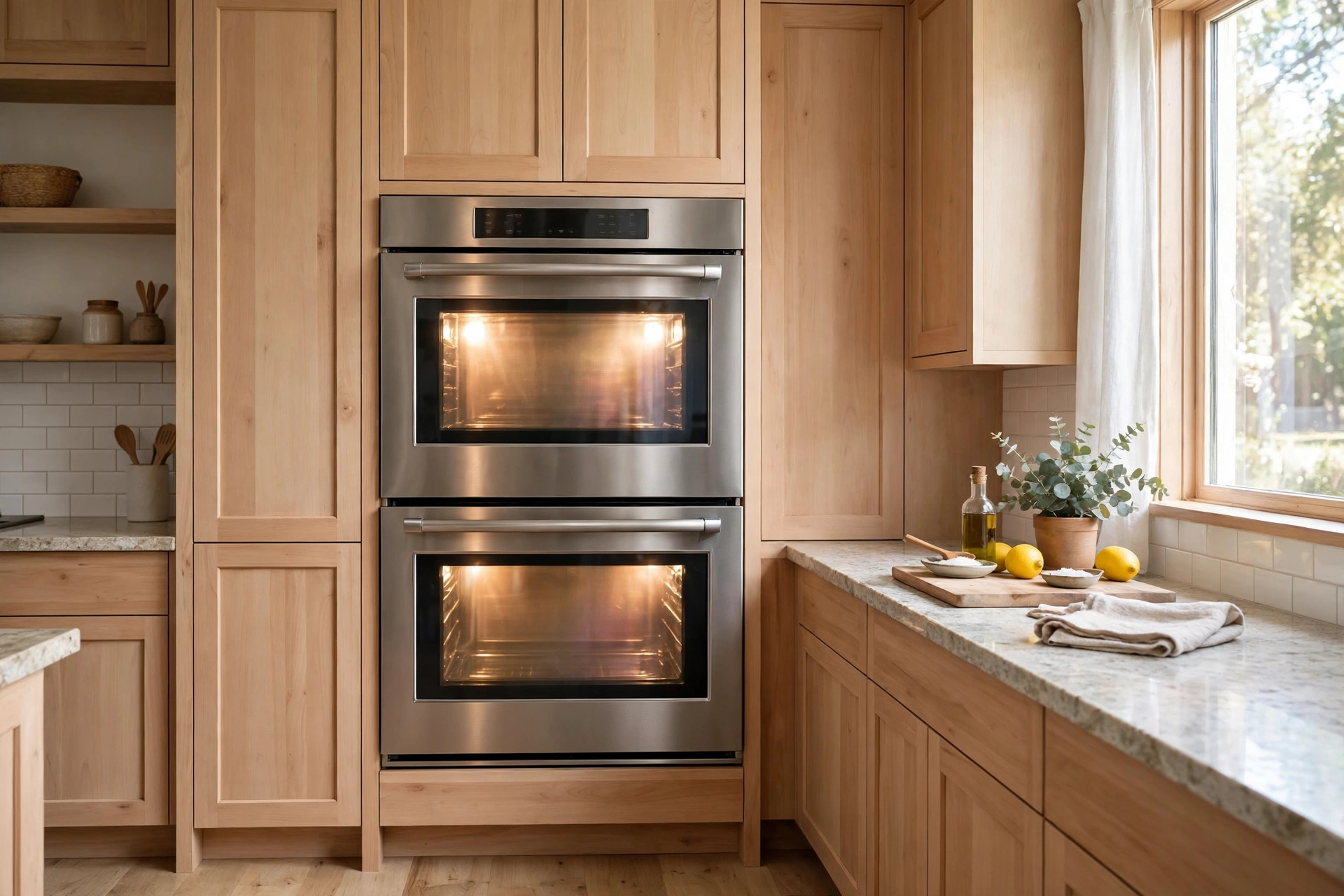
A double wall oven gives a cook two ovens stacked in one cabinet. This double wall ovens american homes guide explains what these units are, how they fit into the typical kitchen, and what to weigh before buying one. Many families in the United States choose them during a remodel. Others add them when they want more cooking space. Either way, a clear plan helps the choice turn out well.
Why Double Wall Ovens Matter
More Cooking Room
A single oven often feels too small at holidays. A cook must bake the turkey first, then the pies, then the rolls. With a double wall oven, two dishes bake at two different heat settings at the same time. The roast can sit low and slow in one oven. The dessert can bake fast and hot in the other. This matters most in large families and in homes where guests come often.
Better Use of Kitchen Space
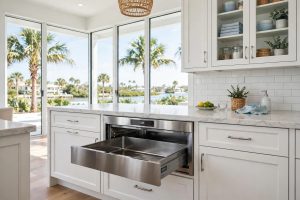
A wall oven sits at eye level in a tall cabinet. The cook no longer bends low to lift a heavy pan. The space below a cooktop stays free for drawers or a microwave drawer. Many buyers who read a microwave drawer units buying guide usa plan the two appliances side by side. The result is a neat cooking wall with all tools within reach.
A Cleaner Kitchen Look
Built-in ovens give the kitchen a calm, finished feel. The cabinet hides the sides of the unit. Only the front panel shows. In open floor plans this matters, because the kitchen faces the living room all day. A clean line of cabinetry looks better than a freestanding range in many modern designs.
How to Choose the Right Model: Double Wall Ovens American Homes Guide
Measure the Cabinet Space
Most double wall ovens are 24, 27, or 30 inches wide. The 30 inch size is the most common in American homes. Measure the opening in the cabinet three times. Write down width, height, and depth. Leave about an inch of air space around the unit for venting. If the cabinet is too small, the oven will not slide in. If it is too large, the trim kit must fill the gap.
Check the electrical supply as well. Most double wall ovens need a 240 volt circuit on a 40 or 50 amp breaker. An old kitchen may only have wiring for a single oven. An electrician can add a new circuit, but it adds to the cost. Plan for this early in a remodel.
Gas or Electric
Most wall ovens in the United States are electric. Gas wall ovens exist but are rare. Electric ovens give even heat for baking. They also pair well with dual fuel ranges buying guide usa in homes that want gas on top and electric below. If the home has no gas line, the choice is simple: electric.
Some cooks like a combination unit. The upper oven works as a speed oven or microwave. The lower oven is a full size bake oven. This setup saves time on weeknights. It also suits smaller cabinets.
True Convection and Other Features
True convection uses a third heating element behind a fan. It moves hot air around the food. Cookies brown more evenly. Roasts cook faster. Many mid range models now include it. Self cleaning is another common feature. It heats the oven very hot and burns off spills. The cook wipes out the ash when it cools. Steam clean is a lighter option that softens spills with water.
Smart controls let the cook check the oven from a phone. This is nice but not needed for good results. A simple dial or touch panel bakes just as well. Buyers who compare brands often check reviews on consumerreports.org before they visit a store.
What to Look For When You Shop
Check the Racks and Interior
Pull the racks out in the store if the model is on display. They should glide smooth and feel solid. Look for at least two racks per oven. Some models add a third rack or a glide rack that rolls out on ball bearings. A glide rack helps when the dish is heavy. Porcelain coated racks can stay in the oven during self clean. Plain chrome racks must come out first, or they may lose their shine.
Look inside at the corners. Rounded corners wipe clean faster than sharp ones. A large oven window helps the cook check food without opening the door. Each time the door opens, heat escapes and the baking time grows.
Read the Control Panel
Stand in front of the unit and try the controls. Buttons should feel firm. A touch screen should answer a light tap. The display should be easy to read in bright light. Look for a clear timer, a probe setting for meat, and a delay start if the family needs it. Avoid a panel that needs three taps for one simple task. Simple wins on a busy night.
Ask About the Warranty
Most makers give one year of full parts and labor. Some give five years on the control board or the heating elements. Ask what the warranty leaves out. Glass doors and light bulbs are often not covered. Keep the receipt. Write the model number and the date of purchase on the first page of the manual.
Time the Purchase
Appliance prices move with the seasons. Holiday weekends often bring the lowest prices of the year. New models tend to arrive in the fall, so late summer can bring deals on last year units. A floor model can save more, but check it well. Open both doors. Test every button. Make sure all racks and manuals come with it. Stores like those at homedepot.com and lowes.com also list open box deals online.
Types and Options
Standard Double Oven
Both ovens are full size, each about five cubic feet. The total is close to ten cubic feet of cooking space. This is the classic choice for big families. Brands like those shown at whirlpool.com and geappliances.com sell many models in this style. Prices run from mid range to high end.
Double Oven With Microwave on Top
The top unit is a microwave or speed oven. The bottom is a full oven. This suits cooks who reheat often but bake less. It also works in a short cabinet where two full ovens will not fit. Home centers such as homedepot.com and lowes.com display these combos in their appliance aisles.
Steam and Speed Options
Some upper ovens use steam. Steam keeps bread crusts crisp and vegetables bright. Others use speed cooking, which blends microwave energy with hot air. These cost more. They suit cooks who try new methods and want the newest tools. bosch-home.com is known for quiet, well built European style models with such features.
Trim Kits and Finishes
Stainless steel is the most popular finish. Black stainless and white are also common. A trim kit fills gaps when the oven is smaller than the opening. Match the finish to the other appliances. A matched set looks planned. A mixed set can look like an afterthought.
Cost and Price
A basic double wall oven starts near one thousand five hundred dollars. Mid range models with convection and self cleaning run from two thousand to four thousand dollars. High end units with steam, smart controls, or pro style trim can pass six thousand dollars. Installation adds two hundred to five hundred dollars in most areas. Electrical work adds more.
Compare the price per year of use. A good oven lasts fifteen to twenty years. A four thousand dollar oven used for twenty years costs about two hundred dollars a year. That view helps a buyer judge whether the extra features are worth the money. Read more buying help in our double wall ovens buying guide usa for model by model detail.
Repair costs matter too. Simple electric elements are cheap to replace. Control boards and touch screens cost more. Keep the manual and the warranty papers in a safe drawer. Register the product with the maker within the first month.
Care and Upkeep
Daily and Weekly Cleaning
Wipe spills after the oven cools. A damp cloth and a mild soap do most of the work. Do not use harsh scrub pads on the glass door. They can scratch the coating. For the racks, soak them in hot soapy water in the sink or tub.
Using Self Clean Safely
Run the self clean cycle when the home is aired out. The oven gets very hot. Keep children and pets out of the kitchen. Remove large bits of food first. Wipe the door seal with a damp cloth, since heat can bake grease into it. Never run self clean right before a party. If a part fails under heat, it is better to learn that on a quiet day.
Long Term Care
Check the door seal once a year. A worn seal lets heat leak out. Food then bakes unevenly and the energy bill rises. Test the oven temperature with a simple oven thermometer. If it reads more than twenty five degrees off, call for service or adjust the setting. Advice on energy use is posted at energystar.gov. Remodel tips also appear at thisoldhouse.com and bobvila.com.
Safety
Wall ovens sit at a height where a child can reach the door. Use the control lock if the model has one. Teach children that the oven door gets hot. Keep the handles of pots turned inward so a passing sleeve cannot catch them.
Vent the kitchen well. Even an electric oven gives off heat and some fumes during self clean. Run the range hood. Open a window for fresh air. Never store cleaning sprays or paper towels on top of or beside the oven cabinet. Heat rises and can harm them.
Have a working smoke detector in or near the kitchen. Keep a small fire extinguisher where an adult can reach it fast. Test the detector batteries twice a year.
Frequently Asked Questions
What size double wall oven fits most American kitchens?
Thirty inches wide is the most common size. It fits the standard tall cabinet found in many United States kitchens. Twenty seven inch models suit older or smaller kitchens. Measure the cabinet opening before shopping.
Do double wall ovens need special wiring?
Yes. Most need a 240 volt line on a 40 or 50 amp breaker. A kitchen wired only for a single oven may need an upgrade. Have an electrician check the panel before the oven arrives.
Are double wall ovens better than a range?
It depends on the cook. A double wall oven gives more oven space and sits at a comfortable height. A range gives a cooktop and oven in one unit and costs less. Many homes use both: a cooktop in the island and a double wall oven in the tall cabinet.
How long do double wall ovens last?
About fifteen to twenty years with normal care. Simple models often last longest because they have fewer parts to fail. Keep the vents clear and clean spills soon.
Can I install a double wall oven myself?
It is not wise. The unit is heavy and needs a 240 volt hookup. A wrong wire can start a fire or harm the breaker panel. Hire a licensed electrician and follow the maker instructions.
Is convection worth the extra cost?
For most bakers, yes. True convection browns food more evenly and cuts cooking time. It is now common in mid range models, so the price gap is small.
A Short Final Word
A double wall oven is a strong choice for an American home that cooks often. It adds space, lifts the work to a kind height, and suits a clean built in look. Measure well, check the wiring, and pick features that match real habits. With fair care, the oven will serve the family for many years.
References
Bob Vila. (n.d.). Home improvement advice. https://www.bobvila.com Bosch. (n.d.). Home appliances. https://www.bosch-home.com Consumer Reports. (n.d.). Product reviews and ratings. https://www.consumerreports.org ENERGY STAR. (n.d.). Energy efficient products. https://www.energystar.gov GE Appliances. (n.d.). Kitchen and home appliances. https://www.geappliances.com Lowe’s. (n.d.). Home improvement products. https://www.lowes.com The Home Depot. (n.d.). Home improvement products. https://www.homedepot.com This Old House. (n.d.). Home renovation guidance. https://www.thisoldhouse.com Whirlpool. (n.d.). Home appliances. https://www.whirlpool.com
Was this guide helpful?

About Emily Rodriguez
The My Garden US editorial team writes practical, in-depth home and garden guides for American homeowners — tested advice, no fluff.