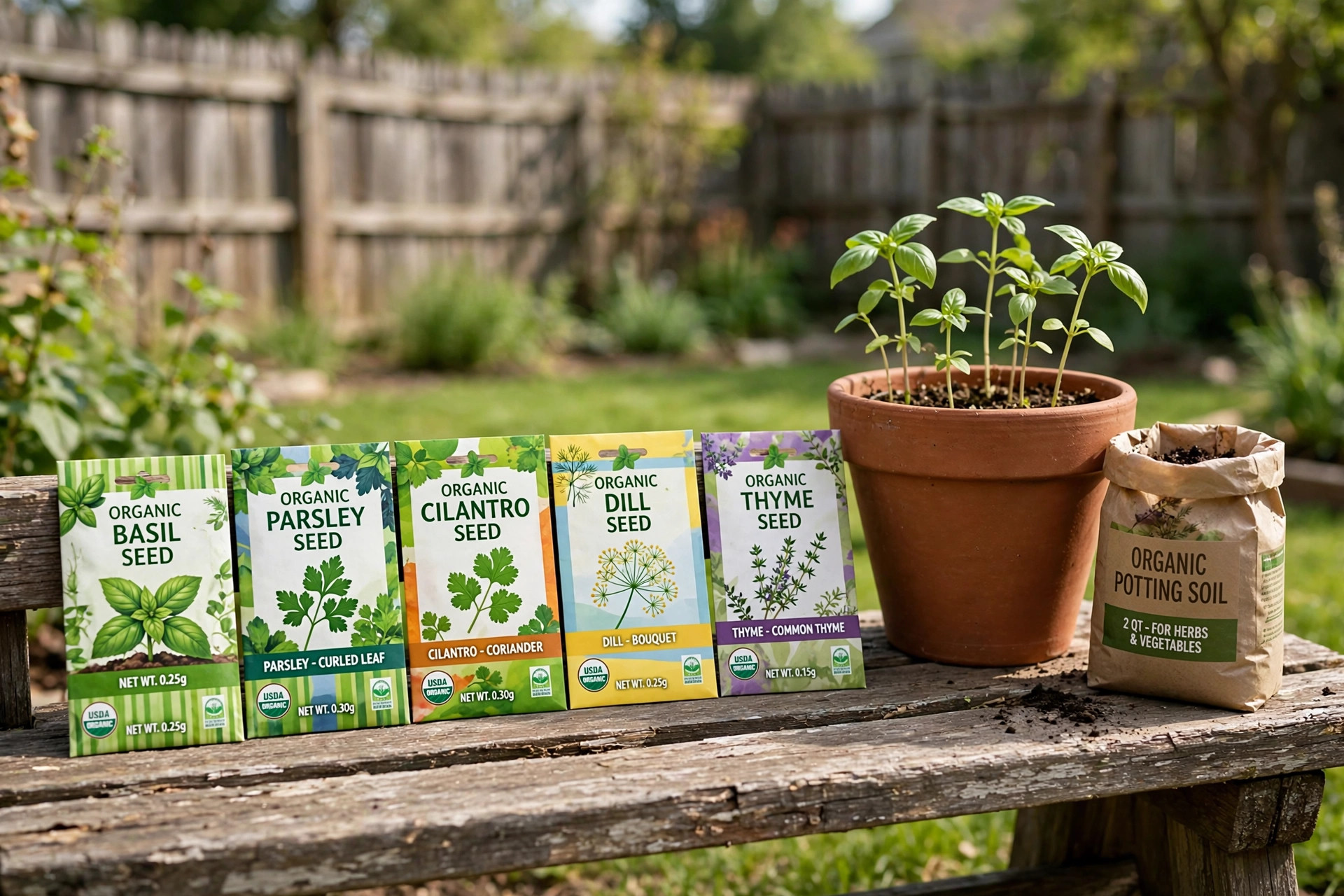

More and more Americans are growing their own herbs. Fresh basil, thyme, and cilantro taste better when picked minutes before a meal. They also cost less than store-bought bundles. That is why so many shoppers look for organic herb seeds USA online deals before spring planting. A small packet of seed can fill a whole window box with green leaves for months.
Buying seed online has its own rules. A good deal is not just the lowest price. Fresh stock, fair shipping, and honest packet dates matter more than a deep discount. This guide explains how to find real value, how to judge quality from a screen, and how to store and start your seed the right way.
Why Growing Your Own Herbs Is Worth It
Fresh herbs are some of the most costly items in the produce aisle. A tiny plastic box of basil can cost as much as four dollars. It wilts in the fridge within days. One three-dollar seed packet can grow enough basil for a full summer of pesto and salads.
Herbs are also easy to grow. Most need only sun, water, and decent soil. They fit on a balcony, a patio, or a kitchen windowsill. A child can plant parsley and watch it sprout in a week. For renters and small-space dwellers, herbs are often the first step into home gardening.
Organic seed adds one more layer of comfort. It comes from plants grown without synthetic pesticides or fertilizers. Many gardeners choose it because they will eat the leaves raw in salads and sauces. When you grow your own, you control what goes into the soil and what touches the leaves.
What to Look for When You Shop Online: Organic Herb Seeds Usa Online Deals
Online seed shopping means you cannot hold the packet in your hand. So read the listing with care. The best sellers give full facts about their stock.
Packed-for Year and Germination Rate
Every packet should show a “packed for” year. Seed is sold for one growing season. A packet packed for the current year sprouts best. Some sellers list a germination test rate, such as 85 percent. A high rate means most seeds will sprout. This detail appears in most organic herb seeds buying guide usa resources, and it is worth the extra minute to check.
Organic Certification Details
True organic seed comes from fields certified under the USDA National Organic Program. Honest sellers state this plainly on the packet or the product page. The Burpee website (https://www.burpee.com) and the Gurney’s seed catalog (https://www.gurneys.com) both publish their organic seed lines with clear labeling. If a listing says “natural” but never says “certified organic,” it may not meet the standard.
Seed Count and Packet Size
Packet size varies more than buyers expect. One seller’s basil packet may hold 200 seeds while another holds 50. Compare the number of seeds, not just the price of the packet. A listing for organic herb seeds for sale usa may look cheap until you find it holds half the seed of a slightly costlier packet.
Shipping Cost and Seed Freshness in Transit
Herb seeds are tough, but long trips in hot trucks can harm them. Sellers who ship seed in plain paper mailers during summer heat may deliver weak stock. Look for sellers who mention cool, dry shipping or who warn that orders may wait for mild weather. The Park Seed company (https://www.parkseed.com) has long experience packing seed for mail delivery across the country.
Seller Reviews and Growing Advice
A seller who answers questions about planting depth and days to sprout is likely a seller who cares about results. Product pages on The Spruce (https://www.thespruce.com) and Gardening Know How (https://www.gardeningknowhow.com) include grower comments that can tell you how seed performs in real gardens. Read a few reviews before you buy.
Types of Organic Herb Seeds to Try
Herbs fall into two broad groups. Annual herbs live one season. Basil, cilantro, and dill belong here. They grow fast and give heavy harvests. Perennial herbs live for years. Thyme, oregano, sage, and mint come back each spring in most of the country. A good starter garden holds some of each.
Easy Annual Herbs for Beginners
Basil is the most popular herb in America. It loves heat and full sun. Sweet basil, Thai basil, and lemon basil all start well from seed. Cilantro grows best in cool spring and fall weather and bolts, or flowers, when summer heat arrives. Dill is nearly foolproof and grows tall enough for pickling jars. Parsley takes longer to sprout, often two to three weeks, but it is patient and steady.
Perennial Herbs for Long-Term Beds
Thyme and oregano spread slowly and need little care once settled. Sage gives gray-green leaves through most of winter in mild states. Mint is best grown in pots because it spreads like a weed. Proven Winners (https://www.provenwinners.com) and Monrovia (https://www.monrovia.com) both describe perennial herb habits in detail for home gardeners who want lasting beds.
Heirloom and Specialty Varieties
Heirloom herbs come from seed lines saved over many years. They often have stronger scent and flavor than common types. Purple basil, fernleaf dill, and Greek oregano are worth a try once the basics are growing. If you enjoy lavender, look into lavender seed packets buying guide usa for tips on starting lavender from seed, which is slower than most herbs.
Cost and Price: What Counts as a Real Deal
Most organic herb seed packets cost between two and five dollars. A collection of six to ten packets may run fifteen to thirty dollars. That is enough to plant a full herb garden. Compare that to a summer of store-bought fresh herbs, which can easily pass one hundred dollars.
Bulk deals can cut costs further. Some sellers offer herb garden bundles with eight or twelve packets at a discount. These bundles work well if you plan to use every packet. Avoid bundles packed with herbs you will never cook with. A deal on seed you will not plant is no deal at all.
Watch the shipping charge. A two-dollar packet with six dollars of shipping is not a bargain. Many sellers offer free shipping above a set order total. It can pay to combine your herb seed order with vegetable seed or garden supplies. The Old Farmer’s Almanac garden pages (https://www.almanac.com) often list seasonal seed sales worth timing your order around.
Sale timing matters. Many seed companies discount stock in late winter and again in midsummer. Buying next year’s seed in fall clearance can save half the price, but only if the seed will store well until spring. Most herb seeds keep for two to three years in a cool, dry place.
Starting Your Seeds Indoors
Most herb seeds start best indoors, six to eight weeks before the last frost. Use small pots or a seed tray filled with sterile seed-starting mix. Press the seeds to the depth listed on the packet. Many herb seeds, like basil, need light to sprout and should sit on the soil surface with only a dusting of cover.
Keep the soil damp but not soaked. A plastic dome or a clear bag over the tray holds moisture. Most herbs sprout best near 70 degrees. Once seedlings show true leaves, give them bright light from a sunny window or a simple shop light hung a few inches above the plants.
Move seedlings outdoors only after nights stay above 50 degrees. Harden them off first. Set them outside for an hour or two on the first day, then add an hour each day for a week. This slow change keeps tender leaves from burning in direct sun.
Care and Upkeep Through the Season
Herbs ask little once they are in the ground or in pots. Still, a few habits will keep them lush.
Water deeply but not too often. Most herbs dislike soggy roots. Let the top inch of soil dry between waterings. Container herbs dry faster than bed herbs, so check pots daily in summer.
Pinch back the tops. Pinching basil and mint tips makes the plants branch out and grow fuller. Never let basil flower if you want tender leaves. Flowers change the leaf flavor and slow new growth.
Feed lightly. Herbs grown in rich garden soil often need no extra food. In pots, a mild organic liquid feed once a month is enough. Too much nitrogen makes big soft leaves with weak flavor.
Watch for pests. Aphids and whiteflies visit herbs in hot weather. A strong spray of water knocks most of them off. Neem oil works for stubborn cases and is accepted in organic practice. The USDA research service site (https://www.nifa.usda.gov) funds work on organic pest control that home growers can learn from.
Mulch beds with straw or shredded leaves. Mulch holds soil moisture and keeps weeds down. It also keeps soil from splashing onto low leaves during rain.
Safety Notes for Home Herb Growers
Herbs are among the safest crops to grow, but a few cautions apply.
Read seed treatment notes. True organic seed is not coated with synthetic fungicides. Some conventional seed is dyed pink or blue to show it was treated. Never eat treated seed, and keep it away from children and pets.
Use clean containers and soil. Old pots can carry plant disease. Wash them with a ten-to-one water and bleach mix, then rinse well. Fresh seed-starting mix lowers the risk of damping-off, the fungus that kills young seedlings.
Label every pot. Seedlings look alike. A simple popsicle stick with the herb name and date saves confusion later. Note which seed came from which packet so you can reorder favorites.
Store seed out of reach. Packets are not food. Keep them in a sealed jar in a cool, dark spot. A refrigerator works well if the jar stays dry.
Frequently Asked Questions
How long do organic herb seeds stay good?
Most herb seeds keep their strength for two to three years when stored cool and dry. Parsley and cilantro lose vigor faster, so buy them fresh each year. Basil and dill often sprout well in their third year. Write the purchase year on each packet so you know its age.
When is the best time to buy herb seeds online?
Late winter, from January to March, brings the widest choice and fresh packed-for stock. Fall clearance sales offer deep discounts on this year’s seed. Buy clearance seed only if you can store it well or plant it soon. Early spring orders can face shipping delays when every gardener orders at once.
Are organic herb seeds harder to grow than regular seeds?
No. Organic seed grows the same way as other seed. The difference lies in how the parent plants were grown, not in how the seeds sprout. Use the same planting depth, spacing, and watering rules you would use for any herb seed.
How many plants will one packet grow?
It depends on the herb and the packet size. A standard basil packet can start fifty or more plants, far more than most families need. Share extra seedlings with neighbors. For direct-sown herbs like cilantro, one packet often covers a full row in the garden.
Can I grow herbs from seed on a windowsill?
Yes. Basil, parsley, chives, and mint all do well in a bright window that gets six hours of sun. Use pots with drainage holes and turn the pots weekly so the plants grow straight. Windowsill herbs may grow slower than outdoor ones, but the flavor is just as good.
What is the difference between organic and heirloom seed?
Organic describes how the seed was produced. Heirloom describes the seed’s age and history. A packet can be both organic and heirloom. It can also be one without the other. Read the label for both terms if you want both traits.
A Final Word
A packet of seed is a small promise. It asks for a little soil, a little water, and a little patience. In return it gives months of fresh flavor and the quiet pride of growing your own food. The search for organic herb seeds USA online deals ends best with a short list of trusted sellers, fresh packed-for stock, and a plan for what you will cook. Start small. Grow what you love to eat. The garden will do the rest.
References
Burpee. (n.d.). Seeds, plants, and gardening supplies. https://www.burpee.com Gardening Know How. (n.d.). Gardening guides and plant care. https://www.gardeningknowhow.com Gurney’s Seed & Nursery Co. (n.d.). Seeds, plants, and garden supplies. https://www.gurneys.com Monrovia. (n.d.). Plants for home gardens. https://www.monrovia.com National Institute of Food and Agriculture. (n.d.). Agricultural research and extension. https://www.nifa.usda.gov Park Seed. (n.d.). Seeds, plants, and gardening supplies. https://www.parkseed.com Proven Winners. (n.d.). Plants and gardening inspiration. https://www.provenwinners.com The Old Farmer’s Almanac. (n.d.). Gardening calendars and advice. https://www.almanac.com The Spruce. (n.d.). Home and garden advice. https://www.thespruce.com
Was this guide helpful?

About Emily Rodriguez
The My Garden US editorial team writes practical, in-depth home and garden guides for American homeowners — tested advice, no fluff.
You May Also Like
Heirloom Vegetable Seeds Reviews Buying Guide USA
June 10, 2026 0 views
A Native Grass Seed American Homes Guide: How to Choose, Plant, and Keep a Native Lawn
August 19, 2026 0 views
Morning Glory Seeds: American Homes Guide
June 8, 2026 0 views