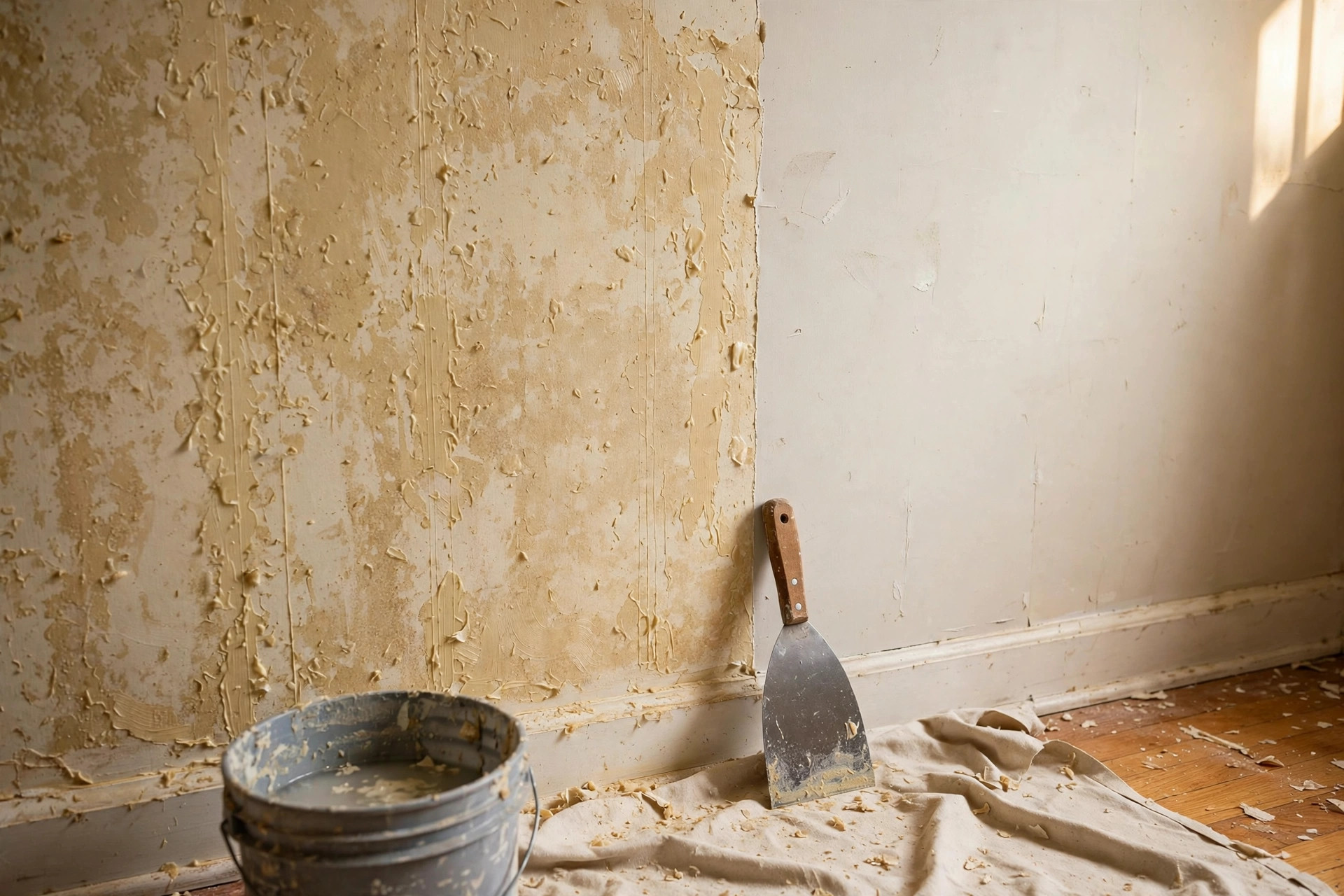

Old wallpaper glue is one of the most stubborn problems in home repair. When you strip the paper, the glue often stays behind. It dries into a thin, shiny film. It feels rough under your hand. Paint will not stick to it well. New paper will not stick to it well either. This guide explains how to remove old wallpaper glue in the USA with simple tools, plain steps, and honest advice. You can do this work on a weekend. You do not need special skills. You only need patience and the right method for the glue on your wall.
Why Old Wallpaper Glue Matters
Many people strip the paper and stop. They paint right over the glue. This is a mistake. The glue left behind is still active. Moisture from new paint can wake it up. Then the paint bubbles. It peels. It cracks along the old seams. The wall looks worse than before.
Glue also changes how the wall looks. Light hits the shiny film in a different way than it hits bare drywall. You can see every line and patch. A smooth finish is not possible until the glue is gone. If you plan to hang new paper, the old glue is even more trouble. It makes the new paste slide. Seams lift. Edges curl.
Taking the glue off is the dull part of the job. It is also the part that decides how the whole project turns out. A clean wall accepts paint, texture, or new paper with no trouble. The time you spend here pays you back in the final look.
What You Will Need Before You Start: How to Remove Old Wallpaper Glue Usa
Gather your tools before you wet the first wall. You will work faster if everything is close at hand.
– A garden sprayer or a large spray bottle – Hot water – A liquid fabric softener or a commercial wallpaper paste remover – A 3 or 4 inch putty knife or a wide wallpaper scraper – A scoring tool if the glue layer is thick or hard – Sponges, clean rags, and a bucket – A drop cloth or plastic sheet for the floor – Painter’s tape – A step ladder – Gloves and eye protection – TSP substitute or a mild degreaser for the final wash
Most of these items are sold at any home center in the country. You can find strippers, scrapers, and scoring tools at stores like Lowe’s. If you prefer brand guides for wall preparation, the Sherwin-Williams site has clear pages on surface prep. Consumer Reports also tests home repair products, and you can read their findings at Consumer Reports before you buy a stripper.
Turn off the power to the outlets in the room. Cover the outlets with painter’s tape. Water and electricity do not mix. Lay the drop cloth along the base of the wall. Glue soup will run down, and it stains carpet and wood floors.
How to Remove Old Wallpaper Glue Step by Step
Work in sections. A section about four feet wide is easy to manage. Finish one section before you move to the next. This keeps the glue wet long enough to soften but not so long that it dries again.
Step 1: Test a Small Area First
Pick a spot behind a door or in a corner. Spray it with hot water. Wait ten minutes. Try to scrape the glue with your putty knife. If it rolls off in soft sheets, your job is easy. If it stays hard and shiny, you need a stripper or a scoring tool. This test saves you from guessing on the whole room.
Step 2: Score the Glue if Needed
Old glue can form a hard shell. Water cannot get through the shell. A scoring tool pokes tiny holes in the surface. Roll it over the wall in circles with light pressure. Do not press hard. You want to pierce the glue, not gouge the drywall. Scoring is the key step for glue that has been on the wall for twenty years or more. The team at Family Handyman has shown this method in many repair guides, and it works on the toughest paste.
Step 3: Apply Your Removal Solution
Fill the sprayer with hot water. Add the stripper or fabric softener as the label directs. A common home mix is one part liquid fabric softener to one part hot water. Spray the section until it is fully wet. The wall should glisten. Let it soak for ten to fifteen minutes. Spray again if it starts to dry. Old glue gives up only when it is fully soaked through.
Step 4: Scrape the Softened Glue
Hold the scraper at a low angle, about thirty degrees to the wall. Push with steady pressure. The glue should come off in wet rolls or sheets. Wipe the blade on a rag often. A loaded blade skips and can tear the paper face of the drywall. Keep the section wet as you work. If the glue fights back, spray more solution and wait five more minutes. Forcing dry glue is how walls get damaged.
Step 5: Wash the Wall Clean
Scraping takes off the bulk of the glue. A thin film always remains. Wash the wall with a sponge and a mix of hot water and TSP substitute. Change the water often. Dirty water spreads glue back onto the wall. Rinse with a clean damp sponge. Run your hand over the wall when it is dry. It should feel like plain drywall, with no slick or tacky spots.
Step 6: Let the Wall Dry Fully
Give the wall a full day to dry. Fans help. Open windows if the weather is mild. Do not prime or paint a damp wall. Trapped moisture causes blisters that will not show up for weeks. Patience here protects all the work you just did.
Types of Old Wallpaper Glue and How Each Responds
Not all glue is the same. Knowing what kind you face helps you pick the right attack. Here are the types found most often in American homes.
Wheat paste. This is the old standard. It was used for decades. It softens well with hot water alone. Soak it well and it scrapes off in sheets. It is the friendliest glue to remove.
Cellulose paste. This is made from plant fiber. It behaves much like wheat paste. Hot water and a stripper take it off with moderate effort. It can leave a slick film that needs a good final wash.
Clay based adhesive. This was used under heavy vinyl papers. It dries very hard. It often needs scoring plus a commercial stripper. Work in small sections and keep it wet.
Premixed vinyl adhesive. Modern and very strong. It resists water when it is fresh, but old layers do soften with heat and a good stripper. A steamer can help here. You can read more about steam methods in the guides at This Old House.
Border adhesive. The glue used for wallpaper borders is thin but tough. It often sits right at eye level where old borders ran. Treat it like clay adhesive. Score it, soak it, and scrape with care.
If you are not sure which glue you have, the soak test in Step 1 will tell you. Soft and gummy means water will win. Hard and glassy means you need scoring and a stripper.
Cost and Price of Removing Wallpaper Glue
Doing the work yourself is cheap. A gallon of commercial stripper costs about ten to twenty dollars. A scoring tool costs about ten dollars. A good scraper costs under fifteen dollars. Sponges, tape, and drop cloths add perhaps twenty dollars more. For one average room, plan on forty to seventy dollars in supplies. The real cost is your time. One room takes most people six to ten hours from start to finish.
Hiring the work out costs more. Handymen and painters in the United States often charge by the hour or by the room for glue removal. Prices run from a few hundred dollars for a small room to over a thousand for a large one with tough glue. If you want to compare options, look at a wallpaper removal service price comparison to see what pros charge in your area. The HGTV site also runs cost guides for common home projects that can help you set a budget.
Watch out for hidden damage. Old glue can hide torn drywall. When the paper comes off, the top layer of the drywall paper may come with it. Small tears can be fixed with joint compound by a careful do-it-yourselfer. Big damage may need a pro. You can check professional drywall repair cost near you if the wall needs more help than spackle can give.
Care and Upkeep After the Glue Is Gone
The wall is clean, but it is not finished. Bare drywall that has been scraped and washed needs sealing before paint. Use a good primer. A stain blocking primer is best if any glue shadow remains. Two thin coats of primer beat one thick coat. Let each coat dry as the can directs.
If you plan to hang new wallpaper, size the wall first. Sizing is a thin coat of paste or primer made for paper. It seals the wall and makes the next removal far easier. Many people who skip this step regret it years later. The Spruce has clear guides on wall sizing and paper hanging for beginners. If you want a low fuss fresh look, many home owners now choose peel and stick wallpaper for bedrooms because it comes down clean with no glue fight at all.
Keep the room at a steady temperature while paint or paper cures. Big swings in heat and humidity can lift fresh edges. Once the finish is cured, normal cleaning is enough. Dust the walls with a dry cloth now and then. Wash marks with a damp sponge and mild soap.
Safety Tips for Glue Removal
This is safe work if you take a few plain precautions.
– Wear gloves. Strippers and TSP substitute dry the skin and can sting cuts. – Wear eye protection when spraying overhead. Solution in the eyes burns. – Keep the room aired. Open a window or run a fan. Some strippers have strong fumes. – Read the label on every product. Follow the mix ratio and the wait time. – Keep children and pets out of the room until the floor is clean and dry. – If your home was built before 1978, test for lead paint before you scrape. Old walls may have lead under the paper. The Bob Vila site explains lead test kits and safe steps in plain terms.
A dust mask is wise when you sand any rough spots after the wall dries. Scraped drywall dust is fine and gets everywhere. A mask keeps it out of your lungs.
Frequently Asked Questions
Can I just paint over old wallpaper glue? You can, but you should not. Paint over glue often bubbles and peels within months. The glue reacts with the moisture in the paint. Stripping the glue first is the only way to get a lasting finish.
Will hot water alone remove old wallpaper glue? Sometimes. Fresh wheat paste and cellulose paste often yield to hot water and soaking. Old, hard glue usually needs a stripper and a scoring tool as well. Test a small area first to see what your glue needs.
How do I know when all the glue is off? Let the wall dry fully. Then run your palm over it. Clean drywall feels matte and a little rough, like paper. Glue feels slick, shiny, or tacky. Spray any slick spot again and scrape it. The hand test never lies.
Can a steamer remove wallpaper glue? Yes. A wallpaper steamer softens glue fast with heat and steam. It is a good choice for large rooms or very old paste. Keep the steamer plate moving so you do not overheat one spot and damage the drywall.
What if the drywall tears while I scrape? Small tears are normal. Let the area dry. Cut away loose paper flaps with a sharp knife. Fill with joint compound, let it dry, and sand smooth. Prime before you paint. For wide damage, a pro is the safer choice.
How long does the whole job take? One average bedroom takes six to ten hours of hands on work, plus a day of drying. Tough glue adds time. Easy glue cuts it. Plan a full weekend so you are not rushed.
A Short Final Word
Removing old wallpaper glue is slow work, but it is honest work. Each clean section brings you closer to a wall you can be proud of. Soak well, scrape with care, wash twice, and let it dry. The paint or paper you put up next will thank you with a smooth, lasting finish. You can find more wall prep advice from paint makers like Behr and Benjamin Moore, whose sites cover primers and finishes for freshly stripped walls.
References
Behr. (n.d.). Paints, primers, and stains. https://www.behr.com Benjamin Moore. (n.d.). Paints and stains. https://www.benjaminmoore.com Bob Vila. (n.d.). Home improvement advice. https://www.bobvila.com Consumer Reports. (n.d.). Product reviews and ratings. https://www.consumerreports.org Family Handyman. (n.d.). DIY home repair and maintenance. https://www.familyhandyman.com HGTV. (n.d.). Home and garden ideas. https://www.hgtv.com Lowe’s. (n.d.). Home improvement products. https://www.lowes.com Sherwin-Williams. (n.d.). Paints and coatings. https://www.sherwin-williams.com The Spruce. (n.d.). Home and garden advice. https://www.thespruce.com This Old House. (n.d.). Home renovation guidance. https://www.thisoldhouse.com
Was this guide helpful?

About Robert Taylor
The My Garden US editorial team writes practical, in-depth home and garden guides for American homeowners — tested advice, no fluff.
You May Also Like

Where to Find Woodland Nursery Wallpaper for Sale USA: A Complete Buyer’s Guide
August 28, 2026 0 views
Best Paint for Outdoor Furniture Metal USA: What Really Works
August 16, 2026 0 views
Dry Erase Wall Paint Reviews for Offices: What Works and What Does Not
June 23, 2026 0 views