When a zone in the yard stops watering, the cause is often a small part called the sprinkler valve. Many people then search for sprinkler valve replacement cost near me. They want to know what the job should cost before they call a repair shop. This guide gives plain facts about prices, parts, labor, and what to ask a local pro.
Why It Matters
A sprinkler valve controls one watering zone. When you turn on the system, the valve opens and lets water flow to the heads in that zone. When it fails, a whole section of the lawn can dry out. Brown patches spread fast in summer heat. Grass that goes without water for two or three weeks may die back to the roots.
A bad valve can also waste water. If the valve sticks open, a zone may run long after the timer shuts off. That shows up on the water bill. In some towns, watering rules fine homes that run sprinklers at the wrong hours. A leaking valve can cause mud spots, soft soil, and wet sidewalks. Fixing it soon saves water and protects the lawn.
Most valves last ten to twenty years. Hard water, dirt, and cold winters shorten the life. If your system is older, more than one valve may wear out near the same time. That is normal. It is one reason people ask about sprinkler valve replacement cost near me before they book a visit.
Signs Your Sprinkler Valve Has Failed: Sprinkler Valve Replacement Cost near Me
Watch for these common signs. One zone does not come on at all. The heads in a zone spurt weakly even though water pressure is fine elsewhere. A zone runs when the timer is off. Water pools near the valve box. You hear a loud banging noise when the zone starts or stops. The timer shows a fault code or an error light.
Sometimes the problem is not the valve body. It may be the solenoid, the small electric part on top that opens the valve. Or the diaphragm, the rubber seal inside. A repair pro can test the parts before deciding what to replace. That is why a fair sprinkler valve replacement cost near me starts with a proper check, not a guess over the phone.
What To Look For When Choosing A Repair Service
Not all shops do sprinkler work every day. A general handyman may be cheaper, but a shop that does irrigation work will finish faster and spot other problems. Look for a company that lists sprinkler repair as a main service. Ask how many valves they replace in a season. Ask if they carry common parts on the truck.
Read recent reviews. Look for comments about showing up on time and leaving the yard clean. A good tech tests every zone after the repair, not just the one that failed. Ask if the visit fee is applied to the job if you say yes to the repair. Many shops credit the trip charge toward the final bill.
Ask for the price in writing before the work starts. The note should list the part, the labor, and any trip fee. That written quote is your guard against a bill that grows after the tech leaves. If you want a rough number first, calling two or three local shops is smart. You will learn the going rate fast.
Types Of Sprinkler Valves And Options
Most home systems use electric valves with a solenoid. A few older systems use manual valves that turn by hand. For a replacement job, the type matters because parts differ in price.
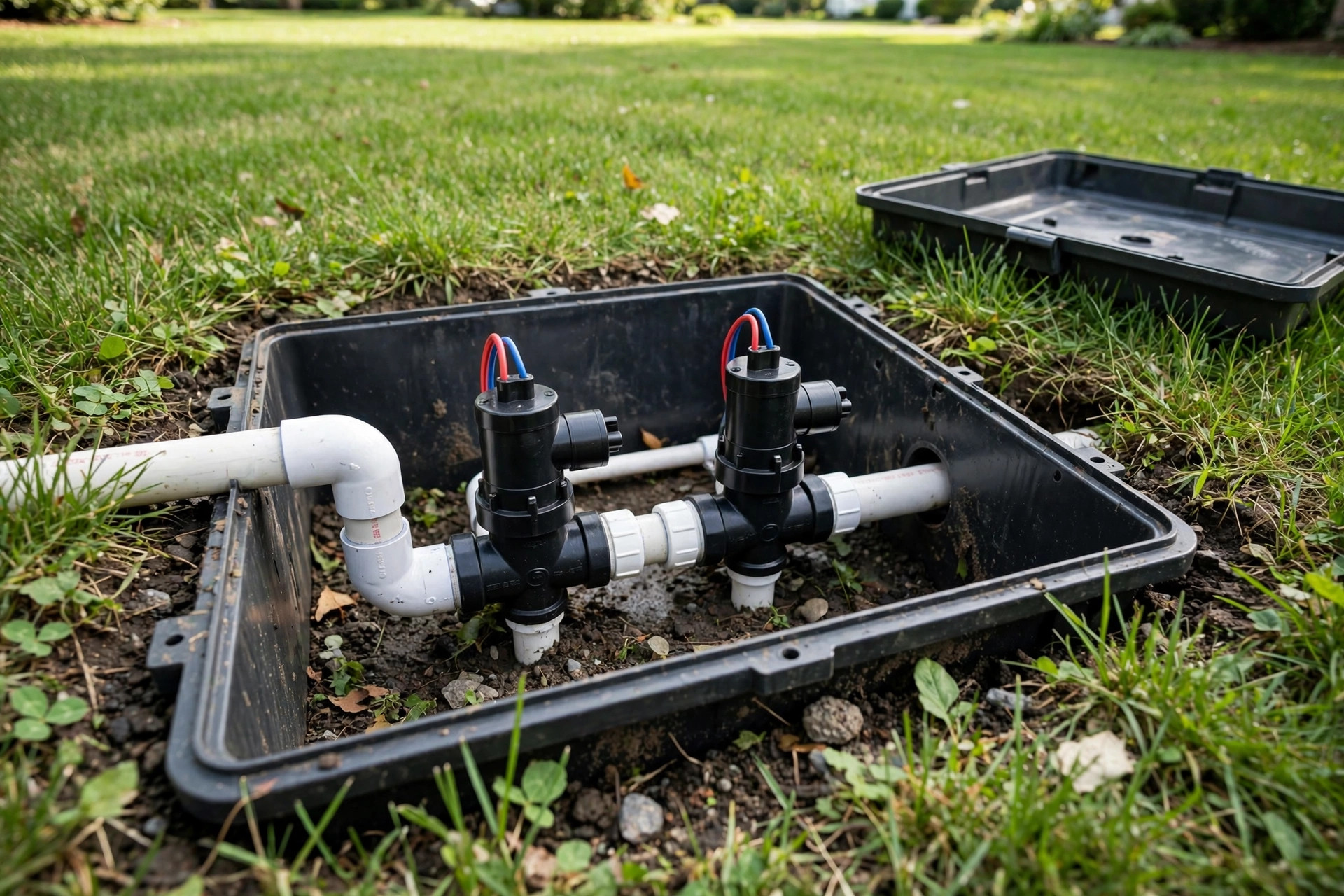
Common valve types include anti-siphon valves, in-line valves, and index valves. Anti-siphon valves sit above ground and stop dirty water from flowing back into the house water. In-line valves sit below ground in a box and are the most common in home lawns. Index valves are older parts that shift water from zone to zone with a single feed line.
Valves also come in sizes, most often three-quarter inch or one inch. The size should match the pipe in your system. Brands matter too. Replacing with the same brand as the old valve is often easiest, because the parts fit the same holes. Some techs rebuild a valve instead of replacing it. A rebuild means new internal parts go into the old body. This can cost less if the body is still sound.
If your timer is old as well, some owners add a smart sprinkler controller for usa homes at the same visit. A smart controller adjusts watering to the weather. It will not fix a bad valve, but it can cut water waste after the repair is done.
Cost And Price: What To Expect
Now the main question: what is a fair sprinkler valve replacement cost near me? In most American towns, the total for one valve runs from about one hundred fifty dollars to three hundred dollars. That includes the part, the labor, and often the trip charge. The valve part itself is usually twenty to sixty dollars for a standard home valve. Labor is the larger share.
Several facts move the price up or down. A valve buried deep in a box full of dirt takes longer to reach. A valve with corroded wires may need new wire splices. If the tech must dig to find the valve, time adds up. Replacing two or three valves in one visit usually costs less per valve than a single visit for one valve. Weekend or evening calls cost more in most areas.
A solenoid alone, without a full valve change, often runs fifty to one hundred dollars installed. A rebuild of the internal parts runs near the same range as a solenoid change. These smaller fixes make sense when the valve body is young and clean. When the body is cracked or very old, full replacement is the better choice.
Travel distance affects the price too. A shop near your home charges less for the trip than one driving forty miles. That is why searching for sprinkler valve replacement cost near me is better than taking a price from another state. Local rates, local water rules, and local labor costs shape the bill.
Before you agree, ask these questions. Is the trip fee included in the quoted price or added on top? Is the price for a full valve or only the solenoid? Does the quote include testing all zones after the repair? Is there a warranty on the part and on the labor? What would a second valve cost if you add it to the same visit?
How The Repair Is Done
A standard valve replacement takes about one to two hours. The tech turns off the water and opens the valve box. He digs out dirt that has filled the box over the years. He cuts power to the zone and disconnects the wires. Then he removes the old valve and fits the new one, making sure the flow arrow points the right way.
New wire connectors seal the electric joins. The box is closed and the soil is put back. Then the tech turns the water on slowly and checks for leaks at every joint. He runs the zone from the timer and walks the lawn to watch the heads. A careful tech also runs the other zones, because a system that old may have more weak spots.
You can watch and learn during the visit. Ask the tech to show you where each valve box is. Mark the spots with small flags or paint. Next time, you can point the next tech right to the place, which cuts labor time.
Care And Upkeep After The Repair
New parts last longer with simple care. Once each spring, run every zone and walk the yard. Look for heads that spray the sidewalk instead of the grass. Fix tilted heads with a small turn of the wrist. Clean dirt from around the heads so the pop-up parts move free.
Keep the valve boxes clear of soil and mulch. If you cannot find the box, you cannot check the valve. In cold states, winterize the system each fall. Blowing out the lines with air keeps ice from cracking pipes and valve bodies. If you are unsure how, a how to install pop up sprinklers yourself guide from a trusted brand can help you learn the basics, though full winterization is a job for a pro in hard-freeze areas.
Check the controller settings twice a year. In spring, set the run times for the growing season. In fall, cut them back. A timer that waters at dawn loses less water to wind and heat. Small habits like these stretch the life of every part in the system, including the new valve.
If you plan a larger yard project, get an affordable lawn sprinkler installation cost estimate before you dig. Adding new zones later can strain an old valve set, so it pays to plan ahead.
Safety Notes For Homeowners
Water and power meet at a sprinkler valve, so take care. Never dig near the valve box without knowing where buried wires and pipes run. Call the free utility marking service before any deep digging. In the United States, the number is 811 in most states. Marking crews show where gas, power, and phone lines lie.
Turn off the water before you touch any valve part. Turn off the controller too, or unplug it. Wear gloves when you open a box that has sat in wet soil. Boxes can hold spiders and insects. If the valve is hot to the touch, the solenoid may be failing. Do not touch bare wires. Let a pro test the circuit.
Chemicals near the valve box need care as well. Weed killer and fertilizer wash into the soil around the parts. Rinse the box with clean water after a lawn treatment. Keep paint, oil, and gas cans away from the valve area so nothing spills into the box.
When To Call A Pro Instead Of Doing It Yourself
A handy owner can swap a solenoid with basic tools. Full valve replacement is harder. It means cutting pipe, gluing joints, and wiring a new part. One wrong glue joint can flood a bed or soak a walk. If you have never worked with PVC pipe, this is not the job to learn on.
Call a pro when water will not shut off at the main, when wires are damaged or buried deep, or when the valve location is unknown. Call a pro when more than one zone acts up, because the trouble may be in the timer or the main line. Also call a pro when your town requires a licensed worker for irrigation jobs. Some cities ask for a permit for new backflow parts.
A good repair shop can often come within a few days. In peak summer, the wait may be longer. If the lawn is browning, hand water the dry zone with a hose while you wait. That keeps the grass alive until the new valve is in place.
Frequently Asked Questions
How much does a sprinkler valve replacement cost near me?
For one valve, most American homeowners pay between one hundred fifty and three hundred dollars, parts and labor included. Prices shift with local labor rates, trip distance, and how hard the valve is to reach. Call two or three local shops for written quotes to find the fair price in your town.
How long does the job take?
Most single-valve replacements take one to two hours. A solenoid swap may take under an hour. Digging out a buried box, fixing wire splices, or replacing more than one valve adds time. Ask the tech for a time estimate when you book.
Should I rebuild the valve or replace it?
Rebuild the valve when the body is sound and only the inside parts are worn. Replace the whole valve when the body is cracked, very old, or a brand that parts no longer fit. A pro can tell you which choice fits after a quick look.
Why does only one zone fail while the others work fine?
Each zone has its own valve. When one valve fails, only that zone is affected. The other valves and zones keep working. This is a normal pattern and a strong sign that the valve, not the timer, is the trouble.
Can I replace a sprinkler valve myself?
You can if you have basic plumbing and wiring skills. You need to shut off the water, cut and glue PVC pipe, and seal the wire joins. If any of those steps are new to you, hire a pro. A bad joint can leak underground for weeks before you see it.
Does a new valve need a new controller too?
No. The valve and the controller are separate parts. Replace the controller only if it is old, broken, or cannot run your zones. Some owners upgrade to a weather-based controller during the same visit to save water, but it is not required.
A Short Final Word
A failed valve is a common lawn problem with a fair and clear fix. Now you know the signs, the parts, the price range, and the questions to ask. Get a written quote, keep the valve boxes clear, and test every zone after the repair. When you search for sprinkler valve replacement cost near me, you are doing the right thing: learning the fair price before the work begins. A one-hour visit and a single new valve can bring a brown zone back to green and keep your water bill where it should be.
For more about your yard equipment, major makers like Toro, John Deere, and Briggs and Stratton publish plain care guides for home lawn systems.
References
Toro. (n.d.). Lawn mowers and yard equipment. https://www.toro.com Deere & Company. (n.d.). Agricultural and lawn care equipment. https://www.deere.com Briggs & Stratton. (n.d.). Engines and outdoor power products. https://www.briggsandstratton.com
Was this guide helpful?

About Emily Rodriguez
The My Garden US editorial team writes practical, in-depth home and garden guides for American homeowners — tested advice, no fluff.