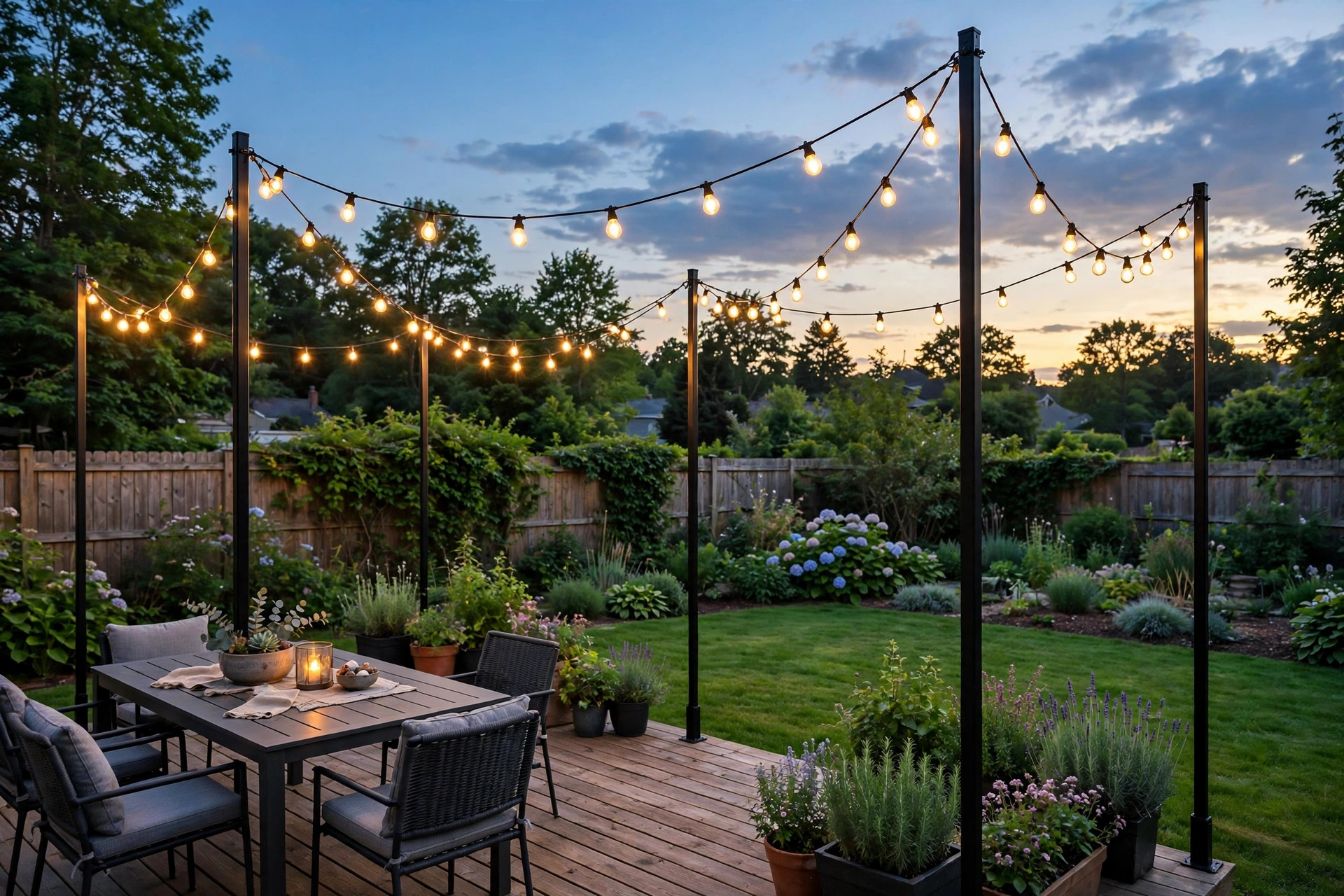

A backyard feels different when it is lit well. On summer nights, many families want to sit outside after dark, eat dinner, and talk with friends. Patio string light poles for backyard use make that easy. They hold the lights up high, so the whole yard glows warm and soft. You do not need trees or a porch roof. You just need poles, lights, and a little planning.
This guide explains what patio string light poles for backyard spaces are, why they are worth the money, how to pick the right ones, and how to set them up safely. It also covers costs, care, and answers to common questions.
Why Patio String Light Poles for Backyard Spaces Matter
Light changes a yard. A dark backyard sits empty after sunset. A lit backyard becomes a second living room. Patio string light poles for backyard areas let you hang lights anywhere, even in an open yard with no posts or trees. That freedom is the main reason people buy them.
The light itself matters too. Most people use warm white bulbs. The warm color feels calm and friendly. It is bright enough to see faces and food, but soft enough that the night still feels like night. Studies of outdoor living show that people spend more time outside when the space is lit. A well-lit yard gets used on weeknights, not just on holidays.
Poles also protect the lights. When lights hang from poles, they stay high and out of the way. People do not bump into them. Lawn mowers do not catch them. Pets are less likely to chew through cords that hang seven or eight feet in the air. Designers at HGTV often show this look in patio makeovers, and the reason is simple: it works in almost any yard.
What to Look For When You Buy: Patio String Light Poles for Backyard
Not all poles are the same. A cheap pole may lean or fall in the wind. A good one stands straight through storms and parties. Here is what to check before you spend your money.
Height
Most poles stand seven to ten feet tall once they are set up. Seven feet is the minimum for a walkway. You want the lights well above head height. Nine or ten feet gives a nicer drape to the lights and makes the yard feel grand. If you are tall, or if the poles go over a dining table, choose nine feet or more.
Weight and Strength
The pole must carry the weight of the light strings. One string of lights is light. Three or four strings pull hard. Steel poles are the strongest. Aluminum poles are lighter and do not rust. Fiberglass poles are light and tough. A steel pole with a wall thickness of at least one inch is a safe choice for most yards.
Check how the pole takes the weight. Some poles have a hook or a loop at the top. Others have holes for carabiner clips. A built-in hook is best. It keeps the light string from sliding off in the wind. Reviews and test reports from Consumer Reports remind buyers to check load ratings, and the same habit applies here.
The Base
The base decides whether the pole stands or falls. There are three common kinds:
– Ground stakes. These push into the soil. They work in lawns and gardens with firm ground. They do not work on concrete. – Weighted bases. These sit on the patio or deck and use weight to stay put. They often hold a water or sand bag, or they come with a heavy metal foot. – Clamp bases. These grip a deck rail or a fence. They are strong but only fit where you have something to clamp to.
For a grassy backyard, ground stakes are usually enough. For a concrete patio, you need a weighted base or a planter that holds the pole in concrete or sand.
Finish and Rust Protection
Outdoor poles face rain and sun. Look for powder-coated steel or anodized aluminum. These finishes fight rust. A plain painted pole may look fine in the store and show rust spots after one rainy season. If you live near the sea, salt air is rough on metal, so aluminum or stainless steel is worth the extra cost.
Types and Options
Patio string light poles for backyard use come in a few main styles. Each fits a different kind of yard.
Freestanding Stake Poles
These are the most common. They push into the ground and stand on their own. They are cheap and easy to move. You can change the layout of your lights for a party and move them back the next day. They work best in yards with deep, firm soil. In loose or sandy soil, they may lean after heavy rain. Pair them with the right string lights for your backyard for the best effect.
Weighted Deck Poles
These have a heavy base and stand on hard surfaces. They are the right choice for patios, decks, and driveways. The base may be a flat steel disc, a tripod, or a ring that holds sandbags. They cost more than stake poles but go anywhere. Guides at The Spruce often show these on rental patios, since renters cannot dig into the ground.
Planter Poles
These poles sit inside a large planter filled with soil, concrete, or sand. The planter doubles as a decoration. You can plant flowers around the pole. This style looks the nicest but takes the most work. You must fill and move heavy planters. They suit people who want the lights to look built in rather than temporary.
Tall Flag-Style Poles
Some poles telescope to twelve feet or more. These give a dramatic look. The lights drape from high above, like a festival tent. Tall poles catch more wind, so the base and the stakes must be extra strong. They are best for special events, though some people keep them up all season.
Solar Pole Sets
A few sets come with small solar lights built into the pole itself, or they pair with solar patio lights for ambiance. These need no outlet. They charge by day and glow by night. They are dimmer than wired lights, but they cost nothing to run and need no extension cords.
Cost and Price
Patio string light poles for backyard projects fit most budgets. Here is what to expect in the United States.
– Budget stake poles: 15 to 30 dollars each. Plain steel, push into the ground, last a few seasons. – Mid-range poles: 30 to 60 dollars each. Better finish, stronger hooks, often with a weighted base option. – Premium sets: 60 to 120 dollars each. Heavy-duty steel or aluminum, rust-proof finish, designer looks. – Planter poles: 40 to 100 dollars for the pole, plus the planter and fill.
A typical backyard setup needs four to six poles. Four poles around a dining area is the most common layout. Six poles can light a larger yard or a long walkway. Expect to spend 80 to 300 dollars on poles for a full setup, plus the cost of the lights themselves. Retailers such as Lowe’s and Wayfair carry options at every price point, and Frontgate stocks higher-end designs for people who want a polished look.
The lights cost extra. A 48-foot string of LED cafe lights runs 20 to 50 dollars. Most yards need two to four strings. LED bulbs use little power and last for years, so the running cost is tiny.
How to Set Them Up
Good setup matters more than the brand of the pole. A cheap pole set up well beats an expensive pole set up poorly. Follow these steps.
Plan the Layout
Draw your yard on paper first. Mark where people sit, walk, and eat. Place the poles at the corners of that area. Keep the distance between poles under the length of your light strings. If the poles are 12 feet apart and your strings are 48 feet long, each string can span three gaps with a nice drape, or you can swag it for a looser look.
Check how to hang string lights on patio layouts for common patterns, such as the V shape, the fan shape, and the straight run. A V shape from a central high point looks festive. Straight parallel runs look clean and modern.
Set the Poles
For stake poles, water the ground the day before if the soil is hard. Push the stake in straight. Use a rubber mallet, not a metal hammer, so you do not bend the top. The stake should go at least 18 inches into firm soil. In soft soil, go deeper or pour a small concrete footing.
For weighted bases, fill the base fully. Water leaks and shifts; sand is steadier. A 40-pound sandbag is a common choice. Make sure the base sits flat on the surface.
Hang the Lights
Start at the outlet and work outward. Use zip ties or carabiner clips at each pole top. Do not pull the strings tight. A little sag looks better and puts less strain on the poles. Most makers suggest a drape of six to twelve inches between poles. Keep the plugs and connections under a covered spot or in a weatherproof box.
If the run is long, do not connect more strings end to end than the maker allows. Most LED strings allow 10 to 20 connected sets. Check the box. Overloading a string is a fire risk.
Check the Height
Walk under every span. The lowest point should be at least seven feet above the ground where people walk, and at least eight feet over a dining table. Adjust the hooks before the party starts, not after guests arrive.
Care and Upkeep
Patio string light poles for backyard use need little care, but a little care goes a long way.
– Take the lights down in winter if you live where snow and ice are heavy. Ice adds weight and can snap strings. The poles can stay up if they are sturdy, but many people store them too. – Check the bases each spring. Stakes loosen over winter as the ground freezes and thaws. Push them back in or reset them. – Wipe down metal poles once a year with a damp cloth and check for rust spots. Touch up chips in the finish with outdoor paint so rust does not spread. – Tighten hooks and clips after the first month. New setups settle, and connections loosen. – Store sandbags indoors over winter so they do not rot or split.
With basic care, a good set of poles lasts five to ten years. The lights themselves may need new bulbs sooner, but LED strings often run for years without a change.
Safety
Lights are safe when they are set up right. Most accidents come from rushing the setup. Keep these rules in mind.
– Use only outdoor-rated lights and extension cords. Indoor cords crack in the sun and can short out. – Keep all plugs and connections dry. A simple plastic cover or a covered outlet box does the job. – Do not overload circuits. Most outdoor outlets handle one or two strings of LED lights with ease, but check the total watts. – Keep lights away from dry leaves, awnings, and anything that burns. LED bulbs run cool, but old-style bulbs get hot. – Call the local utility line service before you dig deep holes for footings. Buried lines are a real danger. Advice from Bob Vila on outdoor DIY projects stresses this step, and it applies here too. – Take down or secure the setup before big storms. High wind can topple poles and throw them.
Frequently Asked Questions
How many poles do I need for a small backyard?
Four poles make a square or rectangle around a dining set or a seating area. That covers most small backyards. Measure your space first. Poles usually sit 10 to 15 feet apart.
Can I use patio string light poles for backyard setups on a deck?
Yes. Use weighted-base poles or clamp poles. Stake poles need soil, so they do not work on a deck. Clamp poles grip the deck rail and are very steady. Make sure the rail is strong enough to hold the sideways pull.
Do the poles work without trees?
That is the whole point. The poles replace trees, posts, and porch roofs. You can hang lights in a wide-open yard. Many renters use them for this reason, and ideas at IKEA for outdoor living show how poles turn a plain yard into a warm space.
How tall should the poles be?
Nine feet is the sweet spot for most yards. It keeps the lights above head height and gives a pleasing drape. Seven feet works in tight spaces. Ten feet or more looks dramatic but needs a stronger base.
Will the poles survive a storm?
Good poles survive normal wind and rain. Take the lights down before heavy storms, and make sure the bases are full and the stakes are deep. No freestanding pole is safe in a severe storm, so use your judgment and bring the setup in when the weather turns bad.
What kind of lights should I hang on the poles?
LED cafe-style string lights are the most popular. They are bright, cheap to run, and last for years. Warm white is the classic look. Cool white looks modern. If you want color, use lights with a remote. Pair the poles with seating from makers like Polywood or Article for a finished look.
A Short Final Word
Patio string light poles for backyard spaces are one of the simplest upgrades a homeowner can make. They cost little, they set up in an afternoon, and they change how the yard feels at night. Choose strong poles, set the bases well, hang the lights with care, and you will have a backyard that draws people outside all summer long.
References
Article. (n.d.). Modern furniture. https://www.article.com Bob Vila. (n.d.). Home improvement advice. https://www.bobvila.com Consumer Reports. (n.d.). Product reviews and ratings. https://www.consumerreports.org Frontgate. (n.d.). Outdoor furniture and decor. https://www.frontgate.com HGTV. (n.d.). Home and garden ideas. https://www.hgtv.com IKEA. (n.d.). Home furnishings. https://www.ikea.com Lowe’s. (n.d.). Home improvement products. https://www.lowes.com Polywood. (n.d.). Outdoor furniture. https://www.polywood.com The Spruce. (n.d.). Home and garden advice. https://www.thespruce.com Wayfair. (n.d.). Furniture and home goods. https://www.wayfair.com
Was this guide helpful?

About Lisa Anderson
The My Garden US editorial team writes practical, in-depth home and garden guides for American homeowners — tested advice, no fluff.
You May Also Like
Outdoor Floor Lamp Waterproof for Patio: A Simple Buying Guide
June 20, 2026 0 views
How to Clean Outdoor Furniture Cushions: A Plain Guide
February 3, 2026 0 views
Why an Outdoor Firewood Log Holder With Cover Belongs Near Every Fire Pit
January 13, 2026 0 views