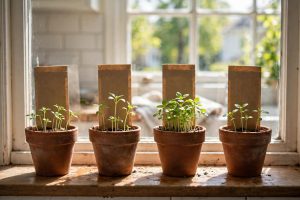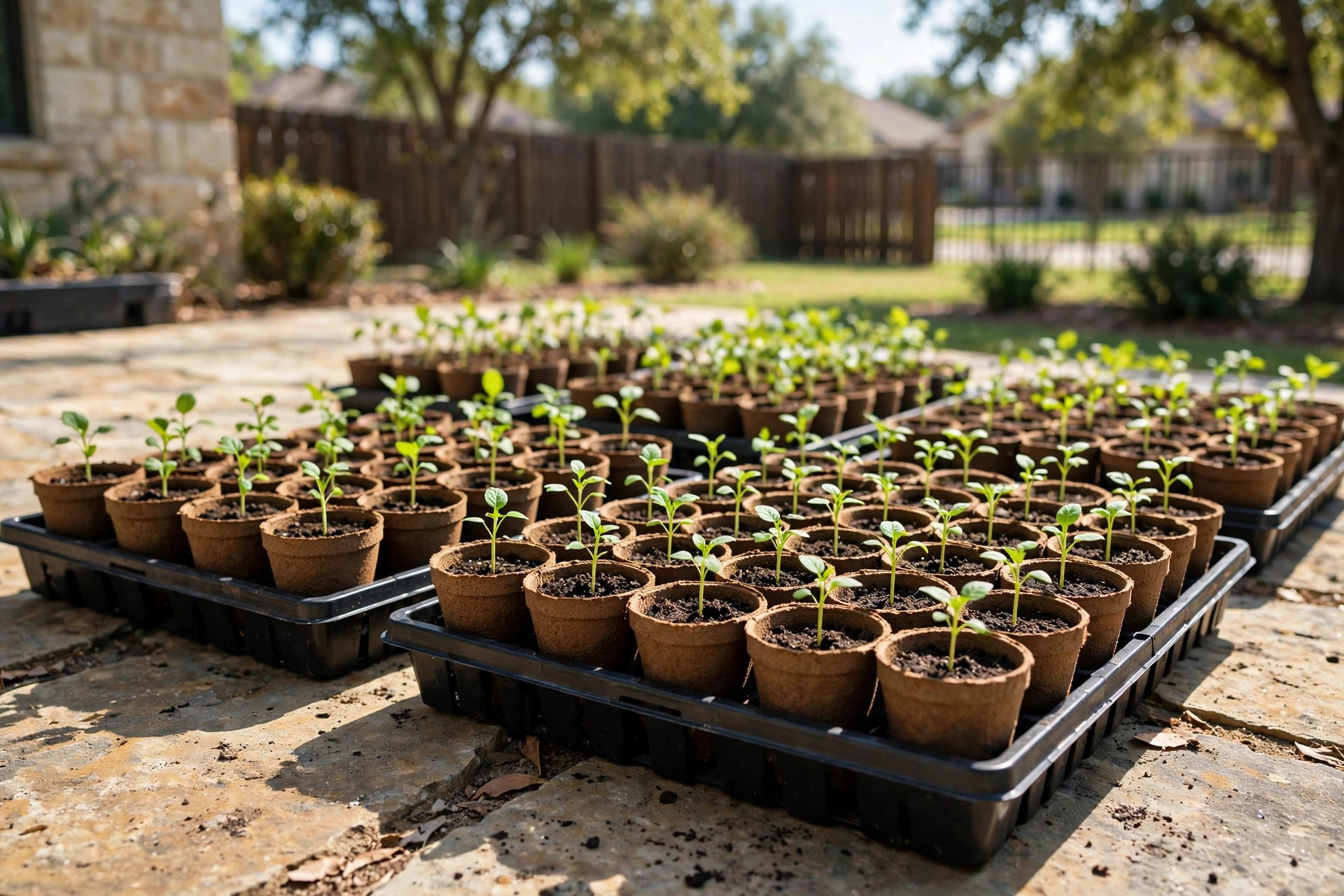

Texas gardeners have a long growing season. They can start seeds early and plant them out with care. Many use peat pots seedlings texas homes usa as a trusted method. A peat pot is a small round pot made of pressed peat. It holds soil and seed. When the seedling grows, the whole pot goes into the ground. There is no need to pull the plant out. This keeps roots safe. For Texas homes, where heat and wind can stress young plants, this method works well. This guide explains what peat pots are, how to choose them, how to use them, and what they cost. It also covers care, safety, and common questions.
Why Peat Pots Matter for Seedlings
Seeds start small and weak. Their roots grow fast. In a plastic pot, roots can circle the sides. This is called root binding. When a gardener pulls the plant from the pot, small roots can tear. This is called transplant shock. The plant may stop growing for days or weeks.
A peat pot solves this problem. The pot itself is planted with the seedling. Roots grow through the soft walls. There is no pulling. There is no tearing. The plant keeps growing. For Texas homes, this matters more than in many other states. Texas summers are hot. A seedling that has been set back by transplant shock may die in heat. A seedling planted pot and all keeps its strength.
Peat pots also suit the Texas calendar. Gardeners in south Texas can start warm-season crops like tomatoes and peppers in late winter. Gardeners in north Texas start cool-season crops like lettuce in late winter and warm crops in spring. Peat pots let them start seeds indoors and move them out without damage. The method is simple and cheap. A bag of peat pots costs a few dollars. The pots break down in the soil over time.
What to Look for When Choosing Peat Pots: Peat Pots Seedlings Texas Homes Usa
Not all peat pots are the same. A few simple checks help Texas gardeners pick good ones.
Size
Peat pots come in small, medium, and large sizes. Common sizes run from 2 inches to 4 inches across. Small pots suit herbs and flowers. Medium pots suit peppers and eggplants. Large pots suit tomatoes and squash. In Texas, bigger pots are often better. The growing season is long. Plants get large fast. A 3 or 4 inch pot gives roots more room.
Wall Thickness
Walls should be firm but not too thick. Thick walls can slow root growth. Thin walls may fall apart too soon. A good peat pot holds its shape for six to eight weeks. That is enough time for most Texas seedlings. Gardeners can read advice on starting seeds at trusted sites like Burpee and Park Seed.
Shape
Round pots are most common. Square pots save space on a tray. Both work fine. Square pots let roots reach the corners less, so they reduce circling. Either shape is fine for Texas homes.
Additives
Some peat pots include lime to balance acid. Peat is naturally acid. A small amount of lime keeps soil closer to neutral. Some pots include small amounts of fertilizer. Beginners should pick plain pots. They can add their own balanced seed-starting mix. Plant care guides at Gardening Know How explain how to pick mixes for young plants.
Types of Seed Pots and Options
Peat pots are not the only choice. Texas gardeners may see several types in stores.
Plain peat pots. These are made of pressed sphagnum peat moss. They are the classic choice. They break down in one to two seasons. Roots pass through the walls with ease.
Peat and wood fiber pots. These mix peat with wood fiber. They are stronger. They hold shape longer. They still break down in soil. They suit seedlings that stay indoors longer.
Coir pots. Coir is made from coconut husks. Coir pots work like peat pots. They hold water a bit longer. In dry parts of Texas, this can help. They are fully biodegradable.
Cow manure pots. These are made from dried manure. They add a little nutrition to the soil. They break down fast. They can smell faintly when wet. Some gardeners prefer them for heavy feeders like squash.
Paper pots. Some gardeners make pots from newspaper. These cost nothing. They break down fast. They suit short indoor periods.
For most Texas homes, plain peat pots or peat fiber pots are the best pick. They are easy to find. They cost little. They match the long indoor starts that Texas springs often need. Gardeners who also grow organic herb seeds indoors can use the same pots for herbs and vegetables alike.
How to Use Peat Pots for Seedlings in Texas
The steps are simple. A Texas gardener needs peat pots, a tray, seed-starting mix, seeds, water, and a light source.
1. Fill each pot with moist seed-starting mix. Press lightly. Do not pack it hard. 2. Plant seeds at the depth the seed packet says. Most seeds go twice as deep as they are wide. 3. Water gently. A spray bottle works well. The mix should feel like a wrung-out sponge. 4. Place the tray in a warm spot. Most vegetable seeds like 70 to 75 degrees. In Texas homes, the top of a refrigerator or a warm shelf works well in winter. 5. Cover the tray with a clear lid or plastic wrap until seeds sprout. This holds moisture. 6. Remove the cover when sprouts appear. Move the tray to bright light. A sunny south window or a simple shop light works well. 7. Water when the top of the mix feels dry. Peat pots dry out faster than plastic pots. Check daily. Texas indoor air in winter can be dry.
Harden off the seedlings before planting out. This means setting them outside for a few hours a day over one to two weeks. Start in shade. Move to sun slowly. This step is key in Texas. The sun is strong. Wind is common. Hardening keeps leaves from burning. More transplanting advice can be found at The Spruce and White Flower Farm.
When it is time to plant, dig a hole the size of the pot. Set the pot in the hole. Make sure the top of the pot sits slightly below the soil line. If the rim sticks out, it can wick water away from the roots. This is a common mistake. Bury the rim. Water well after planting. If roots look crowded at the bottom, tear a small slit in the pot side. This helps roots move out fast.
Cost and Price
Peat pots are cheap. That is one reason Texas gardeners like them.
A bag of 50 small peat pots often costs 4 to 8 dollars. Medium pots cost 6 to 10 dollars per 50. Large pots cost 8 to 12 dollars per 50. Prices vary by store and brand. Big box stores and garden centers both carry them. Buying in bulk saves money. Some gardeners buy 100 or more at the start of the season.
Other costs are small. A bag of seed-starting mix costs 5 to 10 dollars. A tray costs 3 to 6 dollars. Seeds cost a few dollars per packet. A full seed-starting setup for a Texas home garden can cost under 30 dollars. This is far cheaper than buying transplants. A single tomato transplant can cost 4 or 5 dollars at a store. Fifty seed-grown tomatoes cost far less.
Peat pots are single-use. They break down in the ground. Some gardeners see this as waste. Others see it as a fair trade for healthy roots. Coir pots and paper pots are other low-cost biodegradable options. Price lists and growing supplies can be compared at retailers like Gurneys.
Care and Upkeep
Peat pots need steady care. The care is simple but daily.
Watering. Peat pots dry fast. The porous walls lose water to the air. Check the pots each day. Water from the bottom when possible. Set the tray in a shallow pan of water for ten minutes. The pots will soak up water. This keeps the mix even and avoids washing seeds away. In Texas, where indoor heat runs in winter, drying can be quick.
Light. Seedlings need 14 to 16 hours of light each day. A south-facing window may give enough in Texas. If plants grow tall and thin, they need more light. A cheap shop light hung two inches above the tops works well. Raise the light as plants grow.
Fertilizer. Seed-starting mix has little food. After the first true leaves appear, feed with a weak liquid fertilizer. Use half the strength the label says. Feed once a week. Stop feeding a few days before transplanting.
Air flow. A small fan on low near the tray makes stems stronger. Run it a few hours a day. This mimics outdoor wind. Texas winds are strong. Seedlings raised with air flow stand up better outside.
Mold. White mold can appear on peat pots in damp air. It is usually harmless. It shows the air is too still or too wet. Improve air flow. Let the surface dry a bit between waterings. Do not overwater.
Storage. Store unused peat pots in a dry place. Keep them off damp floors. Texas garages can be humid in summer. Store pots in a sealed bag or a dry closet.
Gardeners growing flowers alongside vegetables can learn more about plant care from Proven Winners and Monrovia.
Safety
Peat pots are safe and simple. A few notes keep the work safe.
Seed-starting mix can carry dust. Pour it slowly. Avoid breathing the dust. Some gardeners wear a simple mask. This is a good habit, not a rule.
Fertilizers and pesticides need care. Keep them away from children and pets. Read labels. Use only as directed. Texas homes with dogs or cats should store supplies on high shelves.
Wash hands after handling soil and peat. Soil can carry germs. This is a basic step. It keeps hands and food safe.
Electric lights and heat mats need care too. Keep cords dry. Do not place trays in standing water near outlets. Use a ground-fault outlet when possible. Texas storms can cut power. This is not a danger to the seedlings for a short time.
Peat itself is natural. It is not toxic. Broken bits of peat pots are safe in garden beds. They simply join the soil. The National Institute of Food and Agriculture offers research-based guidance on safe growing practices for home gardeners.
FAQ
How long can seedlings stay in peat pots? Most seedlings can stay four to eight weeks. Small pots suit four weeks. Large pots suit six to eight weeks. If roots push through the walls, plant them out soon. In Texas, the right time depends on the crop and the frost date. Check local planting calendars.
Do I need to remove the peat pot before planting? No. Plant the whole pot. That is the point of a peat pot. Just make sure the rim sits below the soil line. If the pot feels very thick, tear a few small slits in the sides. Roots will move through.
Will peat pots break down in Texas soil? Yes. They break down in one to two growing seasons. Texas soils vary. Sandy soils break them down faster. Heavy clay soils take longer. Keeping the soil moist speeds the process. The pot adds organic matter as it breaks down.
Can I reuse peat pots? It is not advised. Used peat pots are soft and may carry disease. They are cheap. Use new pots each season. Old pots can go in the compost pile.
Are peat pots good for Texas summer crops? Yes. Tomatoes, peppers, eggplants, okra, and squash all start well in peat pots. Texas summers are hot. Starting these crops indoors in late winter gives them a head start. The pot protects roots at transplant time. That head start matters when heat arrives early.
What about starting seeds for a fall garden? Many Texas gardeners plant a fall garden. Peat pots work for fall crops too. Start broccoli, cabbage, and kale indoors in midsummer. Keep the trays in a cool spot if possible. Texas summer heat can make indoor trays too warm. A cool room helps. Transplant out in late summer or early fall.
Final Word
Peat pots are a small tool with a big payoff. They cost little. They need no special skill. They protect young roots at the hardest moment, the move from tray to garden. For Texas homes, where the sun is strong and the season is long, that protection counts. Fill the pots with good mix. Water them daily. Give them light. Harden them off. Then plant pot and all, rim buried, and water well. The seedlings will grow on without a pause. Gardeners who also plant heirloom vegetable seeds will find the same gentle start suits old varieties as well as new ones.
References
Burpee. (n.d.). Seeds, plants, and gardening supplies. https://www.burpee.com Gardening Know How. (n.d.). Gardening guides and plant care. https://www.gardeningknowhow.com Gurney’s Seed & Nursery Co. (n.d.). Seeds, plants, and garden supplies. https://www.gurneys.com Monrovia. (n.d.). Plants for home gardens. https://www.monrovia.com National Institute of Food and Agriculture. (n.d.). Agricultural research and extension. https://www.nifa.usda.gov Park Seed. (n.d.). Seeds, plants, and gardening supplies. https://www.parkseed.com Proven Winners. (n.d.). Plants and gardening inspiration. https://www.provenwinners.com The Spruce. (n.d.). Home and garden advice. https://www.thespruce.com White Flower Farm. (n.d.). Plants, bulbs, and garden supplies. https://www.whiteflowerfarm.com
Was this guide helpful?

About Emily Rodriguez
The My Garden US editorial team writes practical, in-depth home and garden guides for American homeowners — tested advice, no fluff.
You May Also Like
Organic Herb Seeds Florida Homes USA: A Complete Planting Guide
January 8, 2026 0 views
Pothos Plants Bulk Florida Homes USA: A Plain Guide for Buyers
February 5, 2026 0 views
Organic Herb Seeds: A Buying Guide for American Gardeners
July 15, 2026 0 views