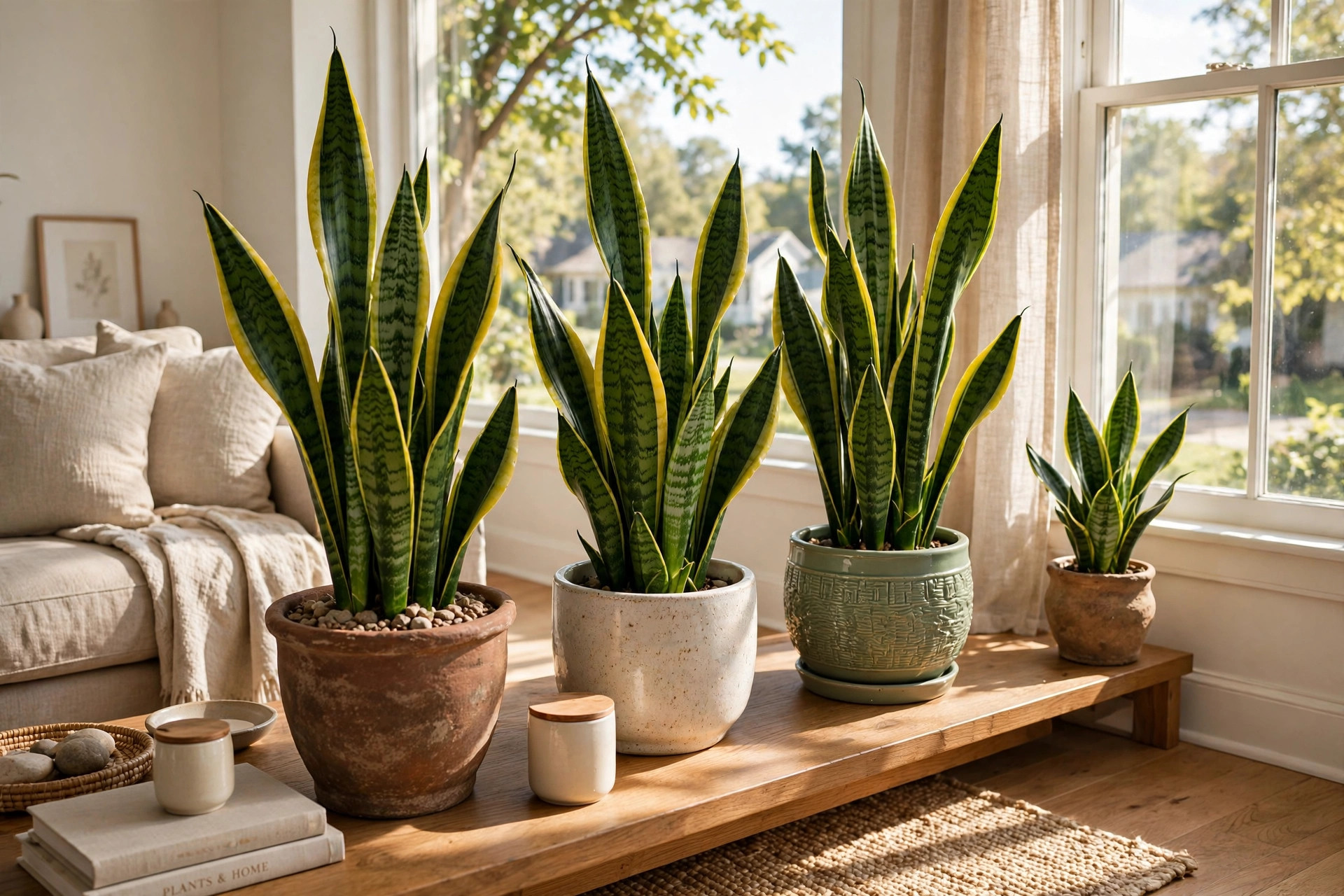

The snake plant is one of the toughest houseplants a person can own. It has stiff, upright leaves that rise from the soil like green blades. It asks for very little water and tolerates low light and bright light. For snake plants indoor California homes USA gardeners keep in living rooms, bedrooms, and offices, this plant is an easy and honest choice. This guide explains why the plant matters, how to choose a good one, the main types, what it costs, how to care for it, and how to keep it safe around people and pets.
Why It Matters
A houseplant does more than decorate a room. A snake plant brings a clean, upright shape into a home. Its leaves add color in winter and summer alike. It does not drop leaves on the floor or need daily attention.
California homes face a dry climate in most regions. The southern part of the state can go months with very little rain. Indoor air grows dry too, because heating and cooling systems pull moisture from the air. Many tropical plants struggle in these conditions. The snake plant does not. It comes from dry regions of West Africa and stores water in its thick leaves. This trait makes snake plants indoor California homes USA residents buy a natural match for the local climate.
The plant also suits the pace of modern life. Many people work long hours. A snake plant forgives a missed watering. It can go two or three weeks without water in cool weather. Beginners who have killed other plants often succeed with this one.
There is also the matter of air. Green leaves and living soil add freshness to a room. People report that rooms with plants feel calmer and more pleasant. Research from the USDA’s National Institute of Food and Agriculture has long supported the value of plants in daily life, and houseplants remain a simple way to bring nature indoors.
The plant fits many styles of decor. A tall snake plant looks fine in a plain clay pot or a modern ceramic planter. It stands well in a corner that needs height and sits well on a low shelf where its leaves can rise above the edge.
What to Look For When You Choose a Plant: Snake Plants Indoor California Homes Usa
Not every snake plant in a store is worth buying. A careful look saves money and trouble. Start with the leaves. They should stand upright and feel firm. The color should be even and rich. Avoid plants with soft, bent, or yellow leaves. Soft leaves point to rot from too much water. Yellow leaves point to stress. Brown, dry tips on a few outer leaves are common and not a serious fault, but the center of the plant should look strong.
Lift the pot and feel its weight. A very light pot may mean dry soil, which is easy to fix. A heavy, soggy pot may mean the store watered too much. Look at the drainage hole at the bottom. Roots growing out of the hole mean the plant needs a larger pot soon. That is not a reason to reject it, but plan to repot within a few weeks.
Check the soil surface. It should look clean. A white crust may mean hard water salts. Green slime means the soil stayed wet too long.
Look at the base of the leaves where they meet the soil. This crown area should be firm and dry. A soft or mushy crown is a sign of rot. Do not buy a plant with a mushy crown.
Buy from a source you trust. Large home and garden retailers like Lowe’s and Home Depot carry snake plants in many sizes, and their stock turns over fast. Local nurseries and established growers such as White Flower Farm offer strong plants with good root systems. Plant care sites such as Gardening Know How and gardening guides like The Spruce show what a healthy plant should look like before you shop.
Size matters for price and for patience. A small four-inch pot costs little and grows slowly. A large ten-inch pot costs more but fills a room at once.
Types and Options
The common snake plant is Sansevieria trifasciata. Botanists have moved it to the genus Dracaena in recent years, but most stores still use the old name. You will see several forms of it.
The classic form has dark green leaves with lighter green bands across them. The variety called Laurentii has yellow edges along each leaf. Moonshine has pale silver-green leaves. Cylindrica has round, spear-like leaves that rise in a fan shape.
Dwarf types stay short. Hahnii grows only six to eight inches tall and suits a desk or a shelf.
Variegated forms cost more than plain green forms. For a first plant, a common green or Laurentii type is the wisest buy. It is cheap, strong, and easy to find.
Pots are part of the choice. A clay pot lets soil dry faster, which suits this plant. A glazed ceramic pot holds water longer and looks better in a living room. Any pot must have a drainage hole. A pot without drainage is the fastest way to kill a snake plant. If you love a pot with no hole, use it as a cover pot. Keep the plant in a plain plastic pot with holes, and set that pot inside the pretty one.
Soil mixes matter too. The plant needs soil that drains fast. A cactus or succulent mix works well. You can also mix regular potting soil with coarse sand or perlite in equal parts. Catalogs from nurseries such as Gurney’s or Park Seed list good soil products, and breeding programs like Proven Winners note soil needs for their plants.
Placement is another option to weigh. A bright living room corner suits a tall plant. A bedroom suits a medium plant. A home office suits a dwarf type on a shelf. A covered patio suits any type in the warm months, as long as nights stay above fifty degrees.
If you enjoy growing things from seed, you may also like reading a morning glory seed buying guide or a daffodil bulb pack buying guide before your next garden project. Succulent lovers often compare succulent variety packs as a next step after snake plants. Catalogs from long-time suppliers such as Burpee are worth a look too.
Cost and Price
Snake plants are not costly. A small plant in a four-inch pot often sells for eight to fifteen dollars in the United States. A medium plant in a six-inch pot often sells for fifteen to thirty dollars. A large plant in a ten-inch pot often sells for thirty to sixty dollars. Very large or rare types can cost more.
Prices vary by store and season. Spring brings the widest choice. Buying from a large retailer often gives the lowest price. Buying from a specialty nursery often gives a stronger plant for a slightly higher price.
The true cost stays low over time. The plant needs no special food beyond basic fertilizer. It needs a new pot only every two or three years. It needs little water, which matters in a state where water bills run high.
A bag of cactus soil costs about six to ten dollars and serves many repottings. Liquid houseplant fertilizer costs under ten dollars and lasts a year or more. These small costs are the whole budget for this plant.
Care and Upkeep
Light comes first. The snake plant tolerates low light, but it grows best in bright, indirect light. A spot near an east or west window is ideal. It can take some direct morning sun. Strong afternoon sun through a south window can scorch the leaves in summer, so move the plant back a few feet. In a dark corner, the plant will live but grow very slowly.
Water comes second, and restraint is the rule. Water only when the soil is dry all the way through. In a California home, that often means every two to three weeks in summer and every three to four weeks in winter. Stick a finger two inches into the soil. If it feels dry, water. When you water, pour until water runs from the drainage hole, then empty the saucer. Never let the plant sit in standing water.
Overwatering kills more snake plants than all other causes combined. The roots rot in wet soil. The leaves turn yellow and soft. When in doubt, wait another week. The plant stores water in its leaves and forgives delay.
Soil and feeding come next. Use a fast-draining mix as described above. Feed lightly in the growing season, from spring to early fall. A half-strength liquid houseplant fertilizer once a month is plenty. Do not feed in winter when growth slows.
Repotting is simple. Move the plant to a pot one size larger when roots fill the old pot, about every two or three years. Spring is the best time. Loosen the root ball gently and set the plant at the same depth as before. Water lightly after repotting, then wait a week before watering again.
Pruning is rarely needed. Remove a damaged leaf at its base with clean scissors. Do not cut the tip off a healthy leaf to make it shorter. A cut tip stops growing and looks blunt forever.
Pests are uncommon. Mealybugs may appear as white cottony spots. Wipe them off with a cloth dipped in rubbing alcohol. Spider mites may appear in very dry air. Rinse the plant in the shower. Fungus gnats point to soil that stays too wet. Let the soil dry out fully between waterings and the gnats fade away.
California seasons shape care. Summer heat waves dry the soil faster, so check water more often. Do not place the plant against a hot window in August. Winter brings shorter days, so growth slows and water needs drop. Homes near the coast get damp marine air, which calls for even less water. In all cases, the finger test in the soil beats any fixed schedule.
Safety
Snake plants contain saponins, natural compounds that taste bitter. The plant is mildly toxic if a person or pet eats a large amount. Chewing a leaf usually causes nausea or an upset stomach. It is not known as a deadly poison, but it deserves respect.
Keep the plant out of reach of small children who put things in their mouths. Keep it away from cats and dogs that chew plants. Cats seem drawn to the tall leaves. Place the plant on a high shelf or in a room pets do not enter. If a child or pet eats part of a leaf, call your doctor or veterinarian for advice. Bring a piece of the leaf so they can identify the plant.
The leaves have sharp tips. They can scratch skin or poke an eye. Keep tall plants away from narrow walkways and from play areas. This is plain common sense with any stiff, pointed plant.
When repotting, wash your hands after handling soil. Wear gloves if you have cuts on your hands. This is good practice with all houseplants.
Frequently Asked Questions
How often should I water a snake plant indoors? Water only when the soil is fully dry. In most California homes, that means every two to three weeks in summer and every three to four weeks in winter. Always check the soil with your finger first.
Can a snake plant live in a room with no windows? It can survive for a time, but it will not thrive. Low light is fine. No light is not. Move it to a bright spot for a few days each week if the room stays dark.
Why are the leaves of my snake plant turning yellow? Yellow leaves almost always mean too much water. Check that the pot drains well and that the soil dries between waterings. Remove the yellow leaves at the base and let the soil dry out fully.
How fast does a snake plant grow? Slowly. In bright light with light feeding, it may grow several new leaves each year. In low light, it may grow almost nothing. This slow pace is normal. It is not a sign of poor care unless the plant also looks weak or pale.
Can I put my snake plant outside in California? Yes, in warm months. A covered patio or a shaded porch suits it well. Bring it inside when nights drop below fifty degrees. Move it into brighter spots a little at a time so the leaves do not scorch.
Do snake plants need fertilizer? Only a little. Feed with half-strength liquid fertilizer once a month from spring to early fall. Skip feeding in winter. The plant grows slowly and needs little food.
A Final Word
The snake plant earns its place in California homes by asking little and giving much. It fits dry air, bright rooms, and dim corners. It fits busy people and new gardeners. Choose a firm, healthy plant. Give it fast-draining soil and a pot with a hole. Water it only when dry. Keep it from harsh sun and from chewing pets. Do these simple things, and your snake plant will stand tall for many years. For snake plants indoor California homes USA gardeners trust, the formula never changes: less water, good light, and a little patience.
References
Burpee. (n.d.). Seeds, plants, and gardening supplies. https://www.burpee.com Gardening Know How. (n.d.). Gardening guides and plant care. https://www.gardeningknowhow.com Gurney’s Seed & Nursery Co. (n.d.). Seeds, plants, and garden supplies. https://www.gurneys.com Lowe’s. (n.d.). Home improvement products. https://www.lowes.com National Institute of Food and Agriculture. (n.d.). Agricultural research and extension. https://www.nifa.usda.gov Park Seed. (n.d.). Seeds, plants, and gardening supplies. https://www.parkseed.com Proven Winners. (n.d.). Plants and gardening inspiration. https://www.provenwinners.com The Home Depot. (n.d.). Home improvement products. https://www.homedepot.com The Spruce. (n.d.). Home and garden advice. https://www.thespruce.com White Flower Farm. (n.d.). Plants, bulbs, and garden supplies. https://www.whiteflowerfarm.com
Was this guide helpful?

About Lisa Anderson
The My Garden US editorial team writes practical, in-depth home and garden guides for American homeowners — tested advice, no fluff.
You May Also Like

Organic Herb Seeds Deals Near Me: A Simple Guide for American Gardeners
February 17, 2026 0 views
Planting Tulip Bulbs in Fall for Florida Homes
January 21, 2026 0 views
Pothos Plants Bulk: Where to Buy USA for Homes, Offices, and Events
April 19, 2026 0 views