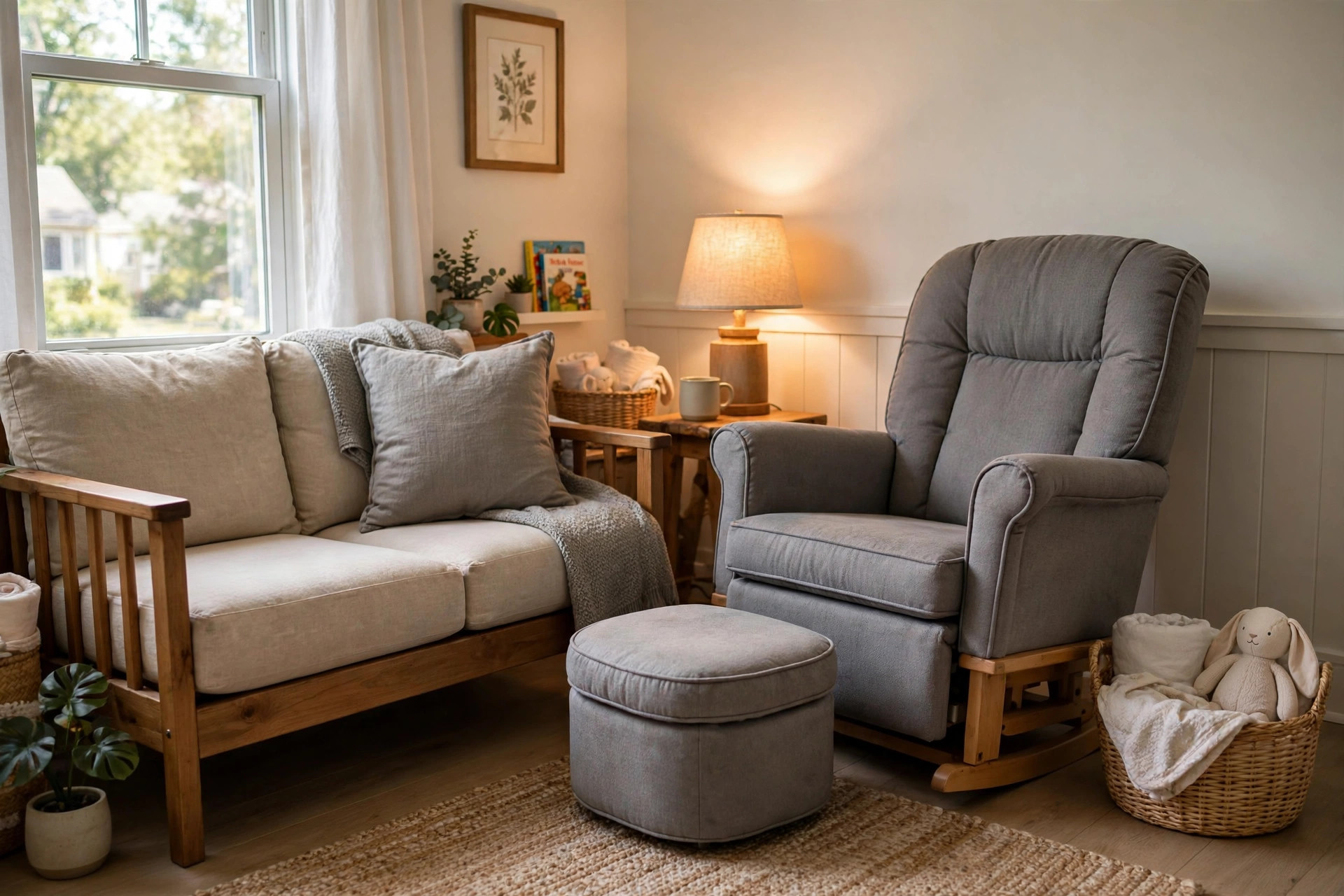

Why the Right Chair Matters in a Small Living Room
The best nursery chair for small living room spaces is not a luxury. It is a daily tool. A new baby feeds eight to twelve times a day in the first weeks. Each feeding can last twenty to forty minutes. That is hours spent in one chair, often at night, often half awake. A bad chair makes those hours painful. A good chair makes them bearable, and sometimes even pleasant.
Many young families do not have a spare nursery. The living room doubles as the feeding room, the napping room, and the evening gathering place. The chair must fit this plan. It must slide into a corner without blocking the walkway. It must look like it belongs next to a sofa, not in a baby ward. And it must still do the job a nursery chair was built for: support your arms, your back, and your tired body through the long first year.
A small living room forgives nothing. Every inch counts. A wide glider that looked fine in the store may swallow a corner and crowd the television. A chair that is too low may leave you struggling to stand with a sleeping baby in your arms. This guide walks through the choice step by step, so you can find a chair that suits your body, your baby, and the size of your room.
What to Look for in a Nursery Chair: Best Nursery Chair for Small Living Room
A nursery chair has one main job: to hold you steady while you feed, rock, and soothe your child. In a small living room, it has a second job: to stay out of the way.
Support and Comfort
Your arms will carry the full weight of the baby for long stretches. Look for armrests that sit at a height where your elbows rest without lifting your shoulders. Armrests that are too high or too low cause neck pain within days. Test the chair with your own arms. Sit the way you would hold a child. The support should feel natural, not forced.
The back rest should reach your shoulders and cradle your head if you drift off. New parents do fall asleep in the chair, even when they plan not to. A high back is safer and more restful than a low one. Lumbar support matters too. A gentle curve in the lower back area keeps the spine in line during long feeds. Some chairs include a separate pillow for this purpose.
The seat cushion should be firm enough to hold its shape and soft enough to sit on for forty minutes. Memory foam or dense foam works well. Avoid seats that sink deeply in the middle. You will need to rise from the chair while holding the baby, and a deep seat makes standing harder.
Size and Footprint
Measure your living room corner before you shop. Note the width, the depth, and the space needed for the chair to move. A glider or rocker needs extra room behind it to swing. A swivel needs room on the sides. A recliner needs room in front for the leg rest.
In small rooms, look for chairs that are under thirty inches wide. Many makers now sell a “small space” or “apartment” model. These chairs trim the armrests and the back without cutting the seat comfort. A rocking chair for small spaces can give the classic soothing motion while leaving the walkway clear.
Also check the height. A chair that stands taller than your sofa can look out of place. A chair with a lower profile blends into a living room and still gives full support if the seat depth is right.
Motion and Mechanism
The three common motions are gliding, rocking, and swiveling. Gliders move on a smooth back-and-forth track and are gentle on carpet. Rockers use curved rails and need a clear path behind the chair. Swivels turn around the base, which helps when you need to reach a side table.
Many chairs combine two or three motions. A glider that also swivels is useful in a small living room. You can turn toward the television or the window without lifting your feet. A nursery glider recliner for a small apartment adds a leg rest that folds out, which helps tired legs recover.
Test the motion before you buy if you can. The glide should feel smooth and quiet. A loud track or squeaking rails will wake a sleeping baby and annoy everyone else in the room.
Fabric and Cleaning
Babies spit up. Milk leaks. Bottles tip over. The fabric on your nursery chair will take punishment. Choose a fabric that wipes clean with a damp cloth. Performance fabrics, microfiber, and many polyester blends handle stains well. Some covers come off for machine washing, which is a real blessing.
Light colors show stains. Dark colors hide them but make a small room feel smaller. A mid-tone fabric in gray, beige, or sage hides marks and stays calm in a small space. If you love a light color, pick a washable slipcover.
Types of Nursery Chairs
Gliders
A glider moves on a fixed track, so it needs less floor space than a rocker. This makes it the most common pick for small rooms. The motion is smooth and quiet. Many gliders come with an ottoman that moves in step with the chair. A nursery glider chair with ottoman for breastfeeding lets you prop your feet up, which takes pressure off the lower back during long feeds.
Rockers
A rocker has the classic back-and-forth motion on curved rails. It is simple, sturdy, and often cheaper than a glider. The downside is the space it needs. The rails sweep back and forth, so keep toys, cords, and small pets clear of the path. In a tight corner, a compact rocker still works well.
Recliners
A nursery recliner is the most restful option. The leg rest rises, the back leans back, and you can almost sleep upright. This is a gift during the three a.m. feeding. The trade is size. Recliners are usually the largest type. Some makers now build slim recliners for apartments. Measure the chair both closed and fully open before you commit.
Swivel Chairs
A swivel chair turns in a full circle. Some also glide. The base takes up little space. In a small living room, a swivel glider can face the room during the day and turn toward the corner at night. It is a smart pick when the chair must serve as a reading chair long after the baby years.
Cost and Price
Nursery chairs for small spaces range widely in price. Basic compact rockers start near one hundred dollars. Mid-range gliders and swivel chairs run between two hundred and five hundred dollars. Premium recliners with power motion and memory foam can pass seven hundred dollars.
Price does not always match comfort. A two-hundred-dollar glider with firm armrests can beat a five-hundred-dollar chair with arms set too wide. Sit in the chair before you judge it by price.
Plan for extras. An ottoman, if not included, may cost fifty to one hundred and fifty dollars. A washable slipcover can add forty dollars. A lumbar pillow adds twenty. Set your budget with these add-ons in mind.
Buying secondhand is common for nursery chairs. Check the frame for cracks, test the glide or rock, and smell the fabric for smoke or mildew. You can have the cushions professionally cleaned. But inspect any used chair for recalls first. Safety rules and recall lists from the Consumer Product Safety Commission are free to check and take only minutes.
Care and Upkeep
A nursery chair earns its keep every day. Keep it clean and it will last through more than one child.
Vacuum the seat and back weekly with a soft brush attachment. Crumbs and lint collect in the seams. Wipe spills at once with a damp cloth and mild soap. Blot, do not rub. Rubbing pushes the stain deeper into the fabric.
Tighten screws and bolts every few months. Gliders and rockers have moving parts that loosen with daily use. A loose bolt makes noise and can make the motion jerky. A small wrench and five minutes of work keep the chair smooth.
Keep the chair out of direct sun. Sunlight fades fabric over the months. If your small living room gets strong afternoon light, pull the chair into shade or drape a light throw over it during the day. Rotate the cushions if they are removable so wear spreads evenly.
When the baby outgrows night feedings, the chair can stay. A good nursery chair becomes a reading chair, a guest chair, or a quiet corner for the parent. Guides on IKEA and Wayfair show how small chairs can be restyled with a new throw or pillow to match the living room once the nursery phase ends.
Safety Notes
Safety comes first with any baby furniture. A nursery chair is not a crib, but it still touches your child every day.
Check that the chair stands stable. Press down on the front of the seat. It should not tip forward. A chair that rocks or glides must have a lock or a gentle stop so it does not move on its own. Keep the area behind a rocker clear of small fingers and pet tails.
Never leave the baby sleeping in the chair alone. Sleeping in a seated position can block a young infant’s airway. Move the baby to a flat crib or bassinet after each feeding. Pediatric guidance from HealthyChildren.org explains safe sleep positions in plain terms.
Look for sturdy construction. Solid wood frames last longer than thin metal or plastic ones. The fabric should be free of loose threads, small buttons, or decorative cords that a baby could pull off and mouth. If the chair has a reclining back, keep little hands away from the hinge.
When the chair must double as a living room seat, anchor any nearby bookshelves or tall lamps to the wall. A crawling baby will pull up on anything in reach. Decorating ideas for child-safe rooms appear on The Spruce and HGTV, which both cover small family spaces.
Frequently Asked Questions
Can a nursery chair really fit in a small living room?
Yes. Many makers now build chairs under thirty inches wide for apartments and small rooms. Measure your corner first, including the space the chair needs to glide or recline. A compact glider or swivel glider often fits where a full-size recliner cannot.
Is a glider better than a rocker for a small space?
A glider usually needs less floor space because it moves on a fixed track instead of sweeping rails. A compact rocker can still work if you leave a clear path behind it. Try both motions if you can. Some parents find rocking easier on the back, while others prefer the smooth glide.
Do I need an ottoman?
An ottoman helps. Raising your feet takes pressure off the lower back during long feedings. If your small living room cannot spare the floor space, choose a glider with a built-in reclining leg rest instead. Some parents also use a firm cushion or a low footstool.
How much should I spend on a nursery chair?
Most parents find a good chair between two hundred and five hundred dollars. Below that range, check the armrests and the motion closely. Above it, you pay for power features and premium fabric. Sit in the chair before you buy. Comfort matters more than the price tag.
What fabric is easiest to clean?
Performance fabric and microfiber clean best. Both wipe down with a damp cloth and resist stains. Removable, machine-washable covers are the easiest of all. Mid-tone colors hide stains better than white or cream.
Can the chair stay in the living room after the baby grows?
Yes, and most parents keep it. A small nursery chair turns into a reading chair or a quiet corner seat. New cushions, a throw, or a pillow can change its look to match the room. Parenting communities on What to Expect share many photos of nursery chairs living second lives in family rooms.
A Short Final Word
The best nursery chair for small living room life is the one you will actually use at three in the morning. It does not need to be large or costly. It needs to fit your room, hold your arms at the right height, and move quietly enough to keep the baby asleep. Measure first. Sit before you buy. Pick a fabric that forgives stains. Then trust the chair to carry you through the long, quiet hours of the first year. Those hours pass faster than you think, and a good chair makes them easier on everyone.
See Pottery Barn Kids for more detail.
References
American Academy of Pediatrics. (n.d.). HealthyChildren.org. https://www.healthychildren.org HGTV. (n.d.). Home and garden ideas. https://www.hgtv.com IKEA. (n.d.). Home furnishings. https://www.ikea.com Pottery Barn Kids. (n.d.). Kids furniture and decor. https://www.potterybarnkids.com The Spruce. (n.d.). Home and garden advice. https://www.thespruce.com U.S. Consumer Product Safety Commission. (n.d.). Product safety information. https://www.cpsc.gov Wayfair. (n.d.). Furniture and home goods. https://www.wayfair.com What to Expect. (n.d.). Pregnancy and parenting guidance. https://www.whattoexpect.com
Was this guide helpful?

About Emily Rodriguez
The My Garden US editorial team writes practical, in-depth home and garden guides for American homeowners — tested advice, no fluff.
You May Also Like

Kids Toy Box with Lid for Living Room: A Practical Buying Guide
January 3, 2026 0 views
Best Kids Desk with Hutch for Homework: What to Know Before You Buy
June 7, 2026 0 views
Crib Mobile Felt Animals for Nursery Decor: A Complete Guide
May 24, 2026 0 views