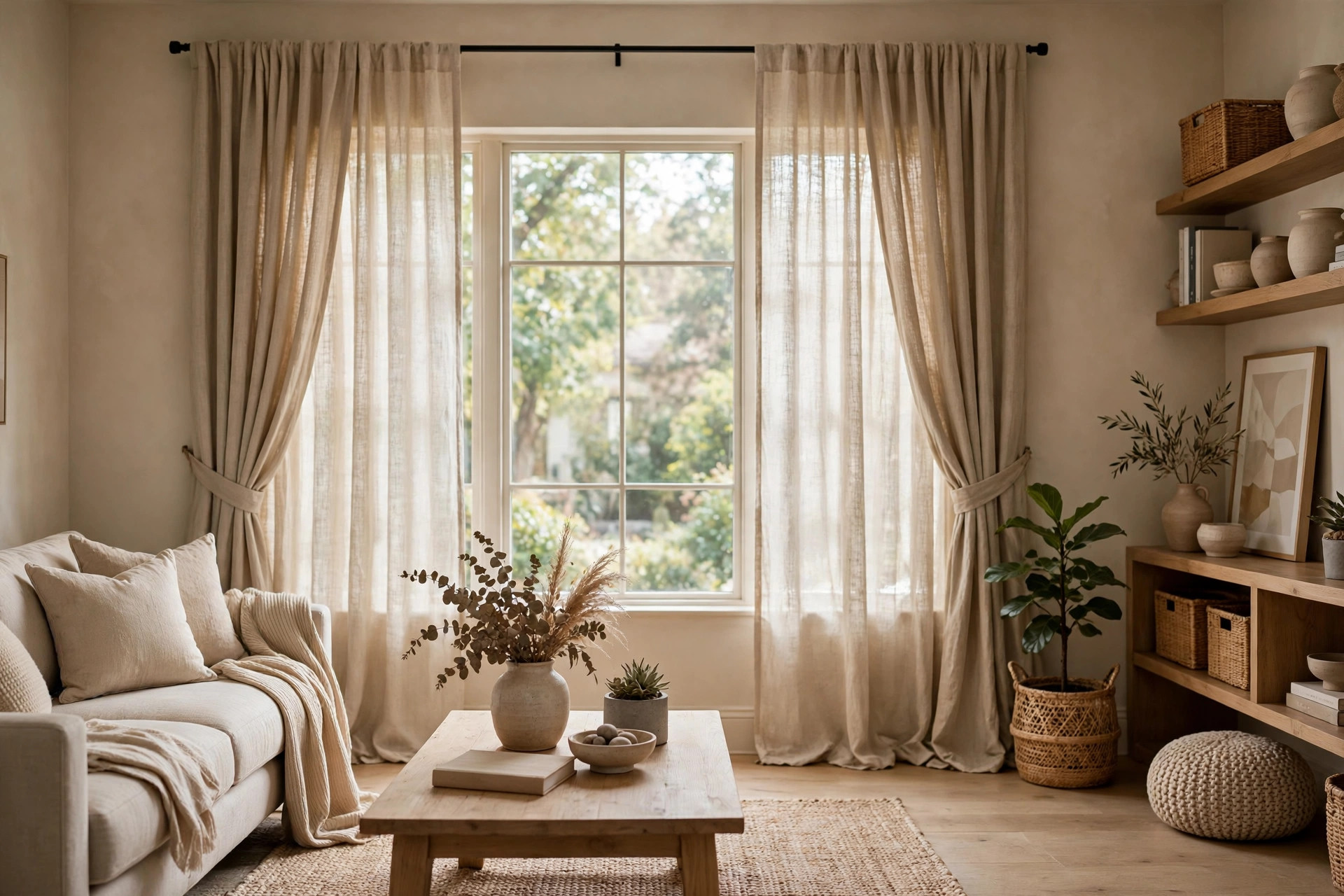

Shopping for custom made curtains online can feel like a maze. One shop quotes fifty dollars a panel. Another quotes four hundred. Both call their curtains custom. A careful custom made curtains online price comparison usa guide helps you see what sits behind each number, so you pay a fair price and get drapes that fit your windows and your home.
Made-to-measure curtains are cut and sewn to your exact width and length. They differ from ready-made panels, which come in fixed sizes. Custom curtains suit wide windows, tall ceilings, bay windows, and arched frames. They also let you pick fabric, lining, and header style. Because each order is unique, prices shift with every choice you make. The sections below walk through those choices in plain terms.
Why a Price Comparison Matters
Window treatments shape a room. They control light, guard privacy, and soften hard edges. Curtains that are too short or too narrow look unfinished. Curtains that fit well look calm and complete.
Many buyers start with ready-made panels because the price is low. Then the panels arrive and pool in the wrong place, or leave gaps at the sides. Custom panels solve these problems, but the price range is wide. A shopper who compares only the headline price may miss the cost of lining, shipping, or hardware. A shopper who compares the full picture gets better value.
Online shopping adds another layer. You cannot touch the fabric. You rely on swatches, photos, and reviews. Comparing shops side by side shows you which sellers include lining for free, which charge extra for wide widths, and which stand behind their work. Blinds.com is one of several large sites that publish full price grids for made-to-measure curtains, and reading those grids teaches you how the trade prices its goods.
What Sets the Price of Custom Made Curtains: Custom Made Curtains Online Price Comparison Usa
Every custom curtain price rests on a handful of factors. Once you know them, the numbers on screen start to make sense.
Fabric Choice
Fabric is the largest single cost. Cotton and polyester blends sit at the low end. They drape well and hold their shape. Linen sits a step higher and brings a relaxed, natural look. Silk and velvet sit at the top. They feel rich and hang in deep folds, but they cost far more per yard and need skilled sewing.
Pattern also matters. A solid color costs less than a printed or woven pattern. Patterned fabric must be matched at the seams, which uses more cloth and more labor. Retailers such as IKEA and Wayfair sell wide ranges of fabric weights, and their listings show how price climbs as fabric grows heavier and more complex.
Width, Length, and Fullness
Curtains are sold by finished width and finished drop. Fullness describes how much fabric gathers across the rod. A flat panel has little fullness. A panel with 1.5 times fullness looks tailored. A panel with 2 to 2.5 times fullness looks lush.
More fabric means more money. A narrow bedroom window may need four yards of cloth. A wide living room window may need twelve. Measure each window carefully before you compare. A shop that looks cheap for a small window may prove costly for a large one. The Home Depot and Lowe’s both offer measuring guides that walk you through width and drop step by step.
Lining, Interlining, and Header Style
Lining changes how a curtain hangs and how long it lasts. Unlined panels are the cheapest. Standard cotton lining adds body and protects the face fabric from sun. Blackout lining blocks most light and costs more. Thermal lining adds an insulating layer and pairs well with thermal energy efficient window treatments for sale, which can help rooms hold heat in winter and stay cool in summer.
Interlining, a soft layer between fabric and lining, gives a plush, high-end feel. It adds real cost. Header styles also shift the price. Simple rod pockets are cheap to sew. Pleated headers, such as pinch pleats or goblet pleats, take more time and more fabric. Eyelets and tab tops sit in the middle.
Labor and Made-to-Order Work
Do not forget the human hand. A custom curtain is cut, sewn, and pressed by workers, not pulled from a warehouse shelf. Labor cost shows up in the price, and it is fair. Shops that pay skilled sewers charge more than shops that rush through orders. Look for even hems, matched patterns, and secure stitching. These small signs tell you the labor was worth the money. A low quote that skips careful sewing often costs more in the end, when panels hang crooked or seams pull loose.
How to Compare Curtain Prices Online, Step by Step
A fair comparison needs the same facts from every shop. Follow these steps and the numbers will line up.
1. Measure once, use the numbers everywhere. Record the finished width and drop for each window. Add the fullness you want. Use the same numbers at every site. 2. Pick one fabric type first. Compare cotton panels at shop A with cotton panels at shop B. Comparing cotton with silk tells you nothing. 3. Ask what the price includes. Some shops quote the panel alone. Others include lining, weights, and a sewn hem. Write down what each quote covers. 4. Add shipping and duties. Free shipping is common, much like the offers found with affordable outdoor patio curtains with free shipping, but not universal. Heavy curtains cost real money to ship. Check the policy before you judge the price. 5. Read the returns policy. Custom goods are often final sale. Some shops allow remakes if the fit is wrong. A slightly higher price can be worth it when the shop stands behind its work. 6. Order swatches. Most sites sell or give away small fabric samples. A swatch shows true color and weight. Never order yards of cloth you have not seen in your own light. 7. Check lead time. Handmade curtains take two to six weeks. If you need them fast, rush fees add cost. Sites such as Pottery Barn list typical lead times beside each fabric, which helps you plan.
Work through the same list at each site. When the inputs match, the price gaps you see are real, and you can choose with confidence.
Common Types of Custom Curtains and Their Costs
Prices below are typical ranges for one panel at standard fullness. Two panels, the usual order for one window, cost about twice as much.
Unlined cotton or polyester panels are the entry point. Expect roughly forty to one hundred twenty dollars per panel. They suit bedrooms and living rooms where light control is not critical.
Lined cotton or linen panels cost roughly one hundred to two hundred fifty dollars per panel. The lining adds body and blocks some light. These are the workhorses of American homes.
Blackout custom panels run roughly one hundred twenty to three hundred dollars per panel. They serve bedrooms, nurseries, and home offices where darkness matters during the day.
Velvet or silk custom panels run roughly two hundred fifty to six hundred dollars or more per panel. These suit formal living rooms and dining rooms. They need professional cleaning.
Sheer custom panels cost roughly sixty to one hundred eighty dollars per panel. They soften light without blocking the view. Many buyers layer sheers behind heavier drapes.
Specialty shapes change the math. Custom sliding panel track blinds for midwest homes and arched or bay window curtains need extra labor. Expect to pay twenty to fifty percent more than standard rectangles in the same fabric.
Treat these ranges as starting points. Sale events, fabric grade, and shop policies move them up and down. Design sites such as HGTV and The Spruce publish style guides that show how each type looks in real rooms, which helps you match the curtain to the space before you spend.
Care and Upkeep
Custom curtains last longer when you care for them with a steady hand. Vacuum panels with a brush attachment once a month to lift dust. Close them fully when the sun is strong so the lining, not the face fabric, takes the wear.
Most cotton and polyester panels can be machine washed on a gentle cycle, but check the care label first. Linen wrinkles; a light steam smooths it. Silk and velvet should go to a dry cleaner. Take curtains down twice a year and air them outside on a dry day. This keeps them fresh without extra washing.
Rotate which panel takes the midday sun if your rods allow it. Even wear keeps both panels fading at the same pace. Mend loose hems early. A small stitch now saves a costly repair later.
Steam out wrinkles after hanging. New curtains often arrive folded, and a gentle pass with a steamer helps them fall into soft folds. Give them a day or two to settle. Fabric relaxes with time, and minor waves often smooth out on their own without any ironing.
Safety Notes
Cord safety deserves real attention. Loose cords on blinds and shades have harmed small children and pets. When you order custom window coverings, choose cordless lifts or covered cord loops wherever the shop offers them. Keep all cords well out of the reach of cribs and beds.
The U.S. Consumer Product Safety Commission keeps current guidance on window covering cord safety for homes with young children. Read it before you buy, and follow its advice when you hang your new curtains. If you are fitting a nursery or a playroom, treat cordless as the default, not an upgrade.
Frequently Asked Questions
How much do custom made curtains cost online in the USA? For one window, most buyers spend between one hundred fifty and six hundred dollars for two panels, depending on fabric, size, lining, and header. Simple cotton panels sit near the low end. Silk, velvet, and blackout linings sit near the high end.
Are custom curtains worth the extra money over ready-made? They are worth it when your windows fall outside standard sizes, or when you want a specific fabric or lining. For standard windows, quality ready-made panels can serve well. Custom work pays off most in rooms with wide spans, tall ceilings, or unusual shapes.
How long do online custom curtains take to arrive? Most shops need two to six weeks from order to delivery. Rush service can cut that to about ten days, usually for an added fee. Always confirm the lead time before you pay.
Can I return custom curtains if I do not like them? Most custom curtains are final sale because they are cut to your size. Some shops allow remakes for measuring errors or defects. Read the policy closely and keep your measurements in writing.
Do I need blackout lining? Blackout lining helps in bedrooms, nurseries, and rooms with strong morning sun. It also adds fullness and a clean look from the street. If you value natural light during the day, standard lining is enough.
Should I order swatches before I buy? Yes. Screen colors shift from the true fabric. A swatch costs little and prevents a costly mistake. Order two or three options and view them in your room at different times of day.
A Final Word
A sound custom made curtains online price comparison usa exercise comes down to three habits. Measure with care. Compare like with like. Read what each price includes. Follow those habits and the wide spread of online prices turns from a puzzle into a clear field of choices. Take your time, order the swatches, and choose curtains that fit your windows, your light, and your budget.
References
Blinds.com. (n.d.). Window blinds, shades, and shutters. https://www.blinds.com HGTV. (n.d.). Home and garden ideas. https://www.hgtv.com IKEA. (n.d.). Home furnishings. https://www.ikea.com Lowe’s. (n.d.). Home improvement products. https://www.lowes.com Pottery Barn. (n.d.). Furniture and home decor. https://www.potterybarn.com The Home Depot. (n.d.). Home improvement products. https://www.homedepot.com The Spruce. (n.d.). Home and garden advice. https://www.thespruce.com U.S. Consumer Product Safety Commission. (n.d.). Product safety information. https://www.cpsc.gov Wayfair. (n.d.). Furniture and home goods. https://www.wayfair.com
Was this guide helpful?

About Jennifer Lee
The My Garden US editorial team writes practical, in-depth home and garden guides for American homeowners — tested advice, no fluff.
You May Also Like

Thermal Sheer Voile Panels With Free Shipping: A Plain Buying Guide
March 1, 2026 0 views
Top Rated Faux Wood Blinds for USA Homes
February 7, 2026 0 views
Navy Blue Velvet Curtains Reviews and Buying Guide
January 12, 2026 0 views